



Dobles cuerdas en Wednesday Night Waltz
Con
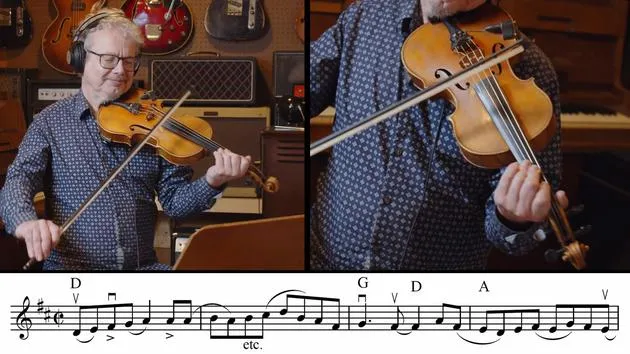
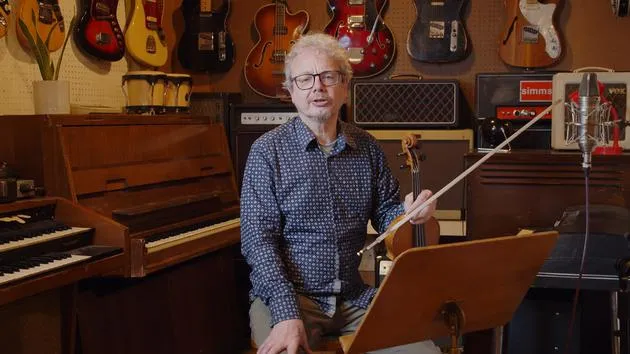
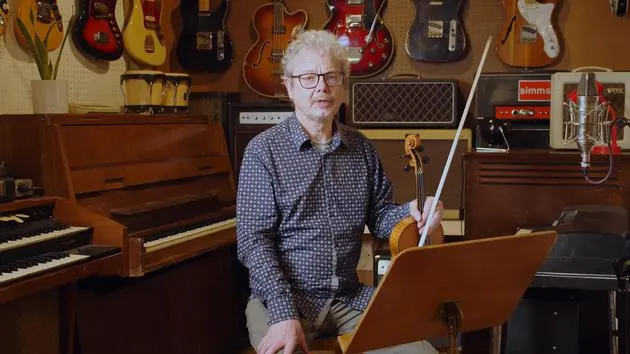
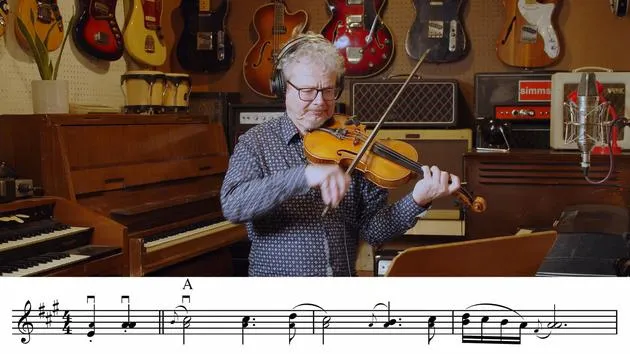
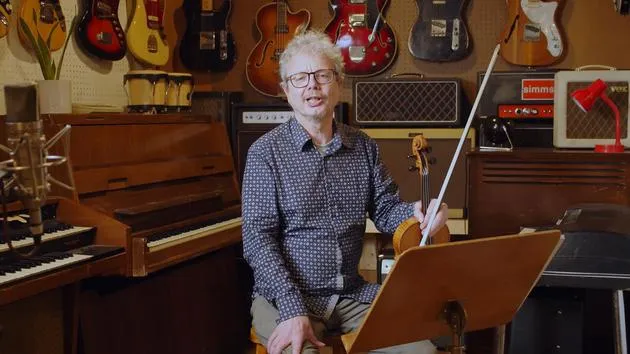
Chris HaighChris Haigh explica la diferencia entre un bordón (una cuerda al aire) y una doble cuerda pisada en el violín, y luego pone las dobles cuerdas a trabajar en 'Wednesday Night Waltz'.
Qué incluye el curso
25 lecciones (1h 30m) · 1 gratis
01. El Georgia Shuffle
5:42
02. Whiskey Before Breakfast (Interpretación)
0:44
03. Dobles cuerdas en Wednesday Night Waltz
Estás aquí8:34
04. Wednesday Night Waltz (interpretación)
0:54
05. Más dobles cuerdas: Cheatem County Breakdown
4:06
06. Cheatem County Breakdown (Interpretación)
0:44
07. Vaqueros cantantes: Yellow Rose of Texas
5:34
08. Yellow Rose of Texas (Interpretación)
0:22
01. Western swing: Beaumont Rag
9:50
02. Beaumont Rag (interpretación)
1:12
03. Bob Wills - Red River Valley
5:25
04. Red River Valley (Interpretación)
0:33
05. Violín a dos voces: escala, Goodbye Liza Jane
3:35
06. Improvisación de Western Swing
5:06
07. Goodbye Liza Jane (interpretación en solo)
1:17
08. Licks de Western swing
9:19
09. Girl I Left Behind Me (análisis del solo)
2:33
10. Girl I Left Behind Me (interpretación en solitario)
0:28
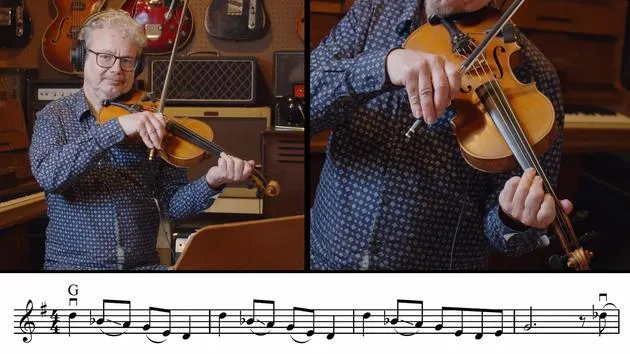
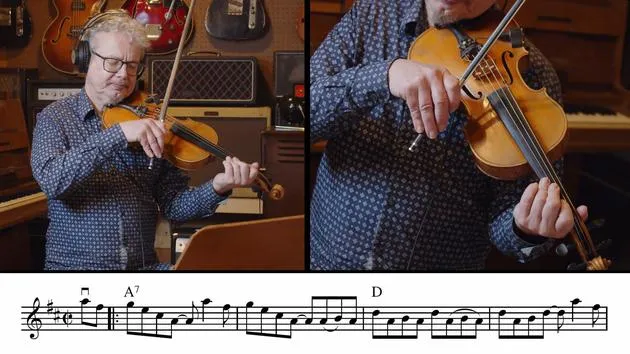
Transcripción de la lección
Double Stops Lesson
Welcome to today's lesson on double stops. Let's clarify the distinction between a drone and a double stop:
- Drone: An open string extra note.
- Double Stop: A fingered extra note, which is slightly more difficult to play.
Understanding the Difference
-
Playing a Drone:
- Requires minimal effort; just angle the bow slightly.
-
Playing a Double Stop:
- Involves more thought and finger positioning.
Advantages of Double Stops
- Double stops provide greater flexibility in terms of keys and notes.
- Drones typically confine you to specific keys (D, A, or G), while fingered double stops can be played in almost any key.
Historical Context
- Double stops became more common in the 20th century.
- In the 1920s and 30s, several fiddle players started recording with a focus on double stops.
Example Tune: "Wednesday Night Waltz"
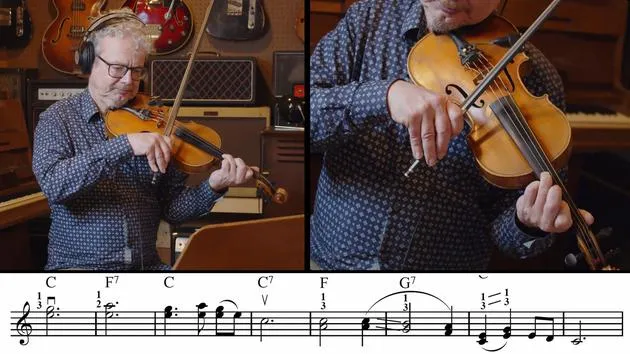
We will explore "Wednesday Night Waltz" by Clark Kessinger, one of the most sophisticated early players.
Basic Exercises
-
Melody Without Chords:
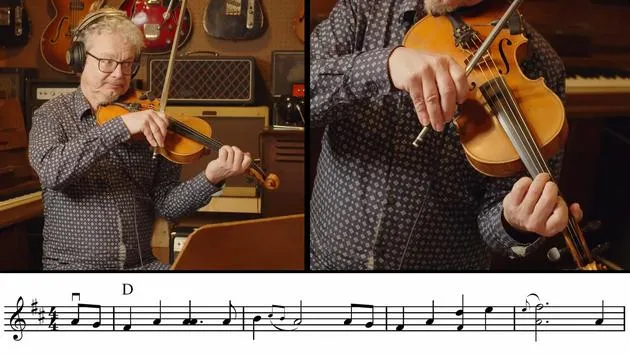
- The melody has two chords, which become evident only with double stops.
-
Melody With Drones:
- Playing with drones provides a hint of chord changes (E drone to D drone).
-
Melody With Fingered Double Stops:
- Fingering clarifies the chord structure:
- First Finger: Plays E (the fifth of A).
- Second Finger: Plays F# (the third note of the D chord).
- Fingering clarifies the chord structure:
Importance of Double Stops
- When playing solo, emphasizing chords helps to communicate the music clearly to the listener.
- While playing with backing is less critical, understanding the chords is still beneficial.
Clark Kessinger's Legacy
- Kessinger was a recording star in the 1920s, known for his tune "Wednesday Night Waltz," which features tricky fingering.
Technique Breakdown
-
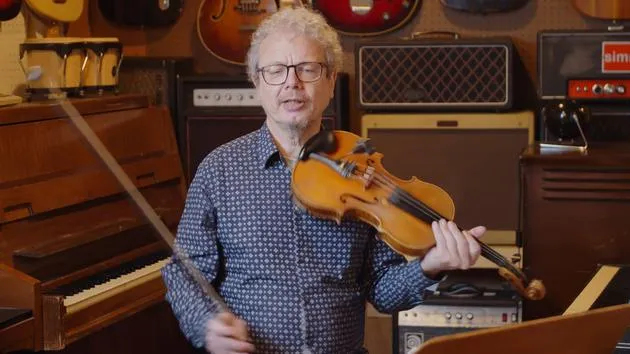
Positioning: Start in second position; use your first finger for G:
- Move the whole hand up a half step.
- Place the third finger below, creating a G and an E.
-
Sliding Exercise:
- Slide your whole hand down and back up while keeping the first finger over the third.
-
Finger Placement:
- The second finger plays F# below the third finger on D.
-
Choice of Position:
- Options: Fourth, third, or returning to first position.
- Work with what is easier for you.
-
Final Bars:
- Use second over first and slide up to the third finger.
Practice Session
- We will do the complete exercise without backing, followed by practicing with backing.
1, 2, 3...
Final Thoughts
- If you find this challenging, especially if you're new to sliding double stops, remember it's a key part of American fiddling tradition, specifically the Double Stop Waltz.
- If you encounter difficult sections, simplify the tune as best you can, but keep practicing:
- Aim to master the difficult bits over time.
Assignment
- Try playing a simple major scale (D or G) and harmonize it in your own way.
- I will demonstrate a more structured approach to this exercise later in the course, but for now, experiment and see what you can create!
25 lecciones
1h 30m de lecciones en vídeo estructuradas
Funciones de vídeo avanzadas
Ralentiza, repite un pasaje, sigue la partitura
Móvil, tablet y ordenador
Practica donde quieras
Garantía de satisfacción 100%
30 días de garantía de devolución
Conoce a tu gurú
Conoce a tu gurú
Chris Haigh es violinista profesional desde hace 25 años, con experiencia en muchos géneros distintos. Ha tocado en más de 75 álbumes, trabajando con artistas como Alison Moyet, Bob Geldof, All About Eve, Michael Ball, David Soul, Oumou Sangare, The Quireboys, Riverdance, Morcheeba, James Galway y Steps.
Ha tocado swing y jazz con The Kimbara Brothers, Diz Disley, Le Jazz, The Hot Club of London y los Quecumbar Allstars, y lidera una banda de swing soviético de siete integrantes, The Kremlinaires.
Chris imparte clases y talleres sobre técnica de violín de jazz y ha enseñado violín de jazz en las universidades de Middlesex, Brunel y Newcastle y en el Truro College. Entre sus créditos como autor figuran nueve libros de violín, entre ellos The Fiddle Handbook.
También dirige Fiddling Around (fiddlingaround.co.uk), probablemente la fuente de información sobre violín más completa y visitada de la red.







