



Más dobles cuerdas: Cheatem County Breakdown
Con
Chris HaighAborda las dobles cuerdas en el violín a través de Cheatem County Breakdown, apoyándote en el estilo de segundo sobre cuarto dedo de Arthur Smith y su sensación sincopada.
Qué incluye el curso
25 lecciones (1h 30m) · 1 gratis
01. El Georgia Shuffle
5:42
02. Whiskey Before Breakfast (Interpretación)
0:44
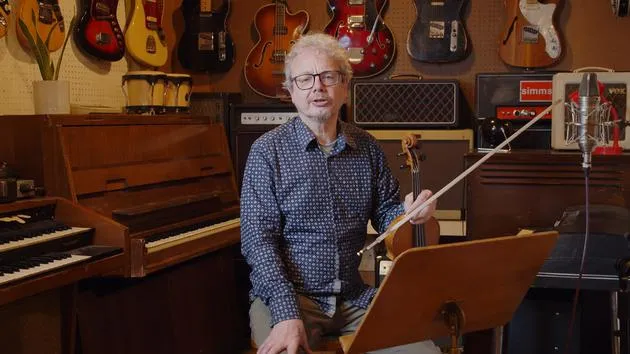
03. Dobles cuerdas en Wednesday Night Waltz
8:34
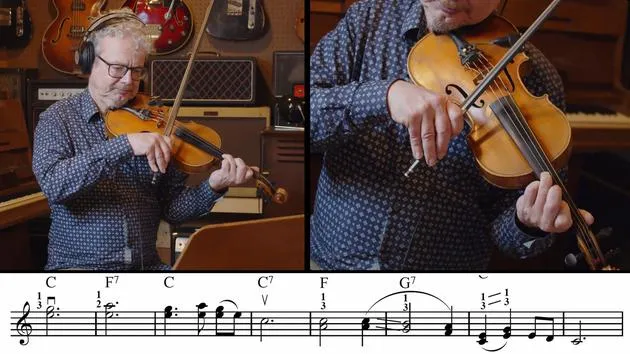
04. Wednesday Night Waltz (interpretación)
0:54
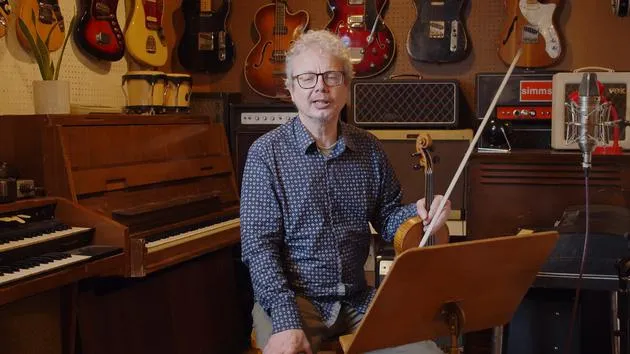
05. Más dobles cuerdas: Cheatem County Breakdown
Estás aquí4:06
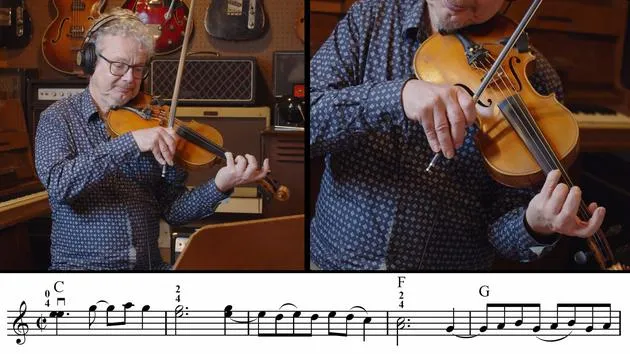
06. Cheatem County Breakdown (Interpretación)
0:44
07. Vaqueros cantantes: Yellow Rose of Texas
5:34
08. Yellow Rose of Texas (Interpretación)
0:22
01. Western swing: Beaumont Rag
9:50
02. Beaumont Rag (interpretación)
1:12
03. Bob Wills - Red River Valley
5:25
04. Red River Valley (Interpretación)
0:33
05. Violín a dos voces: escala, Goodbye Liza Jane
3:35
06. Improvisación de Western Swing
5:06
07. Goodbye Liza Jane (interpretación en solo)
1:17
08. Licks de Western swing
9:19
09. Girl I Left Behind Me (análisis del solo)
2:33
10. Girl I Left Behind Me (interpretación en solitario)
0:28
Transcripción de la lección
Music Lesson: Double Stops in American Fiddling
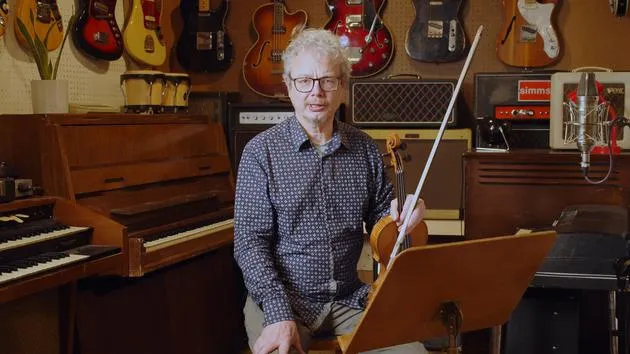
Hello! In this lesson, we're going to look at more double stops. I have to say that double stops are where a lot of the challenge of American fiddling lies.
Spotlight on Arthur Smith
We're going to examine the playing of Arthur Smith, often referred to as "Fiddling Arthur Smith." He was one of the early stars of the Grand Ole Opry, making his debut in 1927, and he was particularly skilled in double stops.
The Tune: Cheetham County Breakdown
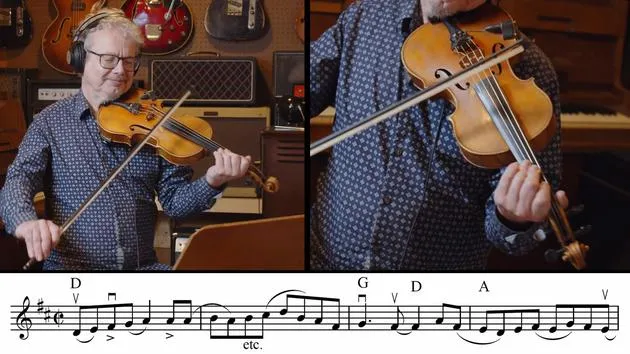
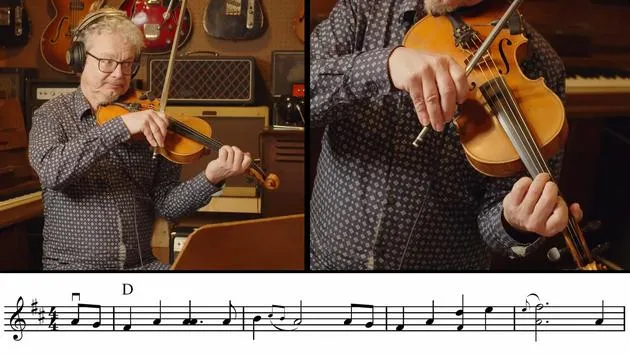
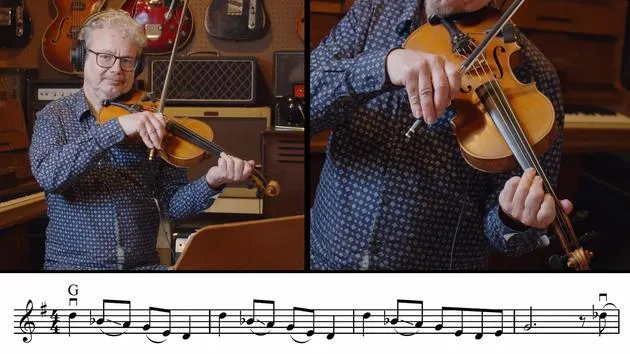
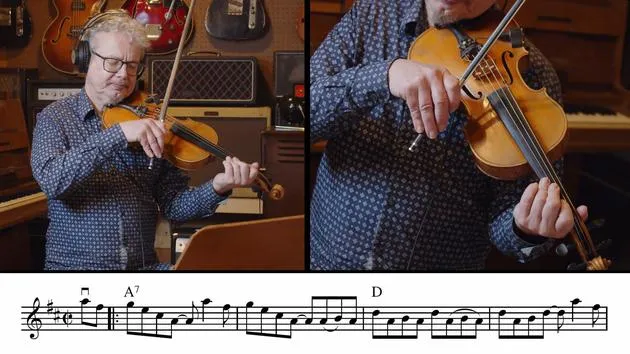
One of the tunes we're going to play, which featured prominently in his performances, includes a whole load of second over fourth finger combinations.
- Second Finger: Goes down first
- Fourth Finger: Then placed on the string
Stretch and Positioning
You may find that your fourth finger interferes with the second finger when playing on the E string. If this happens, you'll need to adjust your hand position to ensure it's at the right angle.
Another Common Technique
We also have open over four, which is another prevalent technique in American fiddling.
- The open E string and the fourth finger play the same note simultaneously.
Again, it's crucial to have your hand positioned well so that your finger is pointing straight down, avoiding any unwanted sounds.
Playing the Tune
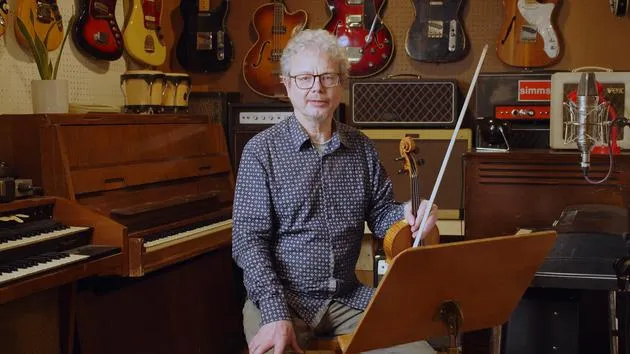
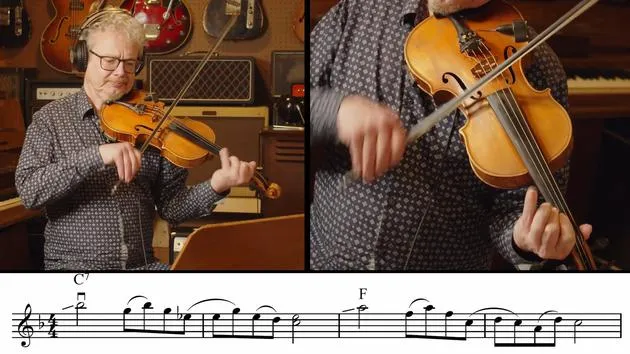
Let's go straight into the tune, Cheetham County Breakdown.
Cheetham County, which can be spelled in various ways, is actually named after a county just west of Tennessee.
I'm going to play this tune nice and slow, and we'll follow with some backing:
- Count: 1, 2, 3, 4.
Important Elements
- You'll notice that not only do we have these double stops, but there is also a significant amount of syncopation in this tune, which is something we've already covered.
Practice Exercise
Now, let's try the same thing, but this time slightly faster and with backing.
For your assignment in this lesson:
- Go back over some of the tunes we've covered and play slow versions while creating some double stops.
- Focus on finding either open over fourth or second over fourth harmonies like we've practiced.
Happy fiddling!
25 lecciones
1h 30m de lecciones en vídeo estructuradas
Funciones de vídeo avanzadas
Ralentiza, repite un pasaje, sigue la partitura
Móvil, tablet y ordenador
Practica donde quieras
Garantía de satisfacción 100%
30 días de garantía de devolución
Conoce a tu gurú
Conoce a tu gurú
Chris Haigh es violinista profesional desde hace 25 años, con experiencia en muchos géneros distintos. Ha tocado en más de 75 álbumes, trabajando con artistas como Alison Moyet, Bob Geldof, All About Eve, Michael Ball, David Soul, Oumou Sangare, The Quireboys, Riverdance, Morcheeba, James Galway y Steps.
Ha tocado swing y jazz con The Kimbara Brothers, Diz Disley, Le Jazz, The Hot Club of London y los Quecumbar Allstars, y lidera una banda de swing soviético de siete integrantes, The Kremlinaires.
Chris imparte clases y talleres sobre técnica de violín de jazz y ha enseñado violín de jazz en las universidades de Middlesex, Brunel y Newcastle y en el Truro College. Entre sus créditos como autor figuran nueve libros de violín, entre ellos The Fiddle Handbook.
También dirige Fiddling Around (fiddlingaround.co.uk), probablemente la fuente de información sobre violín más completa y visitada de la red.







