



Síncopa: Pig Ankle Rag (Clase)
Con
Chris HaighChris Haigh explica la síncopa -añadir un énfasis inesperado dentro del compás- y la remonta al ragtime, antes de aprender la pieza de fiddle 'Pig Ankle Rag'.
Qué incluye el curso
25 lecciones (1h 30m) · 1 gratis
01. El Georgia Shuffle
5:42
02. Whiskey Before Breakfast (Interpretación)
0:44
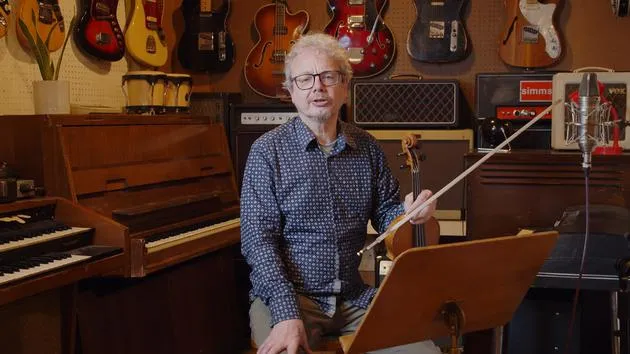
03. Dobles cuerdas en Wednesday Night Waltz
8:34
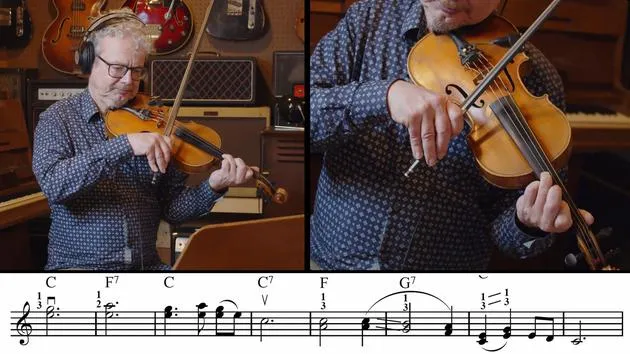
04. Wednesday Night Waltz (interpretación)
0:54
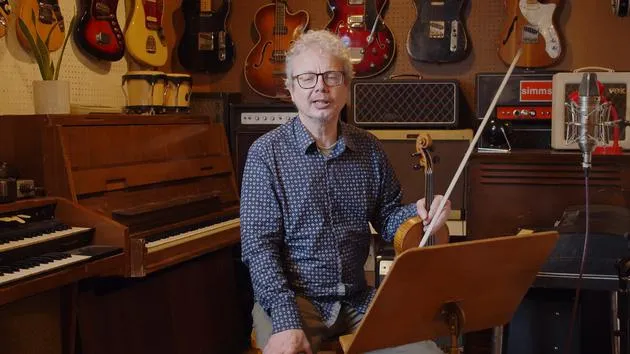
05. Más dobles cuerdas: Cheatem County Breakdown
4:06
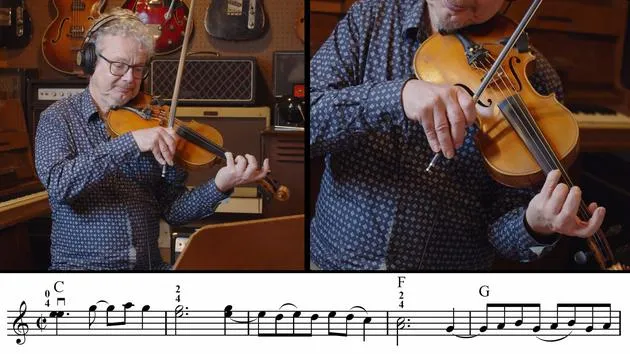
06. Cheatem County Breakdown (Interpretación)
0:44
07. Vaqueros cantantes: Yellow Rose of Texas
5:34
08. Yellow Rose of Texas (Interpretación)
0:22
01. Western swing: Beaumont Rag
9:50
02. Beaumont Rag (interpretación)
1:12
03. Bob Wills - Red River Valley
5:25
04. Red River Valley (Interpretación)
0:33
05. Violín a dos voces: escala, Goodbye Liza Jane
3:35
06. Improvisación de Western Swing
5:06
07. Goodbye Liza Jane (interpretación en solo)
1:17
08. Licks de Western swing
9:19
09. Girl I Left Behind Me (análisis del solo)
2:33
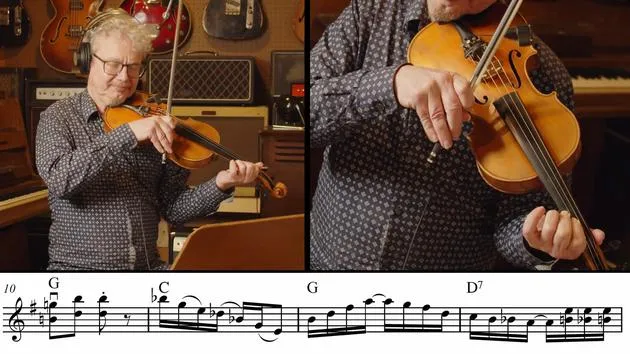
10. Girl I Left Behind Me (interpretación en solitario)
0:28
Transcripción de la lección
Lesson on Syncopation
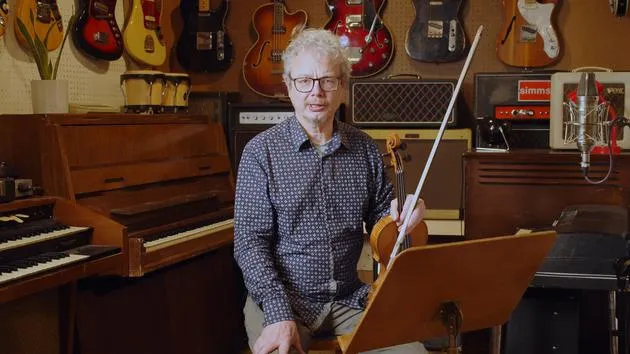
In the last lesson, we mentioned syncopation, and this lesson is going to be more about that.
What is Syncopation?
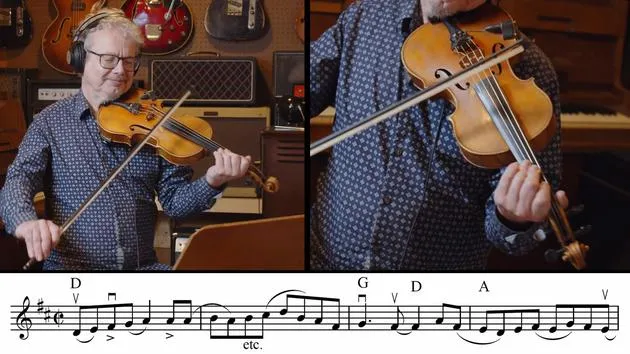
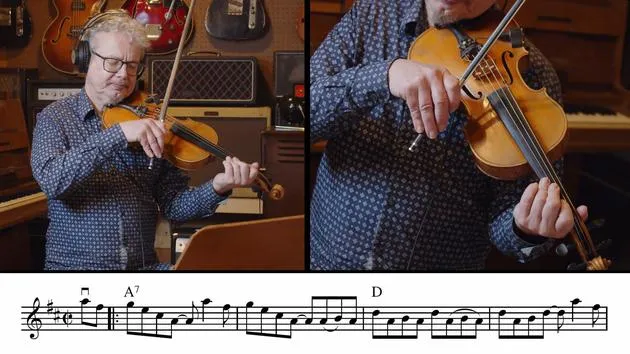
Syncopation is the adding of an unexpected emphasis somewhere within a bar or across a bar line.
- An expected way of playing eight quavers might involve slurring a couple of notes but then adding an unexpected emphasis.
- This unexpected emphasis is the key to syncopation.
Historical Context
Syncopation has its roots in African American music and became widely recognized through ragtime, which was primarily piano music.
- The term "rag" refers to a tune that originates from ragtime.
- Many old-time tunes became known as "rags" and featured distinctive syncopated rhythms.
- The chord sequences used in ragtime often came from pianists, who naturally created these patterns.
Example Tune: Pig Ankle Rag
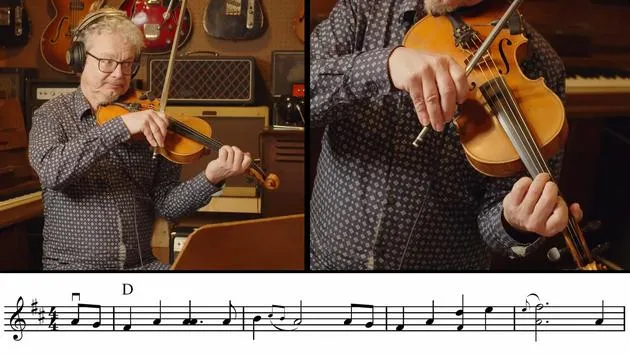
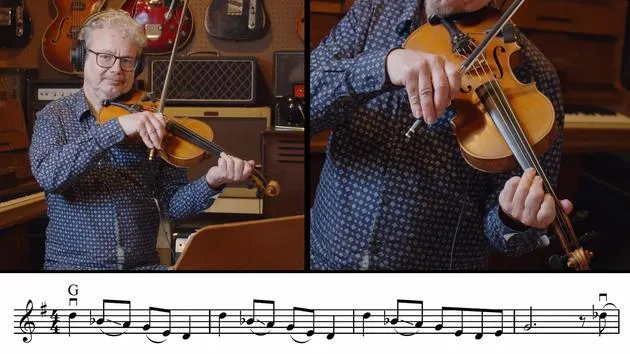
A tune that we'll be playing is the Pig Ankle Rag. This piece includes a characteristic sequence at the end:
- Chord Sequence: G, D, B, A
When you hear this sequence, you'll recognize it as a typical ragtime element. This sequence contrasts sharply with what you would find in Celtic music, which is the origin of many old-time tunes.
Common Syncopated Rhythm
A prevalent rhythm in syncopation is:
1, 2, 3, 1, 2, 3, 1-2
This rhythmic structure is very much syncopated.
Playing the Pig Ankle Rag
Let's play the Pig Ankle Rag, which is a classic old-time rag. I'll start slowly, without backing, and then we'll add the backing and speed it up a bit.
Count: 1, 2, 3, and repeat.
Important Note on Swing
One important aspect of ragtime music is that the eighth notes are played with a swing feel.
- It's not played evenly; it's long, short, long, short throughout whenever there are quavers, unless they're tied together.
- In that case, you often go to a longer note on the accented tied note.
You'll quickly get used to this style.
Assignment
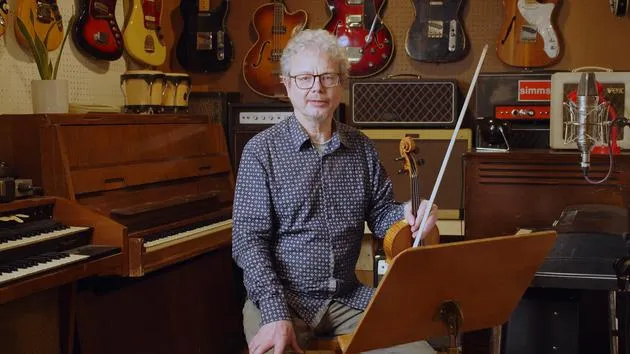
For your assignment, try playing the Pig Ankle Rag without slurs and without syncopation. This unusual task will help you understand what we've been practicing.
- It might sound something like this:
It's not until you attempt this that you realize what we've learned about syncopation. Have fun with this!
Additional Practice
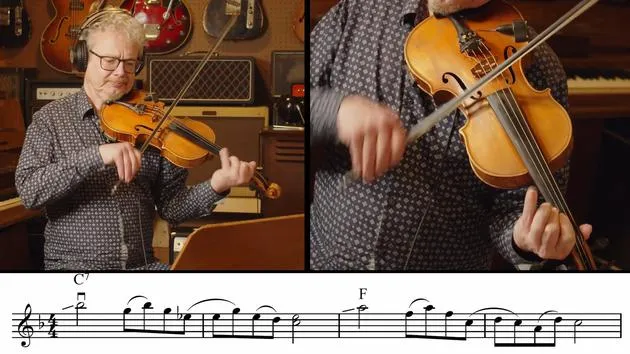
Try playing some scales using syncopation. This will help you develop your skills for later soloing.
- For example, a D major scale might sound like this.
Remember: Adding the syncopation yourself, rather than just reading it, will significantly enhance your ability to use it while soloing later on.
25 lecciones
1h 30m de lecciones en vídeo estructuradas
Funciones de vídeo avanzadas
Ralentiza, repite un pasaje, sigue la partitura
Móvil, tablet y ordenador
Practica donde quieras
Garantía de satisfacción 100%
30 días de garantía de devolución
Conoce a tu gurú
Conoce a tu gurú
Chris Haigh es violinista profesional desde hace 25 años, con experiencia en muchos géneros distintos. Ha tocado en más de 75 álbumes, trabajando con artistas como Alison Moyet, Bob Geldof, All About Eve, Michael Ball, David Soul, Oumou Sangare, The Quireboys, Riverdance, Morcheeba, James Galway y Steps.
Ha tocado swing y jazz con The Kimbara Brothers, Diz Disley, Le Jazz, The Hot Club of London y los Quecumbar Allstars, y lidera una banda de swing soviético de siete integrantes, The Kremlinaires.
Chris imparte clases y talleres sobre técnica de violín de jazz y ha enseñado violín de jazz en las universidades de Middlesex, Brunel y Newcastle y en el Truro College. Entre sus créditos como autor figuran nueve libros de violín, entre ellos The Fiddle Handbook.
También dirige Fiddling Around (fiddlingaround.co.uk), probablemente la fuente de información sobre violín más completa y visitada de la red.







