



Drones: ejercicios básicos y Arkansas Traveller
Con
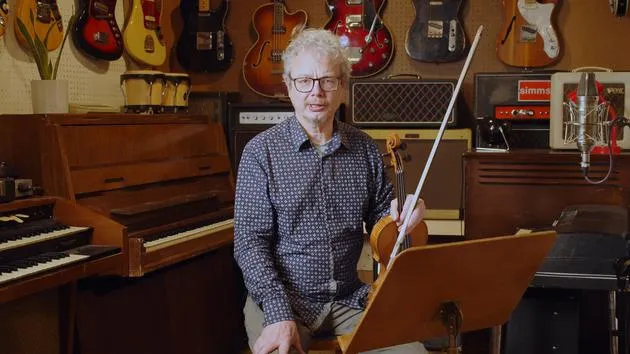
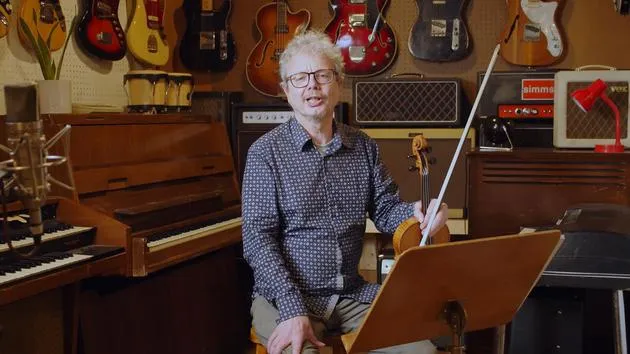
Chris HaighChris Haigh presenta los drones —hacer sonar una cuerda al aire junto a la melodía para ese sabor añejo del fiddle americano— con ejercicios básicos y el tema Arkansas Traveller.
Qué incluye el curso
25 lecciones (1h 30m) · 1 gratis
01. El Georgia Shuffle
5:42
02. Whiskey Before Breakfast (Interpretación)
0:44
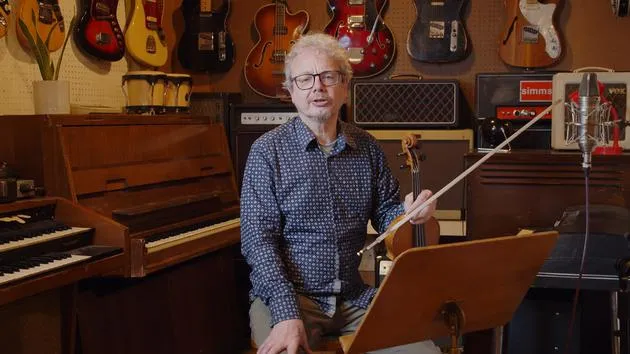
03. Dobles cuerdas en Wednesday Night Waltz
8:34
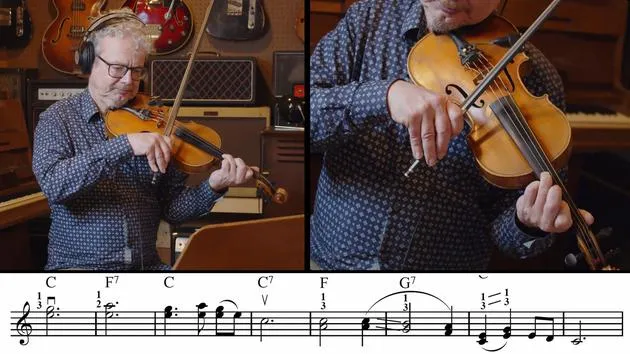
04. Wednesday Night Waltz (interpretación)
0:54
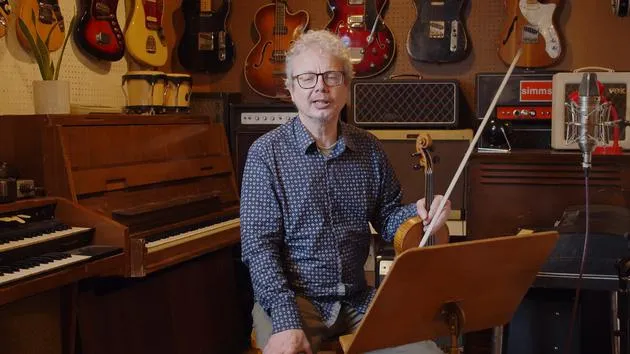
05. Más dobles cuerdas: Cheatem County Breakdown
4:06
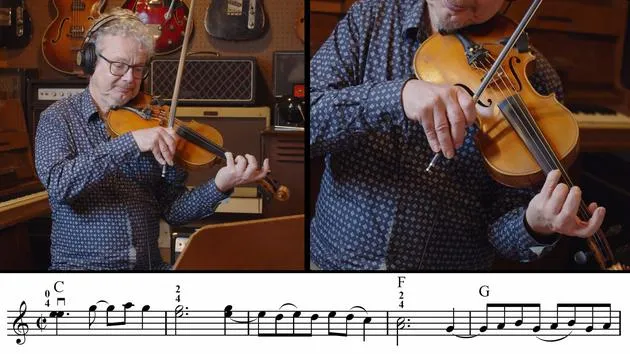
06. Cheatem County Breakdown (Interpretación)
0:44
07. Vaqueros cantantes: Yellow Rose of Texas
5:34
08. Yellow Rose of Texas (Interpretación)
0:22
01. Western swing: Beaumont Rag
9:50
02. Beaumont Rag (interpretación)
1:12
03. Bob Wills - Red River Valley
5:25
04. Red River Valley (Interpretación)
0:33
05. Violín a dos voces: escala, Goodbye Liza Jane
3:35
06. Improvisación de Western Swing
5:06
07. Goodbye Liza Jane (interpretación en solo)
1:17
08. Licks de Western swing
9:19
09. Girl I Left Behind Me (análisis del solo)
2:33
10. Girl I Left Behind Me (interpretación en solitario)
0:28
Transcripción de la lección
Lesson 1: Mastering Drones in American Fiddling
Hello! This first lesson is going to be about drones.
What is a Drone?
Drones are an important part of most types of American fiddling, and it's something you really do have to master.
- The drone is a note played on an open string on either side of the melody note.
- For example:
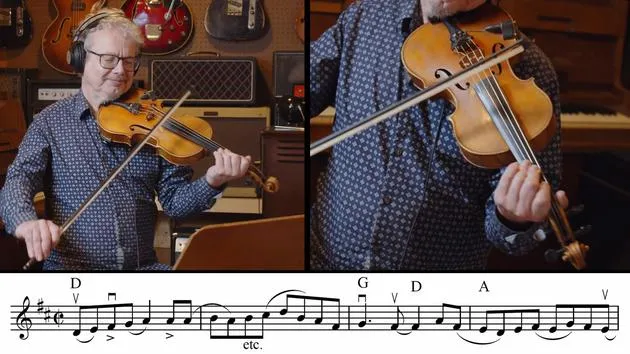
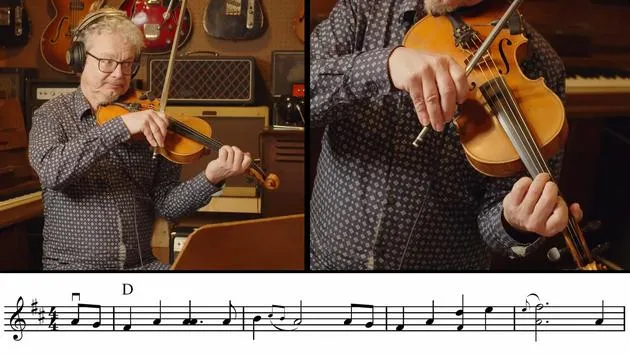
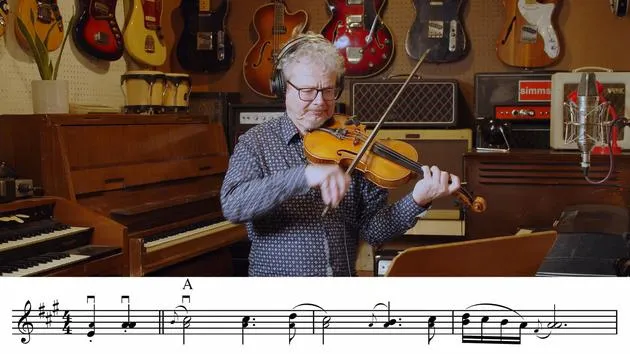
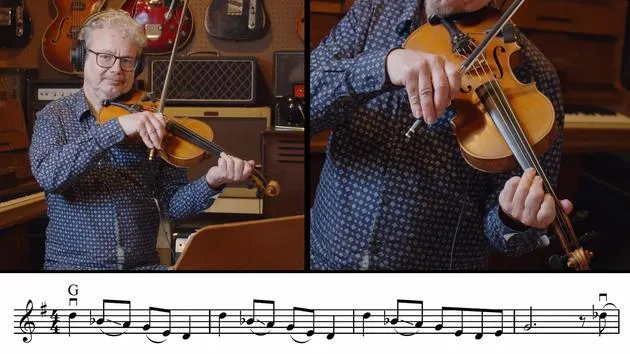
- If we have a phrase like this, we could play drones on an open A above it.
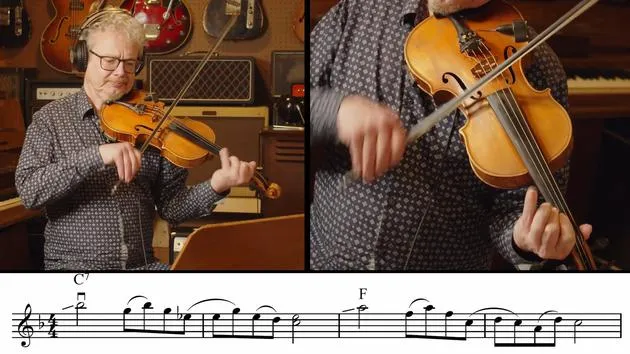
- If we have a different phrase, it can also be accompanied by drones, adding an American old-timey feel to the music.
You can immediately feel that it has a very American sound.
When to Use Drones
Drones aren't used all the time and aren't always appropriate, but it's certainly something you need to master.
Exercises
Let's look at a couple of simple exercises:
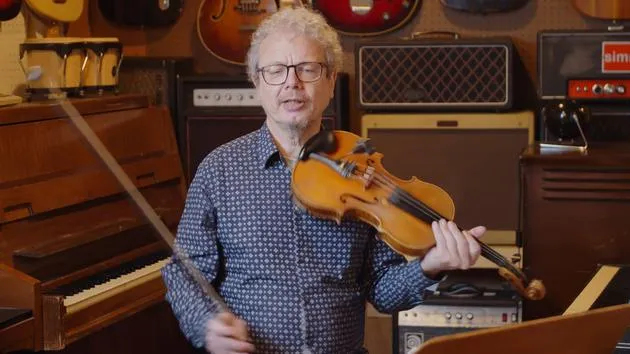
- Play the same thing, but angle the bow slightly to include the open A.
- Angle the bow slightly down to get the open A.
Keys for Drones
This idea works very well in the keys of G, D, and A. As you move up to something like E or B, it becomes harder, and as you go down to C, F, and so on, it gets even harder.
- Drones are mostly used in simple keys, which is why American fiddling tends to stick to those keys.
- By the end of this course, we'll find a workaround to do drones in any key, but that's something to worry about later.
Introducing a Tune: Arkansas Traveler
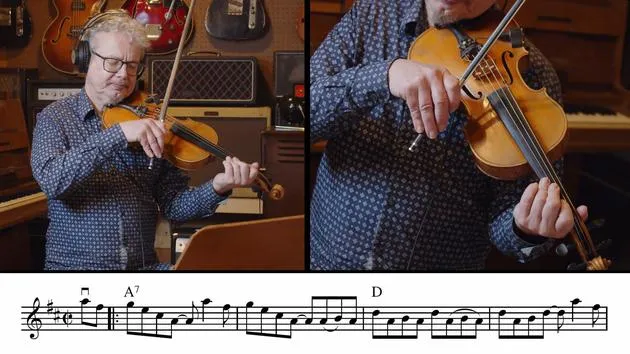
Now, I'm going to show you a tune called Arkansas Traveler, which is a very well-known tune.
Playing Without Drones
Let's play it first without any drones:
Now that sounds okay, but it doesn't sound distinctly American.
Adding Drones
If we add the drones, then it certainly does sound more American.
- You may have noticed that I was not droning on every note; I was droning on most of the notes.
- It's a matter of experience to know which notes can be easily droned and which cannot.
Learning Curve
This is something you can't expect to learn overnight. In fact, it may take weeks or even months to figure out how to easily drone on some notes and not on others.
Reading Music with Drones
As for reading music, when drones are written down, it's helpful but can slow things down. It often looks overwhelming when everything is covered in notes.
- Music is frequently written without drones, with just a suggestion to "play drones here and there."
- You need to come to terms with the fact that you can't expect drones to be noted for you; you need to add them yourself.
Assignments for This Lesson
- Try playing "Arkansas Traveler" with drones and without drones.
- Experiment with several other tunes, anything you know, and try adding the drones yourself, remembering that the drones can be either above or below the melody.
Listening Recommendations
Listen to a couple of old-time players:
- Clark Kessinger playing "West Virginia Special."
- G.B. Grayson on "Train 45."
You'll see that one of them drones all the time, while the other drones hardly at all.
Remember: It's a choice to use drones, and not everyone prefers to use them all the time, or even at all.
25 lecciones
1h 30m de lecciones en vídeo estructuradas
Funciones de vídeo avanzadas
Ralentiza, repite un pasaje, sigue la partitura
Móvil, tablet y ordenador
Practica donde quieras
Garantía de satisfacción 100%
30 días de garantía de devolución
Conoce a tu gurú
Conoce a tu gurú
Chris Haigh es violinista profesional desde hace 25 años, con experiencia en muchos géneros distintos. Ha tocado en más de 75 álbumes, trabajando con artistas como Alison Moyet, Bob Geldof, All About Eve, Michael Ball, David Soul, Oumou Sangare, The Quireboys, Riverdance, Morcheeba, James Galway y Steps.
Ha tocado swing y jazz con The Kimbara Brothers, Diz Disley, Le Jazz, The Hot Club of London y los Quecumbar Allstars, y lidera una banda de swing soviético de siete integrantes, The Kremlinaires.
Chris imparte clases y talleres sobre técnica de violín de jazz y ha enseñado violín de jazz en las universidades de Middlesex, Brunel y Newcastle y en el Truro College. Entre sus créditos como autor figuran nueve libros de violín, entre ellos The Fiddle Handbook.
También dirige Fiddling Around (fiddlingaround.co.uk), probablemente la fuente de información sobre violín más completa y visitada de la red.







