



Shakes
Con
Mike LovattMike Lovatt enseña el 'shake': el efecto de la trompeta de swing que alterna entre armónicos usando el flujo de aire y la lengua, en lugar de limitarse a agitar el instrumento.
Qué incluye el curso
29 lecciones (1h 2m) · 1 gratis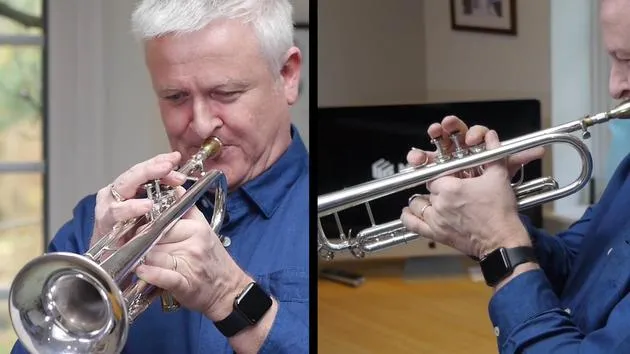
01. Transposition Blues - Introducción e interpretación
2:05
02. Estructura
1:51
03. Meterse a fondo
2:22
04. Bending de notas
2:40
05. Dinámica
3:00
06. Segunda sección, al estilo de Louis Armstrong
2:01
07. Shakes
Estás aquí5:03
08. Scoops
2:35
09. Sonido, estilo y vibrato
3:00
10. Resumen
1:16
11. Desafío (estilo Louis Armstrong)
0:39
Transcripción de la lección
Title: Exploring the Shake Effect on Trumpet
Introduction
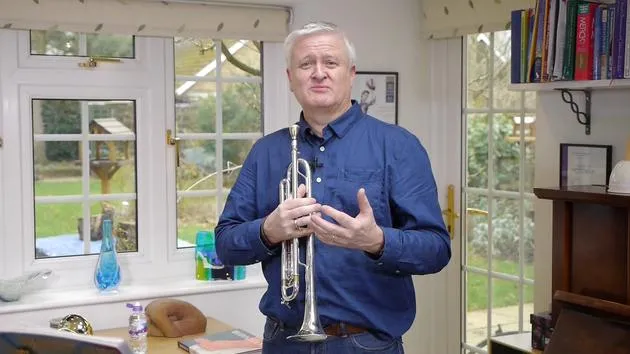
So what other effects, apart from hard tonguing, are we using to achieve that kind of style?
The Shake Effect
Well, I used an effect called a shake. A lot of people ask me:
"How do we shake on a trumpet? How do we shake a note?"
Basic Technique
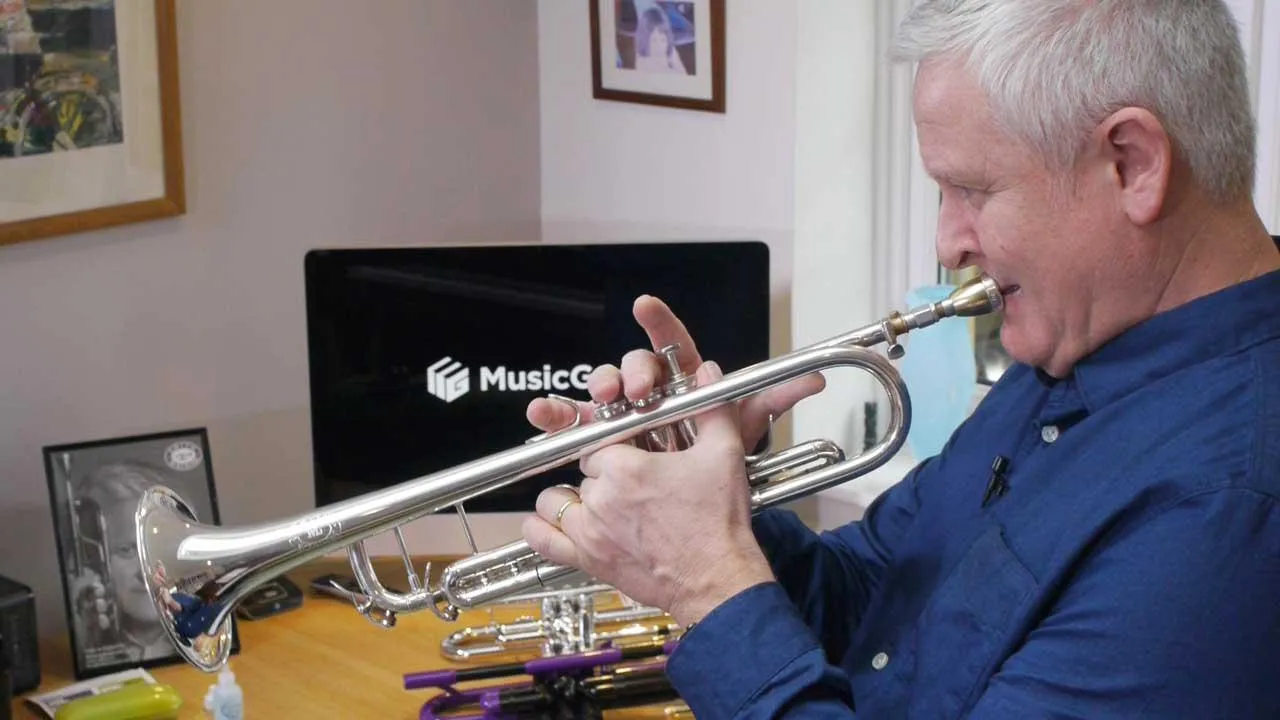
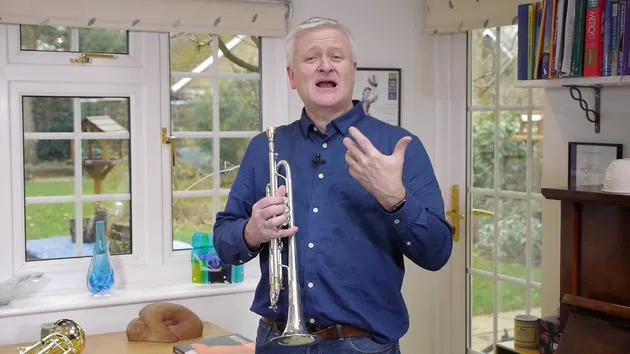
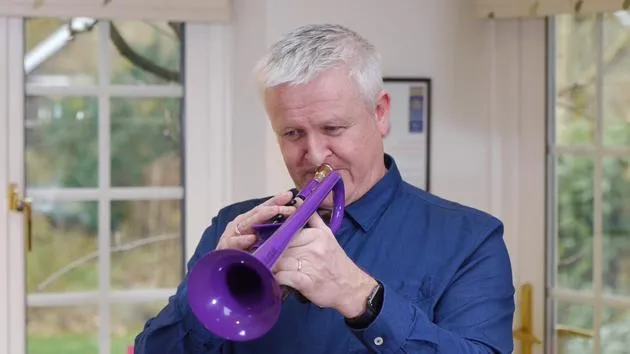
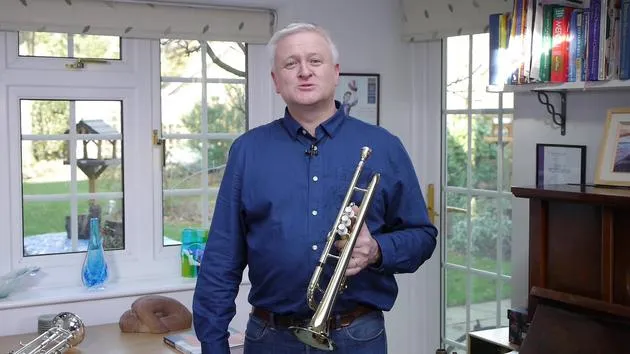
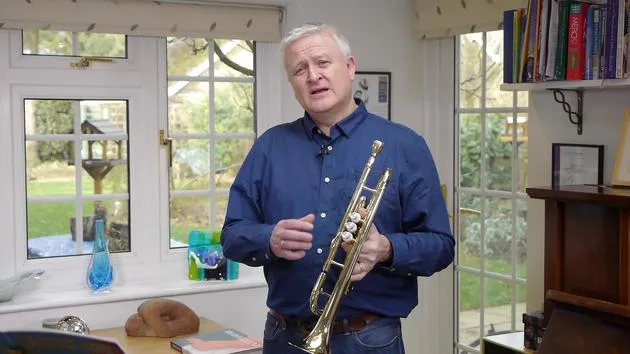
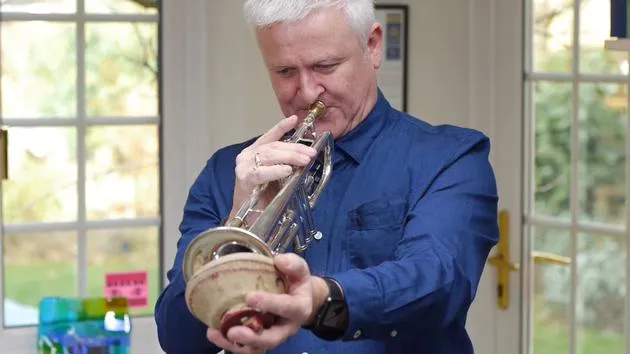
The simplest way is to literally shake the trumpet like this. By doing that, I'm blowing straight through the note, but I'm shaking the trumpet against my lips, which causes that weird kind of bleating sound.
A More Effective Method
In my view, a better way to achieve this is by using the airstream and the tongue. Previously, we've used the airstream and the tongue to help with:
- Register
- Vibrato
Now, let's try using these techniques to perform a shake.
- I'm going to play an E on the top space on the fourth line of the treble clef, just a plain old E.
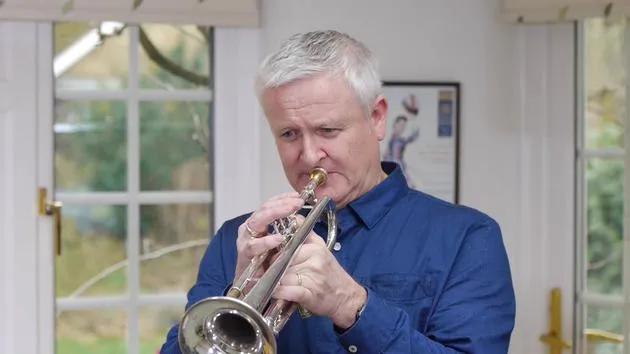
- As I play that E, I'm going to flip my tongue back so the note flips up to the next harmonic, which, of course, open, is a G on the top of the stave.
Practice the Shake
- Try doing that. As you play up the note, move the tongue back and just push with a bit of air.
- Now we need to increase the speed of this technique.
- We also need to learn how to make the note fall back to the E.
Let's practice this with the syllable:
"biya" (moving the tongue backwards and forwards)
- Use the airstream: push, then release it so the note falls back down.
- Gradually speed that up, and we get a shake.
If we increase the airspeed even more, we can achieve this further up the range of the instrument. With years of practice, you might be able to do that too.
Applying Shakes in Music
This is how I use shakes within music to help tell my story. I work out where there's maybe a long note where there's time to do it.
"We can't play a shake on a semiquaver. There just isn't time to do that."
Identifying Long Notes
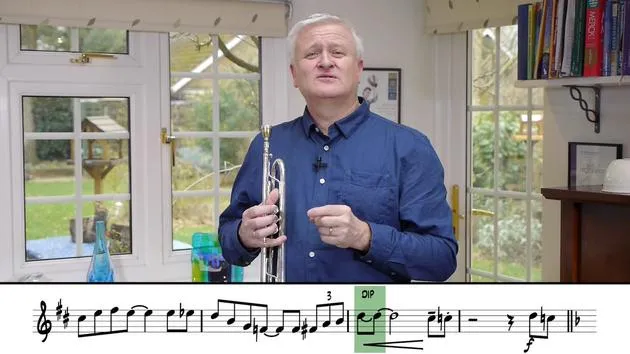
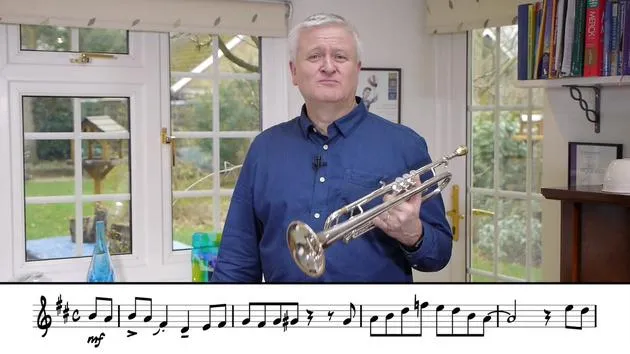
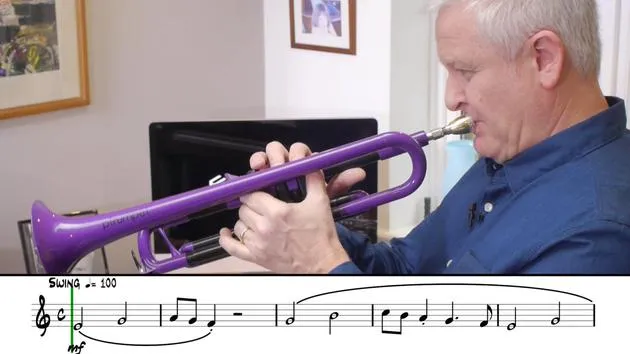
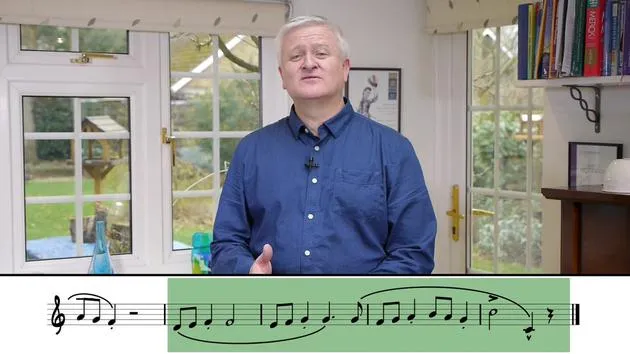
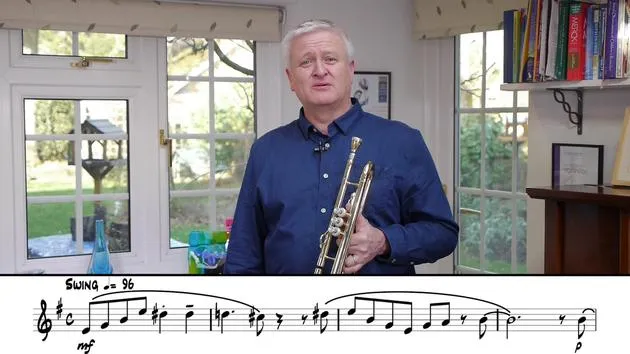
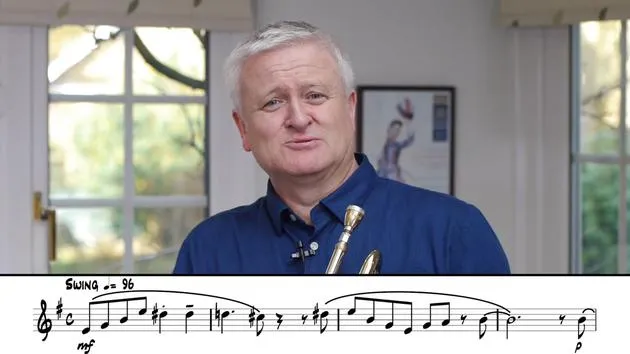
So let's look at the music for long notes where a shake might be beneficial. My eyes immediately go to:
- The second line up from the bottom.
- In the last bar, there's a quaver F followed by a dotted crotchet F with an accent marked.
"It's like a V sitting on the side."
Let's try doing a shake on that second F. I think it works quite well, as it gives the note some emphasis and provides somewhere to land on that third beat with the E flat, which of course is marked with a dot, making that short.
Exploring Other Long Notes
If we played that long, the shake wouldn't work in this context.
Let's look for another long note that maybe isn't marked with an accent. Again, on the same line, in the first bar, we can see:
- An E
- A G
- An A
- A G in quavers tied over to the crotchet G.
Let's try doing the shake on the long note, the G, which is tied over from the quaver to the crotchet.
Conclusion
I'll play that whole phrase and add the shake so you can hear again that I really make sure that I land on that beat.
29 lecciones
1h 2m de lecciones en vídeo estructuradas
Funciones de vídeo avanzadas
Ralentiza, repite un pasaje, sigue la partitura
Móvil, tablet y ordenador
Practica donde quieras
Garantía de satisfacción 100%
30 días de garantía de devolución
Conoce a tu gurú
Conoce a tu gurú
Mike Lovatt estudió en el Trinity College of Music, donde recibió la Jon Kelly Jazz Scholarship. Ha actuado y grabado en una enorme variedad de estilos con artistas como Quincy Jones, Robbie Williams, Eric Clapton, la Orchestra of the Royal Opera House Covent Garden, la Royal Philharmonic Orchestra, Michael Buble, Oasis, Michel Legrand, Tony Bennett, Shirley Bassey y Danny Elfman, entre muchos otros.
Como trompeta principal en el West End de Londres, Mike ha actuado en Jesus Christ Superstar, Evita, The Producers, Billy Elliot, Guys and Dolls, Saturday Night Fever, My Fair Lady y Spamalot, entre otros. Ha tocado en bandas sonoras de películas como las de James Bond, Harry Potter con la London Symphony Orchestra, la premiada Chicago, Beyond the Sea de Kevin Spacey, Charlie and the Chocolate Factory, Madagascar y The Corpse Bride. Aparece a la trompeta y la corneta en Mrs Henderson Presents de George Fenton, y a la trompeta en Looking for Eric.
Mike es trompeta principal de la John Wilson Orchestra, nominada a un Grammy, y ha destacado en sus célebres conciertos y grabaciones de los BBC Promenade.
Mike es muy solicitado como profesor y clínico, y es catedrático de trompeta en la Royal Academy of Music y en el Royal College of Music. En abril de 2013 tuvo el orgullo de recibir la prestigiosa Derek Watkins' Chair of Trumpet en la Royal Academy of Music de Londres.
En sus cursos de MusicGurus, Mike comparte los secretos de su versatilidad, mostrándote cómo clavar los estilos de trompeta auténticos de swing, rock y latino para que puedas tocar cualquiera de ellos con confianza y el feel adecuado.







