



Articulación
Con
Mike Lovatt
Qué incluye el curso
29 lecciones (1h 2m) · 1 gratis
01. Transposition Blues - Introducción e interpretación
2:05
02. Estructura
1:51
03. Meterse a fondo
2:22
04. Bending de notas
2:40
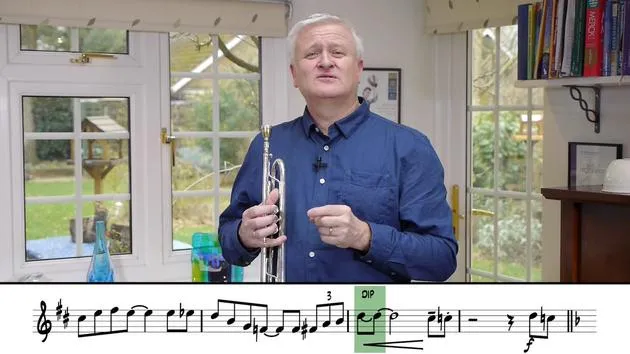
05. Dinámica
3:00
06. Segunda sección, al estilo de Louis Armstrong
2:01
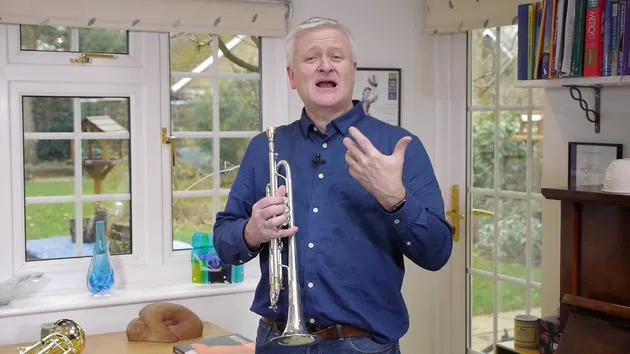
07. Shakes
5:03
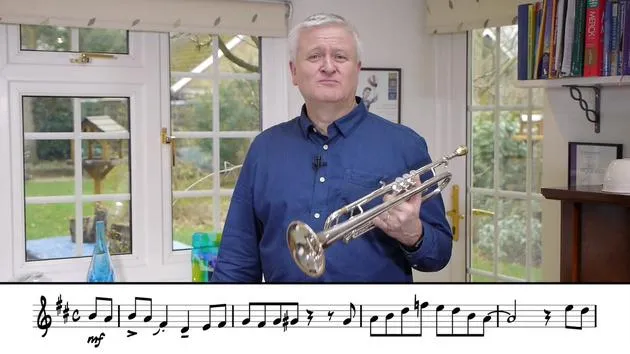
08. Scoops
2:35
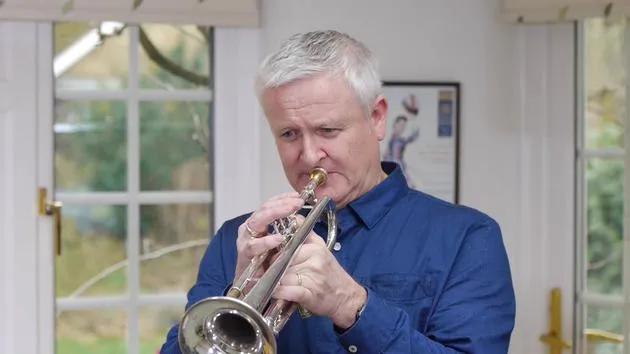
09. Sonido, estilo y vibrato
3:00
10. Resumen
1:16
11. Desafío (estilo Louis Armstrong)
0:39
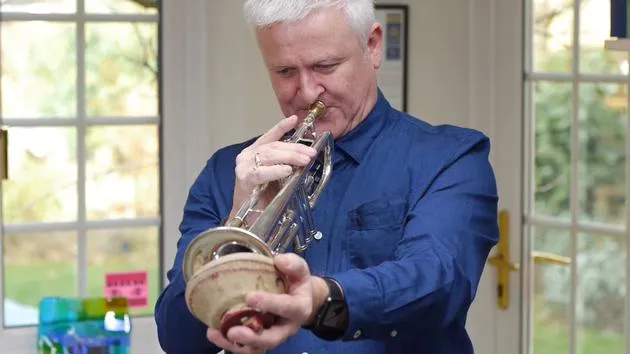
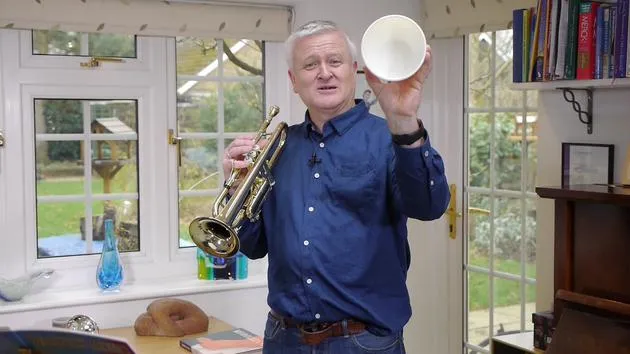
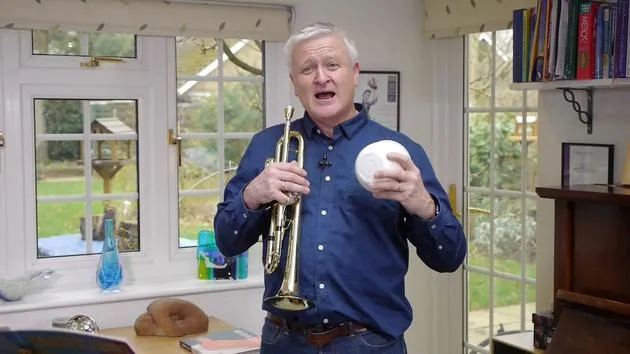
Transcripción de la lección
Music Lesson: Developing Swing Quavers
In our lesson on a small step, we learned how quavers, when swung, need to be played in a triplet fashion. So in this piece, we're going to try and develop that further and use articulation to help the swing quavers.
Listening Exercise
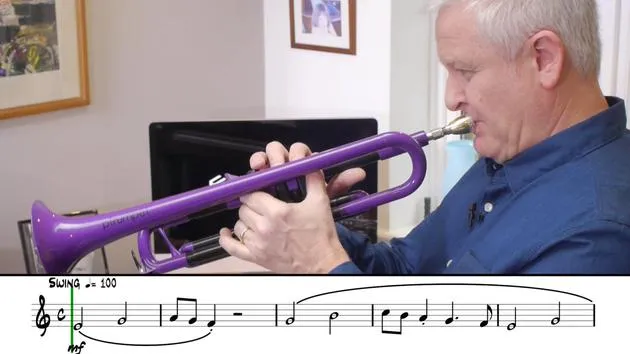
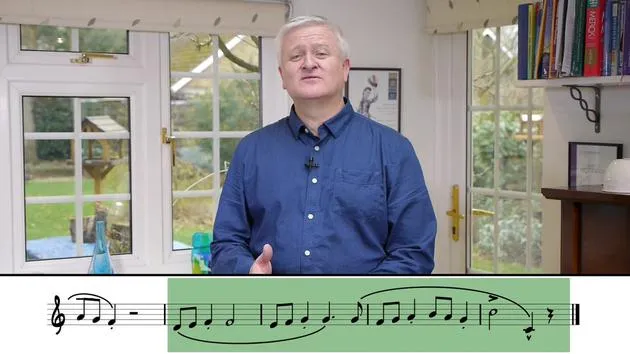
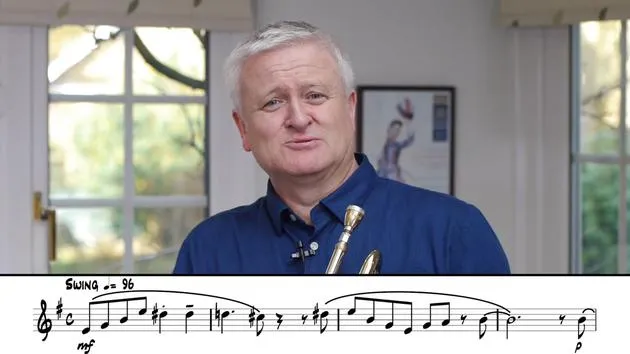
Listen to me play swing quavers halfway through this piece:
De de de de de de de de de de de de de de de.
Listen to the last phrase in the piece.
Can you hear me there?
I'm accenting notes:
Be dee da badida badooda.
You'll notice that the second quaver is not marked short, but I made the decision to make it short to help create that swing feel.
Accenting Notes
I'll play the section at the end now and see if you can hear me using accents there.
On the running quavers:
You can hear me using the accents there to keep time and make it swing:
Badabo do bo deedee.
See if you can copy me.
Using the Tongue for Articulation
Great! We need to use the tongue as well in order to create those accents. See if you can hear me using that.
I'm not just playing legato.
I'm accenting using my tongue. Use a D sound:
Di dee doo doo doo doo doo doo doo.
That kind of technique will make it swing more. It will provide more articulation and help the music "talk" more. This will assist us on our journey.
So, I'm rearticulating the notes, even though they sound as though they're joined together.
Accenting the First Phrase
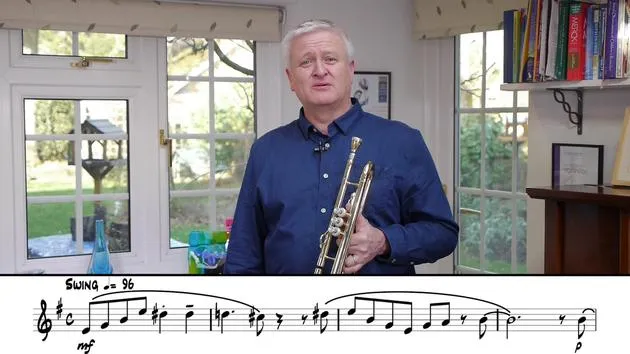
I'm now going to play the first phrase in the piece, and I want you to see if you can hear which notes I'm accenting.
Can you hear when I reach the top of the phrase?
Booba doo bada.
Again, I'm using the D sound to help get that accent. I accent that last quaver to enhance the swing feel, as it's the last note of the triplet.
Triplets help to keep an ongoing feel in rock and roll music.
Music is very much on the beat, a static beat, whereas in swing music, it's an ongoing thing. When we hear swing, we perceive the ride on the cymbal. You hear the drummer, and we get an ongoing feeling. It makes us want to dance, it's swing music!
Copying the Phrase
I'll play that phrase again, and you can copy it.
Exploring the Second Phrase
I'm now going to play the second phrase in the piece to show you further the accents that I apply on different beats and placements.
I'm over-accenting the notes.
Hopefully, you can hear the strong beats that I'm trying to emphasize:
- The first beat of one bar
- The third beat of one bar
At the end of that phrase, there's what we call a push into that long note. A push there is on a quaver triplet, which is the last quaver of the triplet.
So we go:
da, da, da, da, da, da, da, da, da, da, da, da, da, da, triplets.
And that's how we get that feel. It helps the music swing and travel.
Final Thoughts
Now that we've accented notes, does this sound better? Does it make it sound more swingy?
You have a go accenting different notes and see if it starts to sound really swingy.
Listen back to yourself.
29 lecciones
1h 2m de lecciones en vídeo estructuradas
Funciones de vídeo avanzadas
Ralentiza, repite un pasaje, sigue la partitura
Móvil, tablet y ordenador
Practica donde quieras
Garantía de satisfacción 100%
30 días de garantía de devolución
Conoce a tu gurú
Conoce a tu gurú
Mike Lovatt estudió en el Trinity College of Music, donde recibió la Jon Kelly Jazz Scholarship. Ha actuado y grabado en una enorme variedad de estilos con artistas como Quincy Jones, Robbie Williams, Eric Clapton, la Orchestra of the Royal Opera House Covent Garden, la Royal Philharmonic Orchestra, Michael Buble, Oasis, Michel Legrand, Tony Bennett, Shirley Bassey y Danny Elfman, entre muchos otros.
Como trompeta principal en el West End de Londres, Mike ha actuado en Jesus Christ Superstar, Evita, The Producers, Billy Elliot, Guys and Dolls, Saturday Night Fever, My Fair Lady y Spamalot, entre otros. Ha tocado en bandas sonoras de películas como las de James Bond, Harry Potter con la London Symphony Orchestra, la premiada Chicago, Beyond the Sea de Kevin Spacey, Charlie and the Chocolate Factory, Madagascar y The Corpse Bride. Aparece a la trompeta y la corneta en Mrs Henderson Presents de George Fenton, y a la trompeta en Looking for Eric.
Mike es trompeta principal de la John Wilson Orchestra, nominada a un Grammy, y ha destacado en sus célebres conciertos y grabaciones de los BBC Promenade.
Mike es muy solicitado como profesor y clínico, y es catedrático de trompeta en la Royal Academy of Music y en el Royal College of Music. En abril de 2013 tuvo el orgullo de recibir la prestigiosa Derek Watkins' Chair of Trumpet en la Royal Academy of Music de Londres.
En sus cursos de MusicGurus, Mike comparte los secretos de su versatilidad, mostrándote cómo clavar los estilos de trompeta auténticos de swing, rock y latino para que puedas tocar cualquiera de ellos con confianza y el feel adecuado.







