



Cuánto practicar

Lesson time: (3min 42sec)
Juliet Russell explica cómo practicar el canto: con qué frecuencia cantar y cómo mantener la motivación a medida que tu voz se desarrolla.
Course preview
This lesson is part of the course Habilidades esenciales para cantantes
Watch a preview of the full course below.
Lesson transcript:
Welcome to Your Singing Course!
I really hope you're finding this course useful, that you're learning lots about singing, and that you're truly enjoying discovering what your voice can do. It's truly one of the most exciting journeys you can undertake!
Practice Plans
With the lessons, everything is designed with a practice plan in place. After we've learned a new concept, make sure to:
- Go to that practice plan
- Give yourself time to really sit with it
- Practice consistently
Over time, you will notice an increase in your skills.
Improving Your Singing
There are two key points to consider regarding your singing:
-
Improving Your Pitch:
- This is achieved primarily through enhancing your ear.
- However, it's mostly about improving your fine motor skills.
-
The Importance of Practice:
- Practice is essential; it builds on your foundational skills.
- It allows you to notice:
- What's changing in your voice
- What you find difficult
- What you find easy
Foundational Skills
Each lesson has a practice plan, and some skills are foundational:
- Physical Posture and Alignment:
- Essential for effective singing.
- Sirens:
- Should be a fundamental part of your warm-up routine.
- Voice Fricatives:
- Useful for various exercises.
Exercise Types
-
Scaling Exercises:
- Used for pitch differentiation.
-
Staccato Exercises:
- Help develop fine motor skills.
Recommended Routine
The foundation exercises I recommend are:
- Posture and Alignment
- Sirens
Always incorporate these into your routine and make sure to cool down after each session. For other exercises, feel free to mix and match. If you're working on something specific, apply relevant exercises to your songs.
For example:
- Five Note Scales:
- "Da da da da da da da da da."
- Long Scale Exercises:
- "Yeah, yeah, yeah, yeah, yeah, yeah, yeah, yeah."
Progression matters; exercises are designed to help you move incrementally.
Making Practice Enjoyable
When you first start practicing, remember that it shouldn't feel like a chore.
It should support your learning!
As you progress as a singer, I hope you feel motivated to practice.
Helpful Tips
-
Keep a Singing Journal:
- It doesn't have to be complicated. Use a notebook to write down your experiences.
- For example:
- "Today, this felt really easy."
- "I've noticed improvement in my E sound, which feels a bit breathier."
Start to notice what's going on in your own voice.
-
Make Practice Manageable:
- Warming up doesn't require a lot of time; 10 minutes of sirens and scales is often enough, especially at this stage.
-
Try to find time in your routine for daily practice. While three times a week is fine, remember:
- Your progress often relates to how much you practice.
- Keep it fun and realistic for your lifestyle.
Remember, there's no judgment about how often you practice. It's wonderful to support your learning with regular practice!
About the instructor
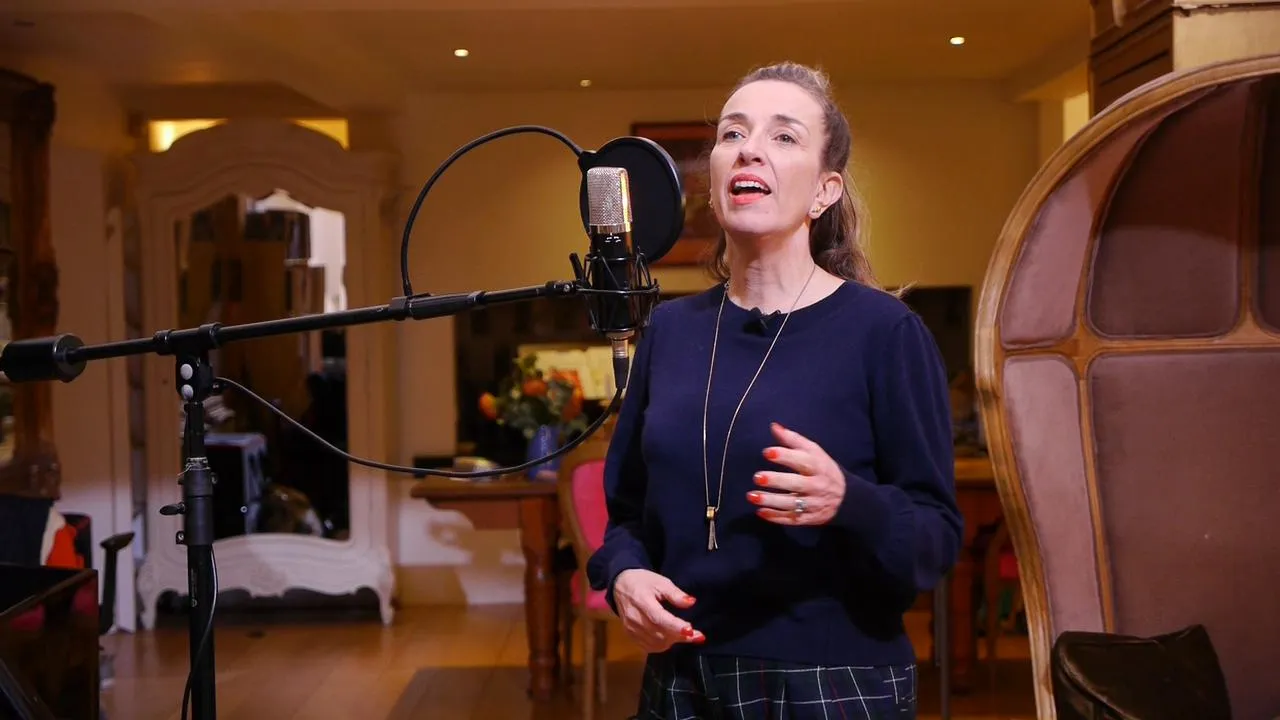
Juliet Russell es cantante, compositora, coach vocal y directora de coros. Le apasiona ayudar a personas y comunidades a desarrollar su voz y su creatividad. Coach vocal en The Voice y The Voice Kids de ITV y en Michael McIntyre’s Big Show de la BBC, Juliet también ha trabajado con artistas galardonados con premios Grammy, Brit, MTV Europe y MOBO. Ha colaborado y actuado con artistas innovadores como Damon Albarn, Imogen Heap, Paloma Faith, alt-J, Yoko Ono, Seal y Ringo Starr. En 2015, con el apoyo del Arts Council of England, llevó de gira su álbum Earth Meets Sky, con músicos locales y coros comunitarios para crear diez actuaciones únicas por todo el Reino Unido. Recibe con regularidad encargos para crear nuevas piezas corales y arreglos vocales, y ha actuado a nivel nacional e internacional. Comprometida con el desarrollo de artistas, Juliet ejerce de mentora y coach de artistas emergentes, trabajando con empresas de management, discográficas y editoriales, así como con artistas independientes. Tiene un estudio vocal en pleno corazón de la vibrante Brick Lane de Londres. Juliet fue directora artística fundadora de Sense of Sound y directora creativa de Sing Up Greenwich y de Sing Late en el V&A. Dirige el Portobello Live Choir, un coro comunitario del oeste de Londres, y el coro profesional Assemble, y es formadora del programa Singing for Lung Health de la British Lung Foundation. read more