



El primer gran éxito de los Rapino Brothers
Qué incluye el curso
16 lecciones (2h 16m) · 1 gratis
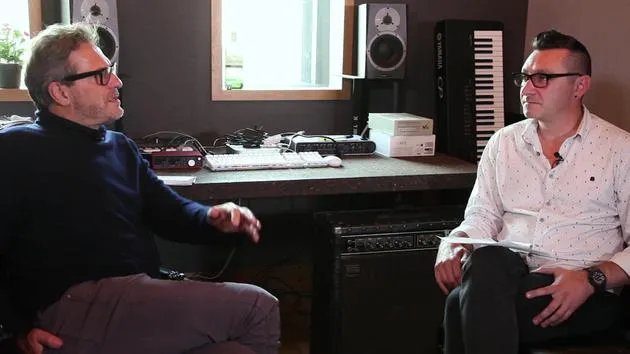
Transcripción de la lección
Music Lesson: From Bologna to London - The Rapinoe Brothers' Journey
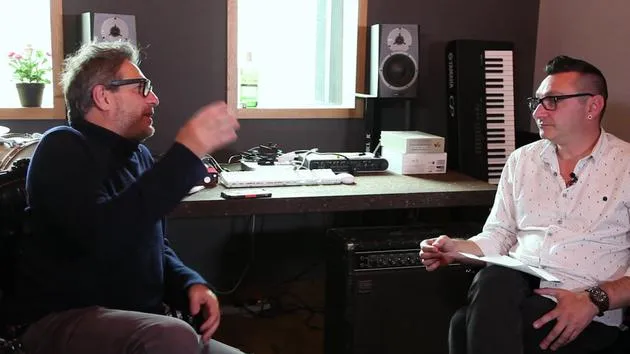
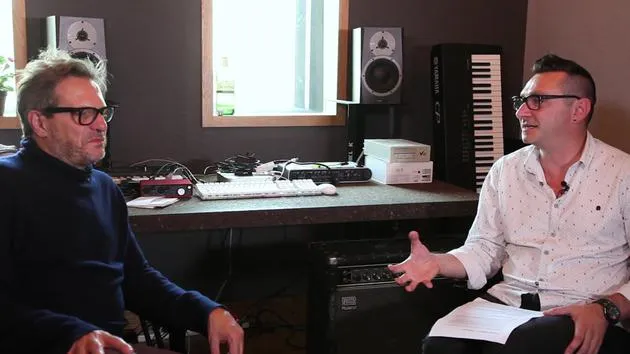
In this next section, we're going to pick up on where we left off in Charlie's biography and go back to Bologna and his move to London. In doing so, we're going to look at some of the first case studies of the successes that the Rapinoe brothers had.
Bologna and the Transition to London
Charlie: Okay, I'd like to take the biography back a little bit to Bologna. You've come back from the States infused with all this incredible excitement of things that were happening in New York. It was the amazing house scene and everything that was going on with the clubs there.
- You're back in Bologna.
- You've met Marco.
- How did your first big hit come about?
We were working out of the studio, where I was helping with the management because I needed to make a couple of bucks. Obviously, I came out of New York completely broke. Independent dance labels in Italy wouldn't pay; they were paying only legal advances.
I was friends with a manager called Stephen Budd, who used to manage Tony Visconti, and another guy called John Moss from Culture Club who I met at Virginia when they were touring in Milan. We went to meet them at a very important fair at the time.
Connecting with the Scene
We played for Bud, I played for Stephen Budd, and he said, "Listen, you're all over the place. This is what's going on exactly on the underground scene in Italy and England."
It was the days of the Hacienda, it was the days of the Milk Bar in Sau Square, or Golden Square. This was around 1988.
- Marco and I flew to England.
- There were two other guys who decided to stay in Italy: Andrea and Sandro.
- We were involved with a record called Tingo Tango on Champion Records.
Discovering Opportunities
Upon arriving in London, a record was being played on Radio 1. This was pre-Internet, so you wouldn't know if someone was playing your record.
It was the week that Black Box - Right on Time went to number one on a little label called Deconstruction. We met Francesca Nezi, who was managing DJs, at a club called the Milk Bar for a night called Swoon, featuring Paul Oakenfold and Danny.
We went to the DJ booth with no idea what we were doing. At that time, narcotics played a very important role in youth culture. It was the days of MDMA.
The Make-or-Break Moment
We worked in an unbelievable basement in Soho. Francesca introduced us to the crowd: "Yo, Tarapino brothers! We got all your records!" They had all these white labels.
Returning to Italy, one day I said to Marco, "Let's move to England, screw it, let's give it a shot for six months." So, I had a banged-up BMW, loaded the trunk and showed up at Stephen Budd's office, saying, "We're here to do war, to make records."
He gave us a space upstairs. We were in Primrose Hill before it became fashionable.
Embracing the Struggles
It was quite a dump. I like dumps. I think it's very important for you people out there: Please stay in the dump.
- Stay in the dump.
- The dump gives life to plants while diamonds don't grow anything.
Just to discuss something related to the last section we talked about: don't chase the trend. Make the trend and swim against it. Staying in the dump helps establish the trend.
Making Records in Primrose Hill
So, in Primrose Hill, we were given this space to make records. We started pushing them in the market. Kiss FM was a pirate station at the time, and they began playing our records.
Until one day, we were in the studio doing a track, a very deep Italian house song, very piano oriented. It's obvious that Italian musicians have an innate sense of melody. Marco was an extremely gifted melodist, and that's what I think made us different.
While English kids or the French were focused on technology, we embraced a bit of improvisation.
The Right Mistake
That's what you refer to as "the right mistake," isn't it?
Charlie: It's the right mistake!
Back in Primrose Hill, there was a multitrack by Kim Mael, this big diva, and I literally snuck in and put on a DAT. We went back to the studio and built a track around the melody. It was called Love Me the Right Way.
- Kim was a very gifted artist.
- We did the record in four hours.
After two days, the two Irish kids were excited about our white label. Then came a call from Stephen Budd, who was contacted by Nick Phillips from MCA, saying, "You have two ways out here: come clean or I take you to court."
From Demo to Hit
We decided to come clean and needed to resync with them. Our studio, about half the size of this room, was where we also slept.
We had a Fostex eight-track machine, very basic equipment, and a sampler we ran live from MIDI. Honestly, it looked like a dump. We had a resident rat in the kitchen.
In this case, the white label with Kim became the demo. Then it exploded on Kiss FM. Nick said, "Let's make a deal." We signed with Logic Records, and the record skyrocketed in the clubs.
The Success of Love Me the Right Way
We assembled everything very quickly. I was specialized in edits, and there's one edit on that record that still baffles us, Marco said, "I don't know how you did it."
It turned out that I cut a vocal incorrectly, which opened a little loop we didn't understand where it came from.
I said, "This is okay, sounds good." It was an event that happened out of my ignorance. Sometimes, doing things wrong turns out right.
Marco and I used to argue because he's a serious musician, while I often changed notes randomly. But it was our contrasts that made us unique.
Ultimately, this record, Love Me the Right Way, exploded. We ended up on Top of the Pops, signed to Arista in the UK, and reached number four on the Billboard chart in the States.
We were selling copies when 250,000 was a huge deal, it was a different era for the industry.
16 lecciones
2h 16m de lecciones en vídeo estructuradas
Funciones de vídeo avanzadas
Ralentiza, repite un pasaje, sigue la partitura
Móvil, tablet y ordenador
Practica donde quieras
Garantía de satisfacción 100%
30 días de garantía de devolución
Conoce a tu gurú
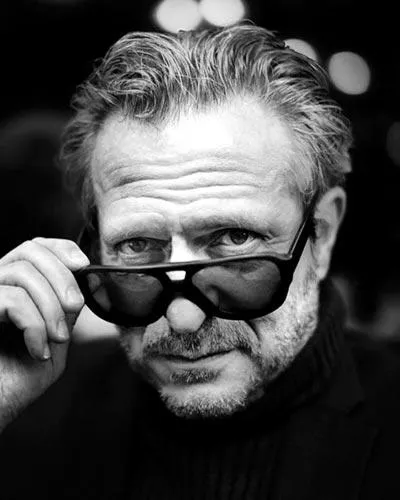
Conoce a tu gurú
Charlie empezó en la industria musical como abogado recién titulado, promoviendo conciertos y llevando a artistas como Iggy Pop y Patti Smith ante un público universitario italiano de espíritu radical.
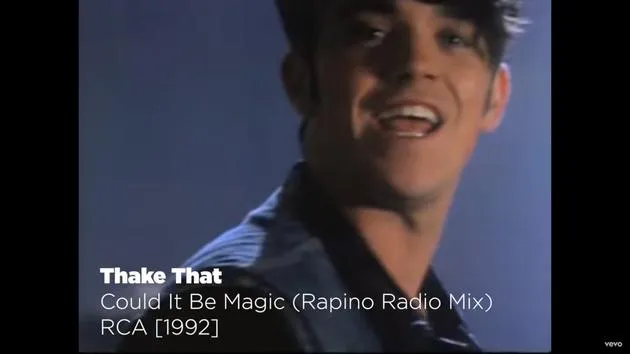
Tras trabajar en el legendario Record Plant NYC y empaparse de la escena house, formó los Rapino Brothers con Marco Sabiu, se mudó a Londres en 1990 y nunca miró atrás. Allí arrasaron durante toda la década, produciendo y grabando discos. Después de su primer éxito con Love Me The Right Way de Kym Mazelle, idearon el primer éxito de Take That y produjeron, mezclaron y arreglaron a muchos grandes artistas del pop durante los años noventa, desde Kylie hasta Primal Scream.
En 1997, Charlie fue el productor «en directo» de «Get Your Act Together» de la BBC, seguido de «Full Frontal» en Channel 4. De 1999 a 2004 fue A&R Director de Sony Music International.
Su energía nunca decae. A lo largo de los años ha repartido su tiempo entre la consultoría de gestión para Ennio Morricone, la consultoría para la revista Rolling Stone, el trabajo en bandas sonoras y la consultoría de producción para películas y videojuegos (incluido convencer a Iggy Pop para que hiciera las voces del videojuego Driver 3), y la contratación y gestión de artistas a través de su sello en empresa conjunta con Sony, Stud Records.
En Get signed!, Charlie descorre el telón sobre décadas de experiencia en producción y A&R para mostrarte exactamente qué escuchan los sellos, cómo dar forma y presentar tu proyecto, y qué hace falta realmente para llamar la atención y conseguir un contrato.







