



Weitere Erweiterungen und sus-Akkorde
James entmystifiziert die Namen erweiterter und sus-Akkorde - 9er, 11er und 13er - und zeigt, wie du diese Klänge in deine Improvisation einbaust.

Das steckt im Kurs
44 Lektionen (3h 49m) · 1 gratis
01. Einführung in Ansätze zur Improvisation
1:00
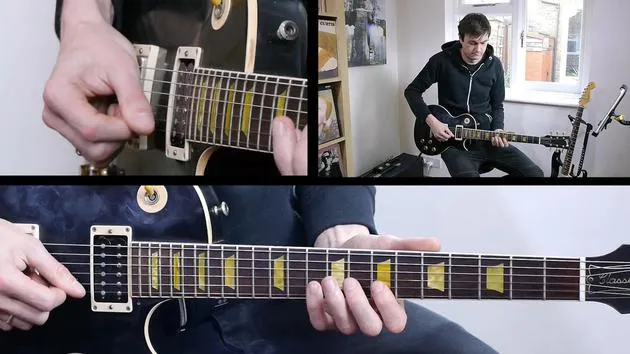
02. Eine Melodie verzieren
5:36
03. Challenge: Reiche deine Melodie ein
0:26
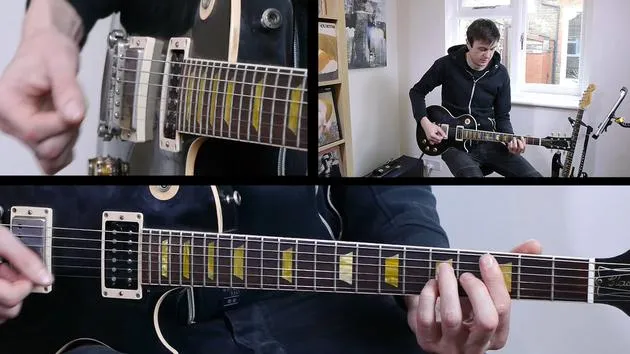
04. Septakkorde
6:38
05. Dein Solo komponieren
8:53
06. Weitere Erweiterungen und sus-Akkorde
Du bist hier4:19
07. Begleiten in zwei verschiedenen Musikstilen
Gratis-Lektion8:36
08. Rhythmisches und melodisches Comping mischen
4:24
09. Rhythmische Improvisation & Comping
9:55
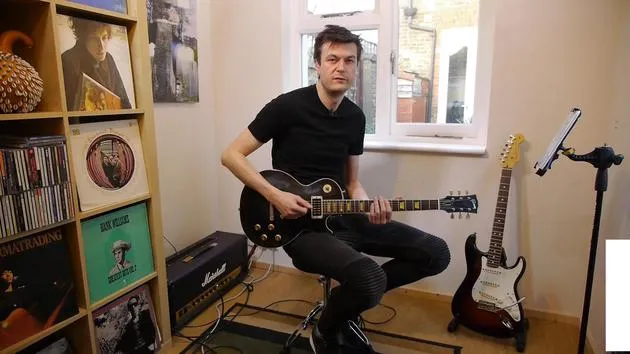
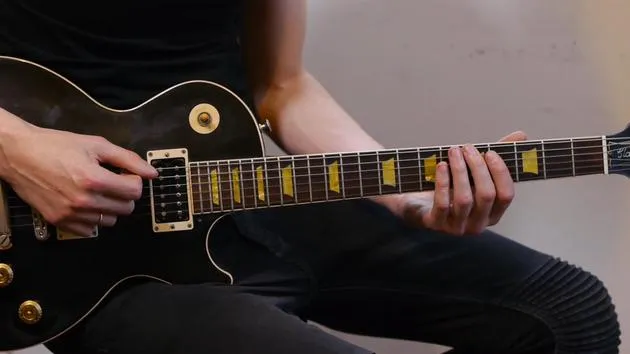
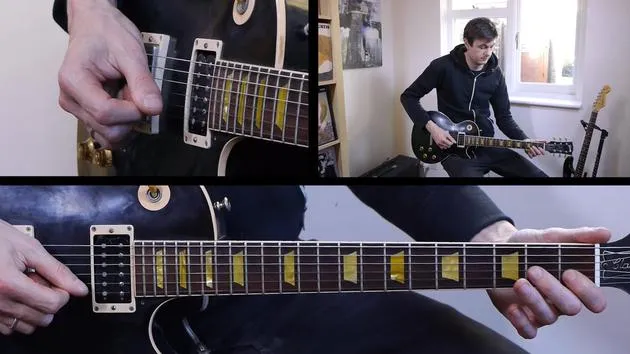
Transkript der Lektion
Exploring Chord Extensions in Improvisation
Okay, so we've talked briefly about the types of seventh chords and how we can incorporate the seventh degree into our improvisations.
Extensions Beyond the Seventh
What I wanted to briefly discuss now are other extensions beyond the seventh. You have probably come across these in charts for music that you've looked at or in the rock school books above the notation. Just to let you know what chords are going on in the background, you might have seen things like:
- G minor 9
- F11
- E7 sharp 9
- F13
These numbers are nothing to be scared of at all. All these numbers reference degrees of the scale that have been added to that chord to extend it, giving it a certain characteristic or color.
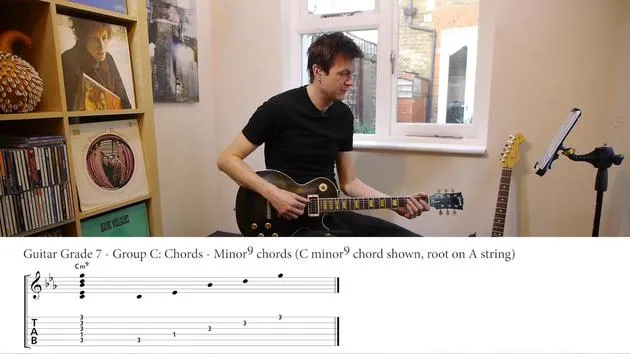
Example: Minor 9 Chord
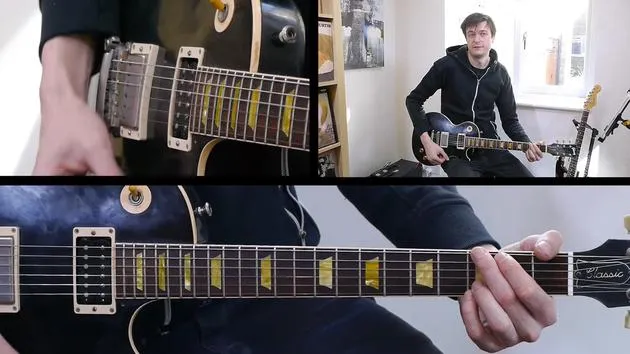
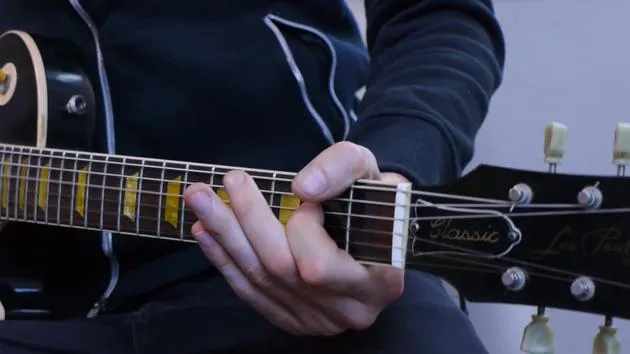
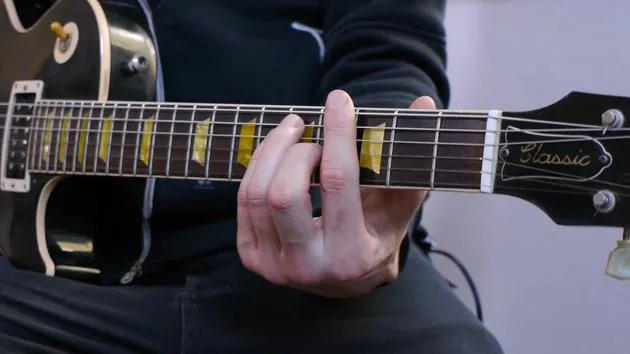
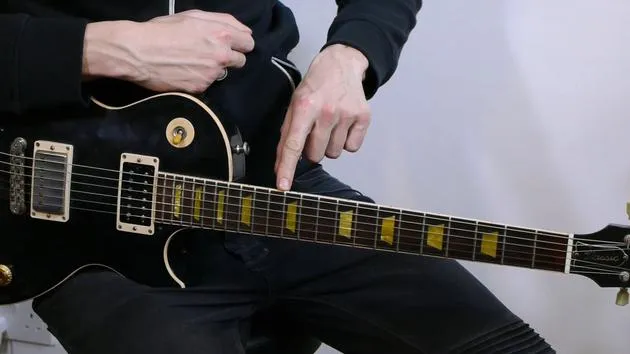
For example, if we were to take the minor nine example, let's say we had an A minor 9. To find that ninth degree, all we do is play through our natural minor scale to the ninth degree:
- 1
- 2
- 3
- 4
- 5
- 6
- 7
- 8
- 9
And we get to this B note here. So, we know that the ninth degree of our A minor scale is a B. That's the note we want to throw in on top of our A minor chord or an A minor 7 chord.
Demonstration
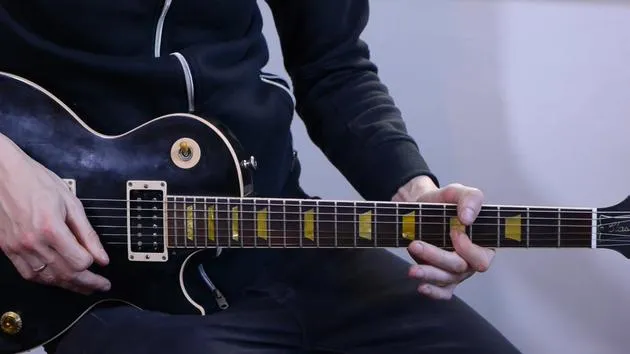
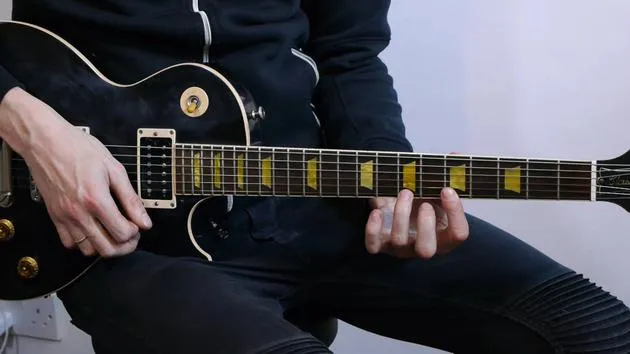
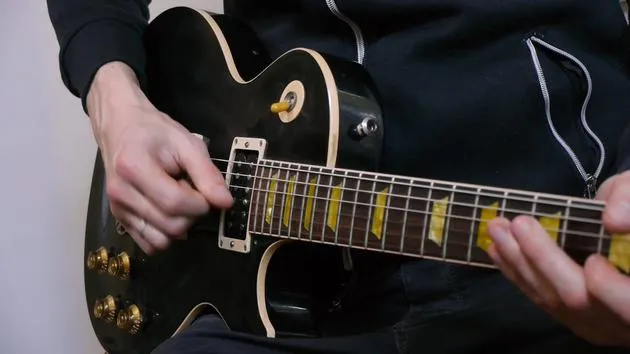
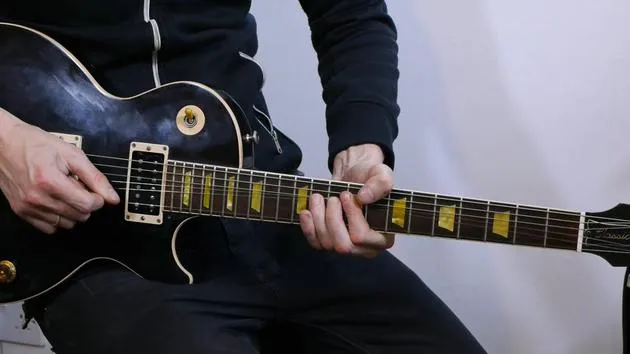
You get this great sounding chord. Knowing that this note is featured in the chord means you can then make a feature of that in your improvisation.
- You could do something simple, like sliding into that note, starting off your phrase with that extended note of the chord.
- It might be quite a discordant tone, but that's not necessarily a bad thing.
- You can use that tension and resolve it to a stronger chord tone later in your phrase.
Other Extensions
The same goes for any of the other extensions we talked about; they can be sharpened or flattened.
For instance, you might see E7 sharp 9. What you would do is go through and sharpen the ninth by one semitone. If it's a flat nine, you'll flatten the ninth by one semitone, and that will be the note added into your extended chord.
Suspended Chords
The only other type of chord I want to briefly discuss is suspended chords, as these can feature numbers as well. The word "suspended" means that we've taken the third out of the chord.
- Let's say we had a D sus 2. Usually, a D major would have a root, a third, and a fifth in it.
- A D sus 2 replaces the third with whatever the number is in the chord.
- If it's a Dsus2, it's replacing the third with a second.
- If it's a Dsus4, it's replacing the third with a fourth.
Again, all we do is count through our D major scale to find whatever degree that is.
- If I start on D and go up a tone, there's my second straight away ? that's an E note.
- I need to replace the third of my D major chord, which is the F#, with an E (the second).
Sound of Sus Chords
We get that chord sound. Sus chords have a fantastic sound. Because we've replaced the third, they are neither major nor minor, as there's no third in there to dictate what that sound is. That's why they have that slightly mysterious vibe to them.
Conclusion
If you ever come across those suspended chords, it's something to consider in your improvisations or compositions. Try to accent or at least notice that those kinds of extensions or alterations to the chord are happening, and it's something you can make use of in your lead playing.
With that, we've discussed a lot of different ideas for approaching improvisation. If you want more stylistically specific examples, do check out the performance analysis of the other tutors in their performance pieces. Wherever there's a development section, they'll have lots of great ideas for you on how to approach those developments and improvisations.
So, good luck with that! Have fun and enjoy it. It's a fantastic skill to develop, and although it is challenging, you'll have loads of fun along the way, I'm sure. Best of luck with it all!
44 Lektionen
3 Std. 49 Min. strukturierte Videolektionen
Erweiterte Videofunktionen
Verlangsamen, Passagen loopen, mitlesen
Handy, Tablet & Desktop
Üben, wo du willst
100 % Zufriedenheitsgarantie
30 Tage Geld-zurück-Garantie







