



Septakkorde
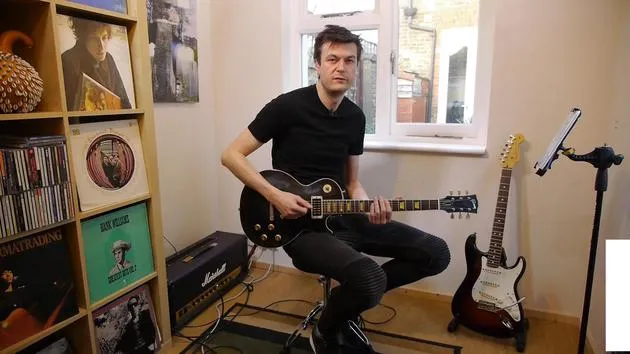
James Barratt erklärt, was Septakkorde sind – erweiterte Akkorde, die aus Dreiklängen aufgebaut werden – und wie du sie beim Improvisieren einsetzt.

Das steckt im Kurs
44 Lektionen (3h 49m) · 1 gratis
01. Einführung in Ansätze zur Improvisation
1:00
02. Eine Melodie verzieren
5:36
03. Challenge: Reiche deine Melodie ein
0:26
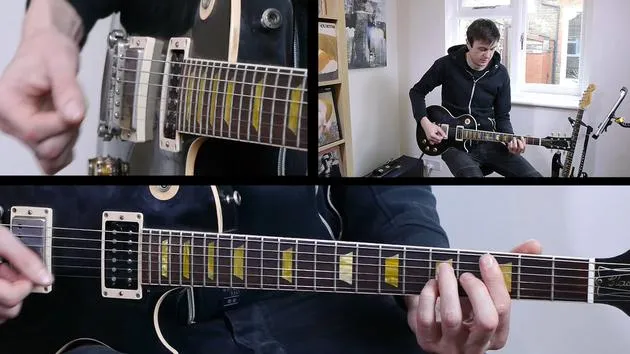
04. Septakkorde
Du bist hier6:38
05. Dein Solo komponieren
8:53
06. Weitere Erweiterungen und sus-Akkorde
4:19
07. Begleiten in zwei verschiedenen Musikstilen
Gratis-Lektion8:36
08. Rhythmisches und melodisches Comping mischen
4:24
09. Rhythmische Improvisation & Comping
9:55
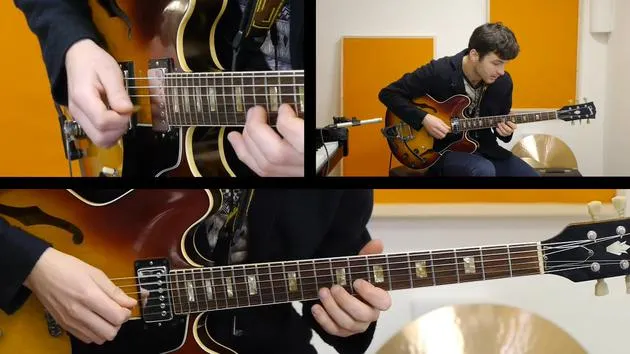
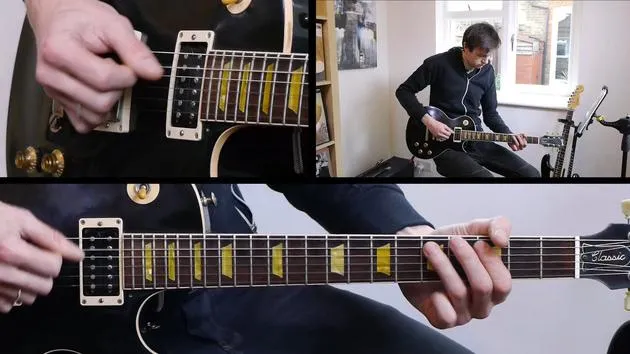
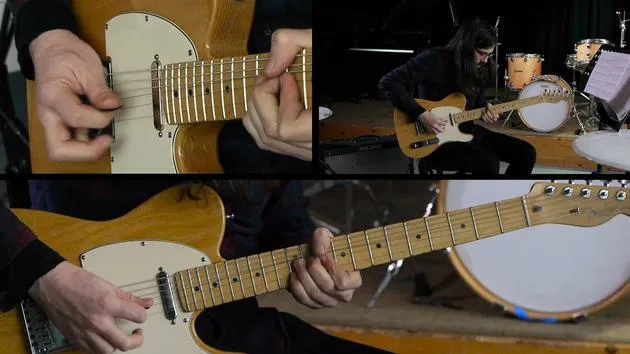
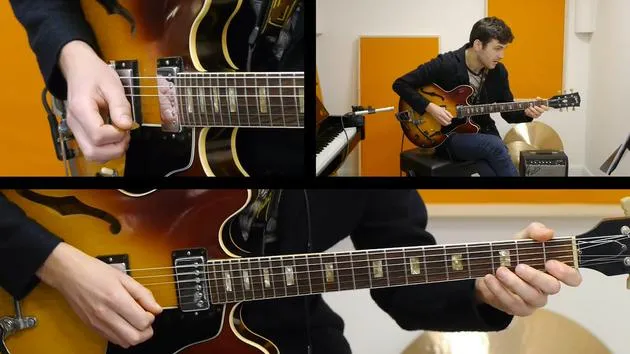
Transkript der Lektion
Improvisation with Seventh Chords
Okay, so the next thing I'd like to talk about regarding improvisation is when we come across seventh chords. If you're unfamiliar with these and you've got the Rock School syllabus, do check out the technical exercises. They're really useful. You'll find lots of examples of seventh chord voicings and arpeggios that go with those, which will really help you out.
What is a Seventh Chord?
To briefly cover what a seventh chord is:
- It's a type of extended chord.
- An extended chord means we've taken a triad, a three-note chord we've used all over the place probably since day one when you picked up the guitar.
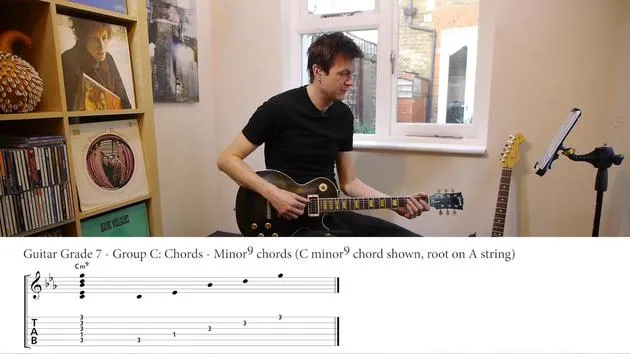
- Major and minor chords are triads, and extended chords are when you add additional notes to those triads. This results in a more complex sound because there are more notes competing for your attention.
Types of Seventh Chords
The three types of seventh chords we have are:
- Minor Seventh: Kind of moody, bluesy vibe.
- Major Seventh: For example, C major seven. To me, that has a dreamy, jazzy vibe.
- Dominant Seventh: This has more of an upbeat blues feel to it, less moody.
Exploring Seventh Chords
Now, there are varying constructions of these chords. If you're interested, it's definitely worth chatting with your teacher about the chord construction of these chords. This is also covered in the Rock School syllabus if you have those books.
Improvisation Ideas
Let's have a look at some blues-based improvisation ideas and how we can really target that seventh note. We've talked about chord tones before, but with seventh chords, we obviously have an additional chord tone to contend with, which is the seventh degree.
Dominant Seventh Example
The two seventh chords I'm going to play with now are:
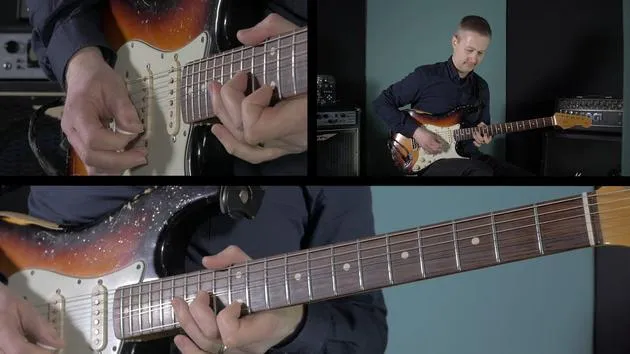
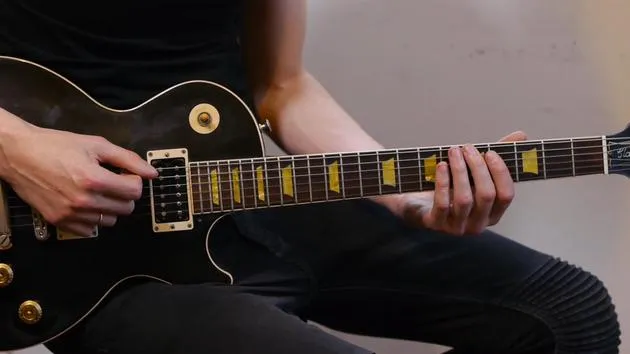
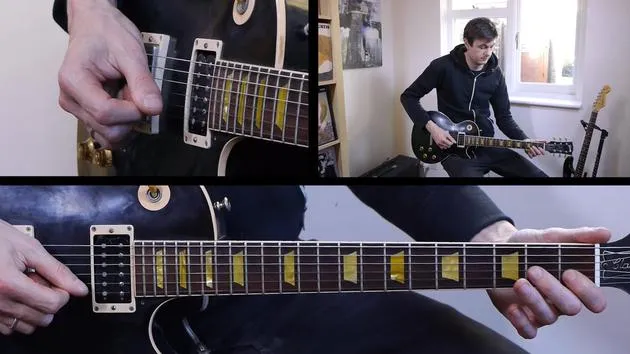
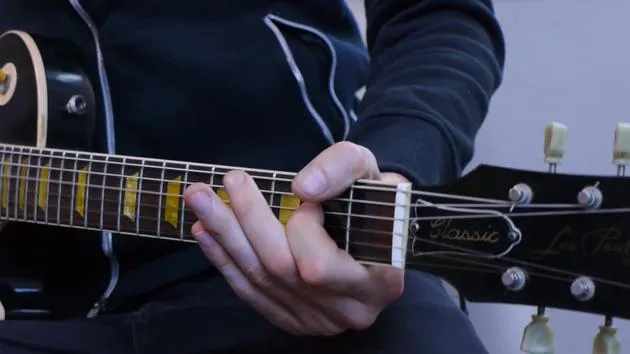
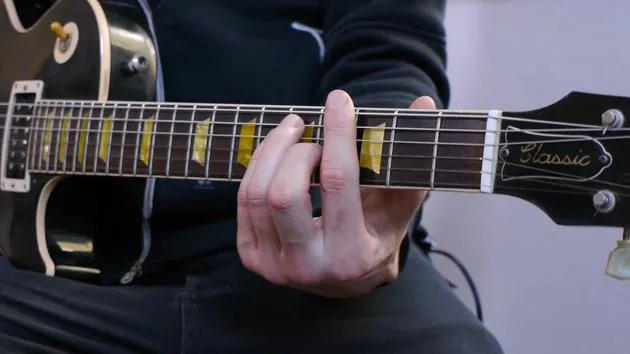
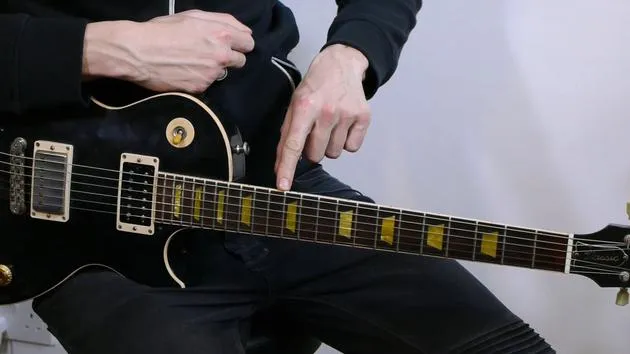
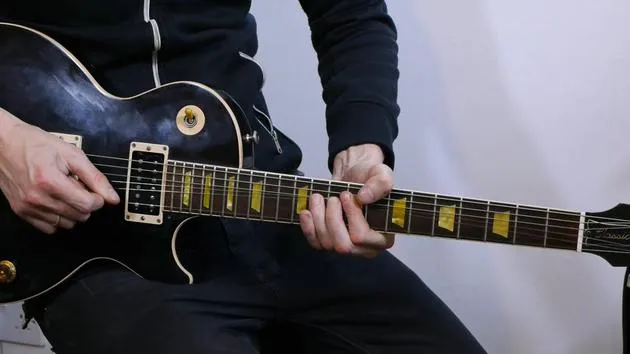
- A7: It looks similar to a standard A major chord. When I remove my little finger, I add this extra G note alongside the root, third, and fifth.
- D7: Let's set this up on a loop now.
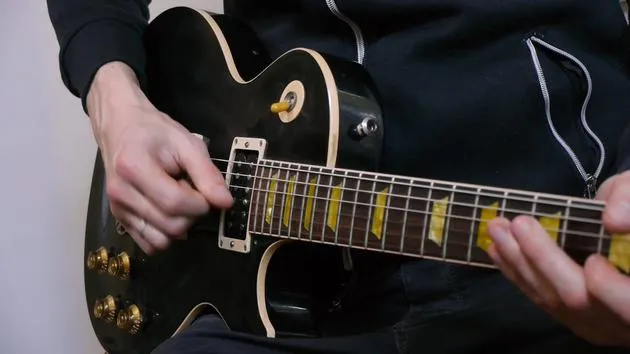
I'm going to start playing through the chord tones of each of those chords. You'll hear how the seventh sounds in conjunction with the root, third, and fifth. Here we go:
- A7 and D7.
Seventh Zone
Let's explore some seventh tones:
- Seventh to the Root
- Third to the Seventh
I may have gotten a bit carried away there, but you can see how fun it can get! What I wanted to demonstrate was how cool the seventh sounds over those dominant seventh chords. It creates a real pull.
In those early phrases, I was just resolving the seventh up to the root note of the chord, over the A and the D, taking the flattened seventh. You can come up with some really cool, authentic blues ideas using just those two notes alone by playing with the octaves and positions.
Working with Chord Tones
What I started to do was branch out and improvise with the other chord tones. You'll often find that the two chord tones with the strongest relationship to the overall vibe and sound of a chord are the third and the seventh. They play a huge role in the sound.
You might think the root note plays a significant role, and it does, but typically, that root note is covered by many other instruments in an ensemble. So, the guitarist doesn't necessarily need to play that.
This allows for the creation of some cool sounding blues ideas just by playing those little chunks of a seventh chord. I can show you this now with only the flattened seventh and the third over A7 and D7, something like this:
- Over A and D.
You can hear how, without the root note at the bottom, you can still imagine what those chords sound like in their fuller contexts.
Experimentation with Seventh Chords
I believe it's really important to experiment and have control over spotting where that seventh is, honing in on it along with the third to come up with rhythmic or melodic ideas that focus on these two core important chord tones.
This is definitely worth trying the next time you encounter any type of seventh chord. We demonstrated with dominant sevenths, but it's equally useful with:
- Minor Seventh: Use the flattened third and the flattened seventh.
- Major Seventh: Use the major third and the major seventh.
So, give it a go and have fun!
44 Lektionen
3 Std. 49 Min. strukturierte Videolektionen
Erweiterte Videofunktionen
Verlangsamen, Passagen loopen, mitlesen
Handy, Tablet & Desktop
Üben, wo du willst
100 % Zufriedenheitsgarantie
30 Tage Geld-zurück-Garantie







