



Zu wem sprichst du?

Mit
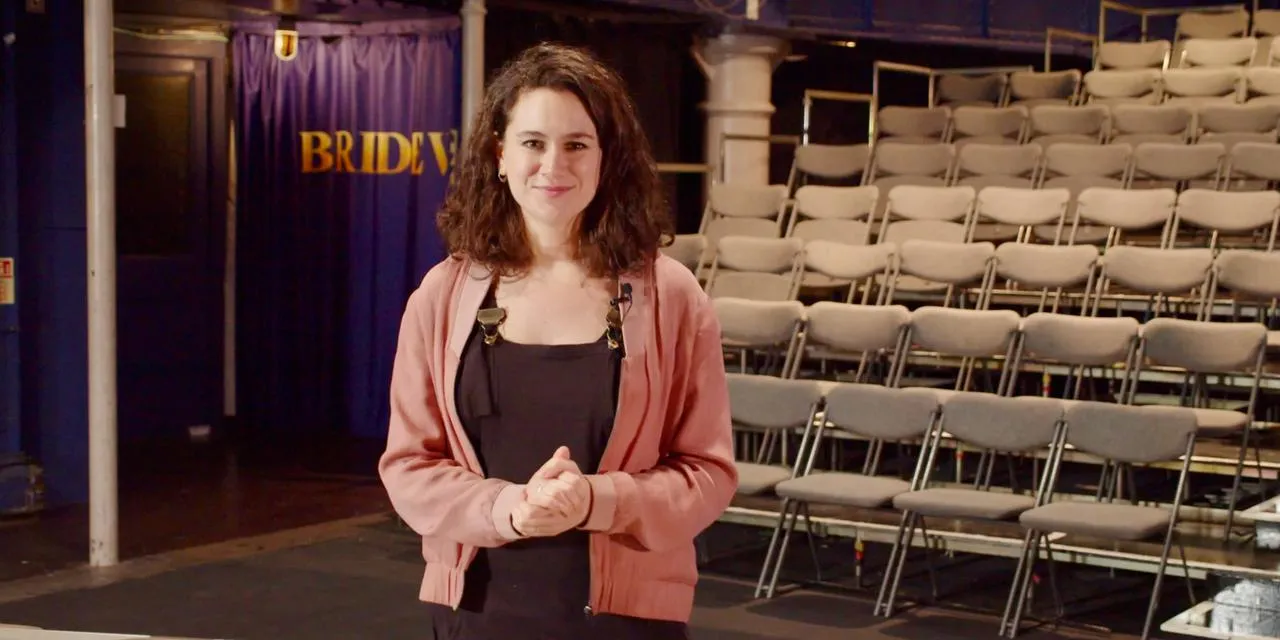
Rachel LynesRachel Lynes zeigt, wie ein Vorsingstück ankommt, indem du genau festlegst, zu wem du singst - am Beispiel von 'I Dreamed a Dream'.
Das steckt im Kurs
18 Lektionen (1h 25m) · 1 gratis
Transkript der Lektion
Finding Your Audience in Performance
So we've looked at finding your truth. Now we're going to look at who you are talking to. This is so important! I believe many of us go into auditions, stand there, and look at some kind of invisible spot in the distance, praying for the best and trying desperately to connect with the truth of the song.
Remember, you're in an audition room. You know there's a panel there, or an audience watching you.
The Importance of Specificity
I want you to get a little specific now. Let's know exactly who you're talking to and see if this helps you. Again, pick any song to try this with. For an example, I will use "I Dreamed a Dream":
"There was a time when men were kind,
And their voices were soft and their words inviting."
Who Are You Talking To?
Now, who are you talking to? You can take a pen and paper and write this down.
-
Your answer may be yourself.
- If I'm talking to myself, where is my eye line?
- Even if my eye line is up, where is my attention?
-
Are you talking to God? To the universe?
- How does that feel?
- How does that expand things?
-
What if it is a real person?
- Are you just going to generically look out there and communicate with this person?
- Or can we help you find your truth by being specific?
Exploring the First Verse
Let's be specific with the first verse in "I Dreamed a Dream." I want you to try it, and you can also use your own song. Imagine you're talking to a man who has hurt you.
If you're Fantine, you are talking to one of the men who has abused you:
-
Visualize:
- Where are they standing?
- Is it here? Is it 2 meters away? Is it 4 meters away? Is it at the back of the auditorium?
-
Details:
- What do they look like?
- Eye color?
- What are they wearing?
- Meet their eyes so that you know where they are.
The Dynamics of the Conversation
Also, consider:
- Does the person stand still the whole time?
- When you're talking to them, do they turn away or start to move away?
For instance, if I have somebody standing about 10 feet away:
- Are they moving towards you? Is that intimidating?
In the context of Fantine, trying to work out her truth through "I Dreamed a Dream", if the man who abused her is walking towards her, several things happen:
- Body Language:
- Is she going to back away?
- Or is she going to come towards him and assert herself?
Choices Lead to Specificity
These choices lead to being specific, and being specific leads to truth.
- If he's coming towards you, does his eye line change?
- As he gets closer, his eye line lifts.
What happens if he walks away?
- Not just side to side, but if he turns his back, and you're saying, "No, no, no, no! You over there!"
- How does that change things?
Alternate Contexts
Consider this:
- What if we shifted the context of "I Dreamed a Dream" completely?
- Imagine she's singing to her daughter, Cosette.
- What if, although she isn't present in the show, Fantine can see her?
Imagine her daughter is on a bed, maybe three feet away, and half asleep.
- Pain and Urgency:
- All the pain she's going through is wrapped in an urge to comfort and soothe.
- Maybe she's trying to impart her truth before knowing she'll die.
The depth this exploration provides can give you something unique as a performer.
Engaging with Your Audience
By asking questions:
- What if the child wakes up during the song and says, "Hey Mum!"?
- How does that change the way you perform it compared to seeing the man who abused you or being alone, cold, maybe freezing at night and talking to God?
In that moment of belief, of faith, you need to put it out there to the universe.
Conclusion
There are so many versions of truth, and by being specific and taking time to ask these questions, you can avoid being generic.
In a world where there is so much competition, thousands of performers vying for roles, give yourself the best chance by being you, because no one else can be.
18 Lektionen
1 Std. 25 Min. strukturierte Videolektionen
Erweiterte Videofunktionen
Verlangsamen, Passagen loopen, mitlesen
Handy, Tablet & Desktop
Üben, wo du willst
100 % Zufriedenheitsgarantie
30 Tage Geld-zurück-Garantie
Lern deinen Guru kennen
Lern deinen Guru kennen
Rachel Lynes arbeitet mit Sängern, die von Recording-Artists bis zu West-End-Darstellern reichen. Sie erforscht die Stimme seit über 20 Jahren, mit besonderem Augenmerk auf der Verbindung zwischen Gesang, psychischer Gesundheit und Wohlbefinden. Als Interpretin verbrachte sie 10 Jahre mit Hauptrollen im West End und international und arbeitete mit allen möglichen Größen, von Andrew Lloyd Webber bis zu Tony- und Olivier-preisgekrönten Kreativen.
Von den Sängern, mit denen sie arbeitet, liebevoll „die Stimmenflüsterin" genannt, ist Rachels Ansatz rigoros technisch und zugleich zugänglich und verbindet die Wissenschaft mit dem Herzen.
Sie ist außerdem Gründerin und Coach von the Sing Space, einem globalen Online-Studio, das Sängern aller Niveaus offensteht und das weltweit erste Vocal Gym™ beheimatet, mit Gruppenkursen, Einzelgesangsstunden und exklusiven Gelegenheiten, vor einigen der führenden Kreativen der Branche aufzutreten, darunter Casting-Direktoren, Regisseure, Produzenten und West-End-Stars.
In ihrem MusicGurus-Kurs bringt Rachel dieselbe technische, aber menschliche Methode in den Musical-Gesang ein und führt dich durch genau die Techniken, die sie mit West-End-Darstellern anwendet.







