



Lange Noten
Mit
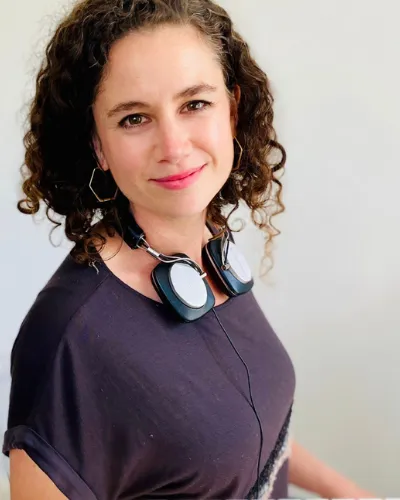
Rachel LynesRachel Lynes zeigt, wie du eine lange Note lebendig hältst – indem du Ton und Atem in Bewegung lässt – anhand von 'She Used to Be Mine' aus Waitress.
Das steckt im Kurs
18 Lektionen (1h 25m) · 1 gratis
Transkript der Lektion
Keeping Long Notes Alive
So, we've looked at some of your big notes. Now, let's have a look at the long notes, or how we can keep a long note alive. Because a note is not something you place and fix; it is something that is alive and ever-changing.
The Nature of Sound
- Tone is growing
- Breath is moving
- Sound is vibrations
You are constantly evolving through any long notes. So, let's have a look at what that means by using one of the longest notes in any musical theatre song at the moment, which is "She Used to Be Mine" from Waitress.
Now, again, we can keep this gender-neutral: you can go for "they used to be mine" or "he used to be mine."
Practicing the Long Note
The phrase we're going to focus on is:
"I'll keep it on, she just..."
This is a part that I love, so I'm going to keep this in character right now. But you can do whatever you want when you're practicing at home.
Let's try:
"She's been gone but used to be mine."
I mean, that's a long note, isn't it? We've got "mine" , that's a really long note!
Tips for Sustaining Long Notes
So, what are we going to do? To not freak out, I'm going to give you three tips that I find really useful:
-
Pulse It
- We don't feel like when you've put that note out there, it's done.
- We want to stay with it.
I want you to add a pulse into it. Let's do this together:
"She's been gone but used to be mine."
And I want you to really over-pulse it.Try again:
"She's been gone but used to be mine."
Overdo it! Really keep it pulsing. Good!Now, when you do it again, keep a mini version of that pulse in there. We don't need to hear it, just keep the echo of it inside your head so you can feel that pulse going. Think of it as a pulse of tone, a growth of tone to keep the note alive.
-
Find the Pulse in Your Body
- Remember, we're in 3/4 time:
- 1, 2, 3 (Used to be)
- 1, 2, 3 (1, 2, 3)
It's a heavy beat on 1, 2, and then 3. Find that in your body now. Look for a movement that has its own momentum. You could:
- Move from one leg to another
- Shift your body around
- Use your hands
The more you can do it, the better.
Try again:
"She's been gone but used to be mine."
Press pause, have a go. Maybe try a bigger note there. Keep it going to the end. Resist the urge to fix it! - Remember, we're in 3/4 time:
-
Keep Breathing Out to the End of the Note
- People forget , and I forget , to stay mindful and present to the end of a note.
This time, breathe out at the end of the note. Aim for there to be more breath left. I know this seems opposite to what we're trying to do, but actually, breathing out will help you.
Let's go again:
"She's been gone but used to be mine."
Did that help by giving your attention just one step further?
Final Thoughts
You can keep playing with all of these tips at home. Try them on your own songs and with your big notes. This was the longest note that I could think of in any song, so don't worry if you couldn't do this one. Just build yourself up in stages!
18 Lektionen
1 Std. 25 Min. strukturierte Videolektionen
Erweiterte Videofunktionen
Verlangsamen, Passagen loopen, mitlesen
Handy, Tablet & Desktop
Üben, wo du willst
100 % Zufriedenheitsgarantie
30 Tage Geld-zurück-Garantie
Lern deinen Guru kennen
Lern deinen Guru kennen
Rachel Lynes arbeitet mit Sängern, die von Recording-Artists bis zu West-End-Darstellern reichen. Sie erforscht die Stimme seit über 20 Jahren, mit besonderem Augenmerk auf der Verbindung zwischen Gesang, psychischer Gesundheit und Wohlbefinden. Als Interpretin verbrachte sie 10 Jahre mit Hauptrollen im West End und international und arbeitete mit allen möglichen Größen, von Andrew Lloyd Webber bis zu Tony- und Olivier-preisgekrönten Kreativen.
Von den Sängern, mit denen sie arbeitet, liebevoll „die Stimmenflüsterin" genannt, ist Rachels Ansatz rigoros technisch und zugleich zugänglich und verbindet die Wissenschaft mit dem Herzen.
Sie ist außerdem Gründerin und Coach von the Sing Space, einem globalen Online-Studio, das Sängern aller Niveaus offensteht und das weltweit erste Vocal Gym™ beheimatet, mit Gruppenkursen, Einzelgesangsstunden und exklusiven Gelegenheiten, vor einigen der führenden Kreativen der Branche aufzutreten, darunter Casting-Direktoren, Regisseure, Produzenten und West-End-Stars.
In ihrem MusicGurus-Kurs bringt Rachel dieselbe technische, aber menschliche Methode in den Musical-Gesang ein und führt dich durch genau die Techniken, die sie mit West-End-Darstellern anwendet.







