



Singen, Mundstück, spielen
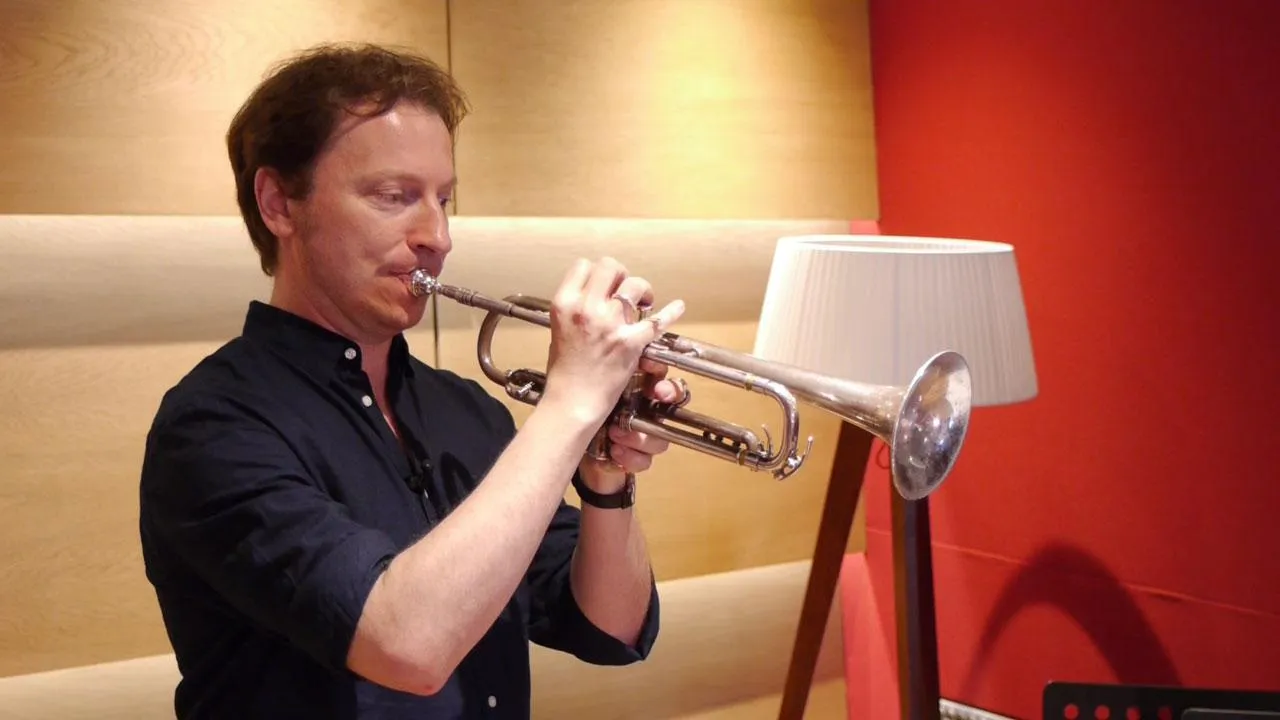
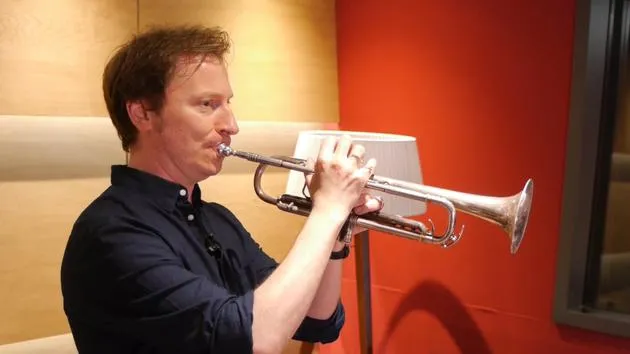
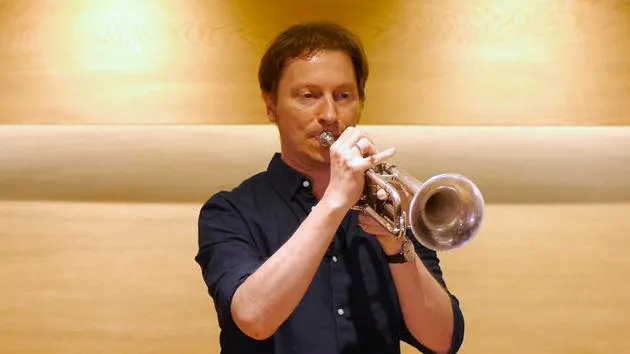
Gerard Presencer teilt eine Übung, die er vom Trompeter der Königlich Dänischen Oper Nikolaj Viltoft gelernt hat: singe sie, summe sie auf dem Mundstück und spiele sie dann, um die rhythmische Platzierung zu festigen.
Das steckt im Kurs
12 Lektionen (1h 49m) · 1 gratis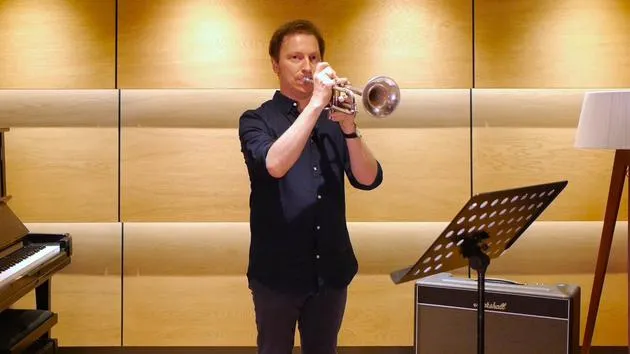
Transkript der Lektion
Brass Exercise: Sing, Mouthpiece, and Play
Now, this exercise is not mine. It was given to me by a fantastic classical trumpet player called Nicolae Wiltoft, who is the solo trumpet player in the Royal Danish Opera House.
Understanding Articulation in Different Genres
I noticed a few years ago that there are certain similarities between opera trumpet players and, say, jazz or commercial trumpet players:
- Some of the articulations that you do when you're playing in an opera orchestra need to be lighter than those in a symphony orchestra.
- This is primarily because you don't want to drown out the singers when you're playing opera.
- Sometimes, you have to perform fanfares (e.g., when the king arrives), but you can't do it too loudly.
These technical approaches are really helpful when you're improvising or playing horn lines, which have very specific rhythmic placements, but not necessarily a massive "punch in the mouth" kind of approach.
The Exercise Overview
So, I took this exercise from Nikolaj and adapted it slightly. One helpful tip I received recently is to practice with an earplug, initially, I suggest using two. However, today we will use one earplug.
- Earplug Type: It doesn't have to be fancy; a cheap one designed for workplace ear protection is fine.
- Ear Selection: It doesn't matter which ear you put it in; in fact, trying alternating ears daily might be beneficial.
Daily Practice Routine
I only do this exercise every day. It's primarily about listening to what you're doing.
A point that was made by a very great classical musician is:
"When working on something simple and diatonic, think about the next note."
For example, if I'm playing a C, I think about E (the next note) before I play it.
Steps of the Exercise
-
Sing the Exercise:
- Begin by singing the exercise.
-
Mouthpiece:
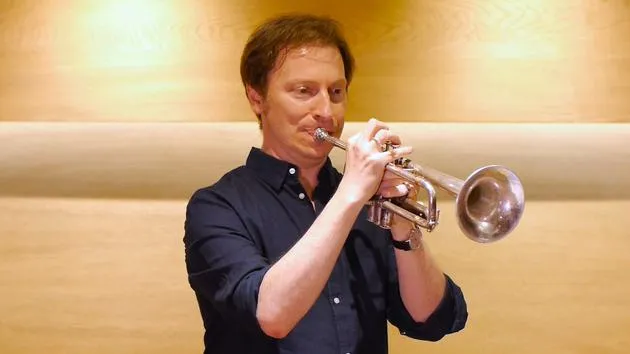
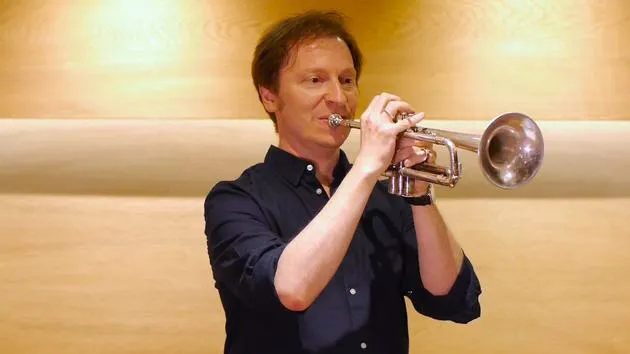
- Next, play it on the mouthpiece.
-
Trumpet:
- Finally, play it on the trumpet using the 1, 2, 3 placement.
Note: I am not a good singer, and that's okay! Don't be shy; singing is beneficial for your development.
Preparing to Play
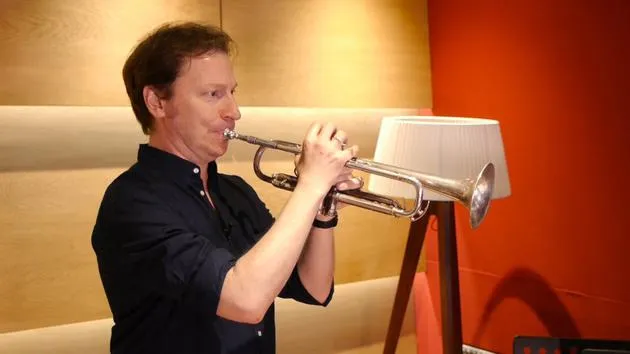
- Hold the trumpet in your right hand and take the mouthpiece out to prepare your fingers.
- You might play faster than the tempo in the exercise, but remember, we're trying to do this efficiently.
As I play one note, I keep thinking about the note that is coming up. The earplug changes how you perceive pitch.
Importance of Intonation
If you sing out of tune, you will play out of tune. This connection between singing, mouthpiece, and playing is crucial.
The hardest part of the exercise is the descent, specifically the sequence:
- F, D, B, C.
To maintain pitch, slow down on every note you sing, play on the mouthpiece, or play the trumpet.
Adjusting Airflow
- Constantly adjust to find the right pitch with your central tongue position.
- Maintain a constant flow of air.
You may notice:
- When you say "toe, toe, toe," it's a legato but single tonguing within a legato airstream.
- This can be disruptive and affect your pitch during descent.
Speeding Up Air
On descent, especially when you start to tongue, you need to speed up your airflow. It might not feel instinctive because often we back off or slow our air as we descend, which breaks up the sound.
Moving Down and Back Up
After completing the downward exercise, proceed in half steps all the way down to G, and then return to C.
- This practice can take a long time; feel free to do it at your own pace.
- Utilizing a tuning machine can help, though it may add to the duration.
There's a great feeling of focus at the end of this exercise, but it's a dedicated practice session, not something to do before a gig, as it can be tiring.
Adding More Repetitions
Then, once you're comfortable, add an extra note.
- Sing and Play and Slow Down: This should be sung and played at a slower pace.
Final Repetitions on Trumpet
At the very end, I add one more repetition fast and light, focusing on staccato.
- This should feel natural; just play it fast and light.
- The tongue position will adjust in the airflow, making it lighter while retaining core principles.
Concluding the Exercise
Finally, descend through the keys down to bottom F sharp.
This entire exercise might take about 20 minutes.
- I might do the first stage daily, which takes about 10-15 minutes.
- If you do the whole exercise including the additional section with staccato, it could take 30-40 minutes.
I wouldn't do that every day, perhaps three times a week works best.
Good Luck!
Remember, consistency is key, and enjoy the process!
12 Lektionen
1 Std. 49 Min. strukturierte Videolektionen
Erweiterte Videofunktionen
Verlangsamen, Passagen loopen, mitlesen
Handy, Tablet & Desktop
Üben, wo du willst
100 % Zufriedenheitsgarantie
30 Tage Geld-zurück-Garantie
Lern deinen Guru kennen
Lern deinen Guru kennen
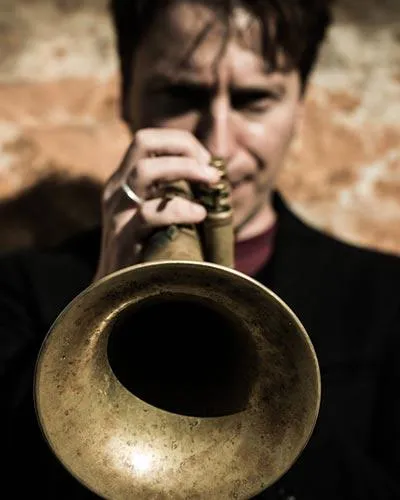
In den vergangenen 25 Jahren hat sich Gerard Presencer einen beachtlichen Ruf als einer der angesehensten Trompeter der europäischen Szene erarbeitet. Mit 18 Jahren gelang ihm der Durchbruch auf der internationalen Bühne, als US3 ihn bat, den Solopart auf Blue Notes Cantaloupe Island (neu interpretiert als Cantaloop Flip-Fantasia) zu spielen, das zu einer der meistverkauften Jazzplatten der 1990er-Jahre wurde. Seither ist er mit einem Who's who internationaler Jazzkünstler aufgetreten und fordert sich und sein Instrument weiterhin heraus, indem er seine Komfortzone verlässt, um sich als Spieler und Autor weiterzuentwickeln.
In anderen Genres hat Gerard als Studiomusiker mit Künstlern wie Sting, Jamiroquai, Zero 7, James Brown, Ray Charles, Joni Mitchell und Jonny Greenwood aufgenommen.
Gerard war zudem in den letzten 25 Jahren ein unverzichtbares Mitglied der verschiedenen Jazzformationen von Charlie Watts, tourte um die Welt und veröffentlichte mehrere Alben mit dem jazzbegeisterten Stone.
Als Pädagoge leitete Gerard von 1999 bis 2010 die Jazzabteilung an der Royal Academy of Music in London und ist derzeit Leiter der Blechbläserabteilung am Jazz Institut in Berlin. In diesem Kurs teilt er seinen inneren Ansatz zum Trompetenspiel - die mentalen und körperlichen Gewohnheiten hinter einem großartigen Klang -, damit du Ton, Kontrolle und Musikalität von innen heraus entwickeln kannst.







