



Übung mit Quinten und Quarten
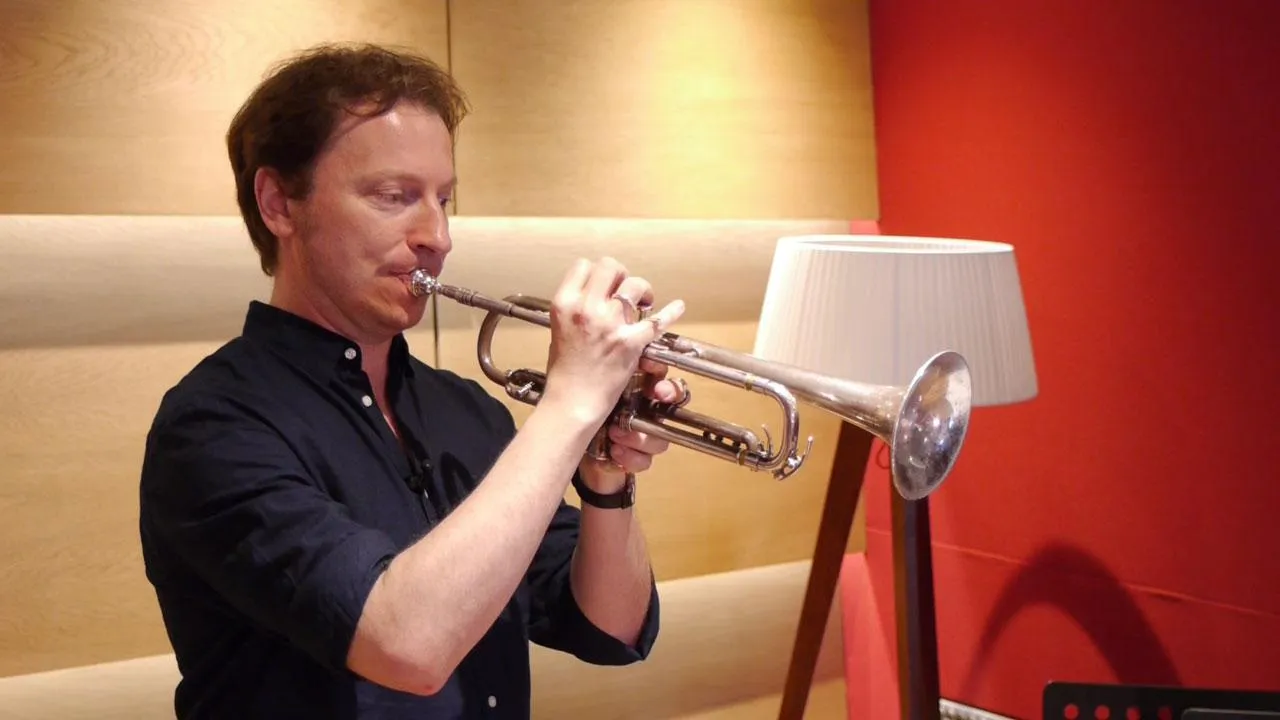
Eine Trompetenübung von Gerard Presencer, die aufsteigende reine Quinten und absteigende reine Quarten verwendet, um deine Intervallkontrolle aufzubauen.
Das steckt im Kurs
12 Lektionen (1h 49m) · 1 gratis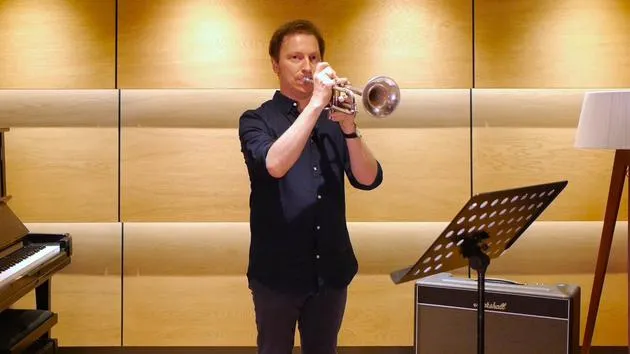
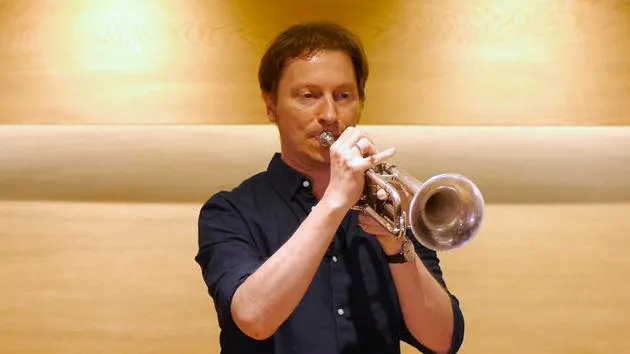
Transkript der Lektion
Music Lesson: Intervallic Exercises
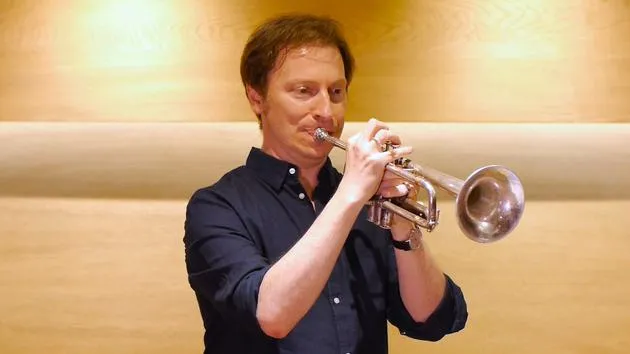
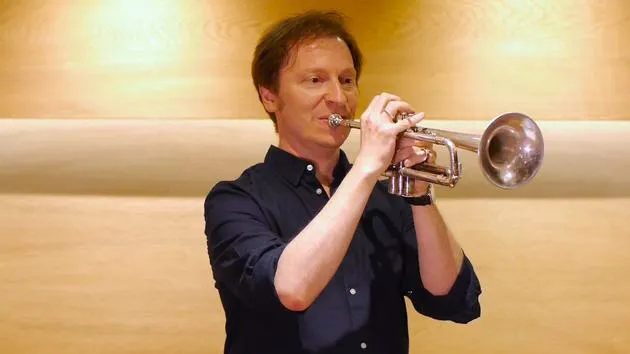
In this next exercise, we're going to use the technical and physical approaches that we've been developing in previous lessons on something which is perhaps a little bit more intervallically interesting. This is something maybe I've taken and used in composition or in improvisation.
The Pattern
- We will use:
- Perfect fifths to ascend
- Perfect fourths to descend
What I'm going to do is put a series of Fermatas over notes at the bottom. (That's pauses for people in the UK, but fermatas for everyone else.)
Airspeed Warm-Up
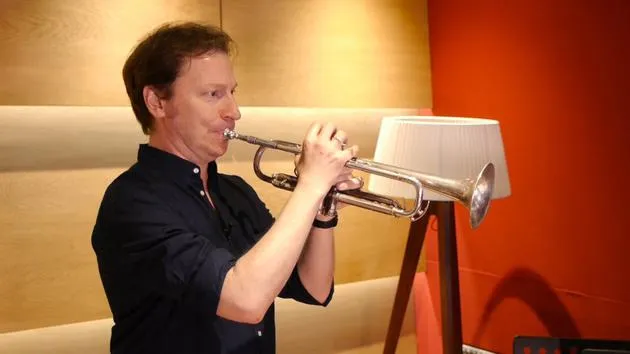
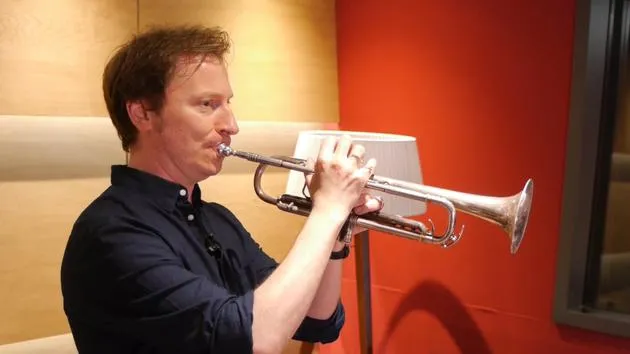
What I'm doing here is crescendoing to speed up the air:
- My tongue position goes forward.
- As I ascend, the intervals will be different. They will be part of the same finger pattern as in the flexibility exercises we've done.
As I descend, I'm going to try to:
- Crescendo down my perfect fourths.
- Maintain the airstream.
- Pitch the notes accurately, rather than just hoping for the best, which is the normal way that jazz trumpet players seem to descend (sorry to say).
Rubato and Breathing
This is rubato. Anytime I need to:
- It's legato and rubato.
- Take a breath through your nose, not too quickly.
Important:
- Not so that anyone else can hear you breathe.
- Carry on as if you were starting the exercise from that point.
Tongue Position and Articulation
What hopefully I've done are a few little splits there.
- I've breathed the exercise and got my tongue position working for me.
- My tongue position will be in the right place when I start to use any kind of articulation, whether it be my jazz articulation or just a staccato.
Now let's use a short staccato that we worked on earlier. Let's say it, then play it like this:
- Remember to look at the center part of your bell and sing it (without pitch) to keep the air flowing.
Optimistic Development
In a way, I tongue faster when I play it on the trumpet, which is quite an optimistic development!
- I will keep going at that.
- I really feel saying it before playing helps get the flow.
Since we did it legato with labored fermatas to ensure proper breathing:
- By the time I play staccato and light, it should actually feel liberating and easier to play the trumpet.
Practicing Staccato
Let's do that one more time because it felt nice.
- It's almost so short that I'm not taking it seriously enough.
- And that's how short it needs to be.
Application in Music
Later, we'll look at how short staccato can be placed in music, which is very useful in:
- Pop music
- Jazz
Short Notes Example
The short eighth notes we practiced were those short notes.
Generally, what happens is when people play those short notes, they sound more like this:
- So I don't know: Which one do you prefer?
- I know which one hurts less, and that's probably the one I want to do.
Okay, good luck!
12 Lektionen
1 Std. 49 Min. strukturierte Videolektionen
Erweiterte Videofunktionen
Verlangsamen, Passagen loopen, mitlesen
Handy, Tablet & Desktop
Üben, wo du willst
100 % Zufriedenheitsgarantie
30 Tage Geld-zurück-Garantie
Lern deinen Guru kennen
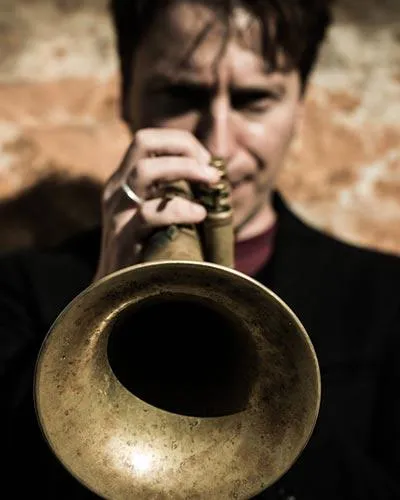
Lern deinen Guru kennen
In den vergangenen 25 Jahren hat sich Gerard Presencer einen beachtlichen Ruf als einer der angesehensten Trompeter der europäischen Szene erarbeitet. Mit 18 Jahren gelang ihm der Durchbruch auf der internationalen Bühne, als US3 ihn bat, den Solopart auf Blue Notes Cantaloupe Island (neu interpretiert als Cantaloop Flip-Fantasia) zu spielen, das zu einer der meistverkauften Jazzplatten der 1990er-Jahre wurde. Seither ist er mit einem Who's who internationaler Jazzkünstler aufgetreten und fordert sich und sein Instrument weiterhin heraus, indem er seine Komfortzone verlässt, um sich als Spieler und Autor weiterzuentwickeln.
In anderen Genres hat Gerard als Studiomusiker mit Künstlern wie Sting, Jamiroquai, Zero 7, James Brown, Ray Charles, Joni Mitchell und Jonny Greenwood aufgenommen.
Gerard war zudem in den letzten 25 Jahren ein unverzichtbares Mitglied der verschiedenen Jazzformationen von Charlie Watts, tourte um die Welt und veröffentlichte mehrere Alben mit dem jazzbegeisterten Stone.
Als Pädagoge leitete Gerard von 1999 bis 2010 die Jazzabteilung an der Royal Academy of Music in London und ist derzeit Leiter der Blechbläserabteilung am Jazz Institut in Berlin. In diesem Kurs teilt er seinen inneren Ansatz zum Trompetenspiel - die mentalen und körperlichen Gewohnheiten hinter einem großartigen Klang -, damit du Ton, Kontrolle und Musikalität von innen heraus entwickeln kannst.







