



Einführung in den Kurs
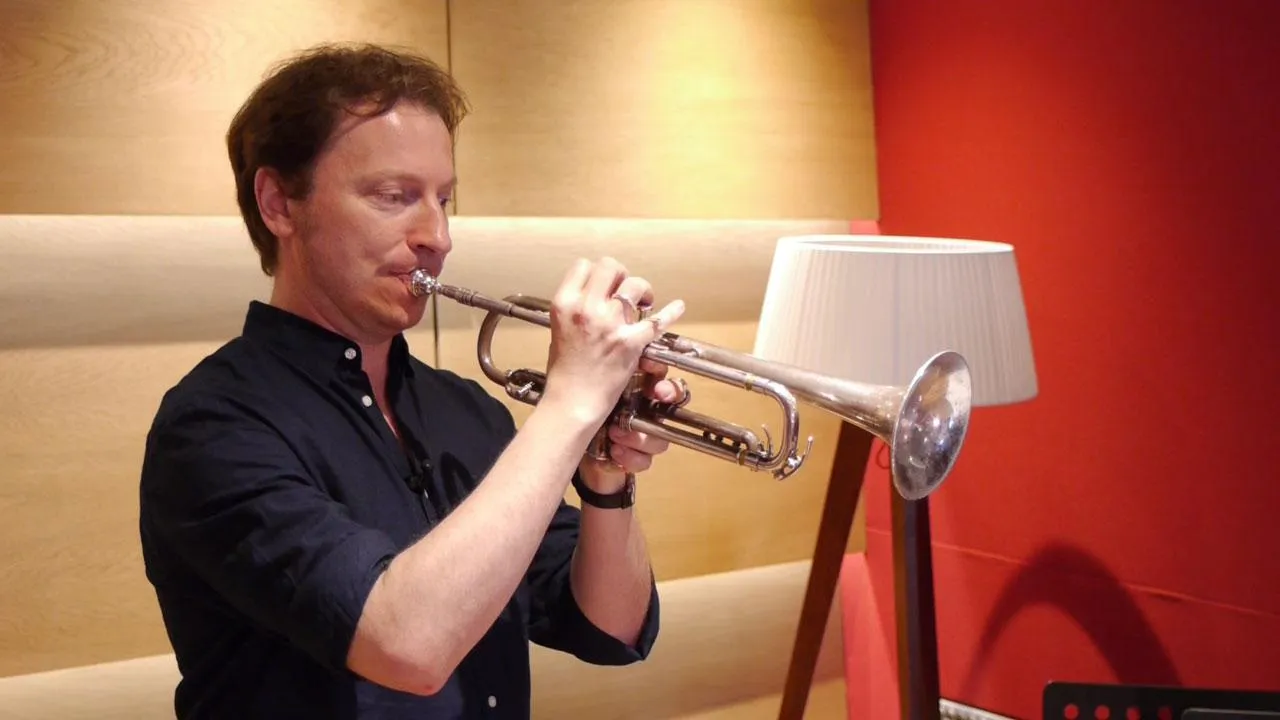
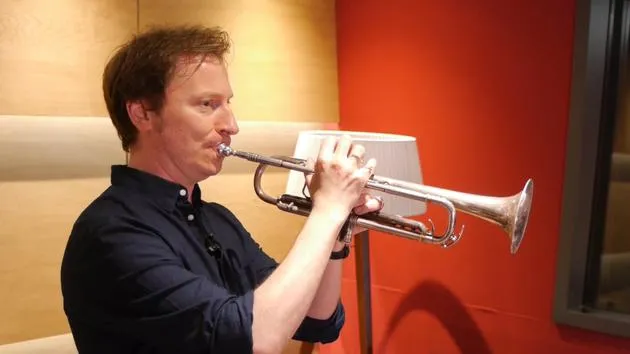
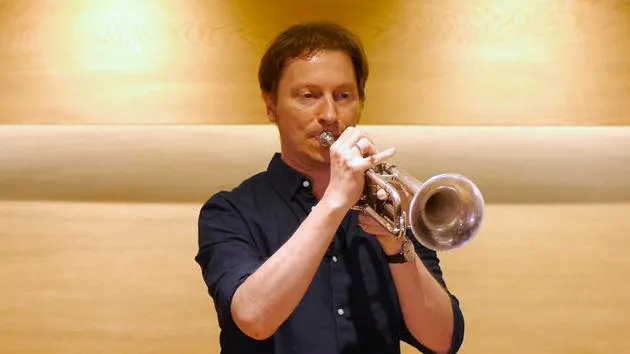
Gerard Presencer stellt seinen inneren Ansatz für die Trompete vor und konzentriert sich darauf, was im Mund passiert, um Ausdauer und Flexibilität über den gesamten Tonumfang aufzubauen.
Das steckt im Kurs
12 Lektionen (1h 49m) · 1 gratis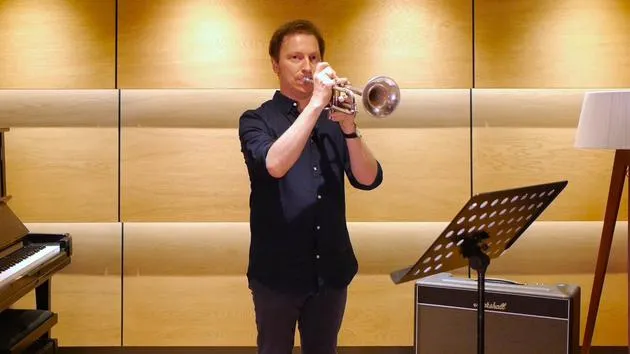
Transkript der Lektion
Developing a Supportive Technical Approach to Playing the Trumpet
To develop a supportive technical approach to playing the trumpet, there are several strategies we can explore. Over the course of the 10 lessons that we're going to have, I will ask you to try a few physical things that focus on the preparation of playing the trumpet rather than the actual playing itself. This will help us create consistency, so that when you go for a high note, you don't have to change how you play externally compared to how you would for a low note.
Consistent Register Approach
- We will work on creating one register and one approach to playing the trumpet up and down.
- The only difference between a low note, high note, or medium note will be what's happening inside your mouth.
Robot Arms Concept
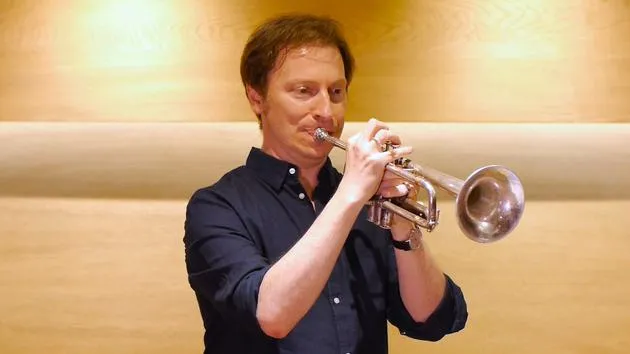
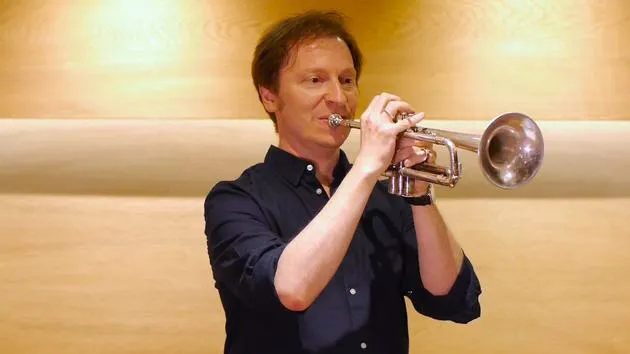
A key concept I like to work on with students is the idea of robot arms.
- What this entails: When you go to play, do it without outside manipulation of your face.
- This method minimizes unnecessary movement as you prepare to play.
- When taking the trumpet off your face, keep the same approach, your airstream should be what produces the note, not your embouchure.
1, 2, 3 Placement
We will also discuss the 1, 2, 3 placement:
- Put the trumpet on your face.
- Take a breath through your nose.
- Play the note.
Make sure you do not put your finger down for the note until you are playing it. For example, if I'm going to play a bottom A flat, I would do it as follows, and then off. I will also practice this with a top C.
Focusing on the Bell
Another exercise relates to looking at your bell:
- This is particularly important when playing staccato exercises.
- Focusing on the center of your bell keeps the trumpet stable, especially when playing fast staccato passages.
Crescendo on Descent
We will cover how to crescendo when descending an arpeggio:
- Instead of backing off on the descent, we'll get louder.
- This practice prepares you to have more control during a descent, reducing the likelihood of crashing down and losing control.
Internal Approach to Trumpet Playing
Throughout these lessons, we will focus on the internal approach to trumpet playing, discussing:
- The development of strength and control within your mouth.
- Recognizing that each player has a different embouchure; what's happening inside your mouth is crucial, even if it's not visible.
Air Stream Control
- The trumpet is functioning best when it acts as a legato airstream machine.
- Regardless of the music style (e.g., playing short notes in a pop band), maintain a steady stream of air.
The Role of Warm-Up
An important feature of our lessons will be understanding that:
- Warming up isn't about duration; it's about the quality of what you do.
- Some warm-up exercises may not sound like music, but they are essential for getting your technique to work effectively.
Focused Warm-Up
- Be conscious of what you're trying to develop during your warm-up.
- As a professional, knowing how to warm up efficiently in limited time is crucial.
Enhancing Muscle Control
Finally, developing trumpet approach and technique should not be seen as simply "pumping iron".
- It's about developing muscle control and strength through control.
- The more familiar you become with the trumpet and your internal processes, the easier playing will become.
By following this process of development, you will become a more efficient, relaxed version of yourself as a trumpet player. Embrace this journey and enjoy the learning!
12 Lektionen
1 Std. 49 Min. strukturierte Videolektionen
Erweiterte Videofunktionen
Verlangsamen, Passagen loopen, mitlesen
Handy, Tablet & Desktop
Üben, wo du willst
100 % Zufriedenheitsgarantie
30 Tage Geld-zurück-Garantie
Lern deinen Guru kennen
Lern deinen Guru kennen
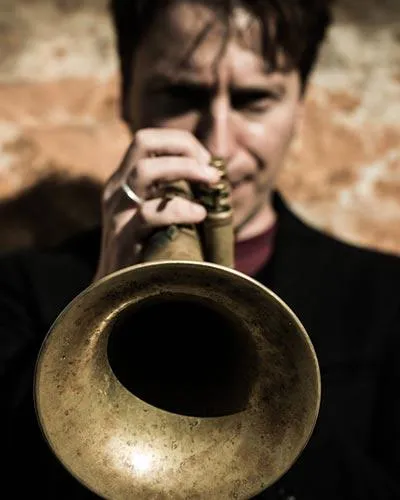
In den vergangenen 25 Jahren hat sich Gerard Presencer einen beachtlichen Ruf als einer der angesehensten Trompeter der europäischen Szene erarbeitet. Mit 18 Jahren gelang ihm der Durchbruch auf der internationalen Bühne, als US3 ihn bat, den Solopart auf Blue Notes Cantaloupe Island (neu interpretiert als Cantaloop Flip-Fantasia) zu spielen, das zu einer der meistverkauften Jazzplatten der 1990er-Jahre wurde. Seither ist er mit einem Who's who internationaler Jazzkünstler aufgetreten und fordert sich und sein Instrument weiterhin heraus, indem er seine Komfortzone verlässt, um sich als Spieler und Autor weiterzuentwickeln.
In anderen Genres hat Gerard als Studiomusiker mit Künstlern wie Sting, Jamiroquai, Zero 7, James Brown, Ray Charles, Joni Mitchell und Jonny Greenwood aufgenommen.
Gerard war zudem in den letzten 25 Jahren ein unverzichtbares Mitglied der verschiedenen Jazzformationen von Charlie Watts, tourte um die Welt und veröffentlichte mehrere Alben mit dem jazzbegeisterten Stone.
Als Pädagoge leitete Gerard von 1999 bis 2010 die Jazzabteilung an der Royal Academy of Music in London und ist derzeit Leiter der Blechbläserabteilung am Jazz Institut in Berlin. In diesem Kurs teilt er seinen inneren Ansatz zum Trompetenspiel - die mentalen und körperlichen Gewohnheiten hinter einem großartigen Klang -, damit du Ton, Kontrolle und Musikalität von innen heraus entwickeln kannst.







