



Bonus-Übungen
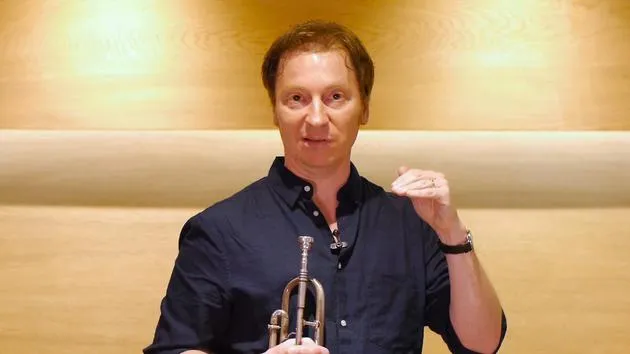
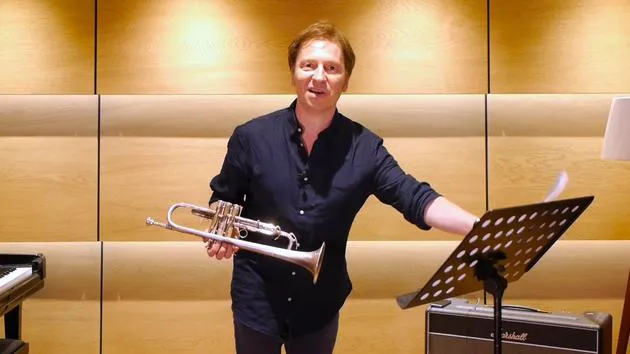
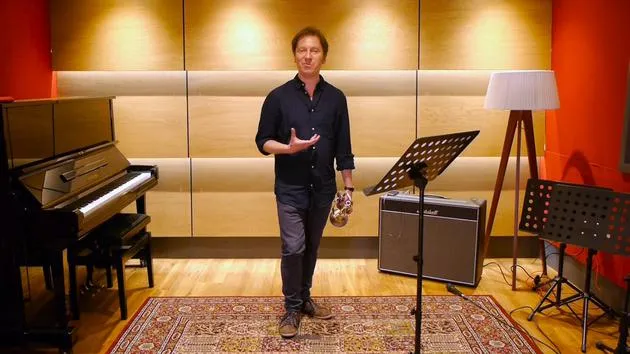
Gerard Presencer teilt zwei kurze Aufwärmübungen, um deinen Luftstrom neu auszurichten, die Öffnung deines Ansatzes zu weiten und eine zentrale Zungenposition zu finden.
Das steckt im Kurs
12 Lektionen (1h 49m) · 1 gratis
01. Bonus-Übungen
Du bist hier4:57
Transkript der Lektion
Airstream and Embouchure Exercises
I now have two small exercises for you. Neither of them are designed to sound particularly nice, but they should help you to:
- Focus again on your Airstream
- Open the aperture of your embouchure
Exercise 1: Central Tongue Position and Airstream Control
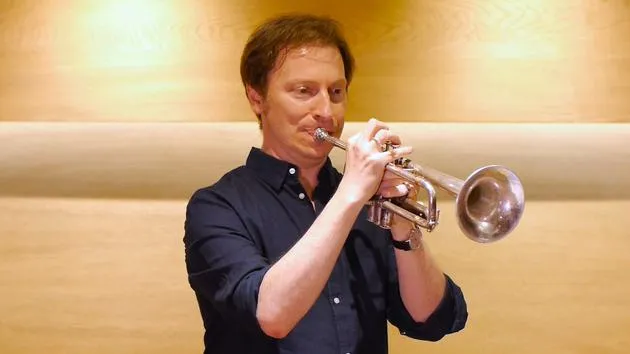
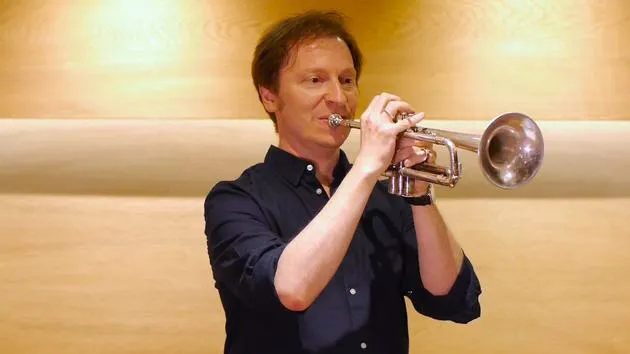
These exercises can help create a sense of airflow and also allow you to feel the central tongue position and where it is.
-
Lead Pipe Variation:
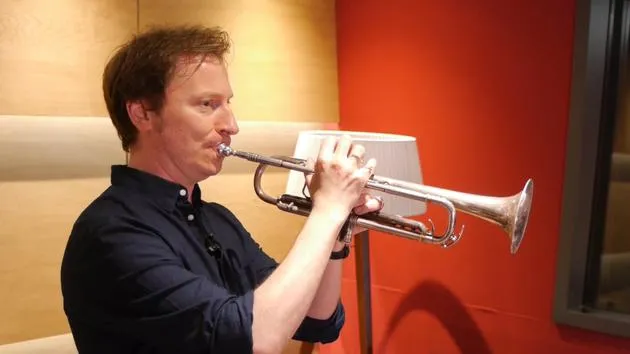
- This exercise is similar to the lead pipe exercise I showed you from Bill Adam, but this time, I don't take my lead pipe out.
- I often use this in between tunes. If I'm rehearsing with a band and want to regain my Airstream control and awareness of my tongue, I do the following:
- Put the 1, 2, and 3 valves halfway down.
- Blow a note.
This helps you feel good about your tone.
-
Feeling Faster Air:
-
To really feel the central tongue position, I play with a bit faster air, especially when thinking about playing higher or louder.
-
Repeat the previous exercise but focus on playing a little faster or even with very fast air.
-
Key Insight: When you push your tongue further forward in the airflow with faster air, it might feel a bit more buzzy around your mouth. It may not sound as nice as when played quieter, but it's important to feel the tongue position moving forward in the central air position.
-
-
Tongue Movement:
-
Additionally, I practice moving my tongue back and forth in the central tongue position within the Airstream.
-
This will produce a sound that is almost like a didgeridoo.
-
Important Note: Your Airstream isn't speeding up; it remains at the same speed, but the tongue movement alters the sound quality. Try to maintain the same pitch throughout.
-
Exercise 2: Chops Relaxer and Aperture Opening
The second exercise is similar to the chops relaxer. I often do it when I want to relax, loosen up, and get my lips vibrating a bit while opening the aperture.
-
Playing Legato:
-
Play from bottom F sharp up to C and back down again, legato, at about mezzo forte.
-
Technique: Stay on the F sharp throughout, which means that for every note I play, I must adjust something in my mouth. This includes:
- The central tongue position
- My Airstream position on my embouchure
-
Perform this nice and slowly. I will be doing it a little faster for the sake of demonstration, as I am more familiar with the positions inside my mouth.
-
-
Crescendo and Decrescendo:
-
On the penultimate note, when I play the fingering for G while maintaining the F sharp, I actually crescendo a little more.
-
Benefit: This technique allows me to hit the note more in the middle than I would if the crescendo wasn't applied. Without it, you might find that the F hits too low.
-
-
Final Note Technique:
- When I hit the F sharp on the correct fingering at the end, I perform a decrescendo and hold the note for as long as I can, challenging myself to play it as quietly as possible.
- If the note cuts out, I suggest:
- If there's some air left, try to get back to the F sharp and start decrescendoing again.
Good luck with those!
12 Lektionen
1 Std. 49 Min. strukturierte Videolektionen
Erweiterte Videofunktionen
Verlangsamen, Passagen loopen, mitlesen
Handy, Tablet & Desktop
Üben, wo du willst
100 % Zufriedenheitsgarantie
30 Tage Geld-zurück-Garantie
Lern deinen Guru kennen
Lern deinen Guru kennen
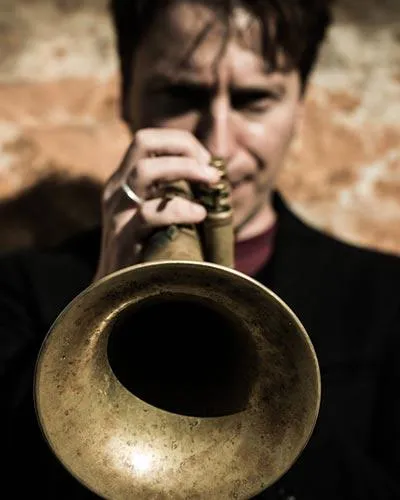
In den vergangenen 25 Jahren hat sich Gerard Presencer einen beachtlichen Ruf als einer der angesehensten Trompeter der europäischen Szene erarbeitet. Mit 18 Jahren gelang ihm der Durchbruch auf der internationalen Bühne, als US3 ihn bat, den Solopart auf Blue Notes Cantaloupe Island (neu interpretiert als Cantaloop Flip-Fantasia) zu spielen, das zu einer der meistverkauften Jazzplatten der 1990er-Jahre wurde. Seither ist er mit einem Who's who internationaler Jazzkünstler aufgetreten und fordert sich und sein Instrument weiterhin heraus, indem er seine Komfortzone verlässt, um sich als Spieler und Autor weiterzuentwickeln.
In anderen Genres hat Gerard als Studiomusiker mit Künstlern wie Sting, Jamiroquai, Zero 7, James Brown, Ray Charles, Joni Mitchell und Jonny Greenwood aufgenommen.
Gerard war zudem in den letzten 25 Jahren ein unverzichtbares Mitglied der verschiedenen Jazzformationen von Charlie Watts, tourte um die Welt und veröffentlichte mehrere Alben mit dem jazzbegeisterten Stone.
Als Pädagoge leitete Gerard von 1999 bis 2010 die Jazzabteilung an der Royal Academy of Music in London und ist derzeit Leiter der Blechbläserabteilung am Jazz Institut in Berlin. In diesem Kurs teilt er seinen inneren Ansatz zum Trompetenspiel - die mentalen und körperlichen Gewohnheiten hinter einem großartigen Klang -, damit du Ton, Kontrolle und Musikalität von innen heraus entwickeln kannst.







