



Einführung in Dah Di Yah (außerhalb des Tempos)
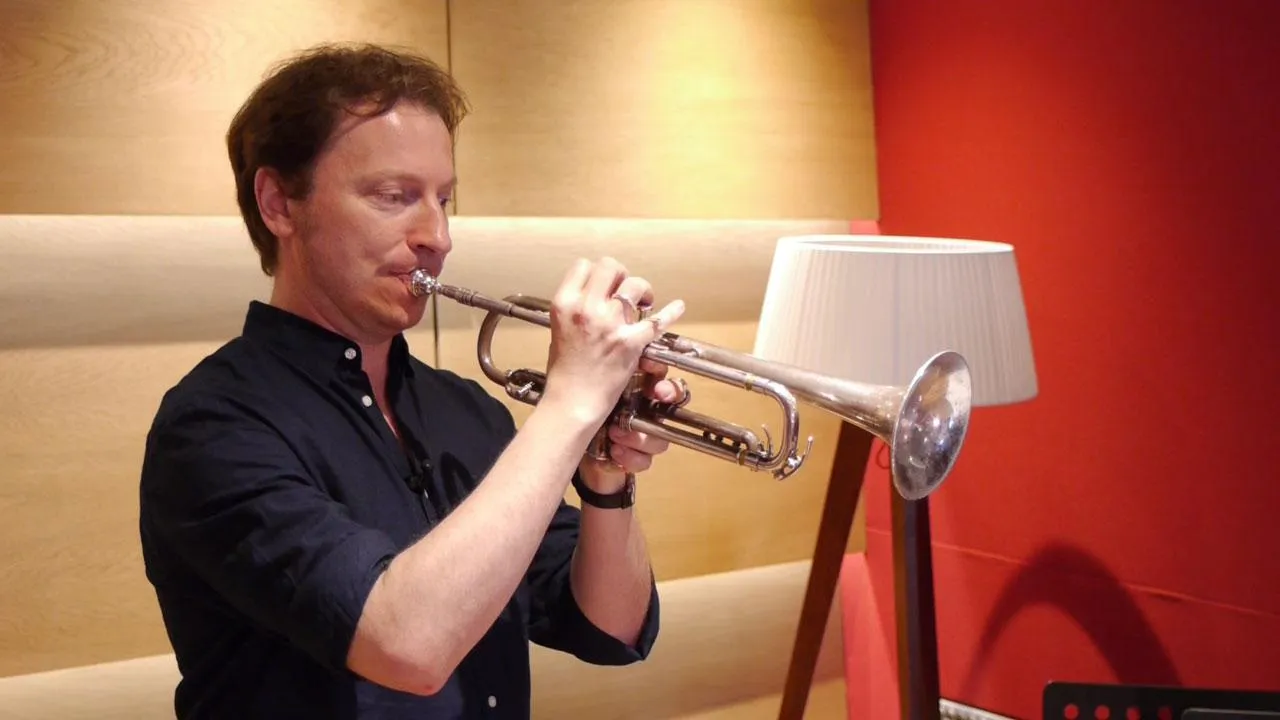
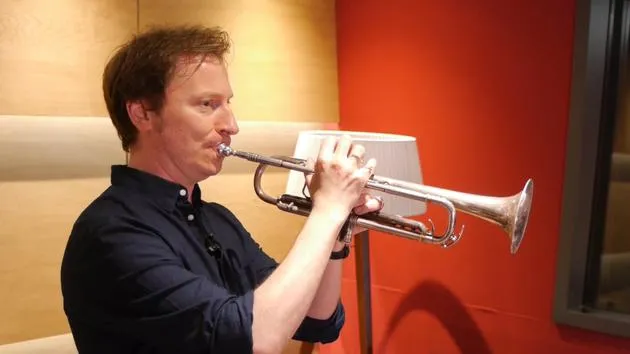
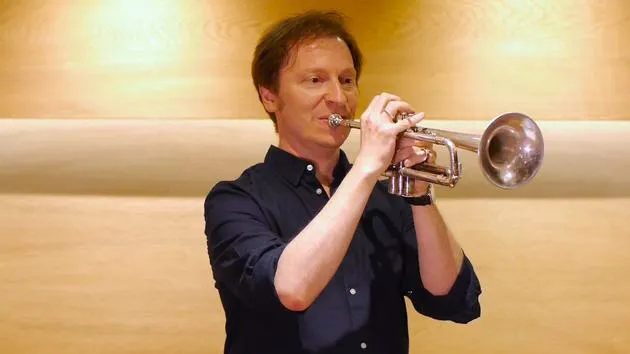
Gerard Presencer stellt die "Dah Di Yah"-Artikulation außerhalb des Tempos vor, indem er die Noten auf einem Legato-Luftstrom atmet, sodass die Zunge die Luft stützt, statt sie anzutreiben.
Das steckt im Kurs
12 Lektionen (1h 49m) · 1 gratis


Transkript der Lektion
Music Lesson: Dadai Daya Articulation
Moving on from our previous lesson, we've warmed up the single tongue that needs to go into the articulation system of Dadaiyadaya.
Rubato Practice
This gives us the time to actually work on the Dadai daya out of tempo before we start to give it some musical meaning.
- We're going to play something rubato.
- Like with the earlier exercises in the course, we'll put a fermata on the first note so that we can crescendo into it.
- So we speed up our air.
Even though we're now going to start to think about using an articulation, we're still considering legato to be the best way of doing things.
Legato Exercise
- First of all, let's play this legato four times.
- As I crescendo, just before I hit the peak of the volume of the crescendo, I move off.
- This means I peak in crescendo on the G.
You can hear what I'm doing with my dynamics.
Articulation Practice
Now, I'm going to do the same thing using da da ya da ya, maintaining the same dynamics and approach as the legato.
- Let's join those two together.
Moving Forward
Now we're going to do another one, this time playing up a little bit further.
- Although we're starting on an F, this is actually something that I would play over G dominant, similar to a G7.
- This gives you an idea of how we're starting to think about relating this to music and harmony.
Structured Exercises
For this exercise:
- I'm going to play it two times legato
- Then two times with the articulation, really trying to emulate the feeling of the airspeed control that I've worked on within legato.
Now we are ready to use tempo!
12 Lektionen
1 Std. 49 Min. strukturierte Videolektionen
Erweiterte Videofunktionen
Verlangsamen, Passagen loopen, mitlesen
Handy, Tablet & Desktop
Üben, wo du willst
100 % Zufriedenheitsgarantie
30 Tage Geld-zurück-Garantie
Lern deinen Guru kennen

Lern deinen Guru kennen
In den vergangenen 25 Jahren hat sich Gerard Presencer einen beachtlichen Ruf als einer der angesehensten Trompeter der europäischen Szene erarbeitet. Mit 18 Jahren gelang ihm der Durchbruch auf der internationalen Bühne, als US3 ihn bat, den Solopart auf Blue Notes Cantaloupe Island (neu interpretiert als Cantaloop Flip-Fantasia) zu spielen, das zu einer der meistverkauften Jazzplatten der 1990er-Jahre wurde. Seither ist er mit einem Who's who internationaler Jazzkünstler aufgetreten und fordert sich und sein Instrument weiterhin heraus, indem er seine Komfortzone verlässt, um sich als Spieler und Autor weiterzuentwickeln.
In anderen Genres hat Gerard als Studiomusiker mit Künstlern wie Sting, Jamiroquai, Zero 7, James Brown, Ray Charles, Joni Mitchell und Jonny Greenwood aufgenommen.
Gerard war zudem in den letzten 25 Jahren ein unverzichtbares Mitglied der verschiedenen Jazzformationen von Charlie Watts, tourte um die Welt und veröffentlichte mehrere Alben mit dem jazzbegeisterten Stone.
Als Pädagoge leitete Gerard von 1999 bis 2010 die Jazzabteilung an der Royal Academy of Music in London und ist derzeit Leiter der Blechbläserabteilung am Jazz Institut in Berlin. In diesem Kurs teilt er seinen inneren Ansatz zum Trompetenspiel - die mentalen und körperlichen Gewohnheiten hinter einem großartigen Klang -, damit du Ton, Kontrolle und Musikalität von innen heraus entwickeln kannst.







