



Schnelle Flexibilitätsübung
Wichtig beim Entwickeln und Üben einer guten technischen Herangehensweise ist die Abwechslung. Diese Übung baut auf dem Multivitamin auf und gibt dir die Möglichkeit, zwischen Registern zu springen, laut und leise zu spielen und Legato und Staccato einzusetzen - alles in einer Übung.
Das steckt im Kurs
12 Lektionen (1h 49m) · 1 gratis
Transkript der Lektion
Music Lesson: Technical Approaches
In this next exercise, we're moving on from the multivitamin in a similar vein. We feel it's important to develop a good technical approach, and practicing different techniques is crucial to that.
Mixing Techniques
- Jumping Between Registers
- Playing Loud and Soft
- Using Legato and Staccato
All these elements will be incorporated into the same exercise.
Key Concepts to Remember
-
Staccato Focus:
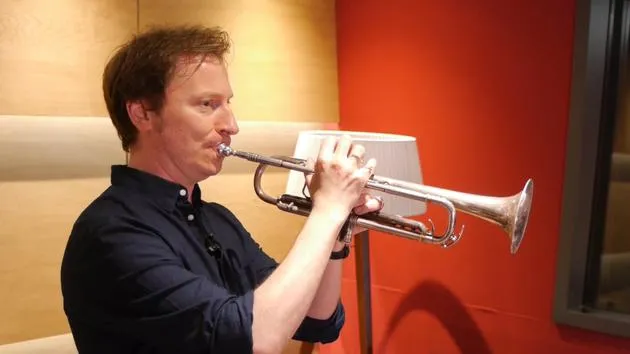
- When performing staccato, pay attention to the central bell part.
- This applies to legato as well.
-
Exercise Goals:
- Start by playing legato to familiarize yourself with the constant air stream and central tongue position.
- Control pitch in coordination with the speed of the air.
-
Articulation:
- Mix in short staccato.
- Define staccato using your central tongue position instead of the tip.
Remember: Legato is king! Often in pop or big band music, the single tongue is more crucial than the air.
Exercise Demonstration
-
Start playing entirely legato.
- Maintain consistent air speed and a slight crescendo on descents.
- Play at a moderate pace for better comfort.
-
Repeat the exercise.
- This time, play the descending moving arpeggios with short staccato.
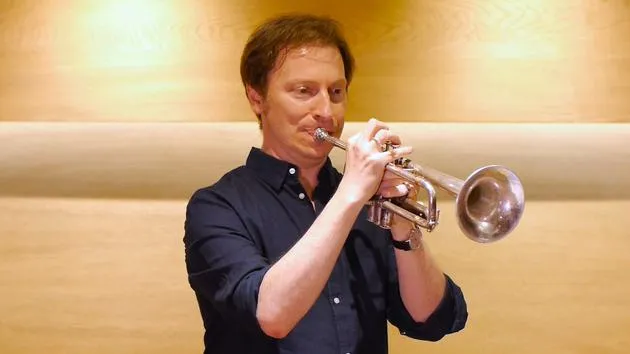
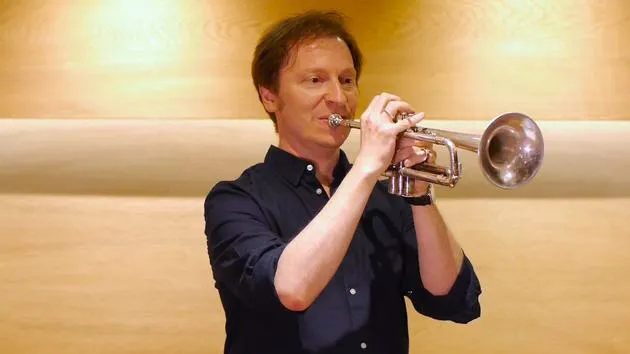
- Notice how focusing on the center of your bell aids in your playing.
-
Keeping It Light:
- If you need to take a breath, do not do so in tempo.
- It might sound in tempo but it's not, so breathe then resume as if starting anew.
Opposite Technique Application
- Play the top static C arpeggio staccato while the moving one becomes legato.
Observation:
- While doing legato on the moving arpeggio, you may need to slow down a bit on the 5:1 and descent to achieve a comfortable crescendo.
Flexibility Exercise
- Add an extra note on the top (up to an E), traveling a tenth in range.
Final Steps
-
Practice Variations:
- Continue with legato on the top and staccato on the bottom.
- Finally, try staccato at the top and legato on the bottom.
-
Troubleshooting:
- If staccatos don't come out, repeat between the C and the bottom F sharp until successful.
- Focus on airflow, keeping it short without over-tensing.
Self-Development
- These exercises are designed for you to troubleshoot your own technical development.
- Each version of the same exercise will present different issues to address.
Takeaway:
- Speed things up or slow things down as needed.
- Always remember to focus on airspeed and a fluid tongue motion.
Good luck, and start listening to yourself as I would if I were in the room with you!
12 Lektionen
1 Std. 49 Min. strukturierte Videolektionen
Erweiterte Videofunktionen
Verlangsamen, Passagen loopen, mitlesen
Handy, Tablet & Desktop
Üben, wo du willst
100 % Zufriedenheitsgarantie
30 Tage Geld-zurück-Garantie
Lern deinen Guru kennen
Lern deinen Guru kennen
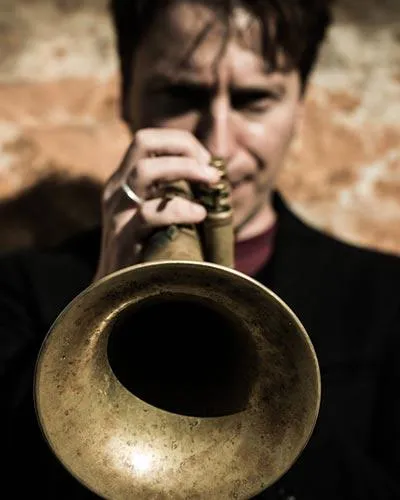
In den vergangenen 25 Jahren hat sich Gerard Presencer einen beachtlichen Ruf als einer der angesehensten Trompeter der europäischen Szene erarbeitet. Mit 18 Jahren gelang ihm der Durchbruch auf der internationalen Bühne, als US3 ihn bat, den Solopart auf Blue Notes Cantaloupe Island (neu interpretiert als Cantaloop Flip-Fantasia) zu spielen, das zu einer der meistverkauften Jazzplatten der 1990er-Jahre wurde. Seither ist er mit einem Who's who internationaler Jazzkünstler aufgetreten und fordert sich und sein Instrument weiterhin heraus, indem er seine Komfortzone verlässt, um sich als Spieler und Autor weiterzuentwickeln.
In anderen Genres hat Gerard als Studiomusiker mit Künstlern wie Sting, Jamiroquai, Zero 7, James Brown, Ray Charles, Joni Mitchell und Jonny Greenwood aufgenommen.
Gerard war zudem in den letzten 25 Jahren ein unverzichtbares Mitglied der verschiedenen Jazzformationen von Charlie Watts, tourte um die Welt und veröffentlichte mehrere Alben mit dem jazzbegeisterten Stone.
Als Pädagoge leitete Gerard von 1999 bis 2010 die Jazzabteilung an der Royal Academy of Music in London und ist derzeit Leiter der Blechbläserabteilung am Jazz Institut in Berlin. In diesem Kurs teilt er seinen inneren Ansatz zum Trompetenspiel - die mentalen und körperlichen Gewohnheiten hinter einem großartigen Klang -, damit du Ton, Kontrolle und Musikalität von innen heraus entwickeln kannst.







