



Blues-Tonleiter und Swing-Achtel kombinieren

Lesson time: (3min 57sec)
Ollie Weston kombiniert die Blues-Tonleiter mit Swing-Achteln und macht aus einer hellen Dur-Melodie eine bluesige, indem er Terzen, Quinten und Septimen erniedrigt.
Course preview
This lesson is part of the course Exploring Jazz Saxophone: Teil 1 - Erste Schritte
Watch a preview of the full course below.
Lesson transcript:
Blues Scale and Swing Quavers Lesson
Introduction
In this lesson, we're going to put together the blues scale and the swing quavers, and start to alter melodies to create melodies using the blues sound.
Major Melody Example
Here's what we'll do:
- I've written a very major sounding melody in the same way as "Leaving Town," but without any blues touches.
- The exercise is to try and turn it into a blues melody yourself.
Original Melody Sound
Here's how the melody sounds with no blues at all:
"1, 2, 1, 2, 3, 4."
Hopefully you're hearing that melody. While the swing is authentic, the notes sound too major, too bright, and they're not really evoking the sound of the blues.
Altering Melodies
You've got lots of options to change:
- Thirds
- Sevenths
- Fifths
For example:
- In the first phrase, I could change my C sharp to a C natural.
- If I want to go really bluesy, I could change the third as well (the F).
It's really yours to take control of:
- You can choose to make everything bluesy and really create a full-on blues-sounding tune.
- Alternatively, you can add blues touches to it and change certain notes.
- Aim to make each performance a little different, and learn to experiment with these sounds through the sequence.
Understanding the 12 Bar Blues
So far, we've talked about the melodic properties of the blues and the rhythmic swing feel to capture authenticity.
12 Bar Sequence
I haven't really talked yet about the 12 bar blues sequence itself:
- As the name suggests, it's a 12 bar sequence of chords that moves throughout the performance.
- It consists of three chords:
- Chord I: D
- Chord IV: G
- Chord V: A
As the lessons progress, you'll learn how to flesh out these chords and play different notes, scales, and lines over them.
Demonstrating the Blues
For the moment, I'm just going to focus on the bass notes so that your saxophone can effectively double what the bass player is doing, allowing you to hear how the chords move through the sequence.
Playing the Root Notes
- The first time through, I'll play long notes on each of the roots of the chord (D, G, and A).
- To demonstrate how a 12 bar blues is constructed, in the second chorus, I'll add a few rhythmic variations.
- I won't change any notes, but I'll incorporate some more authentic sounding rhythms and syncopations to make it sound a bit more effective.
What's a Chorus?
Good point! Each time a 12 bar cycle is repeated, it's called a chorus of the blues.
- Each time through, the melody is called a chorus.
- For a solo, each lap of the 12 bar sequence is also called a chorus.
Performance Demonstration
In this demonstration of the root notes of the blues:
- I'm going to play one chorus that is 12 bars of root notes.
- On my second chorus, I'll play a rhythmic figure with exactly the same notes to make it a bit more interesting and authentic.
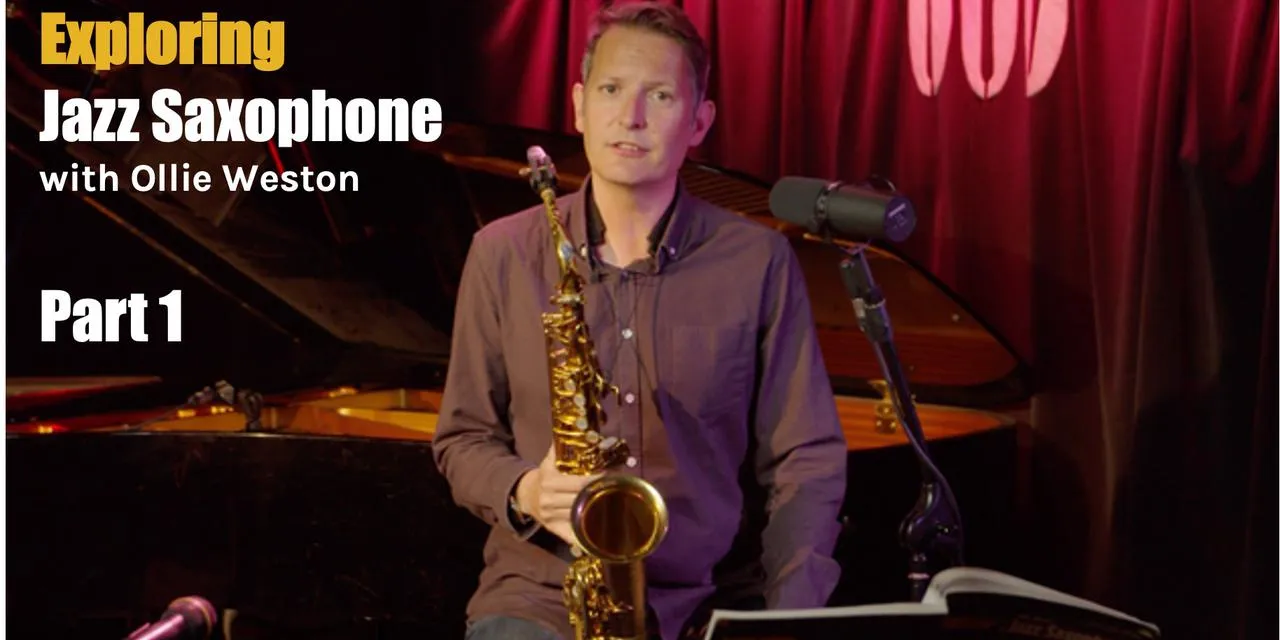
About the instructor
Seit seinem Abschluss am Leeds College of Music (BA Hons) und an der Guildhall School of Music (Post Graduate Diploma in Performance) hat Ollie eine rege und vielseitige Karriere in der Musik aufgebaut. Als Saxofonist ist er live und im Studio mit so unterschiedlichen Künstlern wie Amy Winehouse, Tim Minchin, Bonobo, Frank Turner, dem London Jazz Orchestra, der Hackney Colliery Band, dem Ambient Jazz Ensemble und dem Nelson Riddle Orchestra aufgetreten. Er ist zudem Co-Leader des Jazzquartetts 'Time Is Of The Essence' und komponiert und arrangiert Material für dieses und andere Ensembles. Ollie ist in der Musikpädagogik aktiv, derzeit als Studiengangsleiter der Jazzabteilung an der Guildhall School of Music and Drama (Junior School), wo er Jazzensembles, Big Band und Theorieklassen leitet. Er hat für Schott Music eine Reihe von 'Exploring Jazz'-Büchern geschrieben, die weltweit veröffentlicht werden und in britischen Prüfungslehrplänen enthalten sind. Ollie hat außerdem Workshops für die Oxford University, Pro Corda Strings und BABSWE sowie für die Sommerschulen der Guildhall School of Music geleitet. In seinen Exploring-Jazz-Saxophone-Kursen führt dich Ollie von den ersten Schritten bis hin zum selbstbewussten Improvisieren über Songs und Akkordfolgen und baut dabei die Improvisationsfähigkeiten auf, die dir das Vokabular eines echten Jazzmusikers in die Finger legen. read more