



Bläser-Riffs
Mit
Chris HaighChris Haigh zeigt, wie du die Geige als günstigen Bläsersatz einsetzt und druckvolle, synkopierte Fiddle-Parts schreibst, die klingen wie mehrere perfekt aufeinander eingespielte Blechbläser.
© 2011 Schott Music Ltd, London
Das steckt im Kurs
28 Lektionen (2h 28m) · 1 gratis
Transkript der Lektion
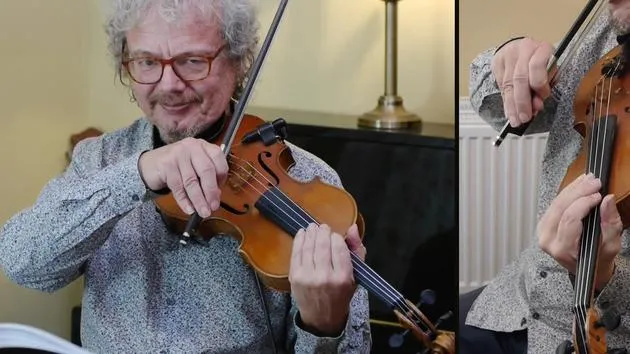
Lesson Focus: Violin as a Budget Horn Section
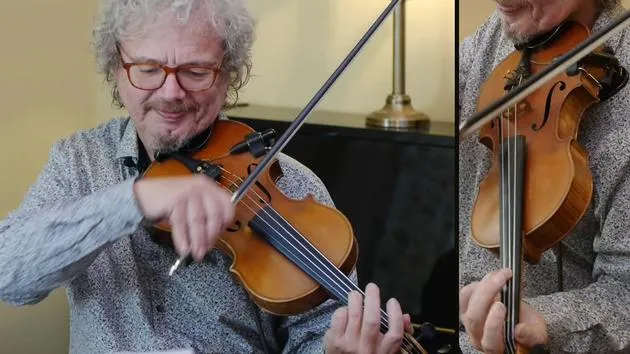
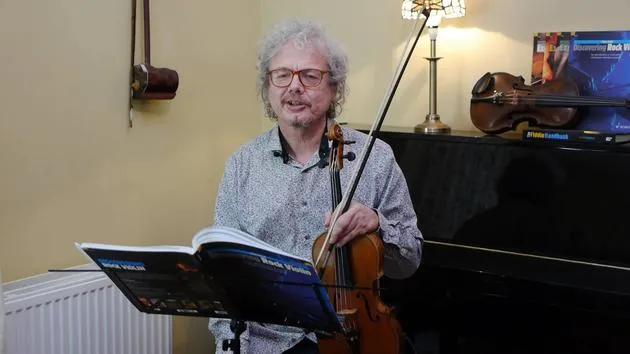
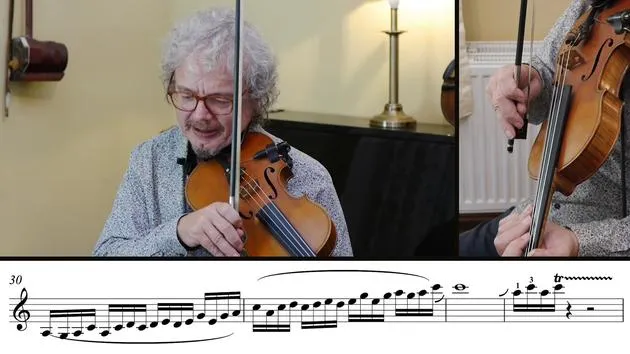
In the last lesson, we looked at the violin as a budget string quartet. Now, we're going to explore the violin as a budget horn section.
Understanding Horn Sections
Horn sections typically consist of:
- 2 to 6 brass players
- Carefully arranged, punchy parts
- Harmonized, locked-together sounds
Contribution to Songs:
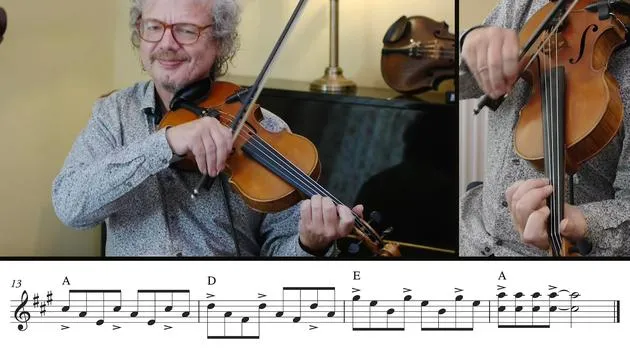
Horn sections can make a significant contribution to a song. The fiddle can achieve a similar effect in a more budget-friendly way.
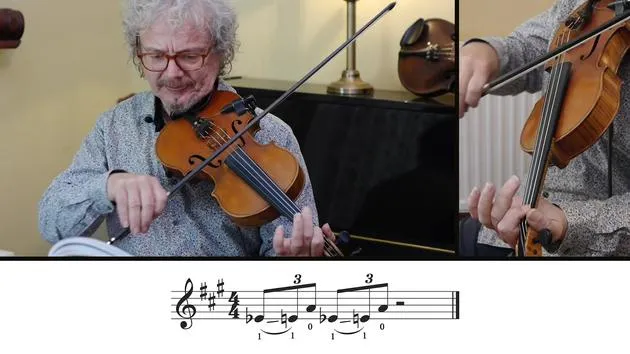
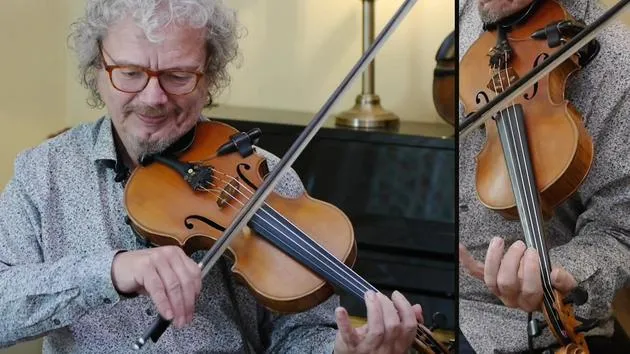
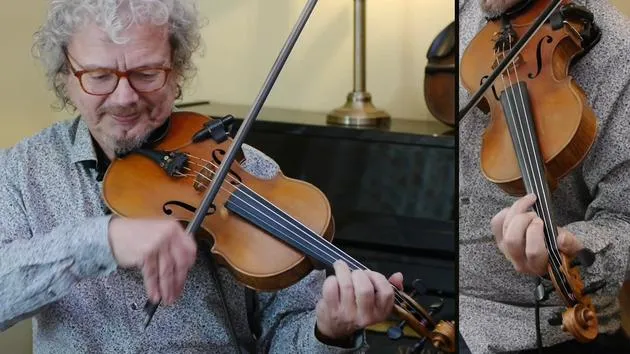
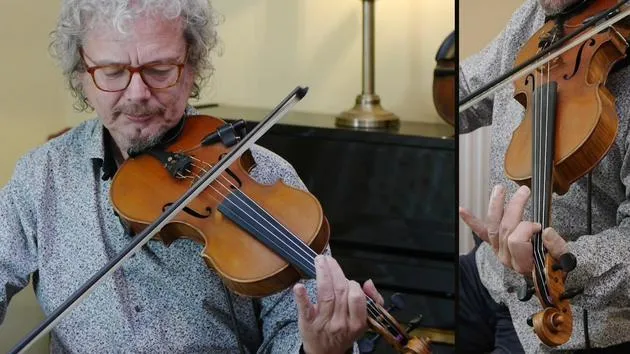
Creating Fiddle Horn Parts
When creating a horn part for the fiddle, consider the following:
-
Simplicity:
Imagine not just yourself playing it, but three or four people playing in unison or harmony. -
Percussiveness:
The rhythm should have a strong, percussive quality. -
Space:
Ensure there is plenty of space within the arrangement. -
Syncopation:
Incorporate syncopated rhythms to add interest.
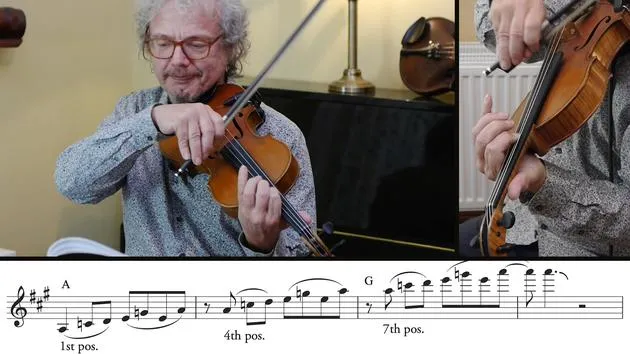
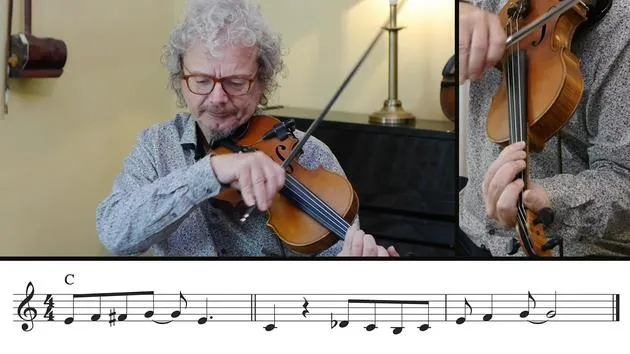
Examples of Fiddle Horn Parts
-
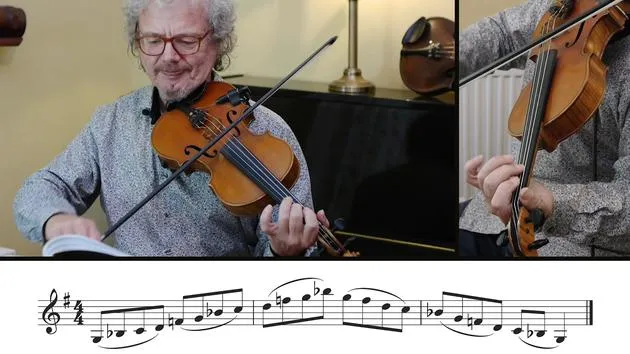
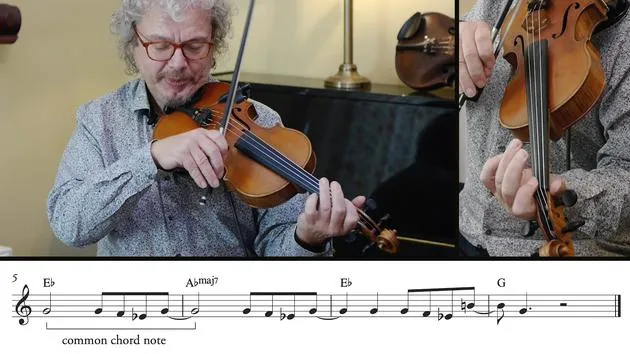
Using Octaves:
This technique can help to fatten up the sound. -
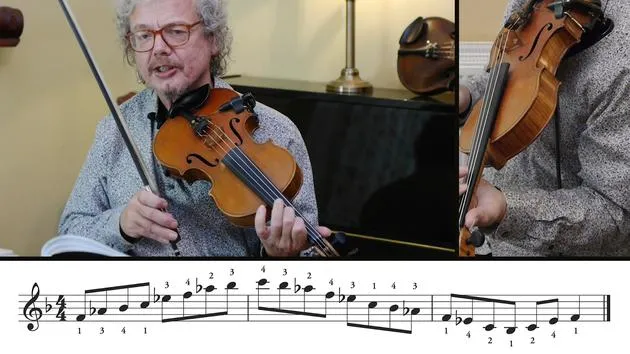
Harmony of Twin Paths:
Let's hear that in conjunction with the chords.
A Note on History: Dex's Midnight Runners
Before we play the final tune in this lesson, it's important to mention a band called Dex's Midnight Runners.
-
Era:
1980s in Britain, led by Kevin Rowland. -
Musical Style:
They had an unusual, ragtag, folky lineup but achieved hits, including "Come On Eileen," featuring a banjo and a brass section.
Interesting Anecdote:
At one point, Kevin Rowland wanted to include a fiddle section alongside the brass. He brought in three fiddle players and was so impressed with the fiddles that he suggested the brass section relearn and incorporate cello and viola. Understandably, the brass players were frustrated and decided to leave, resulting in a fiddle section without the brass.
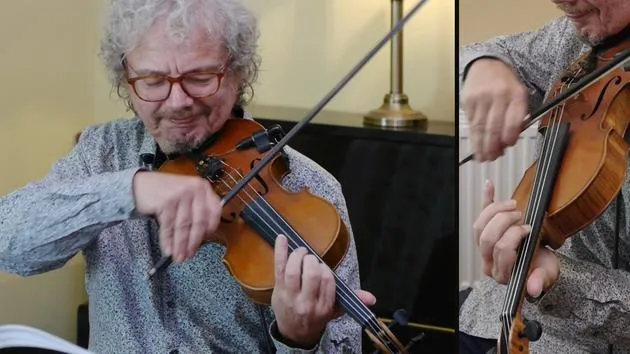
Final Tune: Commemorating the Fiddle vs. Brass Battle
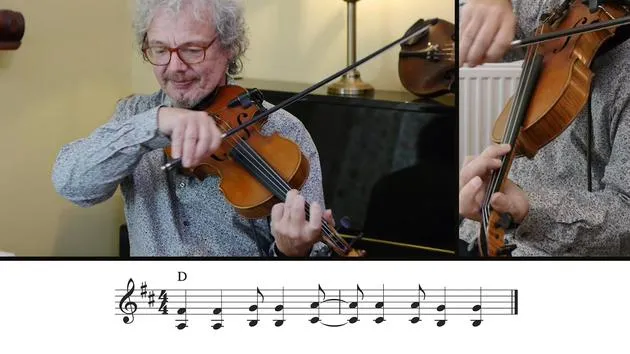
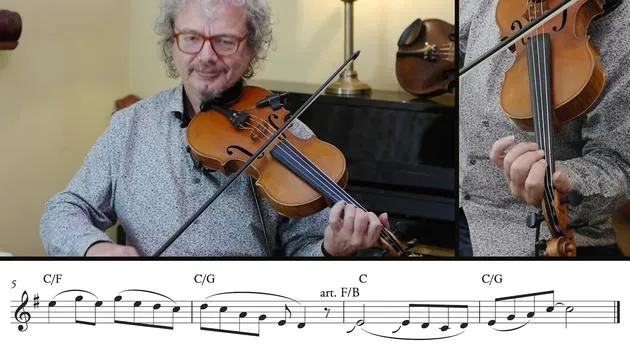
We're finishing off with a little tune that commemorates the epic battle between the fiddle section and the brass section in Dex's Midnight Runners.
Your Assignment
-
Brass Parts:
Using the G and D backing chords, try to create your own brass parts. -
Learning "Brass Doff":
Look at the tune that we just played and see if you can learn it. -
Pop Songs Practice:
Find some pop songs you know and try adding your own brass section fiddle parts to those songs.
Happy practicing!
28 Lektionen
2 Std. 28 Min. strukturierte Videolektionen
Erweiterte Videofunktionen
Verlangsamen, Passagen loopen, mitlesen
Handy, Tablet & Desktop
Üben, wo du willst
100 % Zufriedenheitsgarantie
30 Tage Geld-zurück-Garantie
Lern deinen Guru kennen
Lern deinen Guru kennen
Chris Haigh ist seit 25 Jahren professioneller Fiddle-Spieler mit Erfahrung in vielen verschiedenen Genres. Er hat auf über 75 Alben gespielt und dabei mit Künstlern wie Alison Moyet, Bob Geldof, All About Eve, Michael Ball, David Soul, Oumou Sangare, The Quireboys, Riverdance, Morcheeba, James Galway und Steps zusammengearbeitet.
Er hat Swing-Jazz mit The Kimbara Brothers, Diz Disley, Le Jazz, The Hot Club of London und den Quecumbar Allstars gespielt und leitet die siebenköpfige sowjetische Swing-Band The Kremlinaires.
Chris gibt Unterricht und Workshops zur Jazzgeigen-Technik und hat Jazzgeige an den Universitäten Middlesex, Brunel und Newcastle sowie am Truro College unterrichtet. Zu seinen Veröffentlichungen zählen neun Fiddle-Bücher, darunter The Fiddle Handbook.
Außerdem betreibt er Fiddling Around (fiddlingaround.co.uk), vermutlich die umfassendste und meistbesuchte Quelle für Fiddle-Wissen im Netz.







