



Grundrhythmus 1
Mit
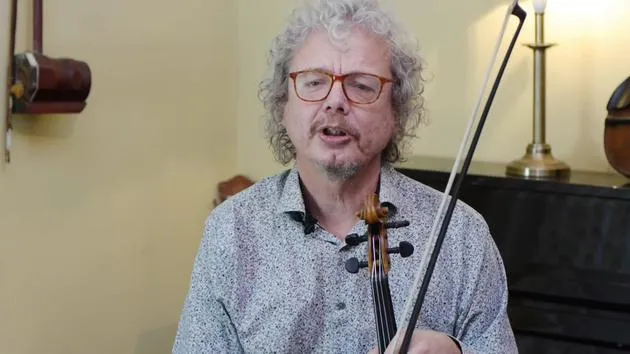
Chris HaighChris Haigh behandelt die Grundlagen der Rock-Violine und konzentriert sich darauf, wie man sich in eine Band einfügt und Rhythmus spielt, statt ständig zu solieren.
© 2011 Schott Music Ltd, London
Das steckt im Kurs
28 Lektionen (2h 28m) · 1 gratis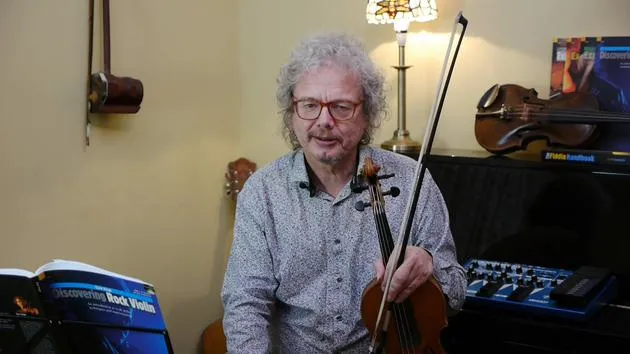
Transkript der Lektion
Rock Violin Basics
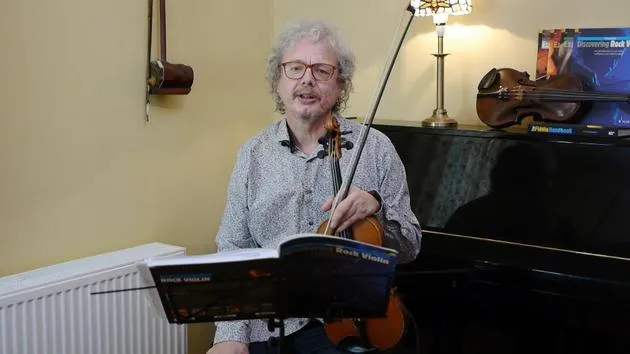
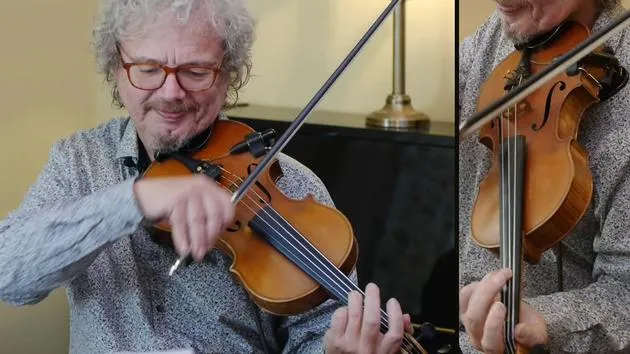
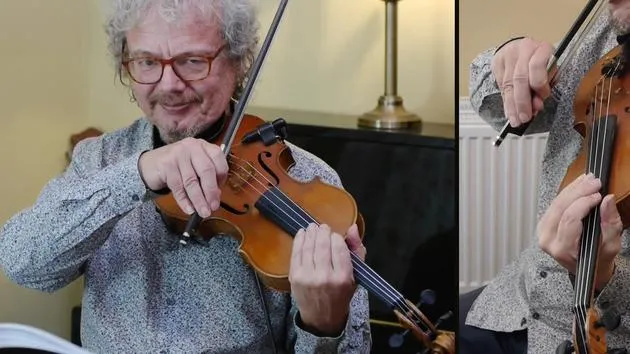
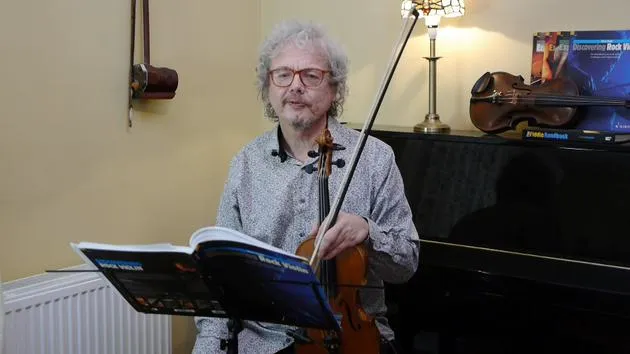
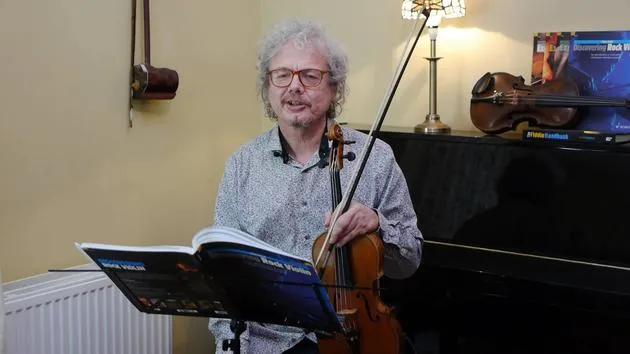
In this lesson, we're going to look at the very bare bones of rock violin playing. We'll interpret rock very loosely to cover various situations where you're playing in a band.
Performance Mindset
Some of you will want to turn up to 11 and shred right away, and there will be quite a lot of that towards the end of this course. However, if you expect that to define your rock violin career, be prepared for a short but glorious journey.
You've got to find ways of playing in a band where you're not at the front all the time, soloing constantly. Especially if you have a singer, they may quickly want to reduce your spotlight.
Playing as Part of the Rhythm Section
I've been in this situation and learned a lot from it. So let's explore some simple ways to be an effective part of the rhythm section.
Chord Sequence
Let's start off with a simple chord sequence.
- We've got three chords today: IV and V.
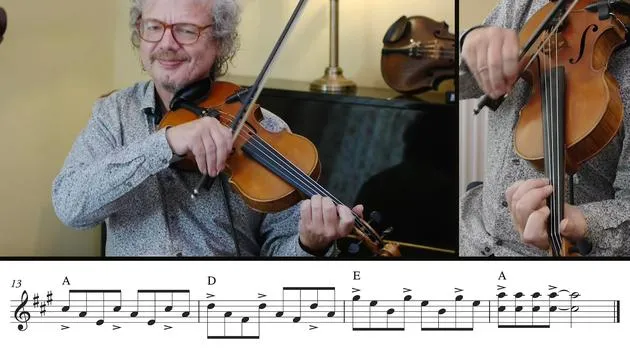
- In this case, we're working with A, D, and E.
Question: What can you do whilst those chords are playing?
-
Single Notes on the Roots
- First, we'll try playing single notes on the roots.
-
Eighth Notes
- Next, we'll play eighth notes. This gives us a lot more notes while still focusing on the roots.
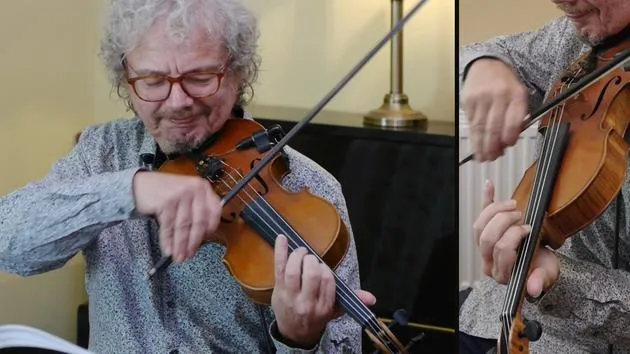
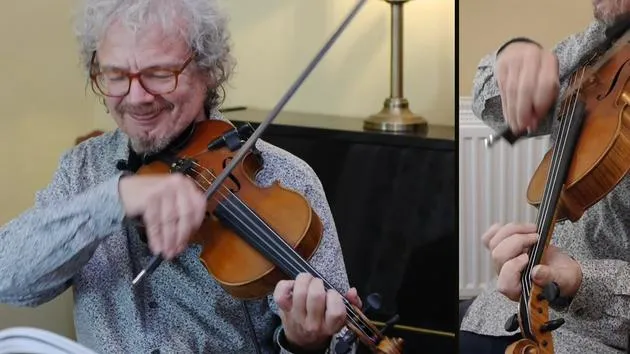
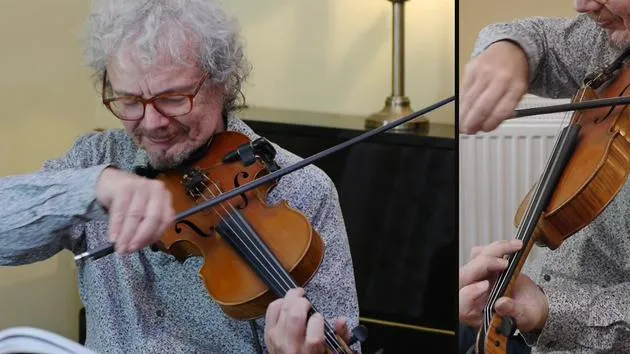
- Remember to strike down at the heel for a punchy rhythmic effect.
-
Accentuation
- Let's increase our accents:
- da da da da da da da da da da da da da.
- Again, maintain that heel strike.
- Let's increase our accents:
-
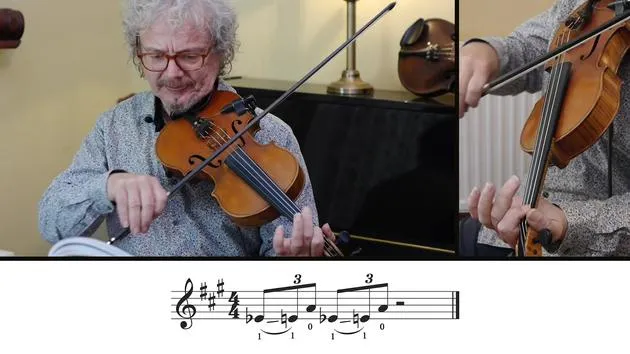
Playing Arpeggios
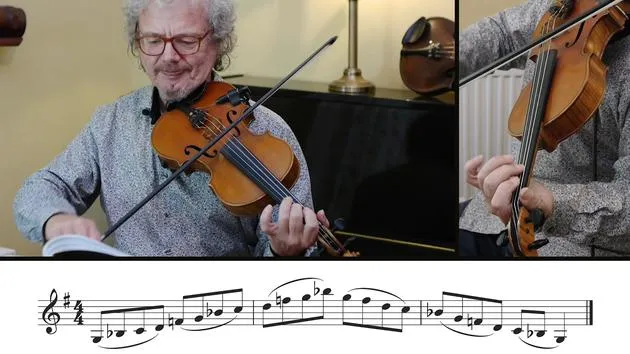
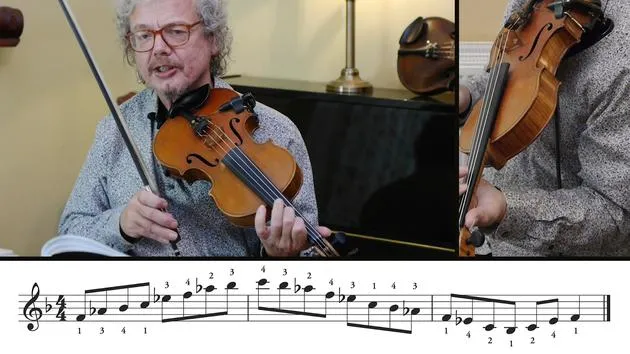
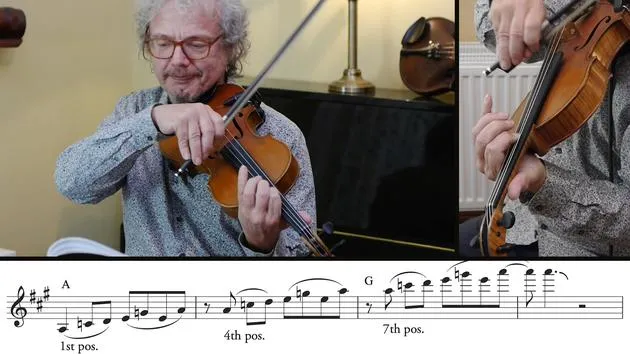
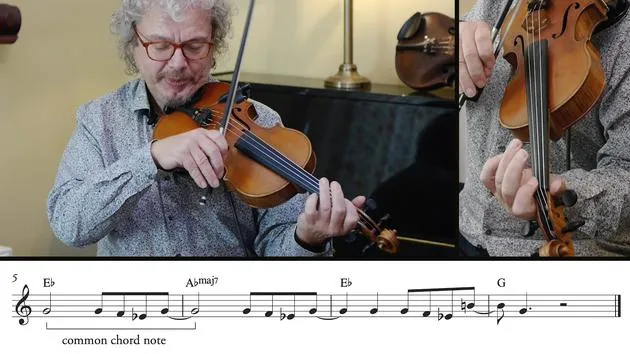
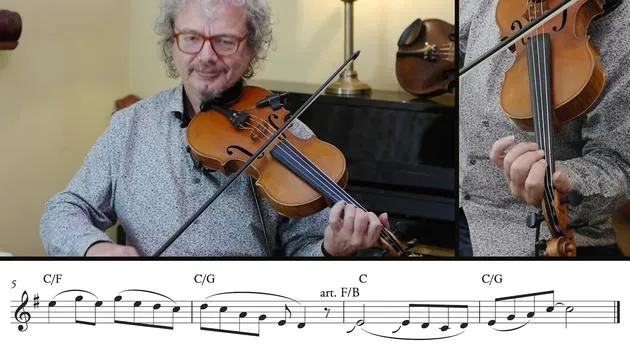
- This time, we'll move to playing arpeggios, which include the root, third, and fifth:
- Go up and down the arpeggio for each chord.
- Instead of going up and down, try going down and up.
- This time, we'll move to playing arpeggios, which include the root, third, and fifth:
-
Accents with Rhythm
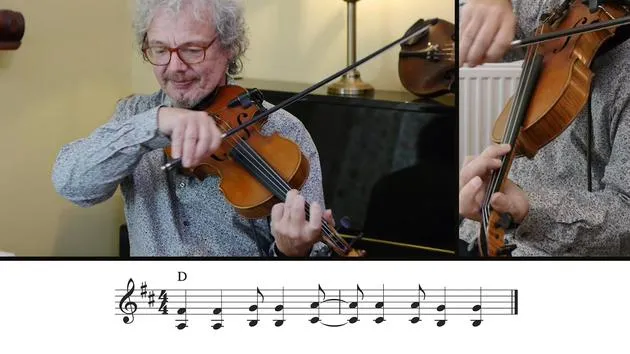
- Now, let's use the roots again but focus on the accents:
- Hear all down bows: da da da.
- This consistency increases attack.
- Now, let's use the roots again but focus on the accents:
Two-Bar Patterns
Now we'll shift gears with a two-bar long pattern:
- da da da da da da da da da da da da.
- This will involve a different chord sequence: two bars of A, followed by two bars of D.
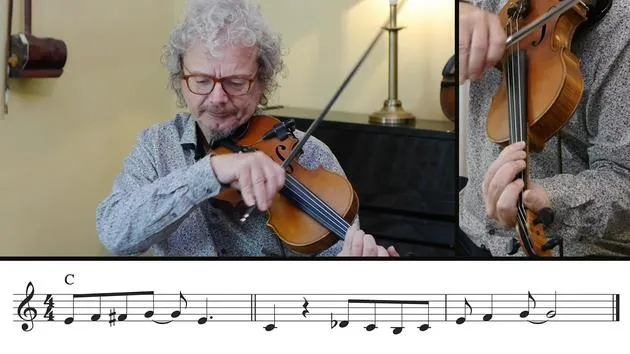
Next, let's create another two-bar pattern, differing between the two bars:
- You'll have off beats, and then a burst of notes at the end.
Application
With the chords, you can see we've explored various approaches to both the notes and rhythms.
- These notes and rhythms will lock in with the rhythm section, drums, bass, and guitar, keeping you busy and happy without overshadowing the singer.
Assignment
For this lesson, here are your tasks:
-
Practice Patterns
Review all the different patterns we've covered. Play them along with the backing tracks, ensuring you use the correct bowing and accentuation. -
Create Your Own Patterns
Using the backing tracks, experiment with creating your own similar patterns. -
Identify Songs
Listen for songs on the radio or in your collection that have a similar feel. Try creating patterns that suit those songs, no matter what key they happen to be in.
Happy practicing!
28 Lektionen
2 Std. 28 Min. strukturierte Videolektionen
Erweiterte Videofunktionen
Verlangsamen, Passagen loopen, mitlesen
Handy, Tablet & Desktop
Üben, wo du willst
100 % Zufriedenheitsgarantie
30 Tage Geld-zurück-Garantie
Lern deinen Guru kennen
Lern deinen Guru kennen
Chris Haigh ist seit 25 Jahren professioneller Fiddle-Spieler mit Erfahrung in vielen verschiedenen Genres. Er hat auf über 75 Alben gespielt und dabei mit Künstlern wie Alison Moyet, Bob Geldof, All About Eve, Michael Ball, David Soul, Oumou Sangare, The Quireboys, Riverdance, Morcheeba, James Galway und Steps zusammengearbeitet.
Er hat Swing-Jazz mit The Kimbara Brothers, Diz Disley, Le Jazz, The Hot Club of London und den Quecumbar Allstars gespielt und leitet die siebenköpfige sowjetische Swing-Band The Kremlinaires.
Chris gibt Unterricht und Workshops zur Jazzgeigen-Technik und hat Jazzgeige an den Universitäten Middlesex, Brunel und Newcastle sowie am Truro College unterrichtet. Zu seinen Veröffentlichungen zählen neun Fiddle-Bücher, darunter The Fiddle Handbook.
Außerdem betreibt er Fiddling Around (fiddlingaround.co.uk), vermutlich die umfassendste und meistbesuchte Quelle für Fiddle-Wissen im Netz.







