



Den Akkorden folgen
Mit
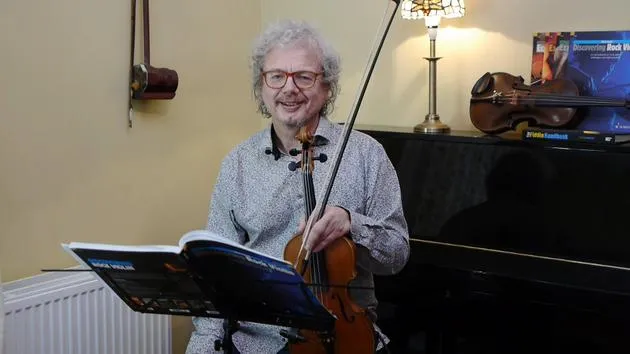
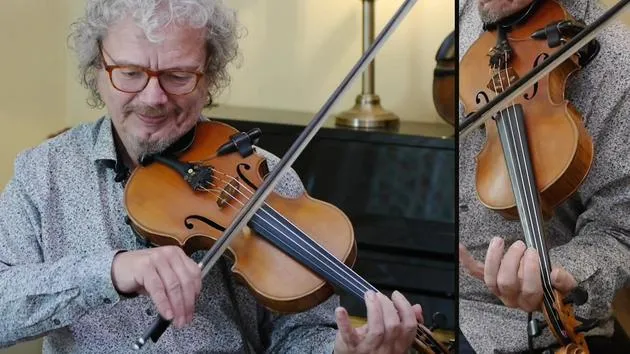
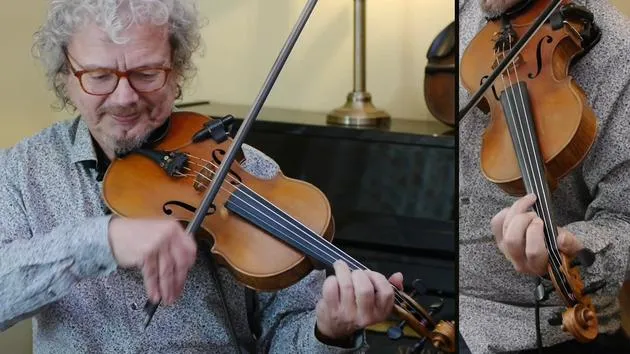
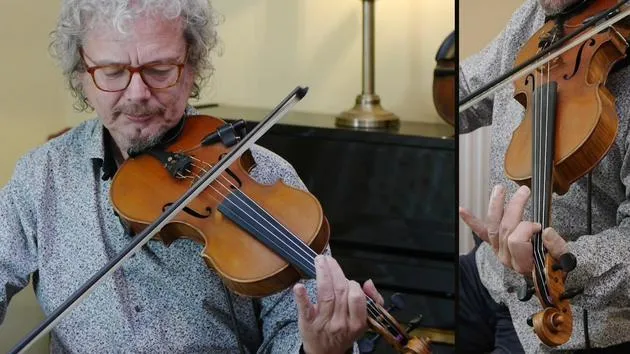
Chris HaighChris Haigh erklärt, wie Akkorde mit der Melodie zusammenhängen, und baut eine diatonische Akkordfolge in C auf, damit du beim Improvisieren eine Landkarte hast.
© 2011 Schott Music Ltd, London

Das steckt im Kurs
28 Lektionen (2h 28m) · 1 gratis
Transkript der Lektion
Understanding the Relationship Between Chords and Melody
Hi everyone! In this lesson, we're going to talk about the relationship between chords and melody.
Overview
So far, we've kind of dodged around chords a bit. All this stuff about blues contradicts classical music theory quite a lot. But now, we're going to dive deeper into what chords actually are and how you can use them when you're improvising.
Diatonic Chord Sequences
Let's first take a look at what's called a diatonic chord sequence. To do that, we need to look at the piano. We will focus on the key of C, which is all the white notes. This is convenient because I'm not much of a piano player!
From those notes, we can create a whole load of chords:
- C Major (root, third, fifth)
- D Minor
- E Minor
- F Major
- G Major
- A Minor
- B Minor, flattened fifth
- Back to C
I'm not going to explain exactly how we get to those, but those chords are made up from the notes of a C major scale.
If a chord sequence consists only of those chords (or some of them), then any note in that scale will fit to some extent throughout that sequence. This is what we call a diatonic sequence: a simple sequence where all the notes and chords are derived from a single scale. This makes it theoretically very easy to improvise on, and that's what we will attempt!
The Tune "Diatonic"
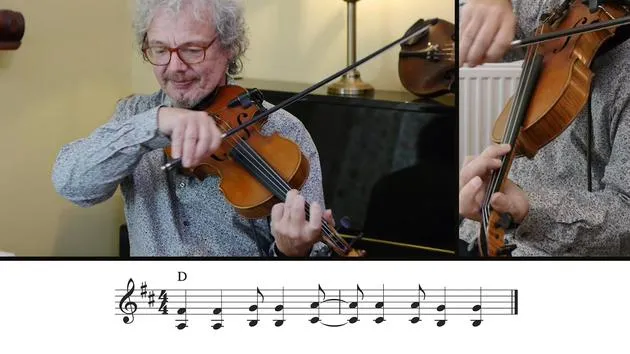
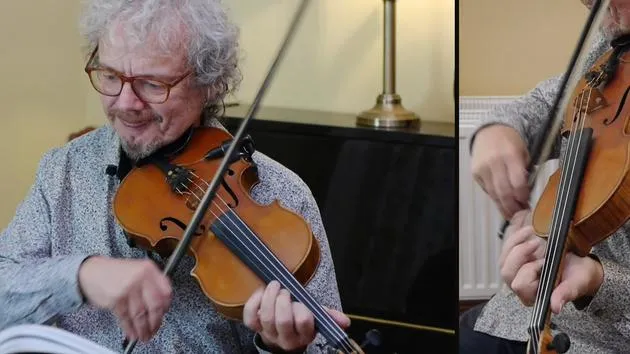
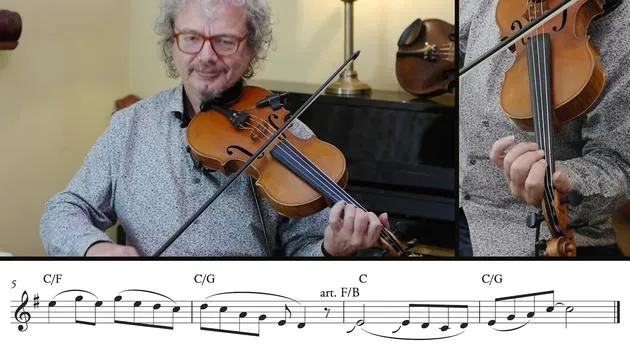
Here's a little tune called "Diatonic," which consists of these simple chords:
- C
- A minor
- F
- G
- A bit of E minor
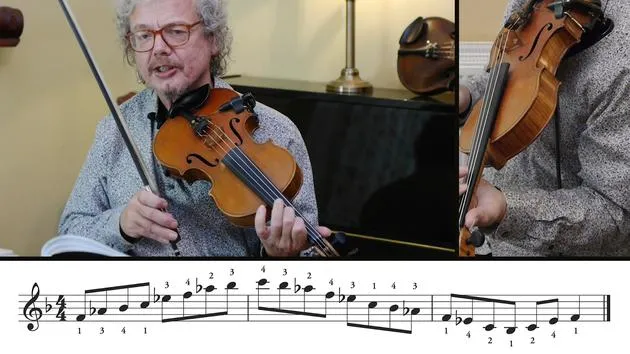
The melody I'll play is based entirely on the C major scale. When it comes to improvising, you have a choice of all the notes that fit over these chords. However, some notes are always safer than others, depending on the actual chord.
Safe Notes
- Over the C chord: The root, third, and fifth will be safe notes.
- Over the A minor chord: The safe notes change accordingly.
The other notes in the diatonic sequence or scale will also work but may not be as safe. If you want a completely safe solo, you will always stick with the root, third, and fifth of whatever chord you're playing.
Examples of Safe Phrases
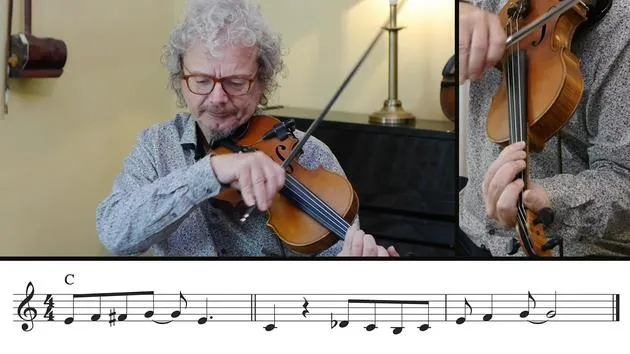
A few safe phrases in C, for example, might sound pretty boring:
- (play an example)
But they are undoubtedly safe because those notes won't clash with the chord.
Passing Notes
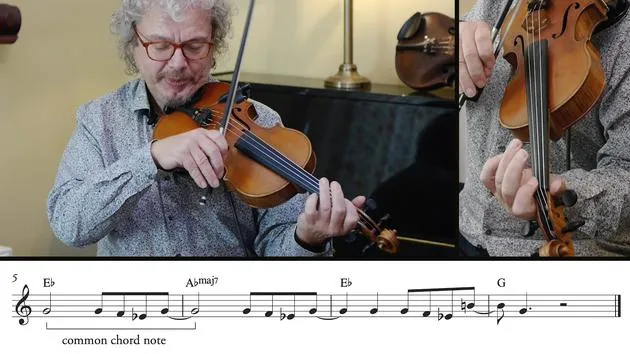
While I mentioned the safe notes, they're certainly not the only notes you can use. Other notes can effectively serve as passing notes, notes that lie between other safe notes.
For example, over a C chord:
- The D note acts as a passing note going from a safe note back to another safe note.
- Although the F note isn't a safe note, it can sound safe as part of a phrase.
This approach is a million miles away from blues, which often involves altering conventional harmony.
Playing Outside of Safe Notes
Now, let's look at a few different ways to deliberately play outside of the safe notes.
Altered Chords
One situation might arise when you don't have a diatonic sequence, and one of the chords is outside of that sequence or is an altered chord.
For example, consider G augmented: a G major chord with a sharpened fifth.
In this context, a certain phrase could also be a safe phrase because it relies on a note that's within the chord.
More Passing Notes
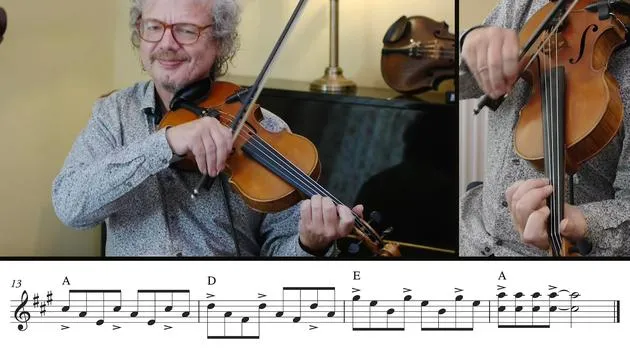
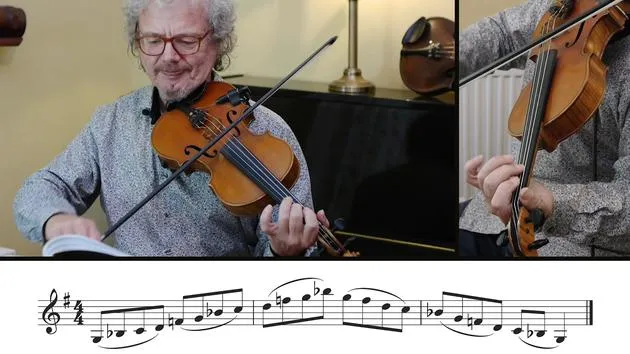
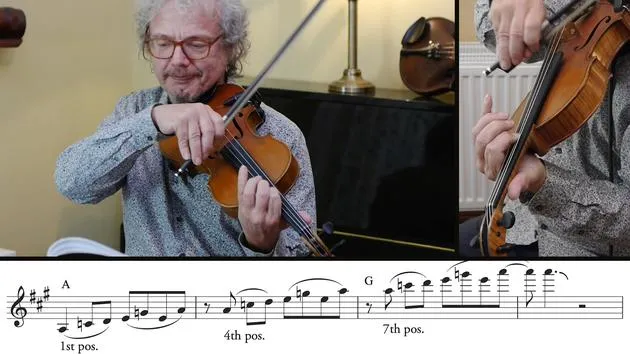
Here's a little chromatic phrase going from E to G. We're inserting the F sharp, which sounds absolutely fine as part of this phrase.
Another instance involves an outside note, still fitting into a phrase.
Blues Phrases
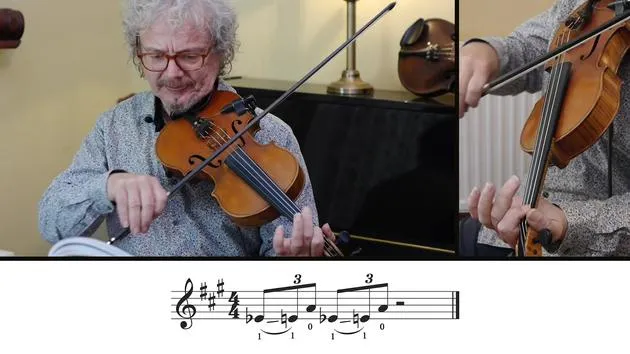
We've talked a lot about blues phrases, stepping outside the chords with flattened thirds, flattened fifths, or flattened sevenths.
Let me remind you with a couple of phrases in C. In a blues context, they sound absolutely fine, but Bach or Mozart might have been horrified!
Deliberate Discord
Lastly, unsafe notes or notes outside of the diatonic sequence can be used for a deliberate effect, creating discord.
For example:
(play an example)
In cases like this, you're challenging traditional classical music, creating unpleasing sounds can have its place in rock music. If you want an example, listen to King Crimson. Their violin player, David Cross, showcases this brilliantly in his solo on "Lark's Tongues in Aspic 2."
Caution
However, treat this approach with caution. The appropriateness depends on the band you're playing in. King Crimson could push boundaries, but the same might not go down well with the Batley Variety Club's house band.
Assignment
For your assignment, try the following:
- Using the diatonic backing track, improvise using just the C major scale.
- Work out some backing figures similar to what we've just played, again using just the C major scale and possibly parts of the Twin Paths of Destiny harmonies.
- Listen to some of your favorite songs, see if you can pick out the chords 1, 4, and 5 along with any other chords present.
- In particular, listen out for any chords that sound non-diatonic or unexpected and see if you can figure out what those chords are.
Happy practicing!
28 Lektionen
2 Std. 28 Min. strukturierte Videolektionen
Erweiterte Videofunktionen
Verlangsamen, Passagen loopen, mitlesen
Handy, Tablet & Desktop
Üben, wo du willst
100 % Zufriedenheitsgarantie
30 Tage Geld-zurück-Garantie
Lern deinen Guru kennen
Lern deinen Guru kennen
Chris Haigh ist seit 25 Jahren professioneller Fiddle-Spieler mit Erfahrung in vielen verschiedenen Genres. Er hat auf über 75 Alben gespielt und dabei mit Künstlern wie Alison Moyet, Bob Geldof, All About Eve, Michael Ball, David Soul, Oumou Sangare, The Quireboys, Riverdance, Morcheeba, James Galway und Steps zusammengearbeitet.
Er hat Swing-Jazz mit The Kimbara Brothers, Diz Disley, Le Jazz, The Hot Club of London und den Quecumbar Allstars gespielt und leitet die siebenköpfige sowjetische Swing-Band The Kremlinaires.
Chris gibt Unterricht und Workshops zur Jazzgeigen-Technik und hat Jazzgeige an den Universitäten Middlesex, Brunel und Newcastle sowie am Truro College unterrichtet. Zu seinen Veröffentlichungen zählen neun Fiddle-Bücher, darunter The Fiddle Handbook.
Außerdem betreibt er Fiddling Around (fiddlingaround.co.uk), vermutlich die umfassendste und meistbesuchte Quelle für Fiddle-Wissen im Netz.







