



Exercise nine: Same weight, increasing speed
With
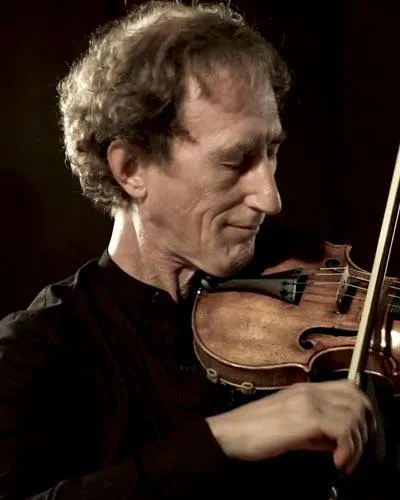
Simon FischerSimon Fischer's bow-control exercise: hold the bow weight identical while moving between sound points and increasing speed, training tone against your instincts.
What's in the course
17 lessons (1h 15m) · 1 free
01. Introduction to Combinations
0:18
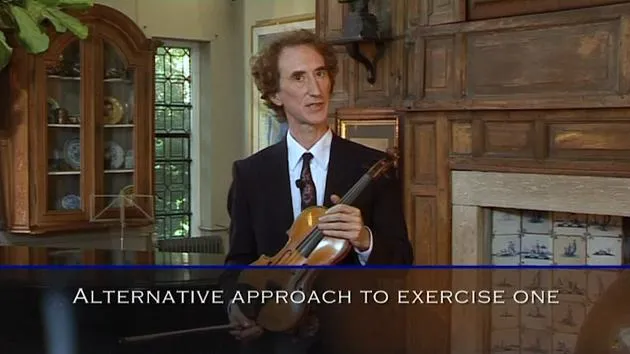
02. Alternative approach to Exercise one
1:23
03. Exercise six: Speed exercise + Pressure exercise
0:55
04. Exercise seven: Speed exercise + Changing soundpoint
3:30
05. Exercise eight: Pressure exercise + Sounding soundpoint
1:44
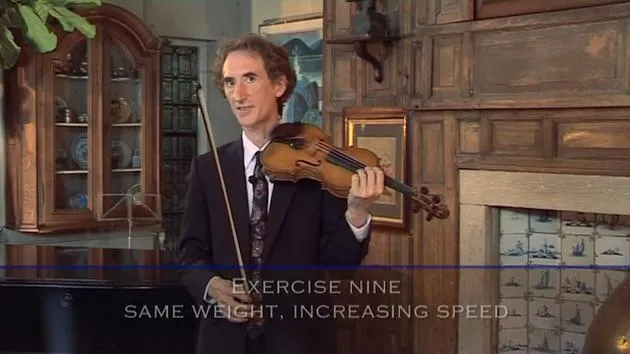
06. Exercise nine: Same weight, increasing speed
You are here1:21
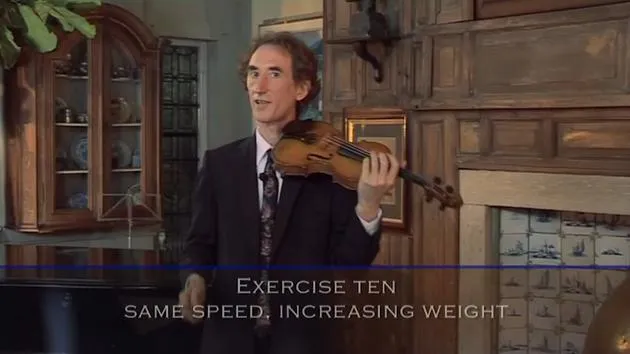
07. Exercise ten: Same speed, increasing weight
1:14
08. Conclusion
1:33
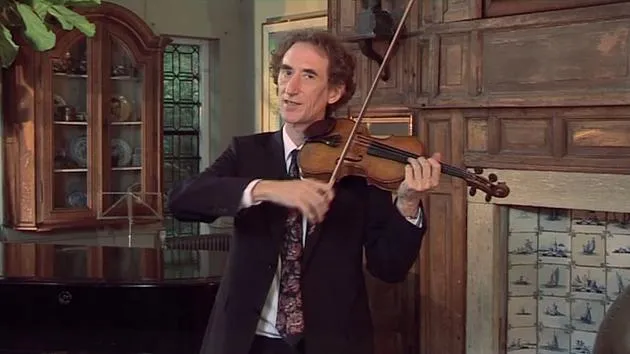
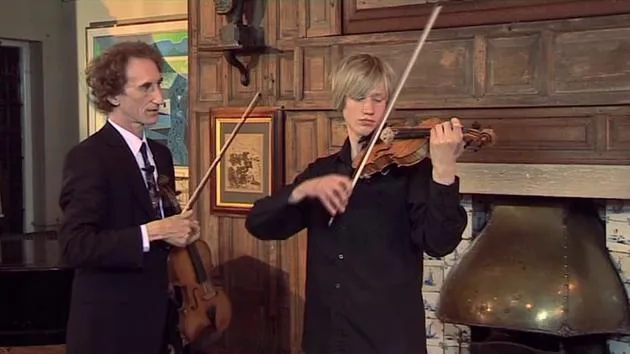
Lesson transcript
Bow Control Exercise
This exercise takes great control and, to an extent, forces you to run counter to instinct.
Steps to Follow:
-
Start at Sound Point One
- Begin in the middle of the bow.
- Play with regular, even strokes.
- Use very little bow and make a mental note of the exact weight you're using.
-
Transition to Sound Point Two
- Without altering the weight, keeping it absolutely the same, without lightening or increasing it even a fraction, move the bow to Sound Point Two.
- Since you've kept the weight the same, the only way to prevent the sound from breaking is to increase the speed of the bow.
-
Balance Speed, Pressure, and Sound Point
- Increase the length of the bow so that the balance of speed, pressure, and sound point remains consistent.
- Continue making every effort not to change the weight in the bow.
-
Move to Sound Point Three
- Now, move to Sound Point Three.
- Increase the bow length even further.
Note: This exercise requires patience and precision. The aim is to maintain the balance of all elements while controlling the sound quality.
17 lessons
1h 15m of structured video lessons
Advanced video features
Slow down, loop a passage, follow along
Mobile, tablet & desktop
Practise wherever you are
100% satisfaction guarantee
30-day money-back guarantee
Meet your guru
Meet your guru
Simon Fischer enjoys a distinguished and wide-ranging career as a performer, educator and recording artist.
He has performed worldwide as a recitalist, and committed three Brahms Sonatas to record, a recording that received high praise in Gramophone Magazine.
Simon is recognised as having a place amongst the world's elite teachers. He is a professor at the Guildhall School of Music, and has held positions at the Yehudi Menuhin School, Wells Cathedral School and the Purcell School, and for 15 years was a visiting professor at the Royal Scottish Academy of Music. Having studied in London with Yfrah Neaman, and in New York with Dorothy DeLay, Fischer's approach unites the best elements of the French, Russian and American violin traditions.
Fischer's published work greatly influences the teaching of the violin. Having written for The Strad magazine since 1991, his monthly articles have attracted a worldwide following. Published by Edition Peters, his technique books Basics and Practice (translated into Korean, Italian and German), Scales and The Violin Lesson, and the DVD The Secrets of Tone Production (now available to stream via MusicGurus), have become standards on many continents. His book and DVD Warming Up was described by The Strad magazine as "23 pages of pure technical gold".
In 2014 Simon Fischer was awarded the European String Teachers Association prize "In celebration of a lifetime contribution to String Teaching".
In his four-part Secrets of Tone Production course, Simon guides you through getting to know your instrument and then working through his fundamental tone exercises step by step, so you can produce a richer, more controlled and more beautiful sound on the violin.







