



Evenness: Sustaining between stages
With
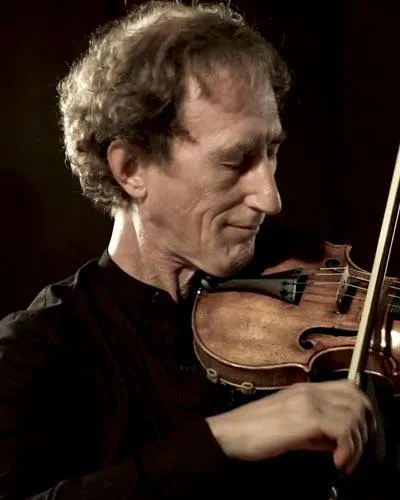
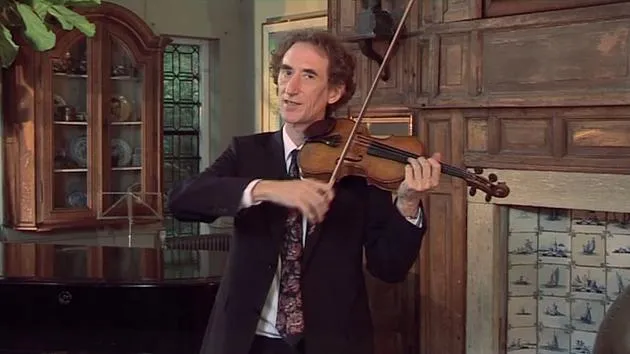
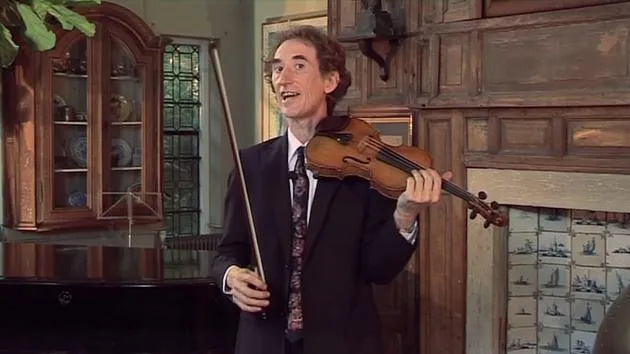
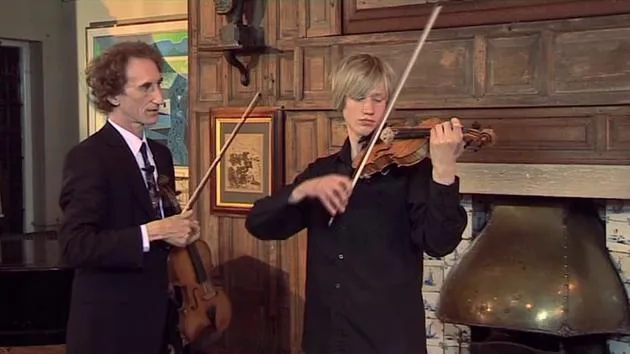
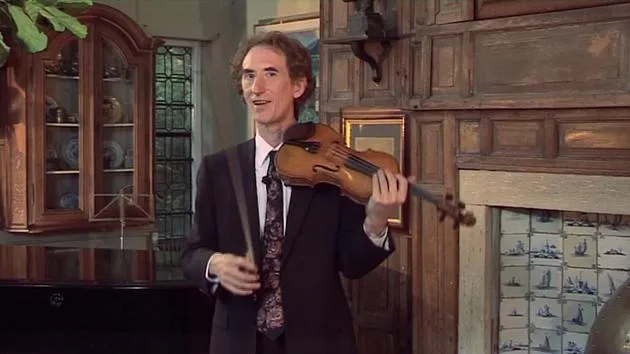
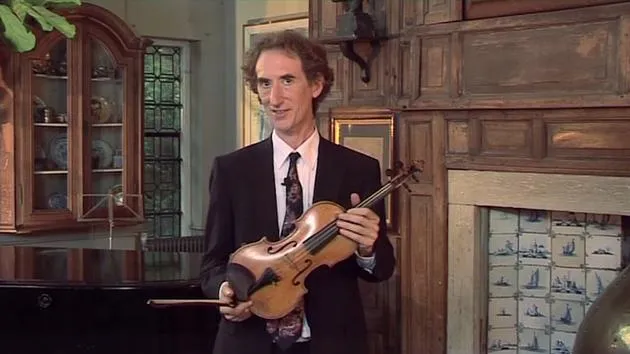
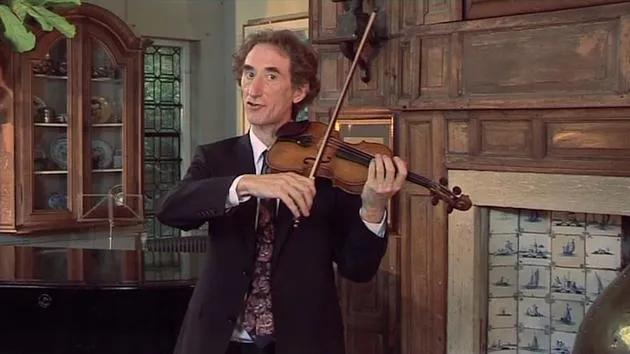
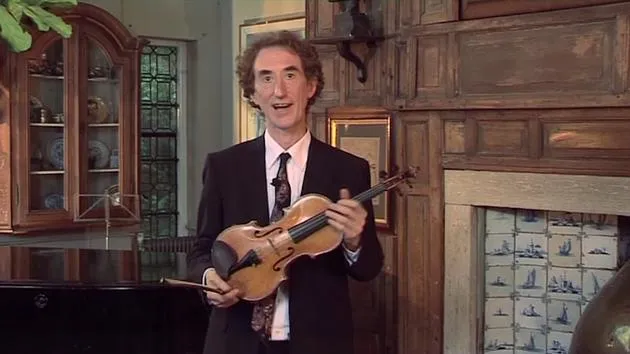
Simon FischerSimon Fischer shows how to keep an even tone by sustaining long, continuous bows between the stages of the speed exercise, feeling the flow and momentum of the bow.
What's in the course
17 lessons (1h 15m) · 1 free
01. Introduction to Combinations
0:18
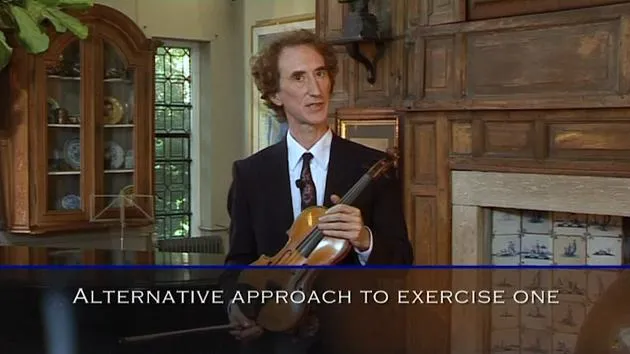
02. Alternative approach to Exercise one
1:23
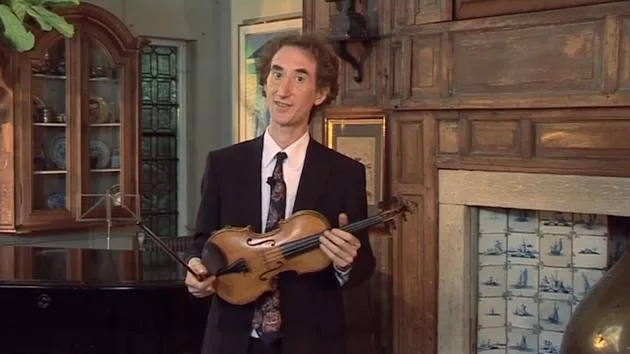
03. Exercise six: Speed exercise + Pressure exercise
0:55
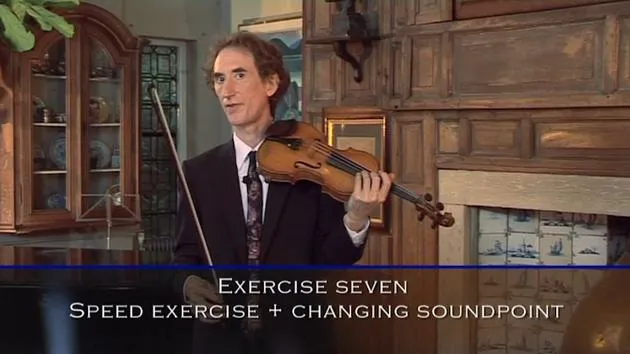
04. Exercise seven: Speed exercise + Changing soundpoint
3:30
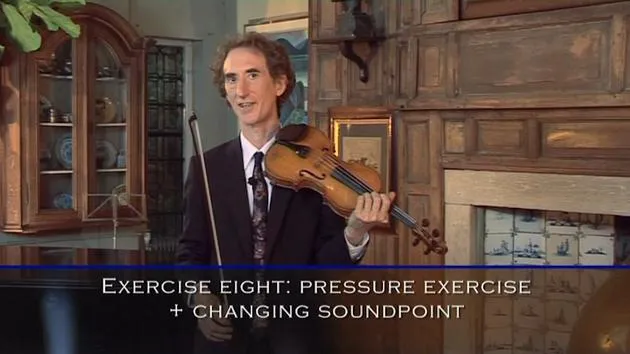
05. Exercise eight: Pressure exercise + Sounding soundpoint
1:44
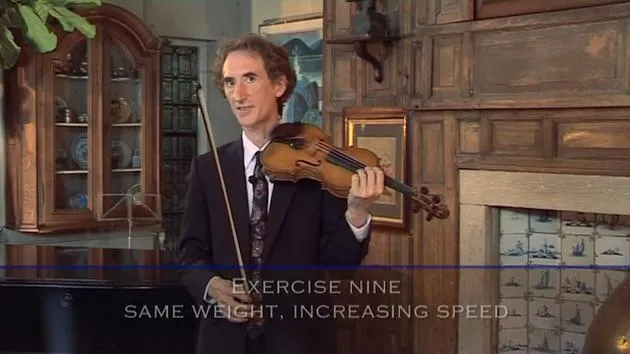
06. Exercise nine: Same weight, increasing speed
1:21
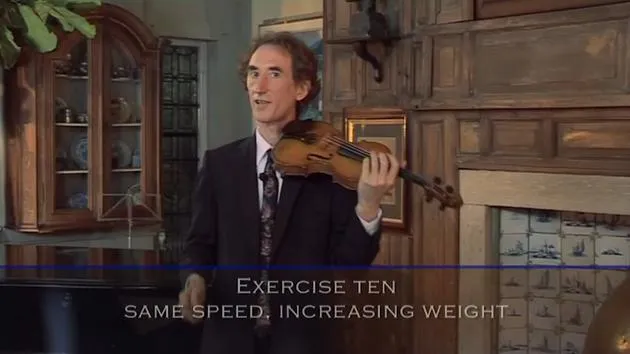
07. Exercise ten: Same speed, increasing weight
1:14
08. Conclusion
1:33
Lesson transcript
Music Lesson: Bowing Technique
As in the pressure exercise:
- Sustain long bows between the stages of the speed exercise.
- Feel the flow, evenness, and momentum of the bow.
Then, keep the same feeling of flow as you continue without stopping, straight into the divisions:
Along, along, along, along, along, along.
That's it. Six. One, two.
Just draw the bow continuously for a minute.
Feel the flow and the momentum.
The same again. Just feel.
Now the same with the speed.
So much better every time, isn't it? Very good.
And do four on the next one. But play deep into the string.
Important Points on Bowing
Naomi, you know, when we start out learning to play a string instrument, the first problem is just how to draw the bow parallel with the bridge. And we concentrate on that for a long time.
But there are two other things that are just as important:
- Distance from the Bridge
- Playing Down Vertically into the String
We don't want to just think in terms of "down bow" is sort of that way, and "up bow" is sort of that way, which makes you play like this way, pushing and pulling.
I know. I'm saying we mustn't press, but still, we need to engage the string. So you need to:
- Be near the bridge,
- Play deep into the string,
- Really engage the string.
Bravo! That's excellent. Now do six.
Counting Bow Strokes
Okay. Yes. If you do six, which number happens exactly in the middle of the bow?
4. 4 is half of 6.
And if you're doing 8, which number would begin right in the middle of the bow?
Five. Right. Five is half of eight, as we know.
But you're going one, two. You're starting the third around there. We want:
- One,
- Two,
- Three, right in the middle of the bow,
- Four,
- Five,
- Six.
Okay, save it along, along. That's it. Okay.
17 lessons
1h 15m of structured video lessons
Advanced video features
Slow down, loop a passage, follow along
Mobile, tablet & desktop
Practise wherever you are
100% satisfaction guarantee
30-day money-back guarantee
Meet your guru
Meet your guru
Simon Fischer enjoys a distinguished and wide-ranging career as a performer, educator and recording artist.
He has performed worldwide as a recitalist, and committed three Brahms Sonatas to record, a recording that received high praise in Gramophone Magazine.
Simon is recognised as having a place amongst the world's elite teachers. He is a professor at the Guildhall School of Music, and has held positions at the Yehudi Menuhin School, Wells Cathedral School and the Purcell School, and for 15 years was a visiting professor at the Royal Scottish Academy of Music. Having studied in London with Yfrah Neaman, and in New York with Dorothy DeLay, Fischer's approach unites the best elements of the French, Russian and American violin traditions.
Fischer's published work greatly influences the teaching of the violin. Having written for The Strad magazine since 1991, his monthly articles have attracted a worldwide following. Published by Edition Peters, his technique books Basics and Practice (translated into Korean, Italian and German), Scales and The Violin Lesson, and the DVD The Secrets of Tone Production (now available to stream via MusicGurus), have become standards on many continents. His book and DVD Warming Up was described by The Strad magazine as "23 pages of pure technical gold".
In 2014 Simon Fischer was awarded the European String Teachers Association prize "In celebration of a lifetime contribution to String Teaching".
In his four-part Secrets of Tone Production course, Simon guides you through getting to know your instrument and then working through his fundamental tone exercises step by step, so you can produce a richer, more controlled and more beautiful sound on the violin.







