



Playing exercise five with a straight bow
With
Simon Fischer
What's in the course
17 lessons (1h 15m) · 1 free
01. Introduction to Combinations
0:18
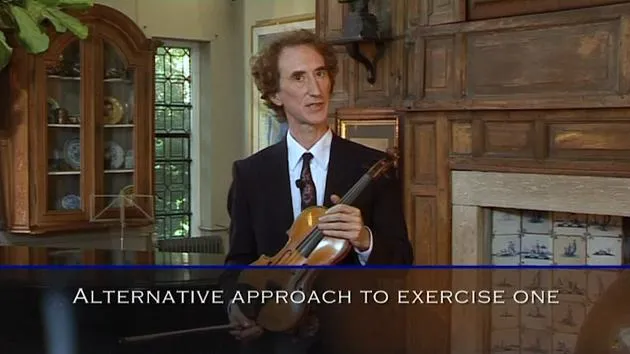
02. Alternative approach to Exercise one
1:23
03. Exercise six: Speed exercise + Pressure exercise
0:55
04. Exercise seven: Speed exercise + Changing soundpoint
3:30
05. Exercise eight: Pressure exercise + Sounding soundpoint
1:44
06. Exercise nine: Same weight, increasing speed
1:21
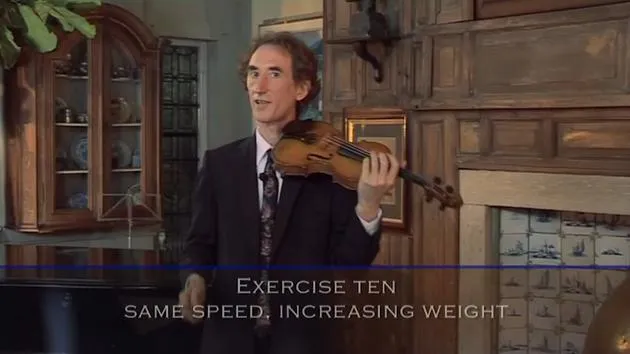
07. Exercise ten: Same speed, increasing weight
1:14
08. Conclusion
1:33
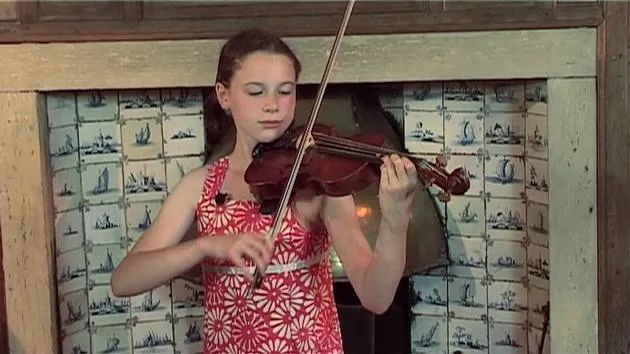
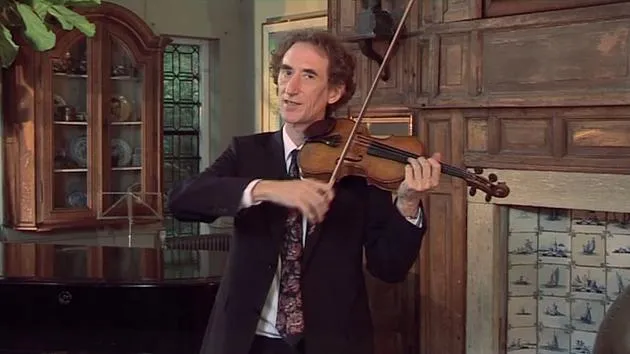
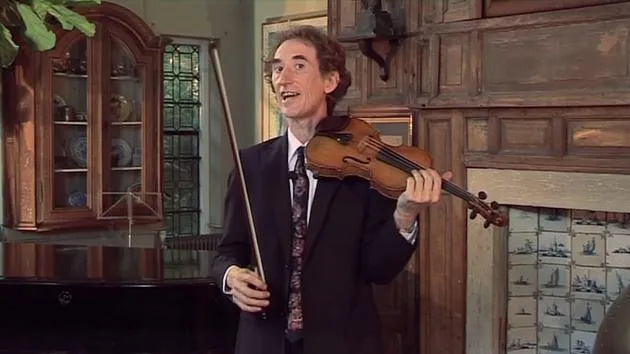
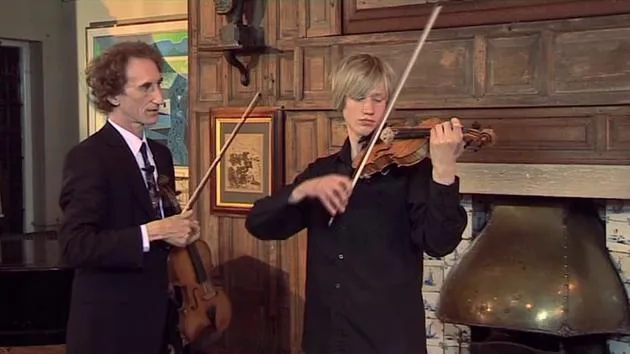
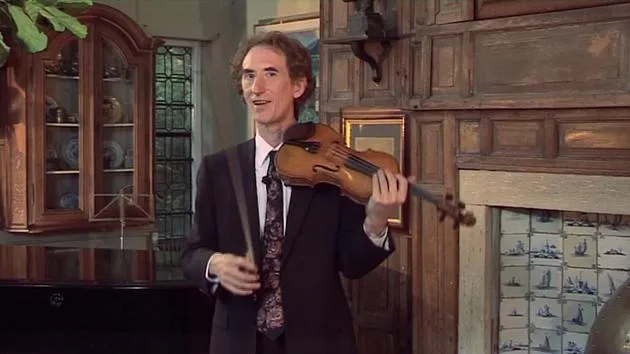
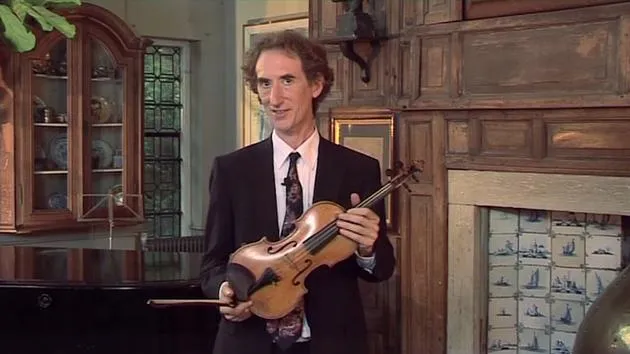
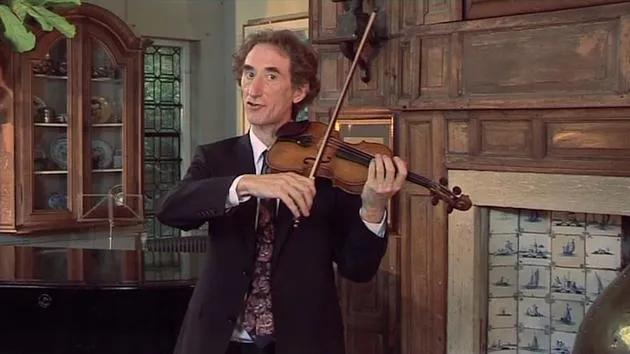
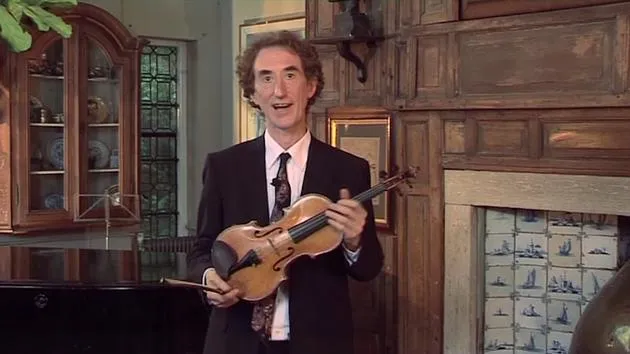
Lesson transcript
Music Lesson: Bow Angling Exercises
Exercises 1 to 4 are very straightforward and contain nothing that anyone ever finds confusing or difficult to get pretty quickly. However, in this exercise, angling the bow the right way is the single factor that anyone ever finds confusing.
Getting Started with a Straight Bow
To make things less complicated for the first few times, it's best to start with a basically straight bow parallel to the bridge. You can add angling the bow later.
We've practiced angling the bow and steering in and out of the bridge. But another way of doing this exercise is simply to play with a straight bow.
Practice Steps
-
Into the bridge and out again:
Much better. -
Into the bridge and out again:
You could go further out than that, you know, into the bridge. Go to the fingerboard. That's great. Here we go by the middle of the bow. -
Starting near the bridge:
- Do two in and outs.
- Heavy and away. Save your bow.
-
Heavy and away:
Now, heavy. Go for total purity. Come back. Very good. -
Slow in the bridge:
When you get there, slow. That's perfect. Well done. -
Slow and heavy:
Now, slow and heavy and away. Bravo. Excellent. Thank you. Very good.
Key Concepts
The proportions of the speed at which you go towards the bridge and the increase in weight while slowing down need to be exactly right.
- You're going slightly too fast into the bridge.
- Feel the purity of the sound. All the way.
- Did you hear that? And pure. All the way. Pure.
Advanced Practice
Can you do two in one bow?
- You have to start nearer the bridge.
- When you do more than one, that's it. Go heavy. Heavy, heavy, heavy.
Did you hear the pitch of the note? Go a little bit there. Too much weight. Bravo.
17 lessons
1h 15m of structured video lessons
Advanced video features
Slow down, loop a passage, follow along
Mobile, tablet & desktop
Practise wherever you are
100% satisfaction guarantee
30-day money-back guarantee
Meet your guru
Meet your guru
Simon Fischer enjoys a distinguished and wide-ranging career as a performer, educator and recording artist.
He has performed worldwide as a recitalist, and committed three Brahms Sonatas to record, a recording that received high praise in Gramophone Magazine.
Simon is recognised as having a place amongst the world's elite teachers. He is a professor at the Guildhall School of Music, and has held positions at the Yehudi Menuhin School, Wells Cathedral School and the Purcell School, and for 15 years was a visiting professor at the Royal Scottish Academy of Music. Having studied in London with Yfrah Neaman, and in New York with Dorothy DeLay, Fischer's approach unites the best elements of the French, Russian and American violin traditions.
Fischer's published work greatly influences the teaching of the violin. Having written for The Strad magazine since 1991, his monthly articles have attracted a worldwide following. Published by Edition Peters, his technique books Basics and Practice (translated into Korean, Italian and German), Scales and The Violin Lesson, and the DVD The Secrets of Tone Production (now available to stream via MusicGurus), have become standards on many continents. His book and DVD Warming Up was described by The Strad magazine as "23 pages of pure technical gold".
In 2014 Simon Fischer was awarded the European String Teachers Association prize "In celebration of a lifetime contribution to String Teaching".
In his four-part Secrets of Tone Production course, Simon guides you through getting to know your instrument and then working through his fundamental tone exercises step by step, so you can produce a richer, more controlled and more beautiful sound on the violin.







