



Synthesised vs. live
With
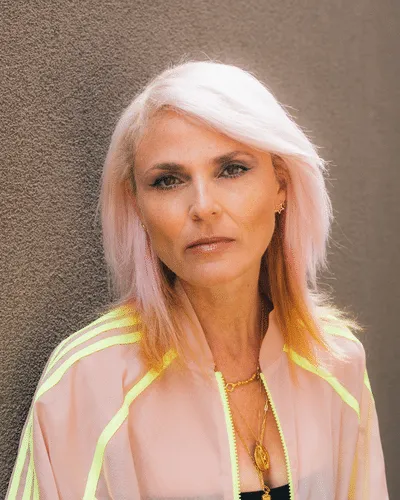
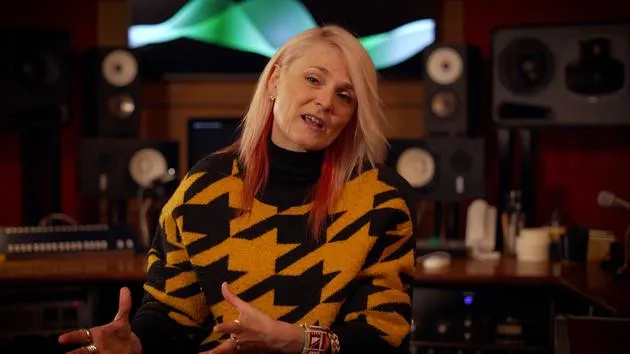
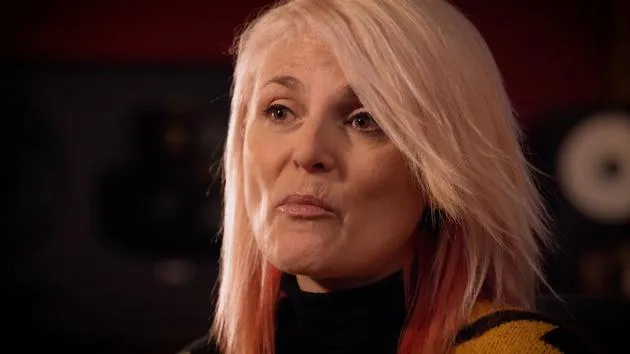
Sister BlissSister Bliss on why a live band beats a laptop - the flexibility that let Faithless reshape their tracks for crowds from dance festivals to rock and jazz stages.
What's in the course
20 lessons (1h 53m) · 1 free
01. Make electronic make sense live
11:22
02. Expanding the studio tracks
7:24
03. Creating space
6:12
04. Synthesised vs. live
You are here4:17
05. Sound designing the show
7:28
06. Rehearsals and preparation
8:56
07. Working with session musicians
7:50
08. Working with musical directors
Free lesson3:18
09. Incorporating stage filming
3:24
10. Visual design
7:59
11. Adapting your setlist
5:18
12. Importance of the crew
6:53
13. Front of house engineer
3:30
14. Live broadcasts
3:03
15. Recording quality
4:22
16. International touring
4:24
17. Time keeping and logistics
3:22
18. When things go wrong
4:41
19. Auditioning
5:19
20. Stress and personal health
4:22
Lesson transcript
Flexibility of a Live Band
What's been amazing about having a live band, as opposed to having everything programmed on a laptop, is that it allows you flexibility. We were not only booked for dance music festivals, but also for festivals alongside rock bands and at jazz festivals.
- Up mountains, down valleys, you name it, we got booked to play it.
- Having that musicianship within the band was really important to allow us to rise to the occasion.
Adapting to Different Festivals
So if there was a metal festival, our sound engineer would just:
- Turn the guitars up to 11
- Make the TOMS really heavy
- Crank up the snare fills
- Add distortion on everything
This way, we didn't feel like we'd come on stage and be really lame alongside these artists. It was a real baptism of fire, a real learning curve.
Sometimes, when we did a jazzy festival, there would be a different energy, and we could really lean into the jazzier side of what we did.
- The playing would be slightly different.
- Some of the licks on the drums would be different.
- Sometimes the bass would move in a slightly different way.
There was a way of being sensitive to our environment.
Freedom Within Structure
The great thing about playing with real musicians is that, although it was within a structure, there was freedom within that. We could also change the set list.
As we grew as musicians, as a band, and as artists, having released not one record, but two records, gaining an audience and moving up the billing at festivals, it felt like we could experiment.
- We were gaining an audience and therefore not always having to win them over.
- It didn't mean we didn't give it 110% every single time, but we felt we could play around with the songs more when we went out to perform them live.
Performance Considerations
If you are an electronic artist and everything is really programmed, you have much less flexibility. We used something called an MPC 4000 to run our beats from. When we were happy with the arrangement, we transferred it to something called an ADAT machine, which was very stable.
Stability of the instruments we were using was really important. I had some analog keyboards, and sometimes, things would go wrong:
- Other keyboards would go out of tune willfully in the middle of a song , quite stressful!
- Sound patches would sometimes disappear.
Having knowledge of what patch I was going to use for each song was crucial since we had worked on them in rehearsals. Unforeseen problems had to be managed on the fly.
Rig Setups for Touring
One of the other things we found very useful as we progressed with our touring was having an A rig and a B rig. This means having exactly the setup, but duplicated.
- This was often necessary because the distances traveled between gigs sometimes didn't allow us to break down the gear after a show and load it onto an articulated lorry in time.
- Certain gigs would require instruments to be set up beforehand.
While the B rig served as a backup, it was never quite as amazing as the A rig, so we always preferred to play on the A rig. Nonetheless, it was useful to have a backup.
Evolution with Technology
Over the years, we ended up using Ableton Live on our last tour, which gave us a lot of flexibility with moving stems about and rearranging the music for a new era. We had done an album that was a remix album, titled 2.0, to celebrate 20 years of Faithless.
We got some amazing remixes done, and we wanted to bring some elements from those remixes into the live show.
It was incredibly useful to be able to experiment with the stems in Ableton and mix them with our previous stems to create a new hybrid, taking the show into the next era.
20 lessons
1h 53m of structured video lessons
Advanced video features
Slow down, loop a passage, follow along
Mobile, tablet & desktop
Practise wherever you are
100% satisfaction guarantee
30-day money-back guarantee
Meet your guru
Meet your guru
'Sister Bliss never stopped writing music. She's an accomplished composer for film and TV, a club DJ, and an advocate for the creative industries'. Billboard
One of the most successful British dance music artists of the past 25 years, Ayalah Bentovim AKA Sister Bliss is the musical force behind Faithless.
Together with iconic front man Maxi Jazz and producer Rollo Armstrong, she formed Faithless: one of the most successful electronic acts of their generation, with a career spanning more than two decades that included 8 albums (3 at number 1) and six top 10 singles. To date, Faithless have sold in excess of 15 million records worldwide and have played live to millions across the world, headlining festivals, stadiums and arenas. The band have collaborated with artists such as Jazzie B, Boy George, Cat Power and Dido, never conforming and moving effortlessly across an eclectic range of genres.
Over a 25-year career that took her from the underground UK club scene to sold-out arena shows and festival headline slots around the globe, Sister Bliss has become one of British dance music's longest-standing and most influential female electronic artists.
She comes off the back of releasing Faithless' first studio album in ten years, the highly anticipated 'All Blessed' - Faithless' love letter to electronic music that presents them at their very best. The album reached number 6 in the charts and the singles, along with their premiere remixes, garnered extensive support across BBC Radio 1, Radio 2 and BBC 6 as well as Kiss FM and Capital.
A classically trained multi-instrumentalist, she has also scored numerous TV, film and theatre productions. Credits include 2012's film Knife Fight starring Rob Lowe and directed by two-time Oscar winner Bill Guttentag, commissions for Sex & The City 2, Chasing Amy, Danny Boyle's The Beach, A Life Less Ordinary, acclaimed British film The Hide, Crossing The Line and the BAFTA-winning TV dramas Life Begins (ITV) and The Poison Tree (ITV).
For theatre, Bliss has written music for The Black Album and The Emperor Jones at The National Theatre in London, as well as composing an original piece for the London Sinfonietta, which was performed at Fuse Festival, UK.
She recently had a lead role in major prime time BBC1 show 'This is My Song', mentoring the contributors and producing their final recordings.
She released a new collaborative album with Rollo and Dido in 2019 under the moniker 'R PLUS' - 'The Last Summer', following a jam-packed summer of festival headline DJ sets throughout the world including sets at Bestival, Exit Festival, Glastonbury, Creamfields, Ibiza and beyond.
Her hugely successful weekly radio show and podcast 'Sister Bliss in Session' is syndicated to over 100 stations and 43 countries worldwide. She recently guest presented Gilles Peterson's acclaimed show on BBC 6 Music and regularly stands in for Ana Matronic on the Dance Devotion show on BBC Radio 2.
She has also presented a 5-part series on Bauer Media's Scala Radio station joining the dots between classical and electronic music, which won the Bronze prize at the New York Festival Radio Awards, competing against 30 countries.
She currently teaches at Tileyard Studios' Masters MA course, including modules on songwriting, production and writing to commercial brief, and mentors individual Masters students - the same hands-on knowledge she shares in Studio to Stage, breaking down exactly how Faithless turned their records into a stadium-filling live show.







