



Incorporating stage filming
With
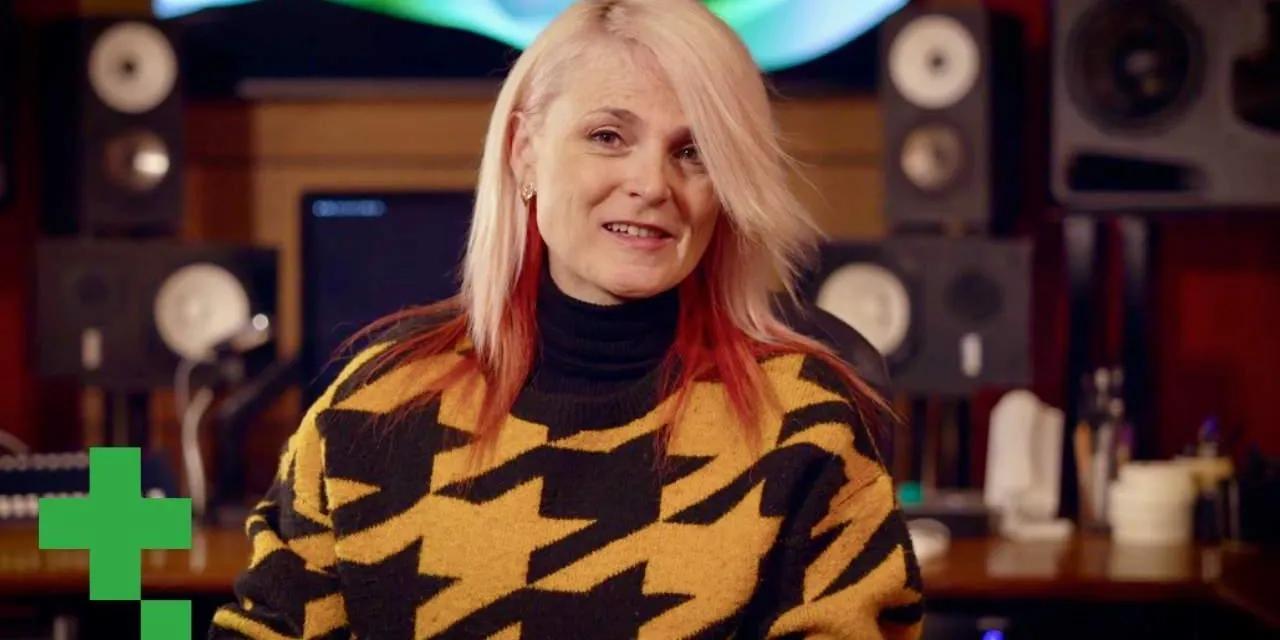
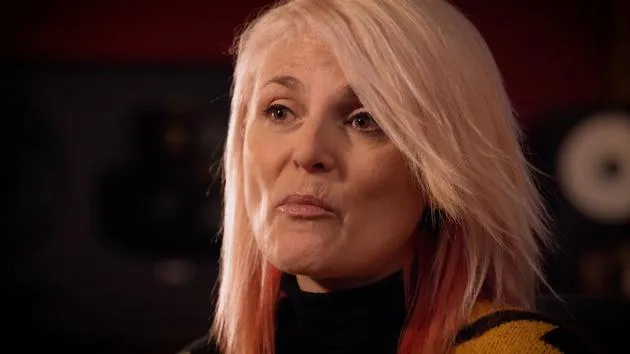
Sister BlissSister Bliss explains why Faithless film the band live on stage - from keyboard riffs to big-screen festival shots so the crowd at the back can see.
What's in the course
20 lessons (1h 53m) · 1 free
01. Make electronic make sense live
11:22
02. Expanding the studio tracks
7:24
03. Creating space
6:12
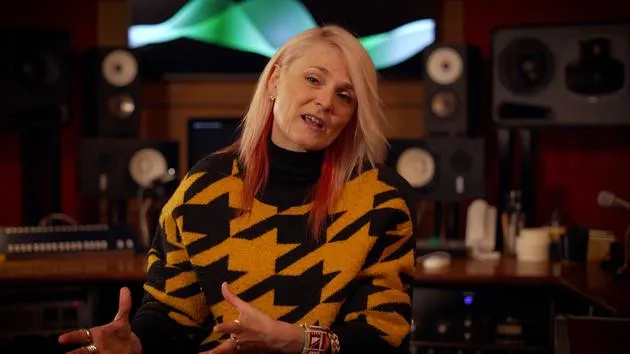
04. Synthesised vs. live
4:17
05. Sound designing the show
7:28
06. Rehearsals and preparation
8:56
07. Working with session musicians
7:50
08. Working with musical directors
Free lesson3:18
09. Incorporating stage filming
You are here3:24
10. Visual design
7:59
11. Adapting your setlist
5:18
12. Importance of the crew
6:53
13. Front of house engineer
3:30
14. Live broadcasts
3:03
15. Recording quality
4:22
16. International touring
4:24
17. Time keeping and logistics
3:22
18. When things go wrong
4:41
19. Auditioning
5:19
20. Stress and personal health
4:22
Lesson transcript
The Importance of Live Keyboards in Faithless Music
As Faithless music is written on keyboards, and there are a lot of keyboard riffs played by my good self, it's quite important to have keyboards up on stage.
Live Performance Dynamics
Obviously, I'm playing them live. But what's quite interesting is when you go to festivals; often people cannot see you at the back. So, they have huge screens either side of the stage.
- Camera Crew: What they will often do is bring camera people on stage to film the band while they're playing.
- This isn't necessarily because they want to make a film of you to put it out into the world.
- It's literally so people at the back can see.
They'll take little shots of:
- The drummer doing big drum fills
- The lead vocalist, whoever's out front of the stage
This really gives the people right at the back a sense of what's going on.
Facing the Camera
As a keyboard player, what I didn't realize was that a lot of the time, I'd have a cameraman right behind me, literally sort of tucked behind, filming my every move. Therefore, I had to be comfortable with that and not nervous or anxious because it's not something you expect.
- In rehearsal, you're working with the band and getting familiar with the crew.
- Maybe you've got your own techs: a drum tech, a keyboard tech, a guitar tech.
These people are there to help you:
- Swap your guitar if you need to move from acoustic to electric.
- Sometimes, they'd come and help reset my analog keyboards if they went mad during a performance.
However, what you don't often expect is having camera people in your face.
The Revelatory Filming
One of the revelations was how much they filmed my hands playing the keyboards and the riffs. This was always very important, especially when melding together programmed and live elements.
- Cognitive Dissonance: It would have been a really weird sort of cognitively dissonant experience if people could hear a massive riff but couldn't see anything.
When performing electronic music, if there are certain parts that are major, the audience is going to latch onto your big riff or certain chords.
You Need to Ensure:
- The physical action matches up with what people are hearing.
- Otherwise, it looks like you're miming the whole show, and the audience can feel really cheated if you do that.
Challenges in Electronic Music Performance
It's often a pitfall for electronic music. Sometimes, I go to see a show and I can see the keyboard players not playing the part that I'm hearing, which I find really annoying.
- Perhaps that's just me, and maybe nobody else notices, but I believe it's important.
If you're going to perform electronic music in a live arena, a great way to do it is to:
- Really play it.
- Even if you're supported by something programmed underneath to keep you tight and in time.
If you're a keyboard player that's brilliant in the studio but not so tight in the live arena, you might want to rethink your approach.
20 lessons
1h 53m of structured video lessons
Advanced video features
Slow down, loop a passage, follow along
Mobile, tablet & desktop
Practise wherever you are
100% satisfaction guarantee
30-day money-back guarantee
Meet your guru
Meet your guru
'Sister Bliss never stopped writing music. She's an accomplished composer for film and TV, a club DJ, and an advocate for the creative industries'. Billboard
One of the most successful British dance music artists of the past 25 years, Ayalah Bentovim AKA Sister Bliss is the musical force behind Faithless.
Together with iconic front man Maxi Jazz and producer Rollo Armstrong, she formed Faithless: one of the most successful electronic acts of their generation, with a career spanning more than two decades that included 8 albums (3 at number 1) and six top 10 singles. To date, Faithless have sold in excess of 15 million records worldwide and have played live to millions across the world, headlining festivals, stadiums and arenas. The band have collaborated with artists such as Jazzie B, Boy George, Cat Power and Dido, never conforming and moving effortlessly across an eclectic range of genres.
Over a 25-year career that took her from the underground UK club scene to sold-out arena shows and festival headline slots around the globe, Sister Bliss has become one of British dance music's longest-standing and most influential female electronic artists.
She comes off the back of releasing Faithless' first studio album in ten years, the highly anticipated 'All Blessed' - Faithless' love letter to electronic music that presents them at their very best. The album reached number 6 in the charts and the singles, along with their premiere remixes, garnered extensive support across BBC Radio 1, Radio 2 and BBC 6 as well as Kiss FM and Capital.
A classically trained multi-instrumentalist, she has also scored numerous TV, film and theatre productions. Credits include 2012's film Knife Fight starring Rob Lowe and directed by two-time Oscar winner Bill Guttentag, commissions for Sex & The City 2, Chasing Amy, Danny Boyle's The Beach, A Life Less Ordinary, acclaimed British film The Hide, Crossing The Line and the BAFTA-winning TV dramas Life Begins (ITV) and The Poison Tree (ITV).
For theatre, Bliss has written music for The Black Album and The Emperor Jones at The National Theatre in London, as well as composing an original piece for the London Sinfonietta, which was performed at Fuse Festival, UK.
She recently had a lead role in major prime time BBC1 show 'This is My Song', mentoring the contributors and producing their final recordings.
She released a new collaborative album with Rollo and Dido in 2019 under the moniker 'R PLUS' - 'The Last Summer', following a jam-packed summer of festival headline DJ sets throughout the world including sets at Bestival, Exit Festival, Glastonbury, Creamfields, Ibiza and beyond.
Her hugely successful weekly radio show and podcast 'Sister Bliss in Session' is syndicated to over 100 stations and 43 countries worldwide. She recently guest presented Gilles Peterson's acclaimed show on BBC 6 Music and regularly stands in for Ana Matronic on the Dance Devotion show on BBC Radio 2.
She has also presented a 5-part series on Bauer Media's Scala Radio station joining the dots between classical and electronic music, which won the Bronze prize at the New York Festival Radio Awards, competing against 30 countries.
She currently teaches at Tileyard Studios' Masters MA course, including modules on songwriting, production and writing to commercial brief, and mentors individual Masters students - the same hands-on knowledge she shares in Studio to Stage, breaking down exactly how Faithless turned their records into a stadium-filling live show.







