



Sound designing the show
With
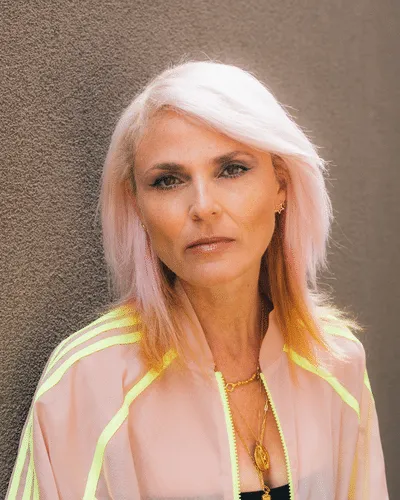
Sister BlissSister Bliss explains how Faithless rebuilt their album sounds for the stage - triggering samples and pads through drum pads and percussion to add live texture.
What's in the course
20 lessons (1h 53m) · 1 free
01. Make electronic make sense live
11:22
02. Expanding the studio tracks
7:24
03. Creating space
6:12
04. Synthesised vs. live
4:17
05. Sound designing the show
You are here7:28
06. Rehearsals and preparation
8:56
07. Working with session musicians
7:50
08. Working with musical directors
Free lesson3:18
09. Incorporating stage filming
3:24
10. Visual design
7:59
11. Adapting your setlist
5:18
12. Importance of the crew
6:53
13. Front of house engineer
3:30
14. Live broadcasts
3:03
15. Recording quality
4:22
16. International touring
4:24
17. Time keeping and logistics
3:22
18. When things go wrong
4:41
19. Auditioning
5:19
20. Stress and personal health
4:22
Lesson transcript
Setting Up the Show
Setting up the show was very important and painstaking. We used a lot of samples and sounds that were on the albums. One of the ways that worked really well was to have percussionists and drummers play them at various different points in the show.
Technology Used
- We utilized a kick called a Muse receptor, which was wired up to Roland V drums.
- There was an SPD 30. Our percussionists also had a Hand Sonic as well as their own pads to play.
This setup created a very dynamic atmosphere. The touch sensitivity allowed the samples to come out at varying volumes, adding to the dynamics of the performance.
Latency Issues
One of the problems you can encounter when using lots of drum pads is latency, which means you're triggering something and hearing it a fraction of a second later. However, the technology has improved since we first started. Now, zero latency FireWire can be hooked up to your pads, so whatever you're running, as soon as you touch it, you hear the sound.
- Tightness in Drumming: Anything rhythmic and drumming needs to be as tight as possible because everybody listens to the drums to keep in time and know where they are in the song.
You don't want triggers coming in half a second late, as this can throw everyone off, preventing them from sitting nicely in the groove.
Mixing Drums and Samples
We achieved a lovely mix of drums; sometimes snare sounds could be live as well as program snare doubled up. Additionally, we used samples taken from the record, drum samples that were chopped up, or little snippets of chords or pads played on these drum pads. This created some interesting textures and contributed to a live show that felt not 100% acoustic, adding a slightly otherworldly, futuristic element.
The Use of Electronic Pads
In a song called I Want More, we used one pad to play a backing vocal. As a band, we are not fans of pre-recorded backing vocals; we believe there's a totally different energy when working with vocalists who are present. It feels fake to hear a whole chorus of people without seeing them.
- The pad simply played "I want more" and the singer would join in with his own backing vocal. This was a little electronic nod to the album version, yet it wasn't something we relied on heavily.
Importance of Vocals
Vocals are quite important, and how we work with those in the band has been crucial from the very beginning. The album featured various voices, with Maxie being the central spine as a sort of rapper and poet. We augmented him with different singers who would come in to do lead vocals and backing vocals.
Rehearsing Vocals
Rehearsing vocals was essential. Here are some effective strategies:
- Sectional Rehearsals: Rehearse sections individually to tighten the band.
- Auditions: Ensure you've auditioned the right people if you're working with session musicians, verifying that their voices blend well together.
It's vital to have:
- Real synergy
- Rhythmic tightness
- Cohesive tone among voices
- Stay in tune and time
With Faithless, sometimes we played to a click, while other times the music was completely acoustic. The diversity of situations required singers who could adapt, hold the stage and retreat to the backing vocal position when necessary.
Vocal Arrangement Considerations
Interestingly, we couldn't always go on stage with the original artists who sang the songs on the album. We often worked with different singers. These could be male or female singers, leading to occasional changes in the key of the songs to fit their vocal ranges.
It can be quite exciting to reinterpret a song sung by a woman and have it performed by a man. This approach offers a fresh perspective on the music.
Case Study: "Music Matters"
One example is our song Music Matters, originally sung by Cass Fox. After her departure, various vocalists sang it, including a male vocalist, Harry:
- We had to change the key completely.
- We also reimagined the song's structure; it started as an electronic piece but was stripped back to an acoustic rendition.
Lyrics Sample:
"Chase the doors back from my clothes?
You told me to look much further?
You told me to want much more?
You told me that music matters and the chase of died from my dog."
It was a revelation to realize that dance music could be played entirely acoustically. The mix included gentle electronic drums and a light backbeat, creating a Balearic feel, akin to what you'd hear in Ibiza at sundown rather than in a club. This transformation surprised the audience, giving them something unique they couldn't experience anywhere else.
20 lessons
1h 53m of structured video lessons
Advanced video features
Slow down, loop a passage, follow along
Mobile, tablet & desktop
Practise wherever you are
100% satisfaction guarantee
30-day money-back guarantee
Meet your guru
Meet your guru
'Sister Bliss never stopped writing music. She's an accomplished composer for film and TV, a club DJ, and an advocate for the creative industries'. Billboard
One of the most successful British dance music artists of the past 25 years, Ayalah Bentovim AKA Sister Bliss is the musical force behind Faithless.
Together with iconic front man Maxi Jazz and producer Rollo Armstrong, she formed Faithless: one of the most successful electronic acts of their generation, with a career spanning more than two decades that included 8 albums (3 at number 1) and six top 10 singles. To date, Faithless have sold in excess of 15 million records worldwide and have played live to millions across the world, headlining festivals, stadiums and arenas. The band have collaborated with artists such as Jazzie B, Boy George, Cat Power and Dido, never conforming and moving effortlessly across an eclectic range of genres.
Over a 25-year career that took her from the underground UK club scene to sold-out arena shows and festival headline slots around the globe, Sister Bliss has become one of British dance music's longest-standing and most influential female electronic artists.
She comes off the back of releasing Faithless' first studio album in ten years, the highly anticipated 'All Blessed' - Faithless' love letter to electronic music that presents them at their very best. The album reached number 6 in the charts and the singles, along with their premiere remixes, garnered extensive support across BBC Radio 1, Radio 2 and BBC 6 as well as Kiss FM and Capital.
A classically trained multi-instrumentalist, she has also scored numerous TV, film and theatre productions. Credits include 2012's film Knife Fight starring Rob Lowe and directed by two-time Oscar winner Bill Guttentag, commissions for Sex & The City 2, Chasing Amy, Danny Boyle's The Beach, A Life Less Ordinary, acclaimed British film The Hide, Crossing The Line and the BAFTA-winning TV dramas Life Begins (ITV) and The Poison Tree (ITV).
For theatre, Bliss has written music for The Black Album and The Emperor Jones at The National Theatre in London, as well as composing an original piece for the London Sinfonietta, which was performed at Fuse Festival, UK.
She recently had a lead role in major prime time BBC1 show 'This is My Song', mentoring the contributors and producing their final recordings.
She released a new collaborative album with Rollo and Dido in 2019 under the moniker 'R PLUS' - 'The Last Summer', following a jam-packed summer of festival headline DJ sets throughout the world including sets at Bestival, Exit Festival, Glastonbury, Creamfields, Ibiza and beyond.
Her hugely successful weekly radio show and podcast 'Sister Bliss in Session' is syndicated to over 100 stations and 43 countries worldwide. She recently guest presented Gilles Peterson's acclaimed show on BBC 6 Music and regularly stands in for Ana Matronic on the Dance Devotion show on BBC Radio 2.
She has also presented a 5-part series on Bauer Media's Scala Radio station joining the dots between classical and electronic music, which won the Bronze prize at the New York Festival Radio Awards, competing against 30 countries.
She currently teaches at Tileyard Studios' Masters MA course, including modules on songwriting, production and writing to commercial brief, and mentors individual Masters students - the same hands-on knowledge she shares in Studio to Stage, breaking down exactly how Faithless turned their records into a stadium-filling live show.







