



Front of house engineer
With
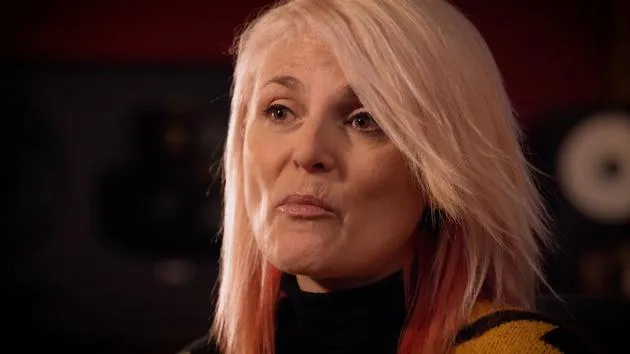
Sister BlissSister Bliss explains what a front-of-house engineer does and why they matter - shaping the mix for each venue so the audience hears your vocals and dynamics.
What's in the course
20 lessons (1h 53m) · 1 free
01. Make electronic make sense live
11:22
02. Expanding the studio tracks
7:24
03. Creating space
6:12
04. Synthesised vs. live
4:17
05. Sound designing the show
7:28
06. Rehearsals and preparation
8:56
07. Working with session musicians
7:50
08. Working with musical directors
Free lesson3:18
09. Incorporating stage filming
3:24
10. Visual design
7:59
11. Adapting your setlist
5:18
12. Importance of the crew
6:53
13. Front of house engineer
You are here3:30
14. Live broadcasts
3:03
15. Recording quality
4:22
16. International touring
4:24
17. Time keeping and logistics
3:22
18. When things go wrong
4:41
19. Auditioning
5:19
20. Stress and personal health
4:22
Lesson transcript
The Importance of a Front of House Engineer
One of the most important people to take on tour, if you can afford it, is a front of house engineer. They're the person responsible for what the audience hears. They can affect the mix and make your sound appropriate to the place you're playing.
Acoustic Environments
- The venue will have its own shape:
- You might be outdoors.
- You might be up a windy mountain.
- You might be in a tiny club.
This person will look after your sound in all those environments.
Creating Space in the Mix
- They create space in the mix for the vocals.
- It's really important for your fans, or any audience really, to hear your lyrics, to hear the words that are being said or sung.
Riding the Mix
They'll also ride up certain elements during the song. For example, in some of our songs, we have big snare fills which help signpost the audience to what's happening next and get them excited.
- A snare fill is a really good device to get you from one section to the next.
- The engineer would ride a really thunderous reverb on that, so it felt like the kind of Horseman of the Apocalypse were galloping towards you.
Technical Setup
He would also put gates and compressors on all of the sounds. Our front of house engineer graduated over the years to using a fully programmable desk, which was an amazing bit of kit from SSL.
Mixing Desk
What's interesting is that Faithless as a band mixed our albums on SSL mixing desks, which have particularly punchy EQs. They have really good circuitry in them.
- I think our sound on record was quite widescreen and grand, but also clean.
- Our front of house engineer managed to get a desk that almost replicated what we had in the studio.
He was able to record all the scenes, so every single song would have a setup. He could just scroll through those setups as befit the song we were playing in that moment.
This was a really good thing because, in the middle of a festival situation, you haven't got long to get yourself on stage before the next act takes over.
- Plugging in the mixing desk and knowing that the sound out front is going to be pretty amazing from the moment you plug it in is a very reassuring thing to have.
The Challenges of Live Sound
Another interesting aspect you don't know until you're in a live environment is the significance of a sound check.
- It's very useful to check everything sounds good.
- It can also be a great time to run a song to ensure you've got any changes in your head, especially since we often made changes on a night-by-night basis.
However, sound checks can be a bit misleading. Important though they are, when people fill up a venue, they change the nature of the sound.
- They actually soak up a lot of the sound, particularly the bass frequencies.
You could be doing a sound check and think, "Oh my God, the bass is overwhelming! It's really woofy and in my face." But then, when the show starts, you might think, "Oh my God, where's the bass gone? It's just disappeared!"
This can happen because you've asked for it to be turned down in your monitors.
Key Awareness
It's crucial to be aware that the nature of sound changes depending on whether there are people in that environment or not. If you're really well prepared, hopefully, it won't throw you too much.
However, there have definitely been occasions when I've gone on stage and the whole bottom end has disappeared, simply because the room now has 10,000 people in it, and my sound check was in an empty space.
20 lessons
1h 53m of structured video lessons
Advanced video features
Slow down, loop a passage, follow along
Mobile, tablet & desktop
Practise wherever you are
100% satisfaction guarantee
30-day money-back guarantee
Meet your guru
Meet your guru
'Sister Bliss never stopped writing music. She's an accomplished composer for film and TV, a club DJ, and an advocate for the creative industries'. Billboard
One of the most successful British dance music artists of the past 25 years, Ayalah Bentovim AKA Sister Bliss is the musical force behind Faithless.
Together with iconic front man Maxi Jazz and producer Rollo Armstrong, she formed Faithless: one of the most successful electronic acts of their generation, with a career spanning more than two decades that included 8 albums (3 at number 1) and six top 10 singles. To date, Faithless have sold in excess of 15 million records worldwide and have played live to millions across the world, headlining festivals, stadiums and arenas. The band have collaborated with artists such as Jazzie B, Boy George, Cat Power and Dido, never conforming and moving effortlessly across an eclectic range of genres.
Over a 25-year career that took her from the underground UK club scene to sold-out arena shows and festival headline slots around the globe, Sister Bliss has become one of British dance music's longest-standing and most influential female electronic artists.
She comes off the back of releasing Faithless' first studio album in ten years, the highly anticipated 'All Blessed' - Faithless' love letter to electronic music that presents them at their very best. The album reached number 6 in the charts and the singles, along with their premiere remixes, garnered extensive support across BBC Radio 1, Radio 2 and BBC 6 as well as Kiss FM and Capital.
A classically trained multi-instrumentalist, she has also scored numerous TV, film and theatre productions. Credits include 2012's film Knife Fight starring Rob Lowe and directed by two-time Oscar winner Bill Guttentag, commissions for Sex & The City 2, Chasing Amy, Danny Boyle's The Beach, A Life Less Ordinary, acclaimed British film The Hide, Crossing The Line and the BAFTA-winning TV dramas Life Begins (ITV) and The Poison Tree (ITV).
For theatre, Bliss has written music for The Black Album and The Emperor Jones at The National Theatre in London, as well as composing an original piece for the London Sinfonietta, which was performed at Fuse Festival, UK.
She recently had a lead role in major prime time BBC1 show 'This is My Song', mentoring the contributors and producing their final recordings.
She released a new collaborative album with Rollo and Dido in 2019 under the moniker 'R PLUS' - 'The Last Summer', following a jam-packed summer of festival headline DJ sets throughout the world including sets at Bestival, Exit Festival, Glastonbury, Creamfields, Ibiza and beyond.
Her hugely successful weekly radio show and podcast 'Sister Bliss in Session' is syndicated to over 100 stations and 43 countries worldwide. She recently guest presented Gilles Peterson's acclaimed show on BBC 6 Music and regularly stands in for Ana Matronic on the Dance Devotion show on BBC Radio 2.
She has also presented a 5-part series on Bauer Media's Scala Radio station joining the dots between classical and electronic music, which won the Bronze prize at the New York Festival Radio Awards, competing against 30 countries.
She currently teaches at Tileyard Studios' Masters MA course, including modules on songwriting, production and writing to commercial brief, and mentors individual Masters students - the same hands-on knowledge she shares in Studio to Stage, breaking down exactly how Faithless turned their records into a stadium-filling live show.







