


Structure and practice techniques
With
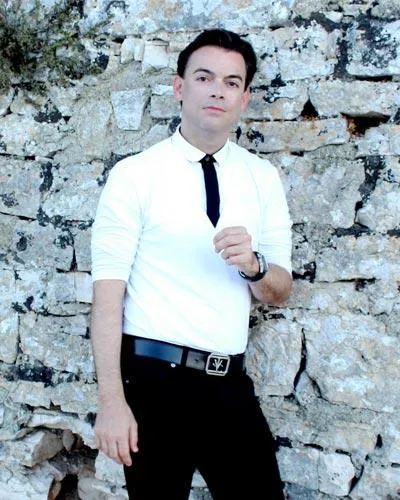
Dejan LazićDejan Lazić breaks down the form of the virtuosic third movement and shows how to practise the fast right-hand figures - fingering, hand position and saving energy through the hardest of the three movements.
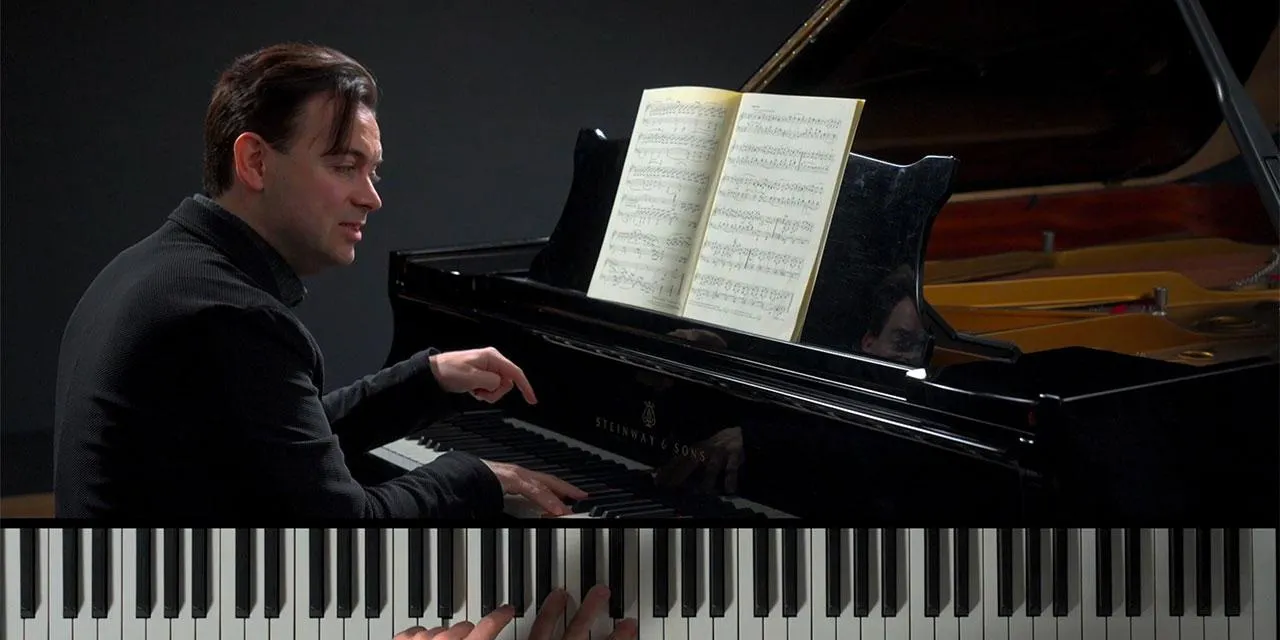
What's in the course
20 lessons (2h 4m) · 1 free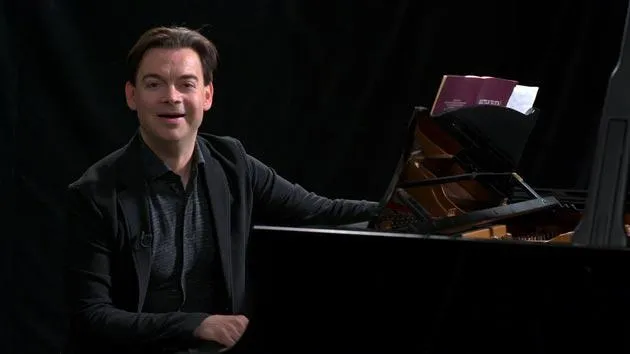
Lesson transcript
Beethoven's Moonlight Sonata: Third Movement
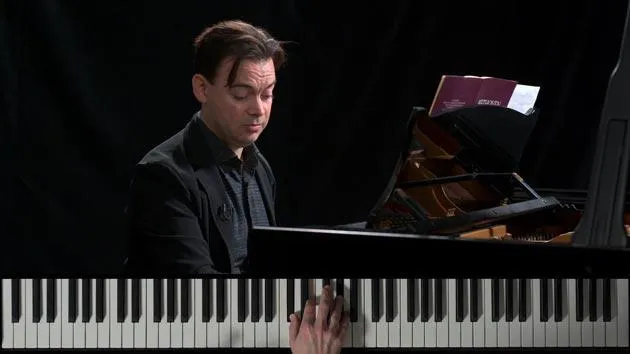
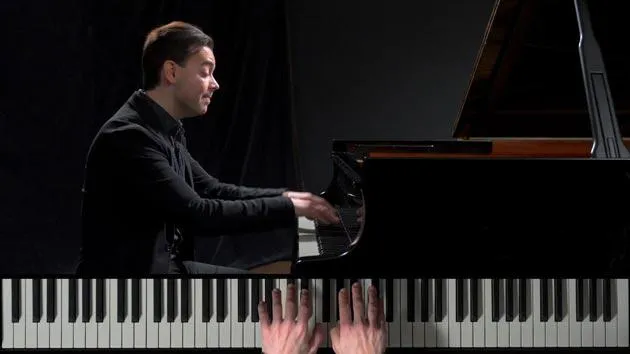
Hi, everyone! We're back with Beethoven and his Moonlight Sonata. Let's dive immediately into the opening of the third movement, which is the most virtuosic one. In a sense, virtuosity here does mean fast; you need fast fingers.
Practicing Fast Passages
I'll try to show you how to:
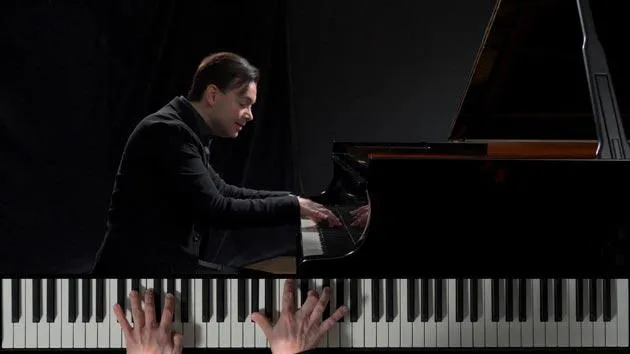
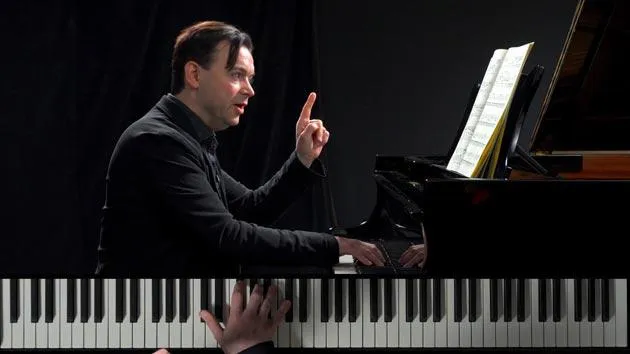
- Practice those passages
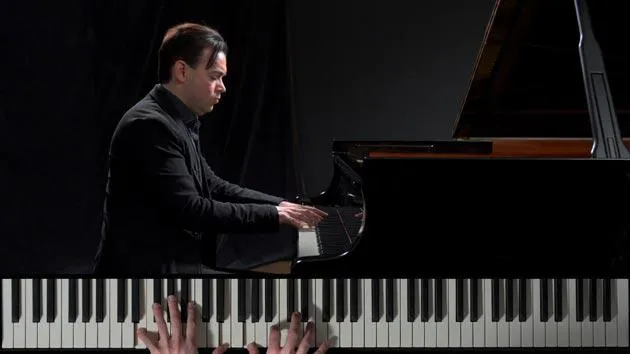
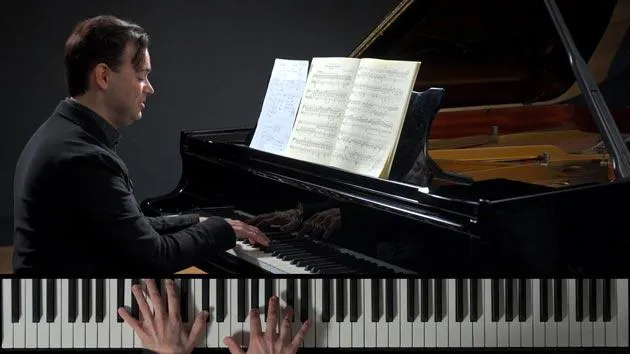
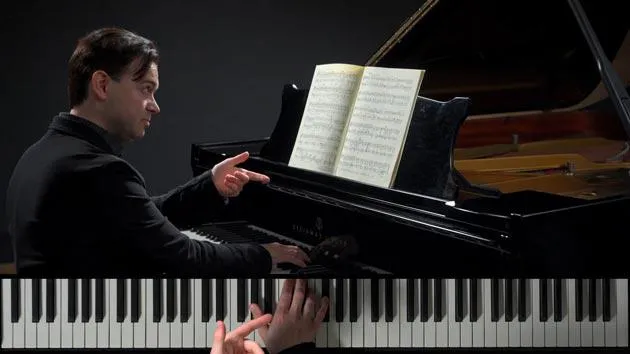
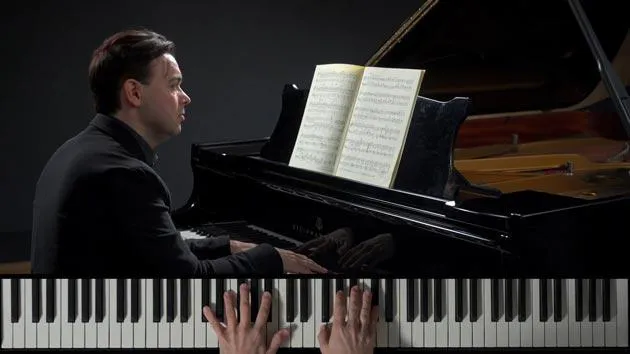
- Use proper hand position
- Manage finger interconnection between 3 and 4
This is very important because, for these passages, you will always need fingers 1, 2, and 5. But for the third note in a row, you will have to decide between three or four.
Look here:
- First broken chord
- Second broken chord
These are all inversions of C sharp minor.
Fingerings to Remember
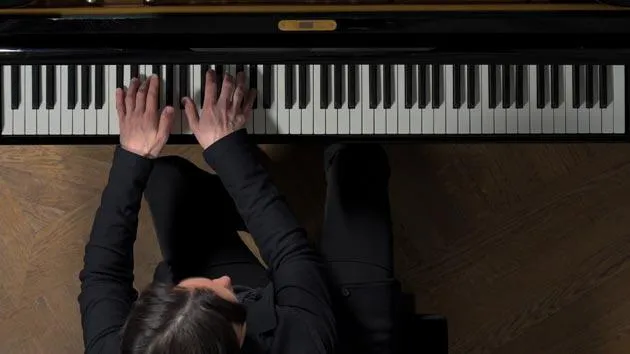
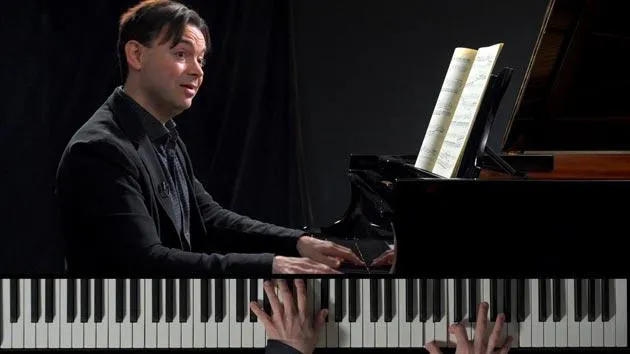
- With an upper octave, I use 3,
- Then again 3, now 4,
- And then we repeat the whole thing again: 3, 3, 4.
So, it's essential to practice slowly, regardless of whether you're a beginner or an advanced student, whether you're already a concert pianist.
I started playing this piece back in the 80s, and I still feel challenged by it every time anew. Whenever you come back to it, always remember to practice slowly because every figure matters.
For instance, here we have the broken C sharp minor chord right at the beginning.
Then we go to the dominant:
- For this one, I'm using third in the middle, fourth, fourth, and then again: 3, 4, 4 (the other way around).
- Next, we reach C sharp major, which acts here as A dominant to F sharp minor.
Structure of the Piece
We have groups of two bars, two bars, two bars. The first six bars are divided into pairs:
- Once you get those three figures right and repeat them, you're set.
- And again, the same principle for the third time around.
So, this is how you practice:
- Know the exact chord.
- Break that chord.
Bar Seven
In bar seven, we have only one bar, meaning we have just that one position. We also have repeats and a new harmony with A in the bass.
This is very important, and it recurs throughout the piece.
Whenever this motif returns, think of it as an engine. The tempo indication is presto agitato, meaning it's very fast and agitated.
Left Hand Technique
When you have the left hand really short, imagine a bassoon player. Everything is in piano except for this very last outburst of sforzando.
Then again, piano outburst and repeat the same.
We are really here agitated yet very soft.
Practicing Dynamics
- Remember to practice slowly, and you can increase the tempo.
- You can even practice with accents to emphasize crucial moments.
Over time, once you've sorted out all:
- Fingering issues
- Balance issues
- Proper harmonies
You can then increase the tempo.
Key Dynamics to Remember
- Stay in piano,
- Transition to sforzando, piano, sforzando, piano,
- In bar seven, we have a crescendo that spans two bars, bringing us finally to forte.
I will play this first beat until the fermata. Here, you finally reach forte!
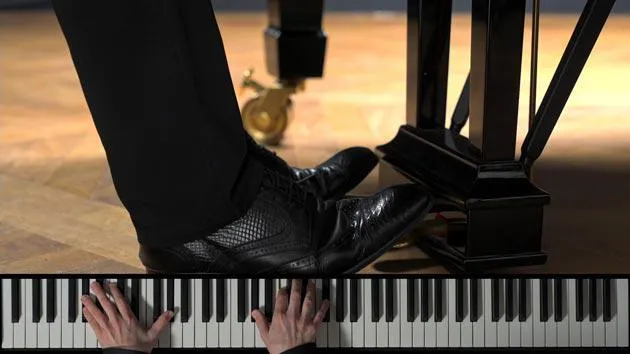
Remember that pedal tone issue from the first movement with the low bass line G sharp? It comes up again here.
So listen:
- I didn't play forte the rest so you can concentrate.
Again, it's the same thematic material that Beethoven uses, connecting movements 1 and 3.
Finally, when we reach this G sharp, we start a new french piano.
Looking Ahead
In the next lesson, we'll explore:
- Alberti basses
- The return of this famous Neapolitan chord
- Much more!
I look forward to welcoming you back then!
20 lessons
2h 4m of structured video lessons
Advanced video features
Slow down, loop a passage, follow along
Mobile, tablet & desktop
Practise wherever you are
100% satisfaction guarantee
30-day money-back guarantee
Meet your guru
Meet your guru
Dejan Lazić's fresh interpretations of the repertoire have established him as one of the most unique and unusual soloists of his generation. He regularly performs with the world's leading orchestras, including the Boston and Chicago Symphony Orchestras, Budapest Festival Orchestra, Royal Concertgebouw Orchestra, London Philharmonic, Philharmonia Orchestra, NDR Elbphilharmonie Orchester, as well as the Australian, Basel, and Netherlands Chamber Orchestras, and has built close collaborations with conductors including Giovanni Antonini, Iván Fischer, Michael Francis, Andris Nelsons, Ivan Repušić, Thomas Søndergård, Robert Spano, John Storgårds, Krzysztof Urbański, and Jan Willem de Vriend.
Dejan Lazić has released many CDs with Channel Classics and Onyx Classics, and a recording of Beethoven's Triple Concerto for Sony Classical. His live recording of Rachmaninov's Piano Concerto No. 2 with the London Philharmonic Orchestra and Kirill Petrenko received the German "Echo Klassik" Award. He also has a strong following in the Far East and is active as a recitalist and chamber musician, appearing regularly at major international festivals.
Dejan Lazić's compositions receive increasing recognition, and he was signed as a composer by the Sikorski Music Publishing Group in 2015. His arrangement of Brahms' Violin Concerto as a Piano Concerto "No. 3" was premiered and recorded with the Atlanta Symphony Orchestra and Robert Spano in 2009 and has enjoyed much ongoing success, at the BBC Proms, Concertgebouw Amsterdam, Hamburg Easter Festival, and Chopin Festival Warsaw, in both Americas and in Japan. His Piano Concerto in Istrian Style (Op. 18) was premiered at the Aspen Music Festival in 2014 and has since been performed throughout Europe and in the USA. Other works include various orchestral, chamber, and piano music, cadenzas, as well as several arrangements of works by Mozart, Schubert, R. Strauss, Wagner, and Debussy.
Dejan Lazić was born in Zagreb, Croatia, into a family of musicians. He grew up in Salzburg, Austria, where he studied at the Mozarteum (piano, clarinet and composition). His early encounters with Zoltán Kocsis and Imre Rohmann at the Bartók Festival in Hungary were decisive for his artistic career, as was the significant influence of Peter Eötvös. Dejan Lazić lives in Amsterdam.
In Master Moonlight Sonata by Beethoven, Dejan shares the insight behind those acclaimed interpretations, guiding you through all three movements of one of the best-loved works in the piano repertoire so you can shape it with genuine understanding rather than imitation. www.dejanlazic.com