Structure and pace of Beethoven's Moonlight Sonata

With
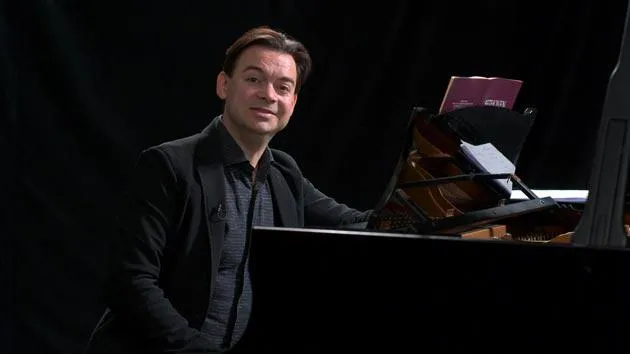
Dejan LazićLet's take a deeper look into the structure of the First Movement through the analysis of the harmonic structure, form, and various modulations. By the end of this lesson, you'll know how to achieve proper tempo without losing the long line.
What's in the course
20 lessons (2h 4m) · 1 free
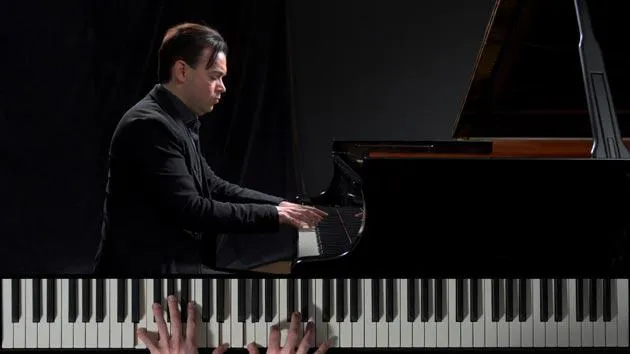
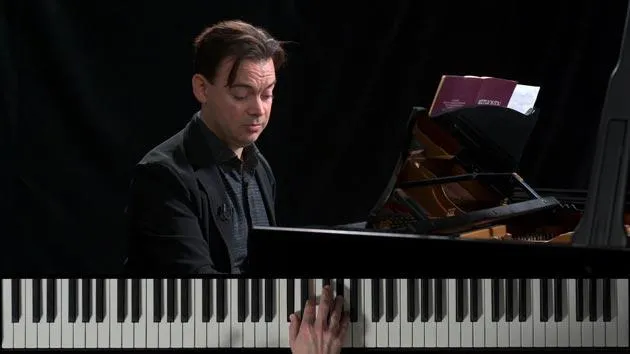
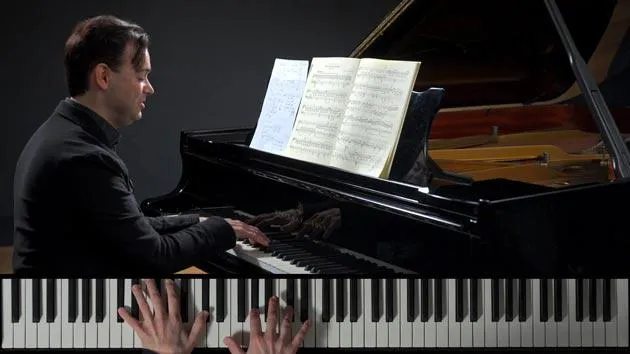
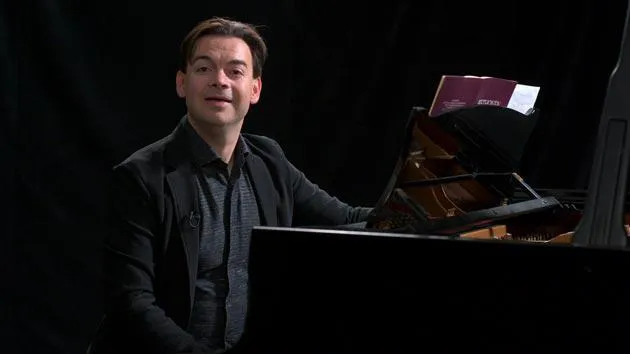
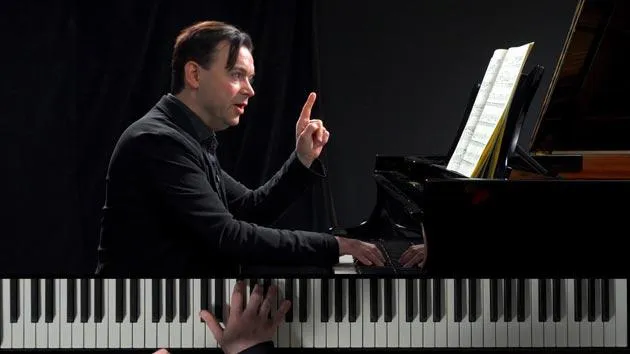
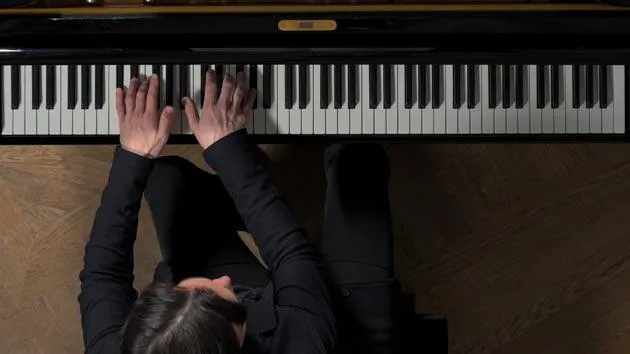
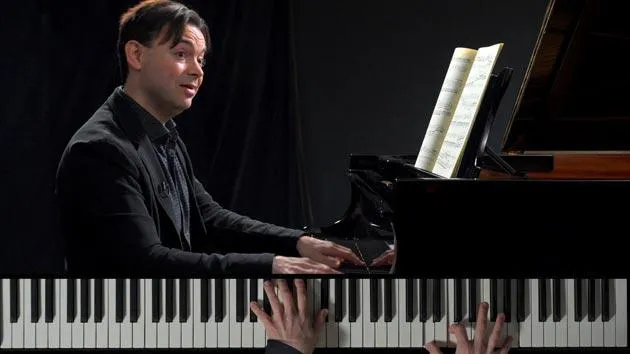
Lesson transcript
Music Lesson: Structure and Pace of the First Movement
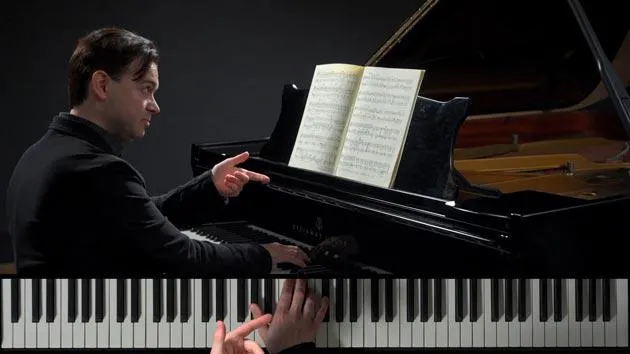
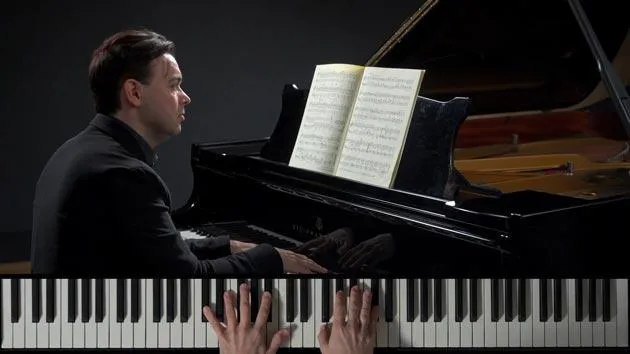
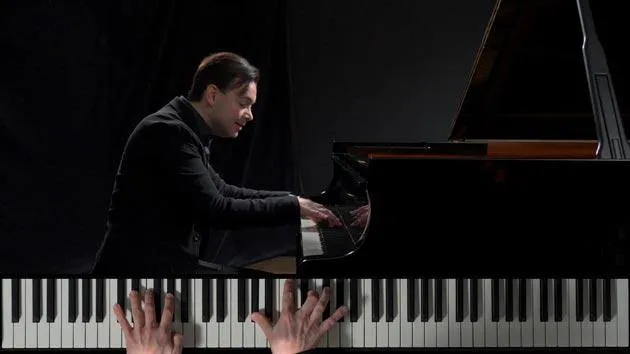
Today, we are going to talk about the structure and pace of the probably most famous movement in the sonata: the first movement.
Introduction
The first movement begins with a short introduction:
- Four bars of sempre pianissimo: Very, very, very slow and quiet soft.
- Note that we should not go too slow because we have the mark alla breve, meaning we should count in two (in halves) and not in four.
Chords and Harmonic Progression
- We start in C sharp minor.
- The bass moves to A major.
- Then we encounter the Neapolitan chord, a special chord dating back to the Neapolitan school of Alessandro Scarlatti and Cimarosa.
This chord can be found, for instance, on the second degree of C sharp minor. The first inversion would appear as D major. It is a very melancholic chord that Beethoven used quite a bit in this sonata.
Significance of the Neapolitan Chord
This is why we talk about this chord and the whole structure:
- There are instances where Beethoven repeats certain features like this chord.
- It then cadences back to C sharp minor.
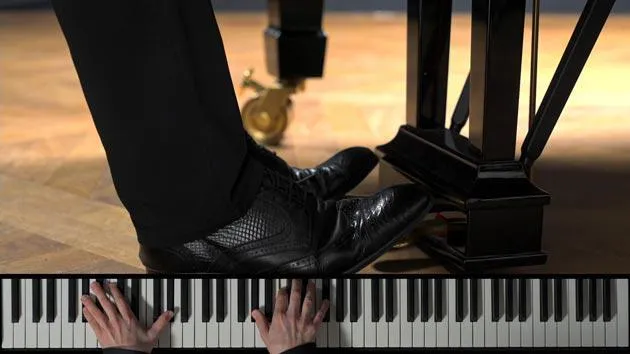
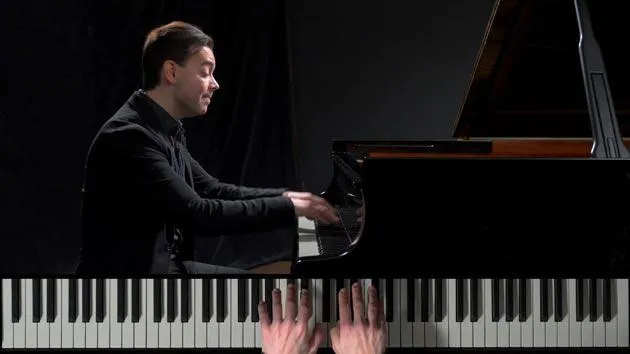
Throughout the piece, we also have an ostinato triplet. We will explore how to play them in the next lessons, as this is quite a long movement.
- It spans three pages.
- In adagio sostenuto tempo, it takes several minutes.
We must maintain a calm, equal pace, with only a few crescendi and decrescendi, always returning to the pianissimo.
Structure Overview: ABA Form
The first movement exhibits an ABA form:
-
A Section: Starts in C sharp minor.
- Beethoven develops this immediately into the parallel major key of E major.
-
Middle Section (B):
- Beethoven changes to B minor, then immediately to B major, presenting a painful moment of dissonance.
- In our Western tonal system, several grades of dissonant chords and intervals exist, with the most dissonant being the major seventh and minor ninth surrounding the octave.
- For example, if we move B to A sharp, we create one dissonance, and if we move B a semitone higher to C, we create another.
After this very tonal opening, Beethoven introduces pain, followed by consonant B major again.
Insight into Harmonic Structure
When played without the triplets, this section almost sounds like a chorale, reminiscent of Baroque masters like Bach. Remember, Beethoven wrote this in 1801, published in 1802, marking the beginning of the Romantic period.
Returning to the A Section
After the A section, we return to the middle section:
- The pedal note G sharp appears in bars 28 to 40, changing to A at bar 40.
- Throughout the middle B section, we have interchanging harmonies.
This leads us back to C sharp minor and the famous motif as the A section returns.
Elevation Towards the End
- Here, Beethoven sticks to E major instead of reverting to E minor, giving the piece a sense of elevation, hope, and light leading to a crescendo and subito piano at bar 49.
Features and Coda
Another feature is the sudden surprise:
- After building up, there might be an unexpected break just before a big moment.
This will be further explored in our next lesson.
Brief Coda
- After returning to C sharp minor, the motif appears in the bass, leading us to conclude the piece in C sharp minor.
- We then have subito il segmente, meaning we should immediately transition to the next movement.
Enharmonic Transition
A fermata prolongs the very last chord:
- We are in C sharp minor but can also interpret it as enharmonic D flat major.
- This transition from C sharp minor to D flat major marks the beginning of a more cheerful second movement, which we will discuss next time.
20 lessons
2h 4m of structured video lessons
Advanced video features
Slow down, loop a passage, follow along
Mobile, tablet & desktop
Practise wherever you are
100% satisfaction guarantee
30-day money-back guarantee
Meet your guru
Meet your guru
Dejan Lazić's fresh interpretations of the repertoire have established him as one of the most unique and unusual soloists of his generation. He regularly performs with the world's leading orchestras, including the Boston and Chicago Symphony Orchestras, Budapest Festival Orchestra, Royal Concertgebouw Orchestra, London Philharmonic, Philharmonia Orchestra, NDR Elbphilharmonie Orchester, as well as the Australian, Basel, and Netherlands Chamber Orchestras, and has built close collaborations with conductors including Giovanni Antonini, Iván Fischer, Michael Francis, Andris Nelsons, Ivan Repušić, Thomas Søndergård, Robert Spano, John Storgårds, Krzysztof Urbański, and Jan Willem de Vriend.
Dejan Lazić has released many CDs with Channel Classics and Onyx Classics, and a recording of Beethoven's Triple Concerto for Sony Classical. His live recording of Rachmaninov's Piano Concerto No. 2 with the London Philharmonic Orchestra and Kirill Petrenko received the German "Echo Klassik" Award. He also has a strong following in the Far East and is active as a recitalist and chamber musician, appearing regularly at major international festivals.
Dejan Lazić's compositions receive increasing recognition, and he was signed as a composer by the Sikorski Music Publishing Group in 2015. His arrangement of Brahms' Violin Concerto as a Piano Concerto "No. 3" was premiered and recorded with the Atlanta Symphony Orchestra and Robert Spano in 2009 and has enjoyed much ongoing success, at the BBC Proms, Concertgebouw Amsterdam, Hamburg Easter Festival, and Chopin Festival Warsaw, in both Americas and in Japan. His Piano Concerto in Istrian Style (Op. 18) was premiered at the Aspen Music Festival in 2014 and has since been performed throughout Europe and in the USA. Other works include various orchestral, chamber, and piano music, cadenzas, as well as several arrangements of works by Mozart, Schubert, R. Strauss, Wagner, and Debussy.
Dejan Lazić was born in Zagreb, Croatia, into a family of musicians. He grew up in Salzburg, Austria, where he studied at the Mozarteum (piano, clarinet and composition). His early encounters with Zoltán Kocsis and Imre Rohmann at the Bartók Festival in Hungary were decisive for his artistic career, as was the significant influence of Peter Eötvös. Dejan Lazić lives in Amsterdam.
In Master Moonlight Sonata by Beethoven, Dejan shares the insight behind those acclaimed interpretations, guiding you through all three movements of one of the best-loved works in the piano repertoire so you can shape it with genuine understanding rather than imitation. www.dejanlazic.com