



Tempo: “Minuetto”, “Menuett”, or “Menuet”
With
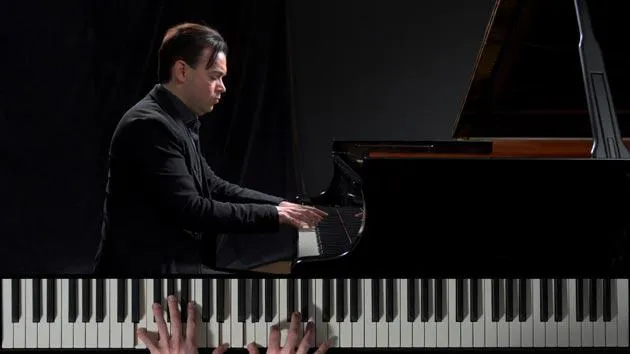
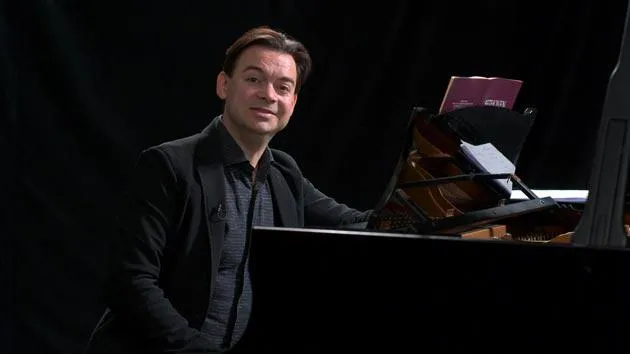
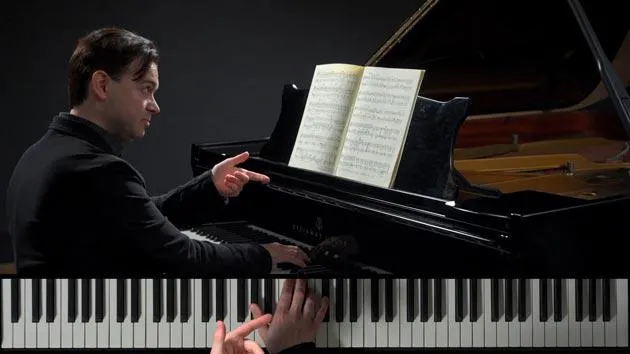
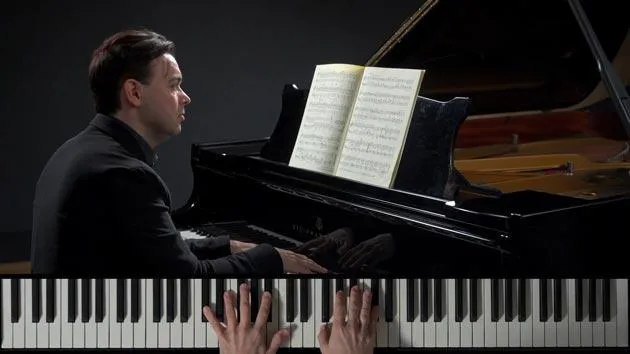
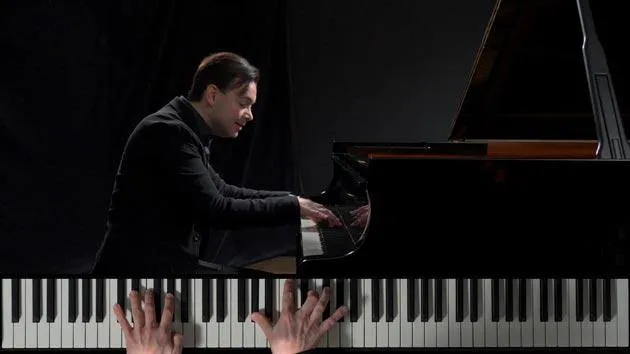
Dejan LazićDejan Lazić uses a string-quartet analogy to explore the tempo and character of this movement, and whether to treat it as an Italian Minuetto, a German Menuett or a French Menuet.
What's in the course
20 lessons (2h 4m) · 1 free
Lesson transcript
Exploring Individual Voices in Beethoven's Piece
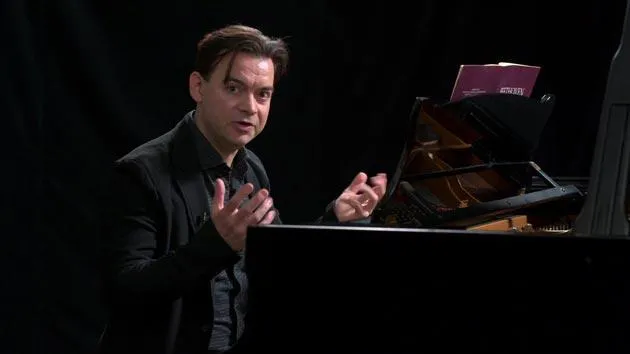
Let us talk about individual voices in this piece. We discussed movement one, emphasizing the strictness of the bass line, the triplets, and the melody.
Main Features of Movement One
In this movement, we have three main features that stand in stark contrast to each other. Here, we're focusing on togetherness and the complexity of a string quartet.
- The composition is written in four voices throughout.
- The very beginning features a three-voice introduction, leading to a four-voice answer question.
Imagining the String Quartet
In envisioning a string quartet, consider the following:
- First Violin
- Second Violin
- Viola
- Cello (paused until later)
From this point onward, we utilize four voices: first and second violins could be imagined in octaves, alongside the viola and cello.
Chamber Music Quality
There are no distinctions between the bass and the middle section, the triplets, and the melodic structure. Here, we are much more 'chamber music-like,' showcasing not just D flat major but also this incredible chamber music quality.
- We will explore the piano's massive range later in the third movement, which follows shortly.
Dynamics and Beethoven's Mark
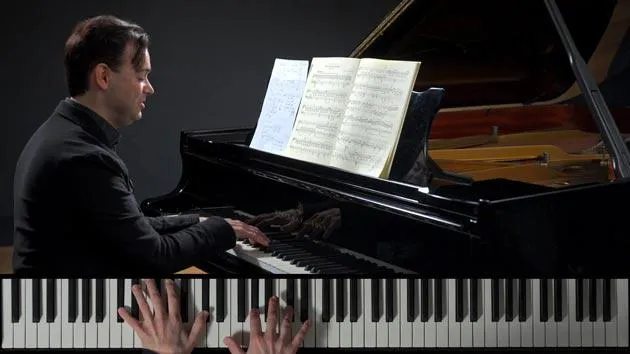
We start from a piano dynamic, progressing from very soft to very loud, from very low to very high registers. However, here we remain much more constrained. It is essential that we adhere to Beethoven's Allegretto marking and everything present in this Urtext edition.
Legato and Pizzicato
- Bars one and two: Note the legato slurs.
- Following that: very short notes, where one could even imagine a pizzicato by strings.
This has been masterfully repeated by Beethoven with a syncopated variation. Instead of having the melody resolving at expected intervals, it arrives later than anticipated.
Lyrical Phrasing and Crescendo
After this, we find an incredibly lyrical part, leading to an outburst around bar 22.
- This mini crescendo lasts only for practically one bar, then we revert back to piano.
This encapsulates the world of Beethoven, which can be challenging on the piano, you must be incredibly quick and alert, paying careful attention to your fingerings.
Keying Techniques
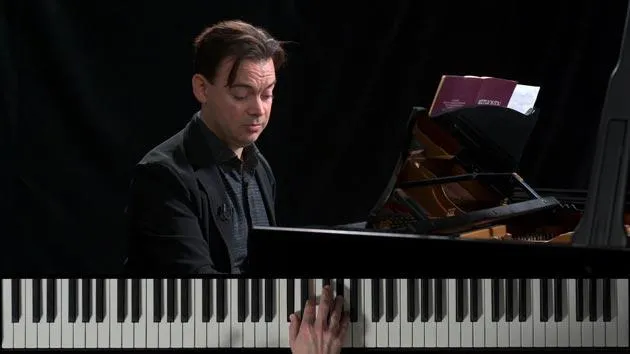
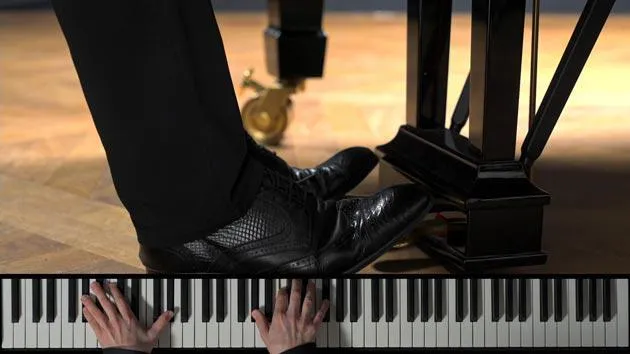
Avoid using your thumb as much as possible on black key legato passages.
- Imagine your keyboard being really hot: you have to bounce off to achieve a short texture.
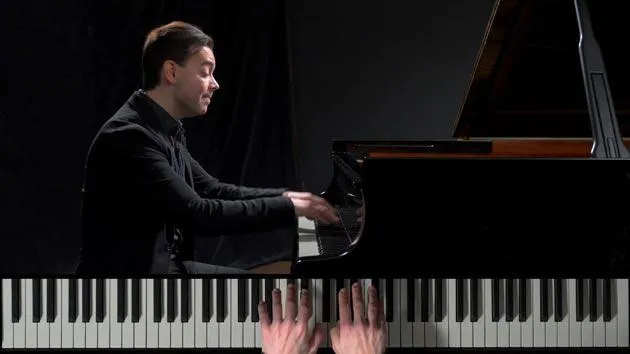
- The left hand remains legato while the right hand is separated into two phrases.
Emergence of New Material
Great news about Beethoven: in every two or four bars, especially every phrase, new material emerges, something completely unexpected.
Practice Insights
When practicing this piece, always ask the question, "Why?"
- Why is there a slur in the left hand?
- In the right hand, we have repeating notes, which are less prominent.
As the mini crescendo occurs, you reach a sforzando before transitioning back into piano. The same phrase is then revisited, but there's a new variation emerging each time.
Understanding Beethoven's Humor
Beethoven has an incredible sense of humor; when you expect a resolution, he takes you a step back.
- Strive to be constrained, as this foreshadows both great Impressionist developments and reflects back on the rococo and gallant styles.
This understanding is crucial when you practice and perform this movement.
Enjoy!
20 lessons
2h 4m of structured video lessons
Advanced video features
Slow down, loop a passage, follow along
Mobile, tablet & desktop
Practise wherever you are
100% satisfaction guarantee
30-day money-back guarantee
Meet your guru
Meet your guru
Dejan Lazić's fresh interpretations of the repertoire have established him as one of the most unique and unusual soloists of his generation. He regularly performs with the world's leading orchestras, including the Boston and Chicago Symphony Orchestras, Budapest Festival Orchestra, Royal Concertgebouw Orchestra, London Philharmonic, Philharmonia Orchestra, NDR Elbphilharmonie Orchester, as well as the Australian, Basel, and Netherlands Chamber Orchestras, and has built close collaborations with conductors including Giovanni Antonini, Iván Fischer, Michael Francis, Andris Nelsons, Ivan Repušić, Thomas Søndergård, Robert Spano, John Storgårds, Krzysztof Urbański, and Jan Willem de Vriend.
Dejan Lazić has released many CDs with Channel Classics and Onyx Classics, and a recording of Beethoven's Triple Concerto for Sony Classical. His live recording of Rachmaninov's Piano Concerto No. 2 with the London Philharmonic Orchestra and Kirill Petrenko received the German "Echo Klassik" Award. He also has a strong following in the Far East and is active as a recitalist and chamber musician, appearing regularly at major international festivals.
Dejan Lazić's compositions receive increasing recognition, and he was signed as a composer by the Sikorski Music Publishing Group in 2015. His arrangement of Brahms' Violin Concerto as a Piano Concerto "No. 3" was premiered and recorded with the Atlanta Symphony Orchestra and Robert Spano in 2009 and has enjoyed much ongoing success, at the BBC Proms, Concertgebouw Amsterdam, Hamburg Easter Festival, and Chopin Festival Warsaw, in both Americas and in Japan. His Piano Concerto in Istrian Style (Op. 18) was premiered at the Aspen Music Festival in 2014 and has since been performed throughout Europe and in the USA. Other works include various orchestral, chamber, and piano music, cadenzas, as well as several arrangements of works by Mozart, Schubert, R. Strauss, Wagner, and Debussy.
Dejan Lazić was born in Zagreb, Croatia, into a family of musicians. He grew up in Salzburg, Austria, where he studied at the Mozarteum (piano, clarinet and composition). His early encounters with Zoltán Kocsis and Imre Rohmann at the Bartók Festival in Hungary were decisive for his artistic career, as was the significant influence of Peter Eötvös. Dejan Lazić lives in Amsterdam.
In Master Moonlight Sonata by Beethoven, Dejan shares the insight behind those acclaimed interpretations, guiding you through all three movements of one of the best-loved works in the piano repertoire so you can shape it with genuine understanding rather than imitation. www.dejanlazic.com







