Sound production

With
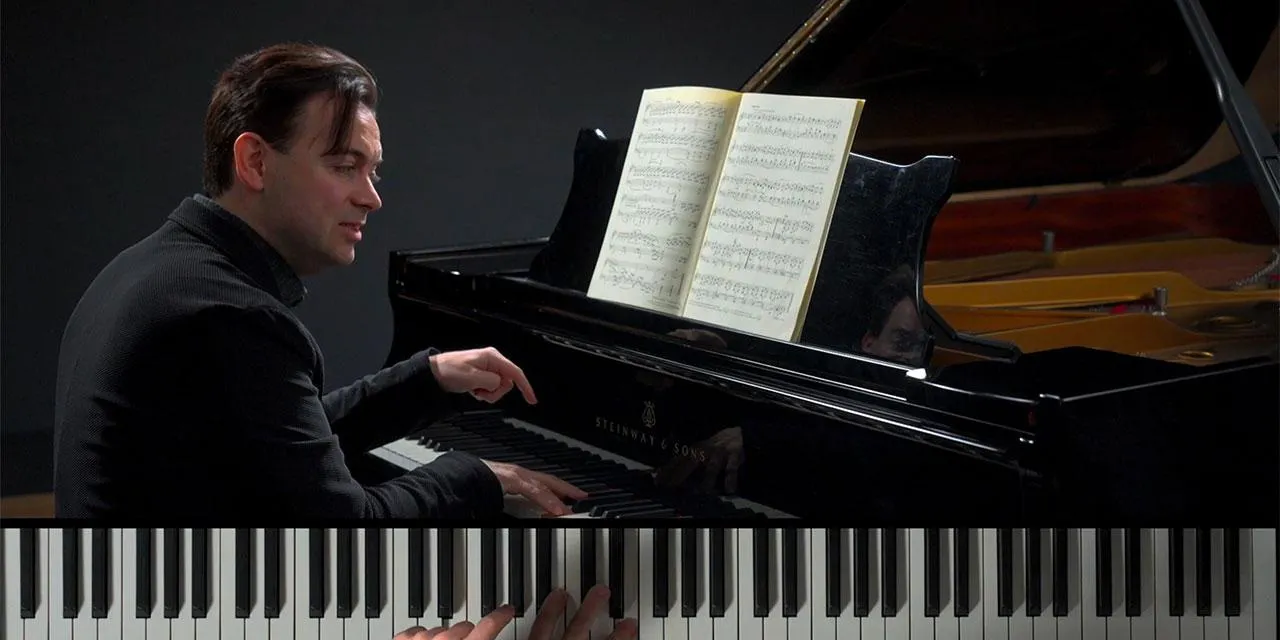
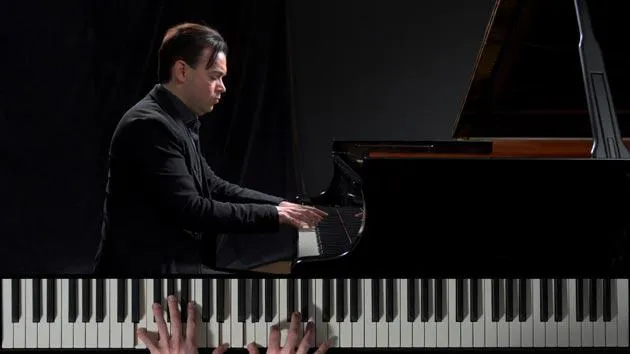
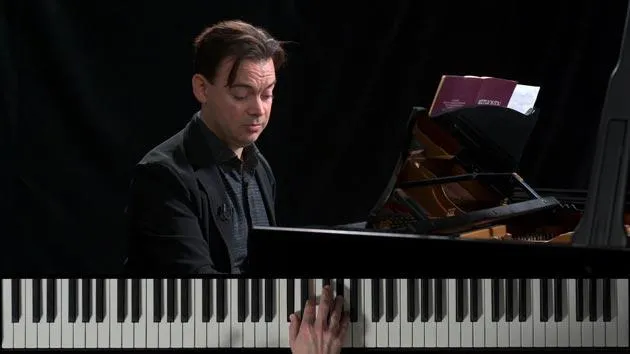
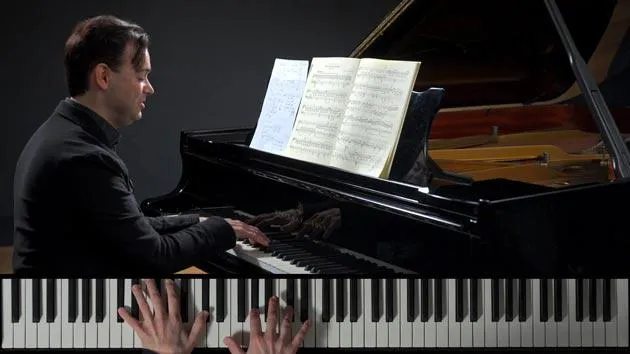
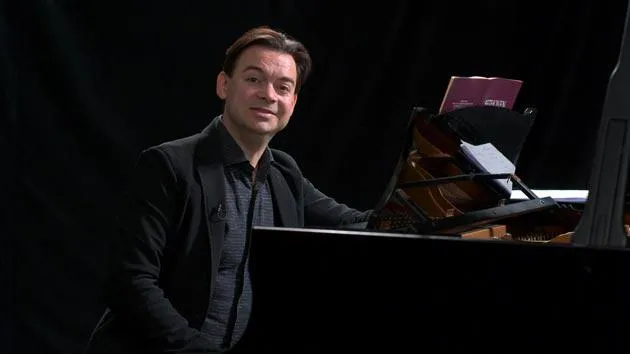
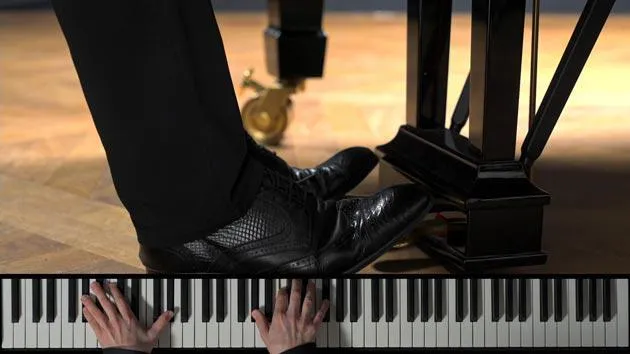
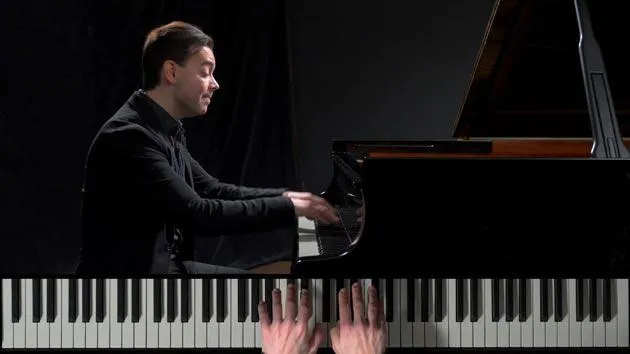
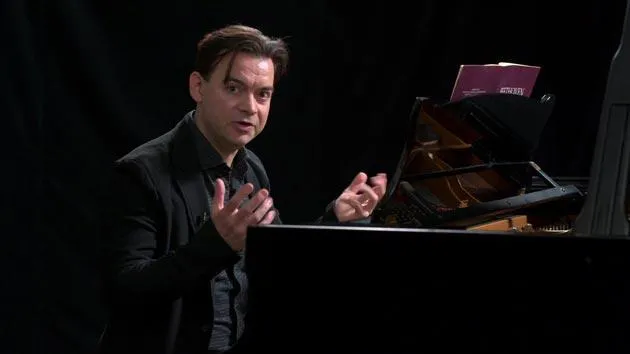
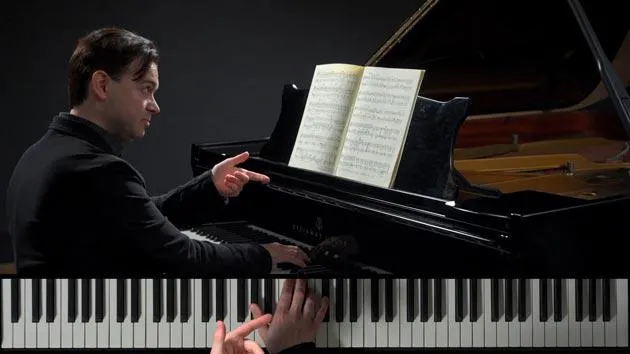
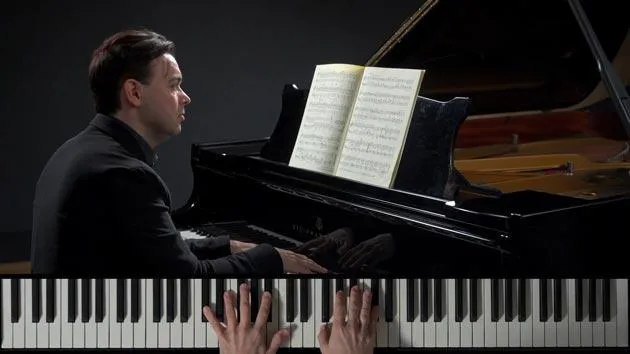
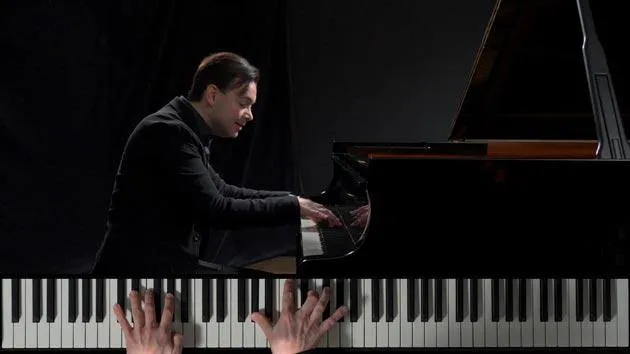
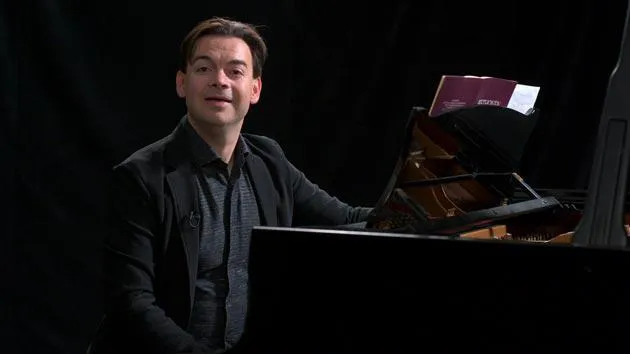
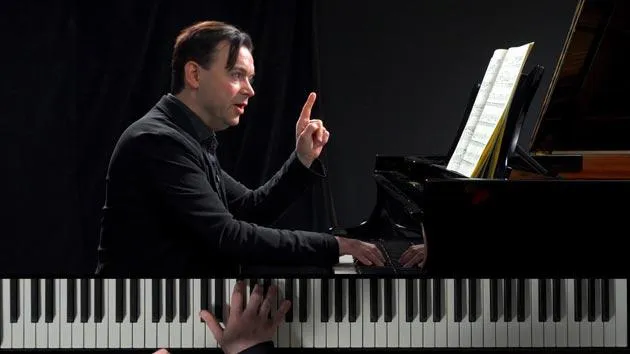
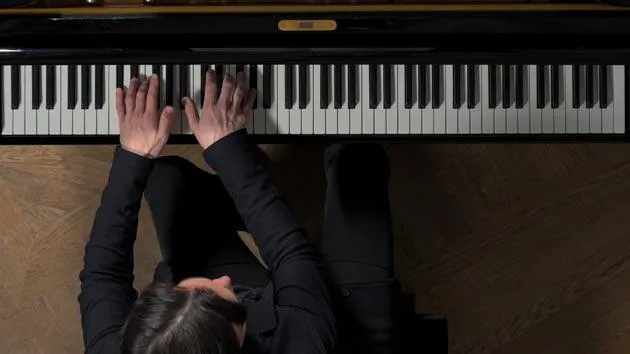
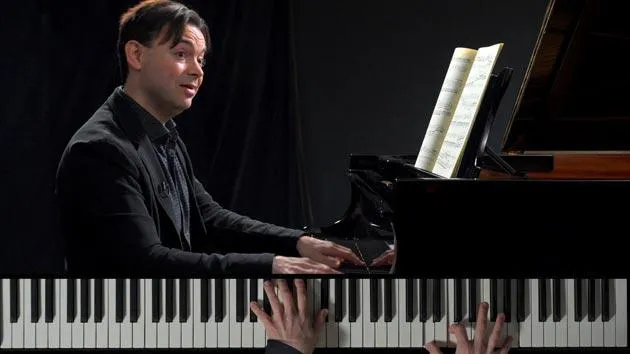
Dejan LazićDejan Lazić shows how to produce the sempre pianissimo sound the first movement needs, keeping the thumb light, voicing the triplets evenly, and handling the pedal.
What's in the course
20 lessons (2h 4m) · 1 free
Lesson transcript
Beethoven's Moonlight Sonata: Opus 27, Number 2
Introduction
Hello, and welcome back to this course! Today, we will delve into Beethoven's famous Moonlight Sonata, Opus 27, Number 2.
This sonata is his 14th piano sonata and stands pretty much in the middle of his 32 sonatas, written in 1801.
First Movements and Sound Production
Sempre Pianissimo
Let's first talk about sound production.
- Beethoven's marking right at the beginning is sempre pianissimo, which means this whole movement should be played very, very quietly.
How can we achieve that?
Until bar five, where we introduce the famous motive in the right hand, we encounter:
- Triplets in the right hand
- Long bass notes in the left hand, also in pianissimo.
The piano can sound like an entire orchestra, with a great range from very soft to very loud and many different colors. Today, I would like to address how to achieve this pianissimo throughout the movement and also touch upon the topic of pedalization.
Right Hand Technique
First, let's talk about the right hand.
- It should be played very calmly.
Key Points:
- Pay attention to your thumb.
- Our hand is not ideally constructed for playing the piano, the fifth finger is short, and the thumb is poorly positioned.
When playing black keys with your thumb, you might have to turn your hand inwards.
The Thumb Challenges:
- Since we place our other fingers naturally, the thumb often ends up sounding too loud, so it must be tamed.
Concentrate on making the thumb flexible and avoiding false accents. Focus more on fingers 2 and 4 while keeping the thumb light.
Left Hand Considerations
Now, regarding the left hand:
- The bass notes can be quite loud, especially on a modern Steinway piano, which has a massive and robust sound.
It is crucial to maintain balance so the left hand doesn't overpower the piece. Pay special attention to:
- The thumb in the right hand and octave in the left hand should be played very gently.
Additionally, when playing black keys, remember that while you could theoretically use your second finger, the thumb is needed for the lower octave when the motive appears.
The Challenge of Dynamics
It's vital to recognize that:
- The fifth finger, often the weakest, plays important musical material.
- The strongest finger (the thumb) should be played the softest.
This is what makes the movement particularly difficult. When I learned this sonata as a child, I thought it was relatively easy. However, as I matured and explored the harmonic structure, phrasing, and pacing, I realized how deep this music truly is.
Starting in Bar Five
Let's begin in bar five.
- Be cautious with your left hand, and only emphasize the right hand's fifth finger clearly on the motive.
The last note in this motif, which lasts for three beats, should be sustained.
Image This:
- If you were a horn player or singer, you would sustain the note, but on the piano, the sound declines once the hammer hits the string.
To enhance the G sharp, consider:
- Playing the triplets a bit loudly to emphasize its presence and sustain the tone in the air.
Creativity in Performance
When it comes to sound production, it's a multidimensional aspect, including timing.
- I took a little time between the major triplets in E major, slowing down slightly.
Although this isn't specified in the music, remember that Beethoven's Sonata Quasi Una Fantasia suggests a free improvisation style. Adapt your performance based on how you feel in the moment, making each performance unique.
Phrasing and Structure
As we discuss phrasing, pay attention to Beethoven's notations:
- In bars 7 and 8, the right hand has a slur over two bars, while the left hand only covers one bar.
This means the right hand continues the phrase, creating a more prominent emphasis there.
Concluding Thoughts
Geniuses like Beethoven didn't make decisions lightly; there's intent behind every marking.
We'll explore the following in our next lesson:
- The reasoning behind the structure and markings in his works.
- More on sound production, timing, and phrasing.
I look forward to welcoming you back!
20 lessons
2h 4m of structured video lessons
Advanced video features
Slow down, loop a passage, follow along
Mobile, tablet & desktop
Practise wherever you are
100% satisfaction guarantee
30-day money-back guarantee
Meet your guru
Meet your guru
Dejan Lazić's fresh interpretations of the repertoire have established him as one of the most unique and unusual soloists of his generation. He regularly performs with the world's leading orchestras, including the Boston and Chicago Symphony Orchestras, Budapest Festival Orchestra, Royal Concertgebouw Orchestra, London Philharmonic, Philharmonia Orchestra, NDR Elbphilharmonie Orchester, as well as the Australian, Basel, and Netherlands Chamber Orchestras, and has built close collaborations with conductors including Giovanni Antonini, Iván Fischer, Michael Francis, Andris Nelsons, Ivan Repušić, Thomas Søndergård, Robert Spano, John Storgårds, Krzysztof Urbański, and Jan Willem de Vriend.
Dejan Lazić has released many CDs with Channel Classics and Onyx Classics, and a recording of Beethoven's Triple Concerto for Sony Classical. His live recording of Rachmaninov's Piano Concerto No. 2 with the London Philharmonic Orchestra and Kirill Petrenko received the German "Echo Klassik" Award. He also has a strong following in the Far East and is active as a recitalist and chamber musician, appearing regularly at major international festivals.
Dejan Lazić's compositions receive increasing recognition, and he was signed as a composer by the Sikorski Music Publishing Group in 2015. His arrangement of Brahms' Violin Concerto as a Piano Concerto "No. 3" was premiered and recorded with the Atlanta Symphony Orchestra and Robert Spano in 2009 and has enjoyed much ongoing success, at the BBC Proms, Concertgebouw Amsterdam, Hamburg Easter Festival, and Chopin Festival Warsaw, in both Americas and in Japan. His Piano Concerto in Istrian Style (Op. 18) was premiered at the Aspen Music Festival in 2014 and has since been performed throughout Europe and in the USA. Other works include various orchestral, chamber, and piano music, cadenzas, as well as several arrangements of works by Mozart, Schubert, R. Strauss, Wagner, and Debussy.
Dejan Lazić was born in Zagreb, Croatia, into a family of musicians. He grew up in Salzburg, Austria, where he studied at the Mozarteum (piano, clarinet and composition). His early encounters with Zoltán Kocsis and Imre Rohmann at the Bartók Festival in Hungary were decisive for his artistic career, as was the significant influence of Peter Eötvös. Dejan Lazić lives in Amsterdam.
In Master Moonlight Sonata by Beethoven, Dejan shares the insight behind those acclaimed interpretations, guiding you through all three movements of one of the best-loved works in the piano repertoire so you can shape it with genuine understanding rather than imitation. www.dejanlazic.com