Alberti Bass (Accompaniment)

With
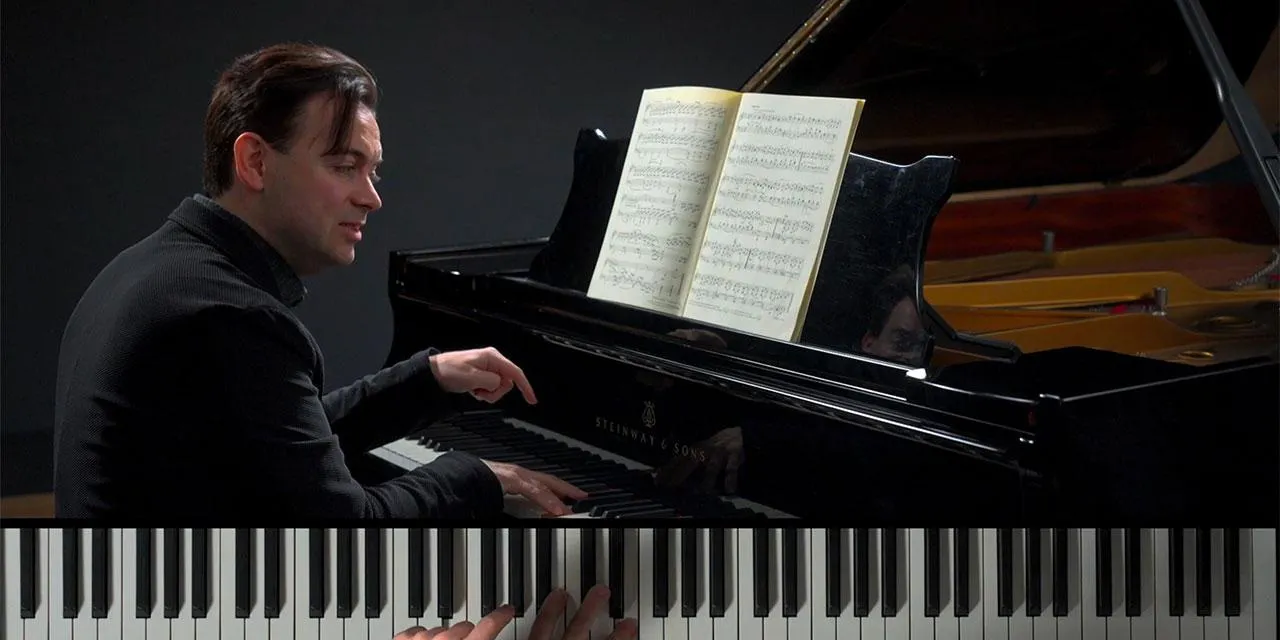
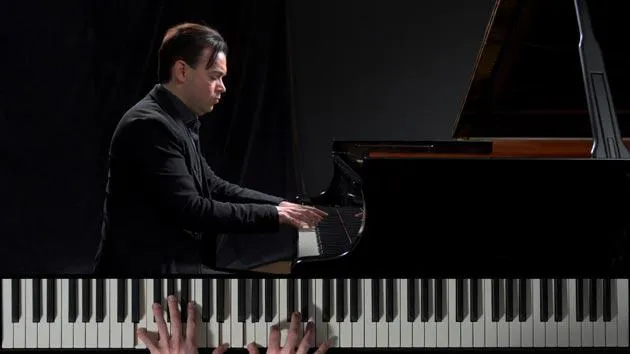
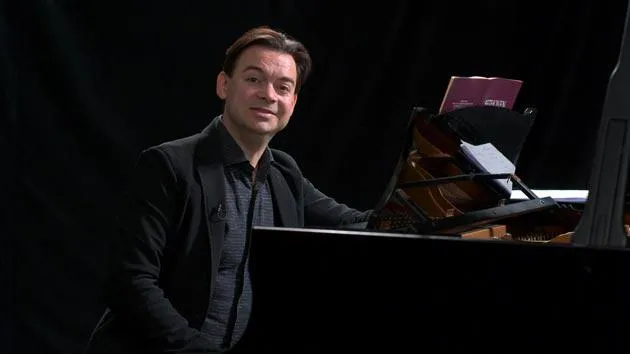
Dejan LazićDejan Lazic explains the Alberti bass accompaniment figures in Moonlight Sonata's third movement, how to balance them against the melody and how to practise them.
What's in the course
20 lessons (2h 4m) · 1 free
Lesson transcript
Beethoven's Moonlight Sonata: Third Movement
Hi everyone, we are back with Beethoven and the Moonlight Sonata, third movement, the most virtuosic one.
Contrasts in the Sonata
We were talking about the great contrasts Beethoven included when composing this sonata:
- First Movement: Very intimate, soft, and slow.
- Second Movement: Cheerful and dance-like, described as a "flower between the two Abbesses," as Lis called it, in D flat major.
- Third Movement: Back to C sharp minor with incredible broken chords passages.
Rhapsodic Movement
This movement doesn't start with a clear theme or subject. Instead, it begins with broken chords, similar to how we started the first movement. Later, we discover that there is indeed a motivic subject, a theme worthy of singing.
Theme Introduction
The thematic material appears a bit later, in Bar 21, after we encounter a fermata. Do you remember the pedal note: G sharp fermata?
Fermata Timing
- Importance of Timing: No one really knows how long this fermata should be.
- Repetition: Since you are likely repeating this first section multiple times, you can experiment with timing.
- Consider making it dramatically longer the first time and a bit shorter another time.
- Beethoven's Improvisation: Beethoven was a great improviser. Performers noted that he often played the same piece differently in repeats.
Transitioning from Second Movement
After the second movement, which ends in B flat major, we transition immediately to C sharp minor, setting up the "engine" for the third movement.
Fingering Recommendations
For fingering, I recommend:
- Not the usual: Octave 1:5.
- Consider 1-4 for certain sections since the fourth finger is positioned between the black keys and doesn't project as well.
Accentuation and Dynamics
- Use piano sforzando and prepare for novelty.
- In Bar 19, we see a crescendo for the first time with the same figure (broken chords), but it's done with slurs, meaning it should be played legato and more expressively.
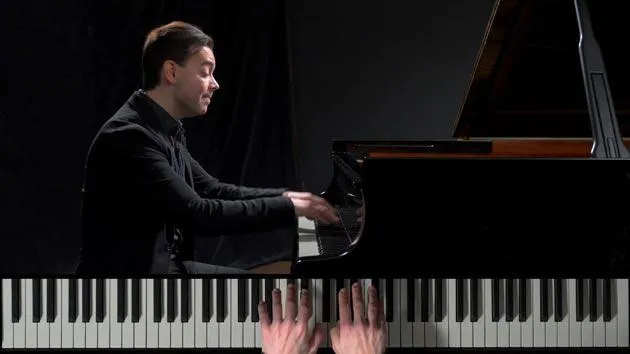
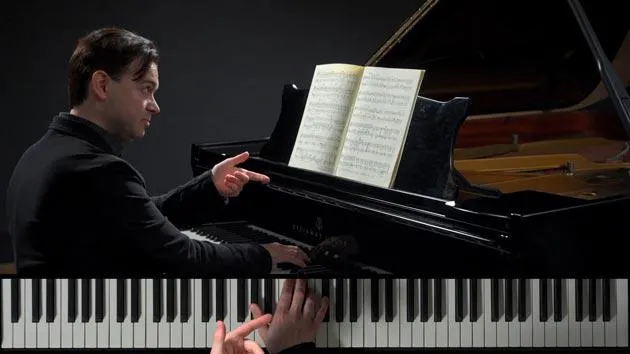
Alberti Bass
We encounter the Alberti bass, a familiar accompaniment figure used extensively by the Italian composer Alberti, a singer and harpsichordist.
- This figure appears frequently in Beethoven's writing and is a mix of humor and irony.
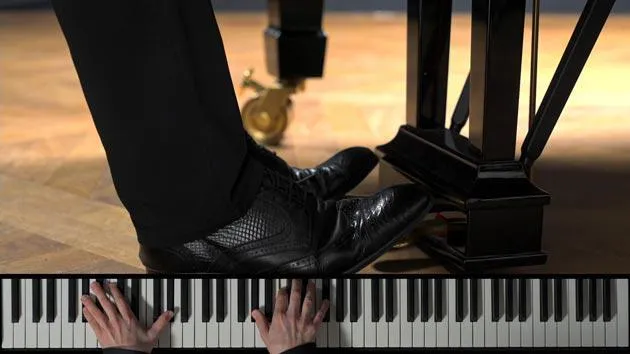
- It's essential to play it with minimal pedal to ensure clarity since it belongs more to the 18th century than to a 19th-century piece.
Variations of Alberti Bass
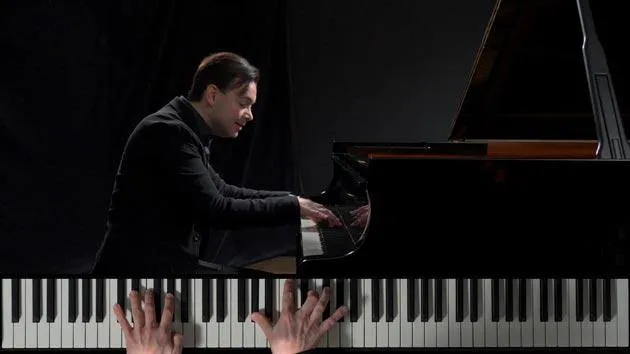
- The figure appears in various forms:
- In the left hand during the middle section,
- In the right hand from Bar 75.
Practicing Tips
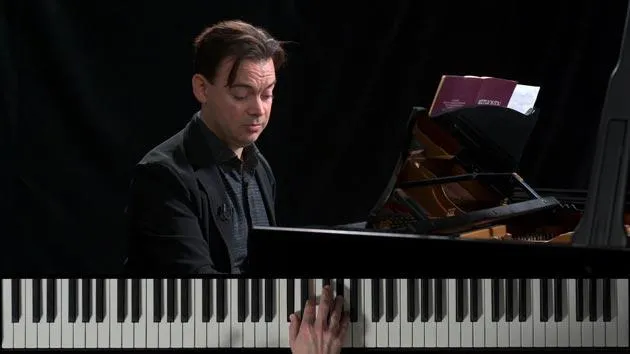
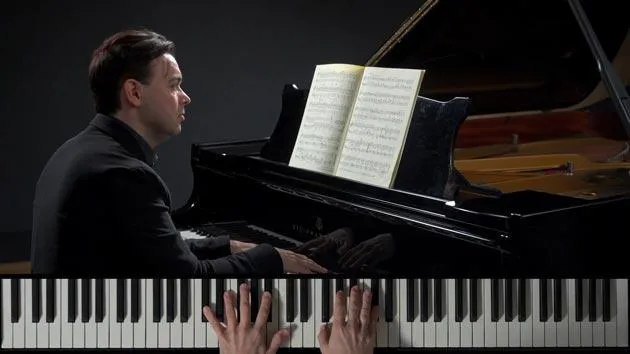
Pay attention to the thumb:
- We discussed the importance of the thumb's flexibility earlier.
- For G sharp minor, your thumb should be very flexible:
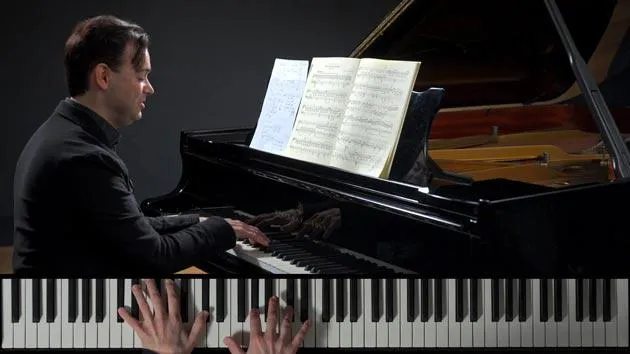
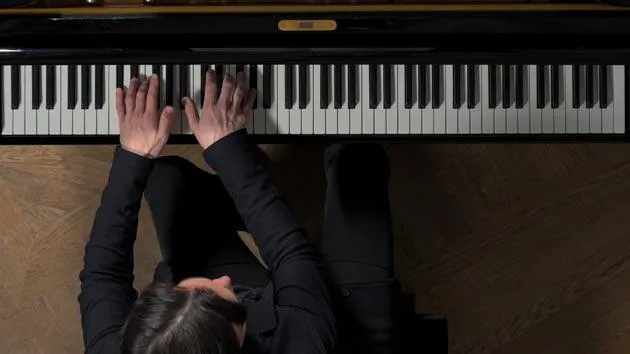
- In the left hand, use G sharp 5-3-1 for the first inversion.
- Then, try 4 to 1 to maintain a natural hand position.
Additional Considerations
- Avoid practicing too fast, focusing instead on maintaining proper technique to avoid strain.
- Ensure that you take care of your thumbs throughout the practice.
See you next time!
20 lessons
2h 4m of structured video lessons
Advanced video features
Slow down, loop a passage, follow along
Mobile, tablet & desktop
Practise wherever you are
100% satisfaction guarantee
30-day money-back guarantee
Meet your guru
Meet your guru
Dejan Lazić's fresh interpretations of the repertoire have established him as one of the most unique and unusual soloists of his generation. He regularly performs with the world's leading orchestras, including the Boston and Chicago Symphony Orchestras, Budapest Festival Orchestra, Royal Concertgebouw Orchestra, London Philharmonic, Philharmonia Orchestra, NDR Elbphilharmonie Orchester, as well as the Australian, Basel, and Netherlands Chamber Orchestras, and has built close collaborations with conductors including Giovanni Antonini, Iván Fischer, Michael Francis, Andris Nelsons, Ivan Repušić, Thomas Søndergård, Robert Spano, John Storgårds, Krzysztof Urbański, and Jan Willem de Vriend.
Dejan Lazić has released many CDs with Channel Classics and Onyx Classics, and a recording of Beethoven's Triple Concerto for Sony Classical. His live recording of Rachmaninov's Piano Concerto No. 2 with the London Philharmonic Orchestra and Kirill Petrenko received the German "Echo Klassik" Award. He also has a strong following in the Far East and is active as a recitalist and chamber musician, appearing regularly at major international festivals.
Dejan Lazić's compositions receive increasing recognition, and he was signed as a composer by the Sikorski Music Publishing Group in 2015. His arrangement of Brahms' Violin Concerto as a Piano Concerto "No. 3" was premiered and recorded with the Atlanta Symphony Orchestra and Robert Spano in 2009 and has enjoyed much ongoing success, at the BBC Proms, Concertgebouw Amsterdam, Hamburg Easter Festival, and Chopin Festival Warsaw, in both Americas and in Japan. His Piano Concerto in Istrian Style (Op. 18) was premiered at the Aspen Music Festival in 2014 and has since been performed throughout Europe and in the USA. Other works include various orchestral, chamber, and piano music, cadenzas, as well as several arrangements of works by Mozart, Schubert, R. Strauss, Wagner, and Debussy.
Dejan Lazić was born in Zagreb, Croatia, into a family of musicians. He grew up in Salzburg, Austria, where he studied at the Mozarteum (piano, clarinet and composition). His early encounters with Zoltán Kocsis and Imre Rohmann at the Bartók Festival in Hungary were decisive for his artistic career, as was the significant influence of Peter Eötvös. Dejan Lazić lives in Amsterdam.
In Master Moonlight Sonata by Beethoven, Dejan shares the insight behind those acclaimed interpretations, guiding you through all three movements of one of the best-loved works in the piano repertoire so you can shape it with genuine understanding rather than imitation. www.dejanlazic.com