



Introduction

With
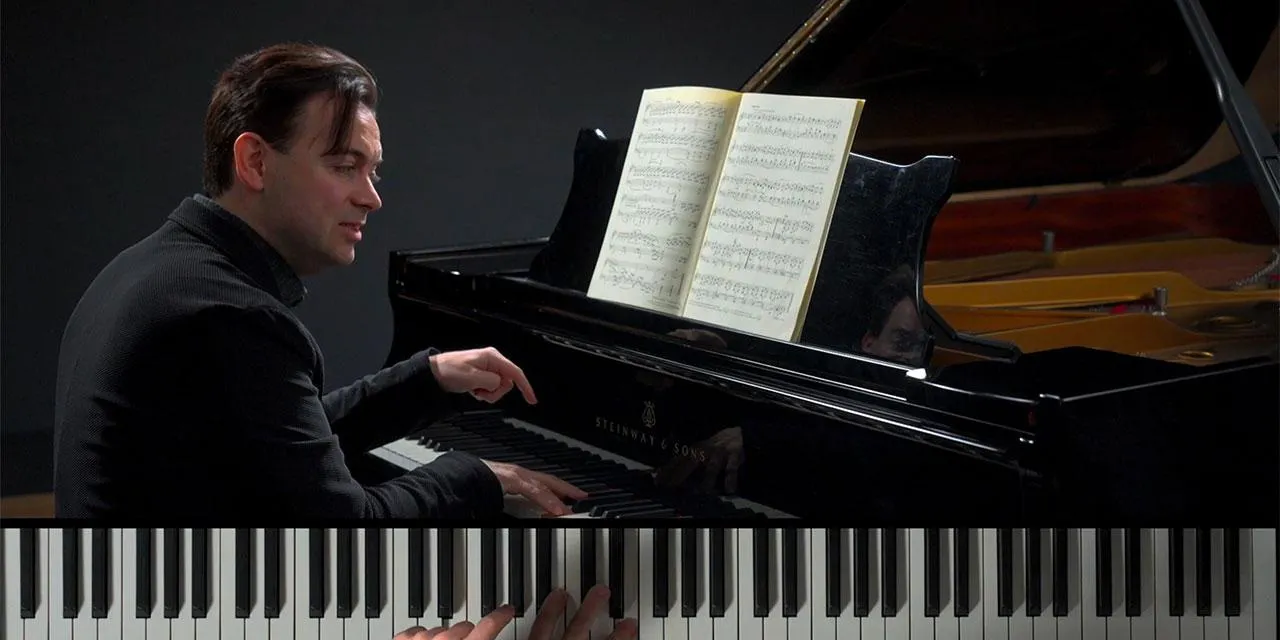
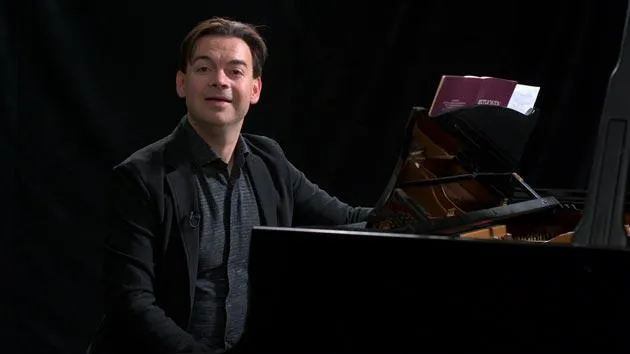
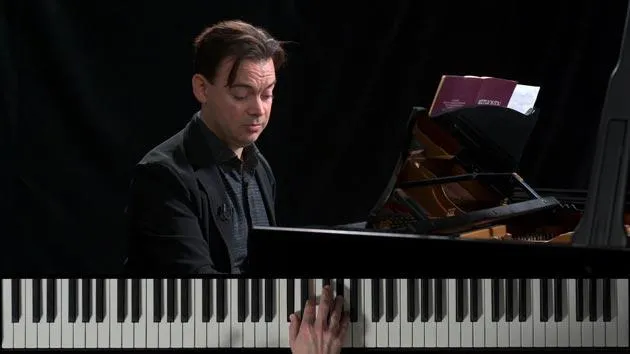
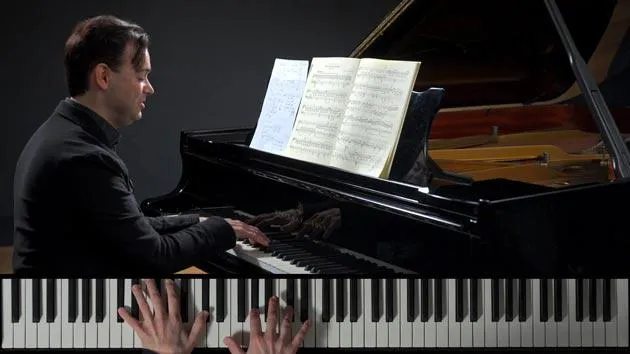
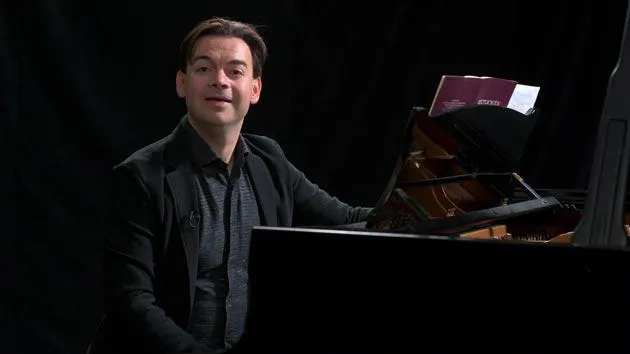
Dejan LazićDejan Lazić introduces the first movement of Beethoven's Moonlight Sonata, with the story behind its nickname and the C-sharp minor mood that defines it.
What's in the course
20 lessons (2h 4m) · 1 free
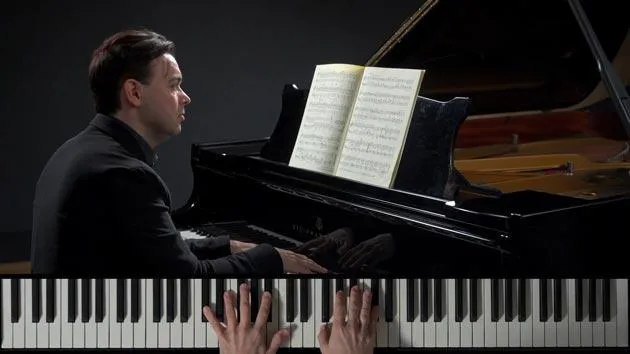
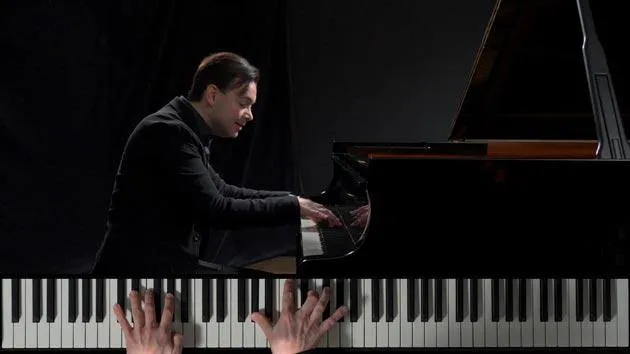
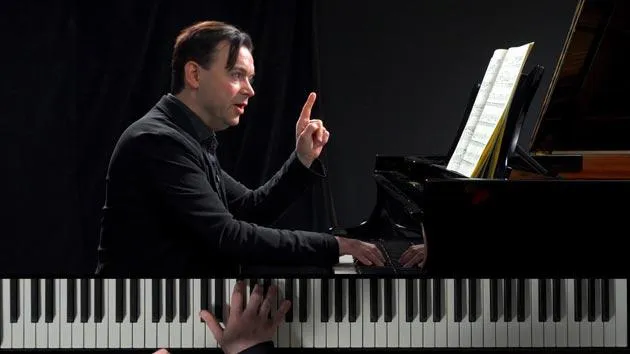
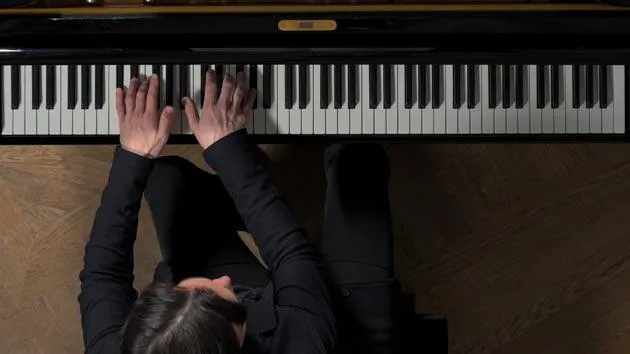
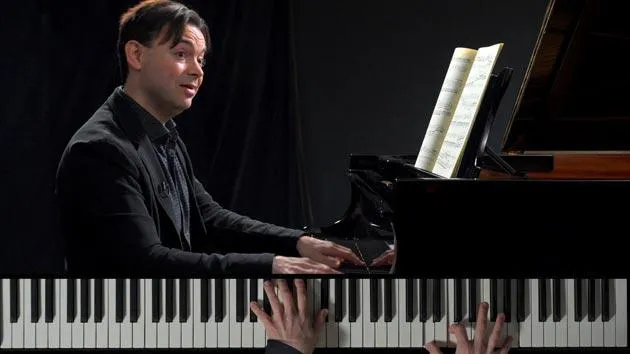
Lesson transcript
Welcome to the Moonlight Course: Exploring Beethoven's Famous "Moonlight Sonata"
Hello and welcome back to the Moonlight Course, focusing on Beethoven's famous "Moonlight Sonata."
Background of This Great Work
Before we start, let's dive into a bit of the background of this exceptional piece:
-
Title Origin: The name "Moonlight Sonata" wasn't given by Beethoven. It was bestowed five years after his death by a German critic and poet, Ludwig Rellstab. He was inspired by the serene beauty of Lake Lucerne in Switzerland, imagining moonlight shimmering on its surface.
-
Rejection of the Title: Many musicians later rejected this title; for instance, the very opening motive evokes:
- A punctuated rhythm
- An adagio in a very slow pace
- A minor key, which gives it somber, dark qualities
Structure of the Sonata
The piece features three movements, each with distinct characteristics:
-
First Movement:
- Begins with those famous triplets, creating a melody that appears to come from nowhere.
- In C-sharp minor.
-
Second Movement:
- Called the "flower between the two abysses" by Franz Liszt.
- This is the only movement with major qualities, specifically in D-flat major, which gives it a much more cheerful essence.
-
Third Movement:
- A dramatic outburst of passion and technical challenge, in stark contrast to the previous movements.
The Importance of Pedalization
In our lessons, we will explore the entire work movement by movement, focusing on different aspects, such as pedalization:
-
Beethoven's Instructions: The first remark in Italian states:
"Si deve sonare tutto questo pezzo delicatissimamente e senza sordino,"
which translates to:
"One should play this piece with utmost delicacy and without sustained pedal."
-
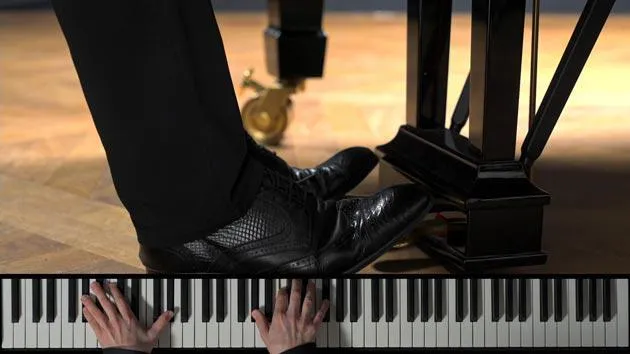
This means the whole piece should be played through with one pedal. With modern instruments, like the Steinway we have, adaptations may be necessary on a case-by-case basis.
Personal Connection
This piece was cherished by many musicians and composers. It was written for Giulietta Guicciardi, a pupil of Beethoven, who was also considered a love interest.
Title of the Sonata
Unlike the "Moonlight" title, Beethoven did give this sonata a title: Sonata Quasi Una Fantasia, meaning "Sonata in the manner of a Fantasy." This highlights the unconventional structure of the three movements:
- First Movement: Slow, soft (Adagio sostenuto sempre pianissimo)
- Second Movement: A minuet-like dance
- Third Movement: Fast and impassioned
Conclusion
I look forward to delving deeper into this wonderful sonata with you, exploring all of its intricate details and uncovering what Beethoven truly meant with this remarkable work.
20 lessons
2h 4m of structured video lessons
Advanced video features
Slow down, loop a passage, follow along
Mobile, tablet & desktop
Practise wherever you are
100% satisfaction guarantee
30-day money-back guarantee
Meet your guru
Meet your guru
Dejan Lazić's fresh interpretations of the repertoire have established him as one of the most unique and unusual soloists of his generation. He regularly performs with the world's leading orchestras, including the Boston and Chicago Symphony Orchestras, Budapest Festival Orchestra, Royal Concertgebouw Orchestra, London Philharmonic, Philharmonia Orchestra, NDR Elbphilharmonie Orchester, as well as the Australian, Basel, and Netherlands Chamber Orchestras, and has built close collaborations with conductors including Giovanni Antonini, Iván Fischer, Michael Francis, Andris Nelsons, Ivan Repušić, Thomas Søndergård, Robert Spano, John Storgårds, Krzysztof Urbański, and Jan Willem de Vriend.
Dejan Lazić has released many CDs with Channel Classics and Onyx Classics, and a recording of Beethoven's Triple Concerto for Sony Classical. His live recording of Rachmaninov's Piano Concerto No. 2 with the London Philharmonic Orchestra and Kirill Petrenko received the German "Echo Klassik" Award. He also has a strong following in the Far East and is active as a recitalist and chamber musician, appearing regularly at major international festivals.
Dejan Lazić's compositions receive increasing recognition, and he was signed as a composer by the Sikorski Music Publishing Group in 2015. His arrangement of Brahms' Violin Concerto as a Piano Concerto "No. 3" was premiered and recorded with the Atlanta Symphony Orchestra and Robert Spano in 2009 and has enjoyed much ongoing success, at the BBC Proms, Concertgebouw Amsterdam, Hamburg Easter Festival, and Chopin Festival Warsaw, in both Americas and in Japan. His Piano Concerto in Istrian Style (Op. 18) was premiered at the Aspen Music Festival in 2014 and has since been performed throughout Europe and in the USA. Other works include various orchestral, chamber, and piano music, cadenzas, as well as several arrangements of works by Mozart, Schubert, R. Strauss, Wagner, and Debussy.
Dejan Lazić was born in Zagreb, Croatia, into a family of musicians. He grew up in Salzburg, Austria, where he studied at the Mozarteum (piano, clarinet and composition). His early encounters with Zoltán Kocsis and Imre Rohmann at the Bartók Festival in Hungary were decisive for his artistic career, as was the significant influence of Peter Eötvös. Dejan Lazić lives in Amsterdam.
In Master Moonlight Sonata by Beethoven, Dejan shares the insight behind those acclaimed interpretations, guiding you through all three movements of one of the best-loved works in the piano repertoire so you can shape it with genuine understanding rather than imitation. www.dejanlazic.com







