



Ending

With
Paddy Milner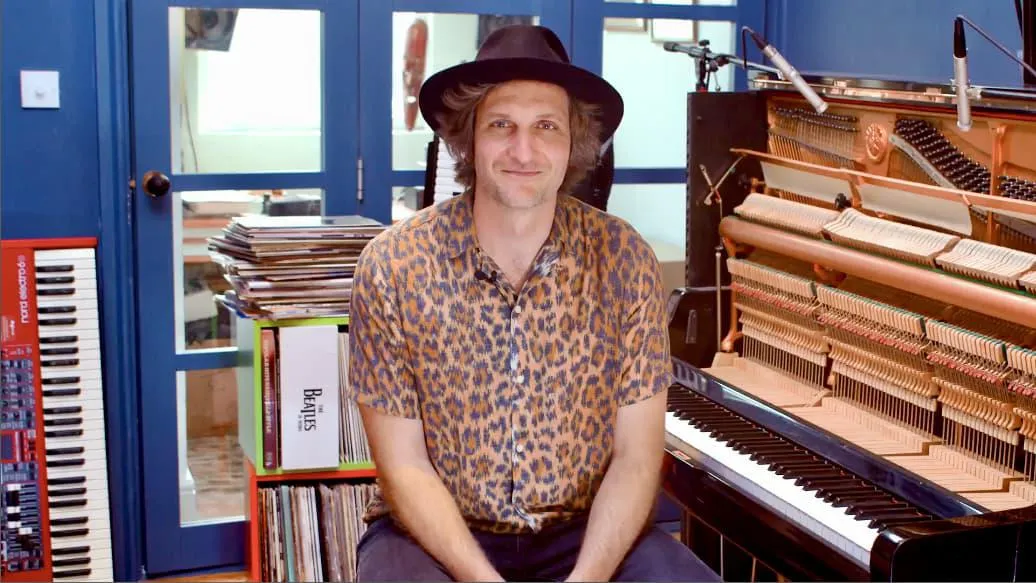
What's in the course
35 lessons (2h 23m) · 1 free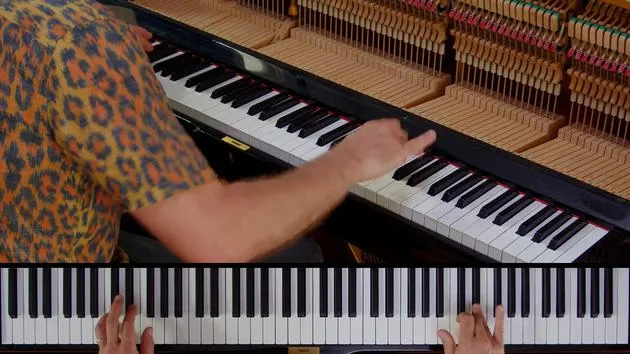
01. Dive Bomber (Pete Johnson) - piano performance by Paddy Milner
3:00
02. Intro to the piece
Free lesson5:30
03. First chorus
6:09
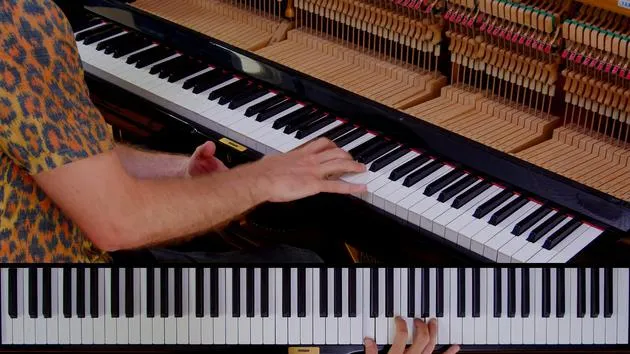
04. Second chorus
1:49
05. Next section
2:36
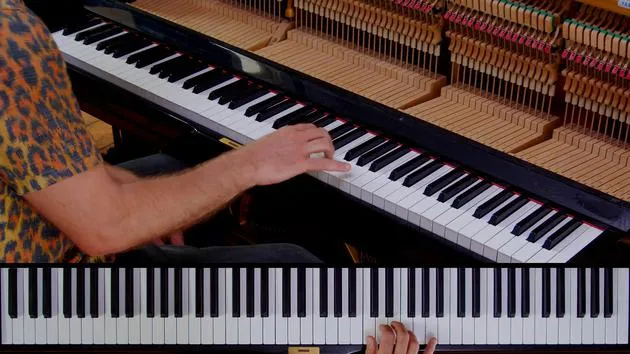
06. Turnaround
0:49
07. First break
4:17
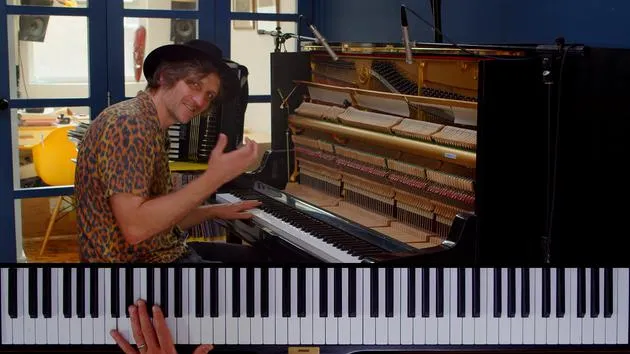
08. Single note line
2:26
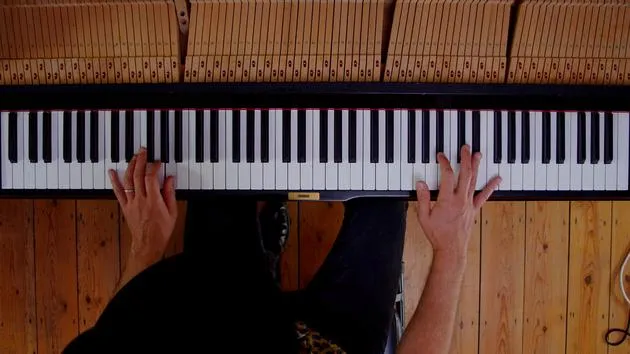
09. Next chorus
2:43
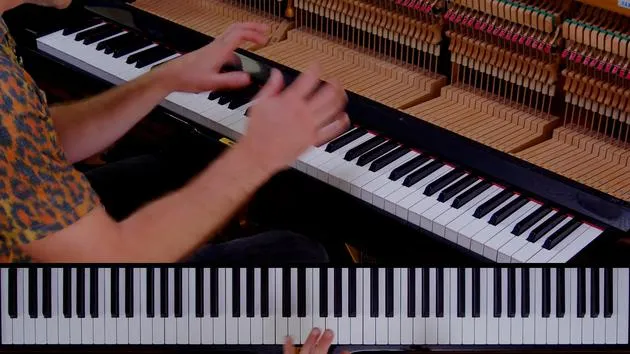
10. Next break
4:25
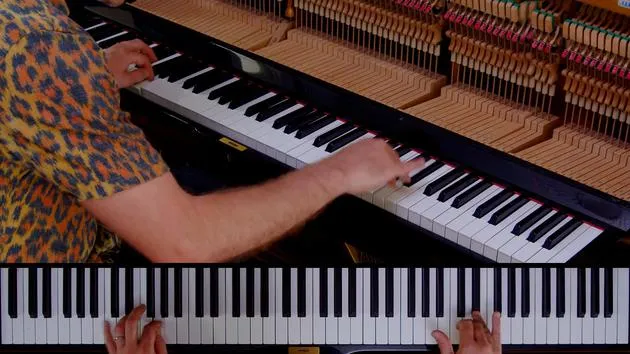
11. Next chorus
5:15
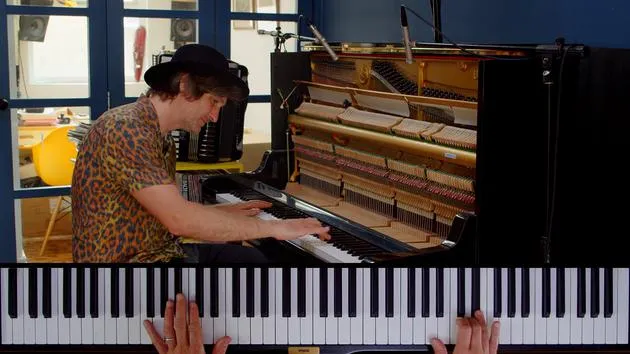
12. Chord IV riff
2:04
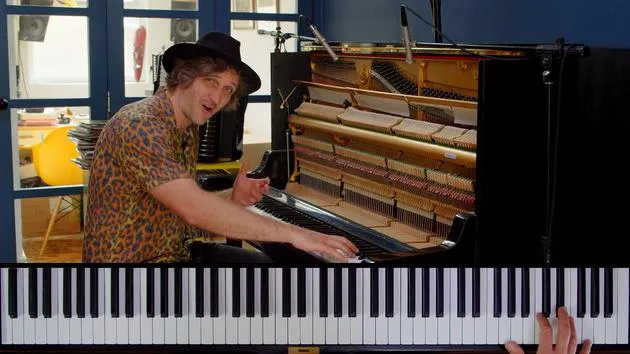
13. High section
8:24
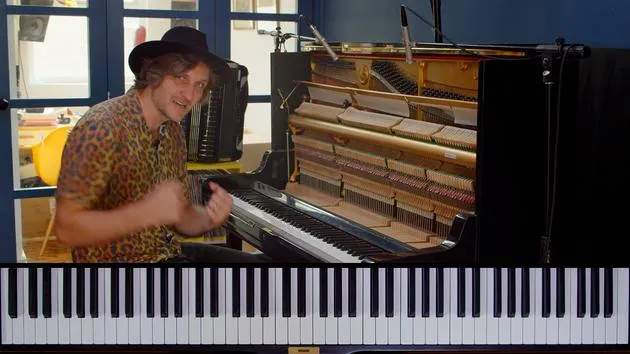
14. Last chorus
5:00
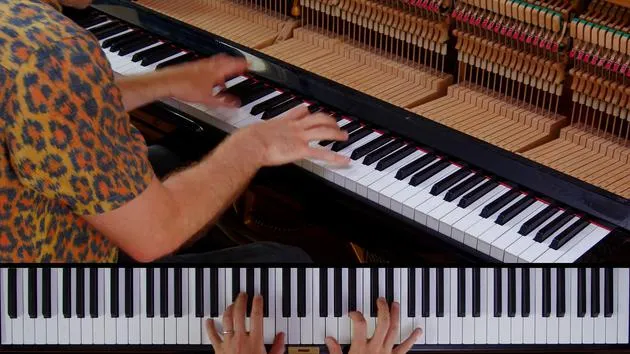
01. Honky Tonk Train Blues (Meade Lux Lewis) - piano performance by Paddy Milner
3:01
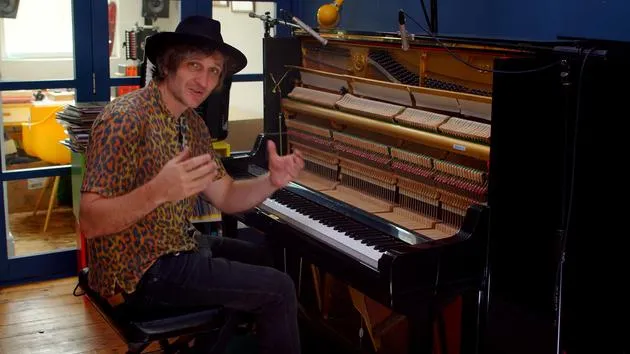
02. The Intro - All Aboard!
2:56
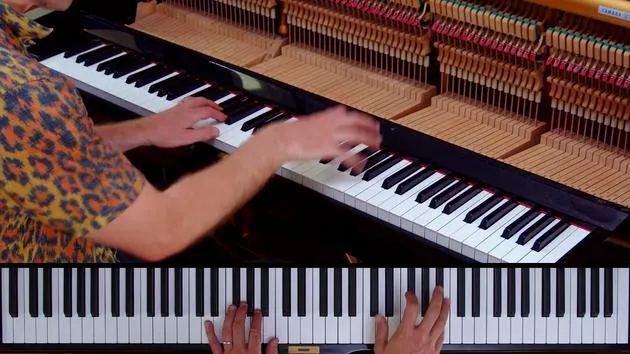
03. Left Hand - The Engine
4:03
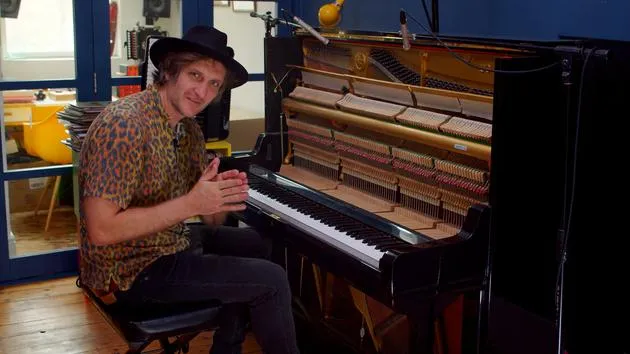
04. First chorus and turnaround
8:11
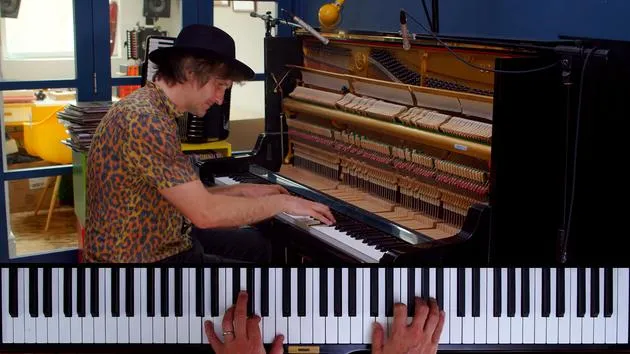
05. Second chorus - 3 2 Polyrythm
1:54
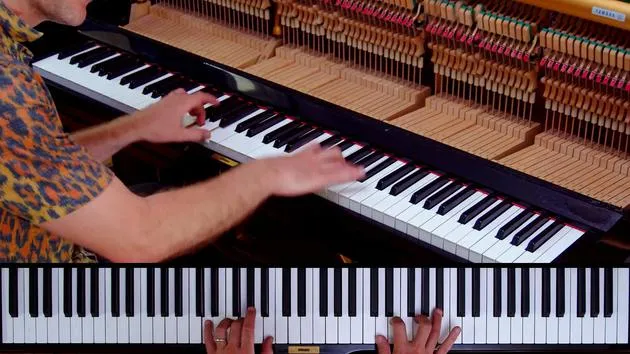
06. Third chorus - Train whistle trill
4:44
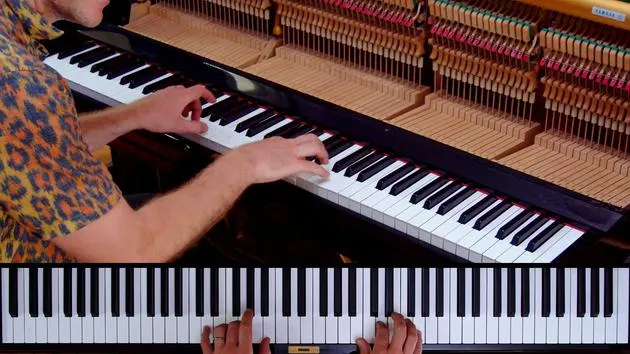
07. Fourth chorus - Repeated triplets
2:56
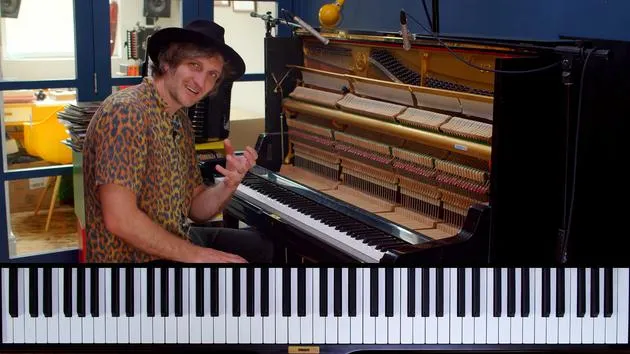
08. Sixth chorus - Em G6 harmony
7:03
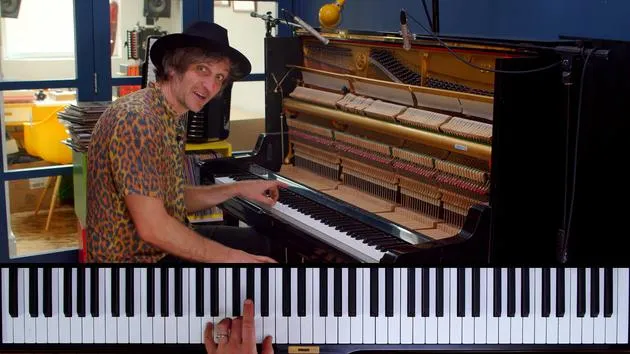
09. Seventh chorus
2:33
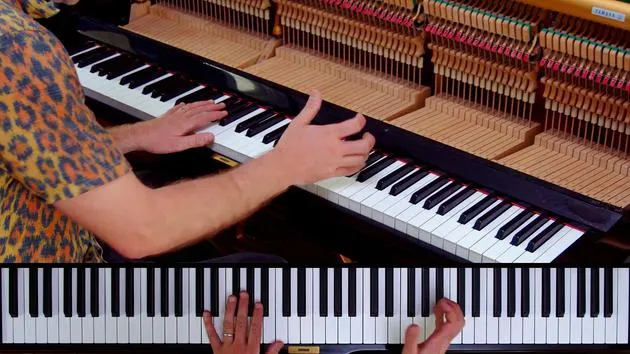
10. Eighth chorus
2:51
11. Last chorus ending - Coming into the station
2:28
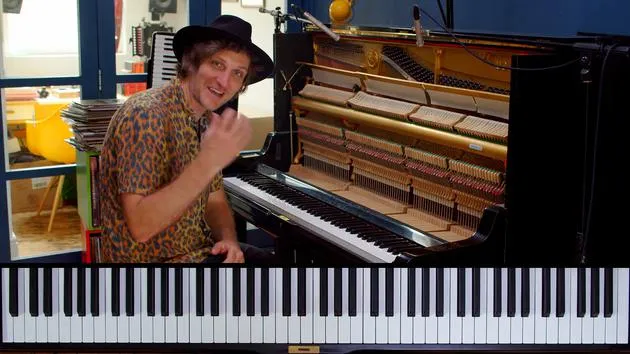
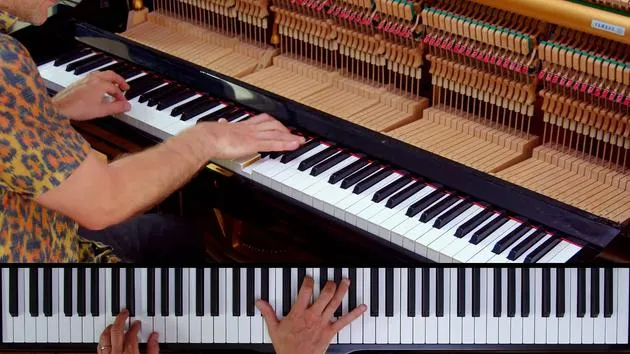
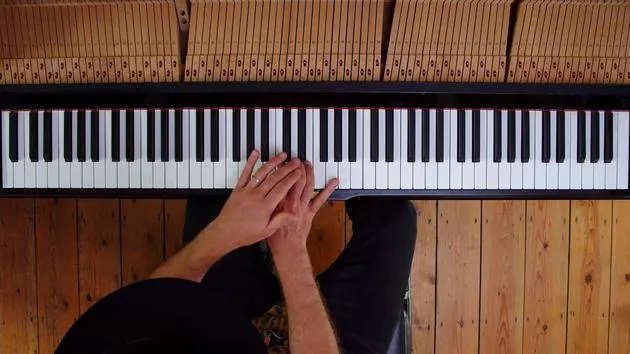
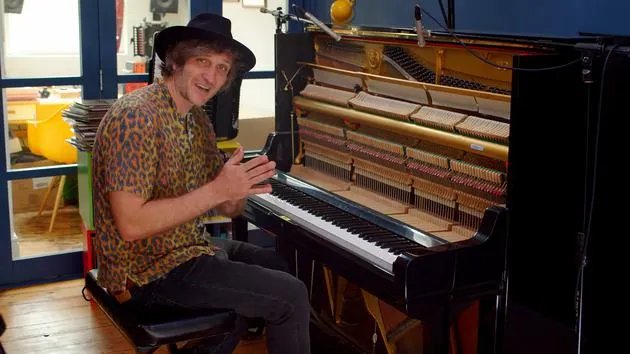
Lesson transcript
Music Lesson
So after. Now shake that thing.
So we're back onto that idea.
I think he may have been aiming for that E flat, but on the recording, I hear that he's just hitting a knee twice. That's neither here nor there, but I think that's kind of what happened.
Last Chorus
Okay, so those are all things that we've heard before.
And then for the very last chorus, which is kind of the peak of the tune, this is where the sort of climax of the dancing would happen, he plays this right up at the top of the register, which we haven't been to before.
High Register
- He saved that high register bit for the end of the tune.
- This is where the frenzy would be happening.
There's more triplets in there as well, adding a level of complexity and intensity to it.
New Material
He also brings in this little chromatic thing, which he hasn't done before in the tune.
- There's this kind of new material for the ear to listen to.
- That little bit adds variety and interest.
Then, we have a kind of strange ending. It's not at the end of the 12-bar form.
Ending
He does it after coming down from the F chord.
- I'm not sure why that is.
- Maybe the idea of the 12-bar form hadn't fully crystallized at that point.
- Or maybe it's because the recording had to be a certain length before they ran out of wax on the cylinder or something.
I'm not exactly sure what the recording process was.
Anyway, he finishes it sort of halfway through the 12-bar, not at the end of the 12-bar.
And then, there is a very simple turnaround ending, just very simple. There's no big flourish, none of that. No, just very simple.
Conclusion
So there you go. That is pretty much as far as I could work it out from the record, what Pine Top Smith played on his 1928 recording.
So, yeah, good luck playing it! I hope these tips have helped.
And as always with this music, which is improvised music, take these ideas and do your own things with them.
35 lessons
2h 23m of structured video lessons
Advanced video features
Slow down, loop a passage, follow along
Mobile, tablet & desktop
Practise wherever you are
100% satisfaction guarantee
30-day money-back guarantee
Meet your guru
Meet your guru
Paddy Milner is recognised as one of the leading blues piano players in the world - he is currently keyboard player of choice for Sir Tom Jones, following several years with the late, great Jack Bruce - but he is also a superb original songwriter and a distinctive singer. Just read the praise from the likes of Dave Brubeck below! His playing was featured on the soundtrack for the hit 2019 film 'Rocketman'.
He has twice won the award for Best Keyboard Player in the British Blues Awards, and he holds a long-standing residency as a founder member of the Ronnie Scott's Blues Explosion at the world-renowned Ronnie Scott's club.
His current group LONDONOLA plays homegrown British music with a strong dose of New Orleans spirit, and his collaborative group JAWBONE goes from strength to strength following the release of their self-titled debut album.
- "I love it... there's a guy who can really play the piano" - Dave Brubeck
- "I highly recommend it. Somehow things start to feel much better!" - Jack Bruce
- "The best blues piano player in Europe..." - Blues Access, USA
- "Impressive & original" - The Times
- "Dazzling" - The Independent
Across his courses, Paddy breaks down authentic blues shuffle, slow blues, boogie-woogie, rock 'n' roll and New Orleans piano - right down to three classic boogie-woogie songs - so you can learn these styles from one of the very best in the business.







