



Developing an interpretation: Playing like you'd sing

With
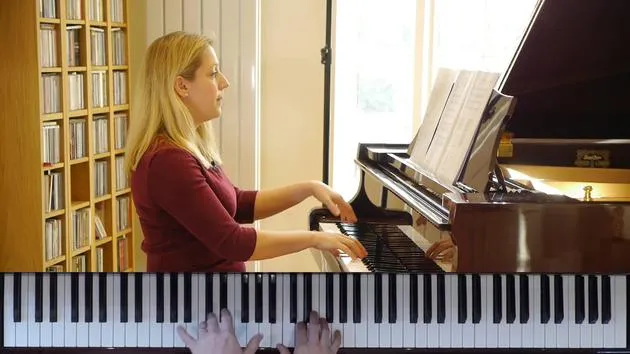
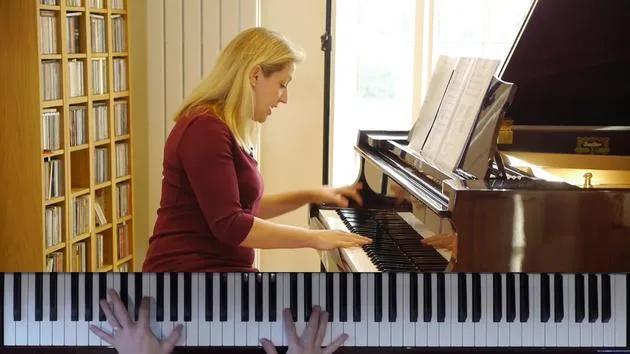
Annabel ThwaiteAnnabel Thwaite shows how to bring your own interpretation to a familiar carol, using the words we all know to shape the melodic line - an idea you can carry into other classical playing.
What's in the course
21 lessons (0h 41m) · 2 free
Lesson transcript
Melodic Line and Musical Direction
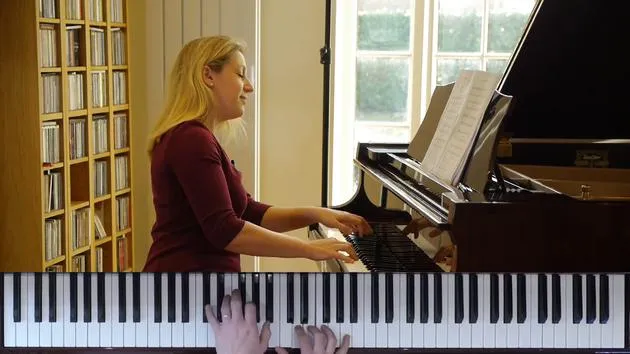
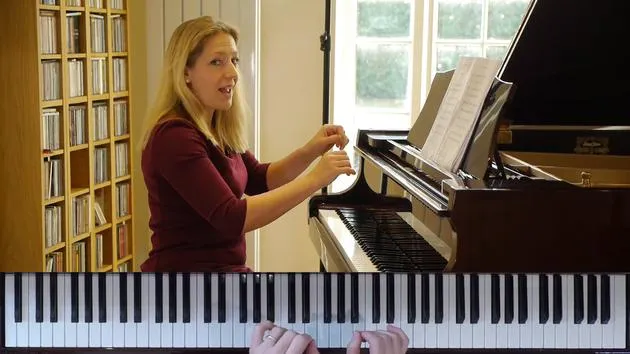
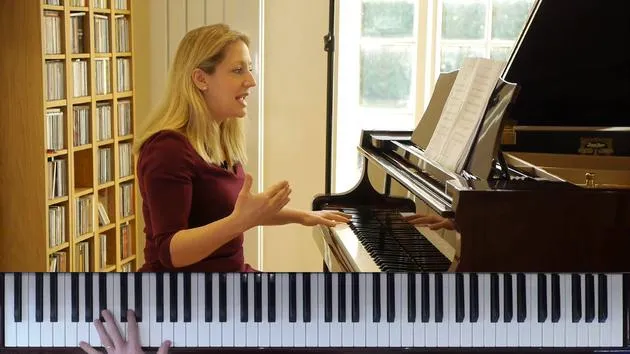
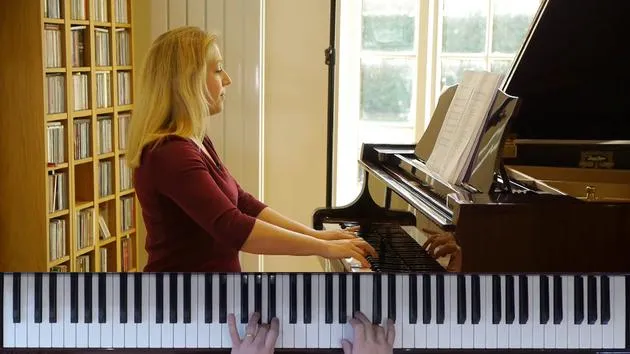
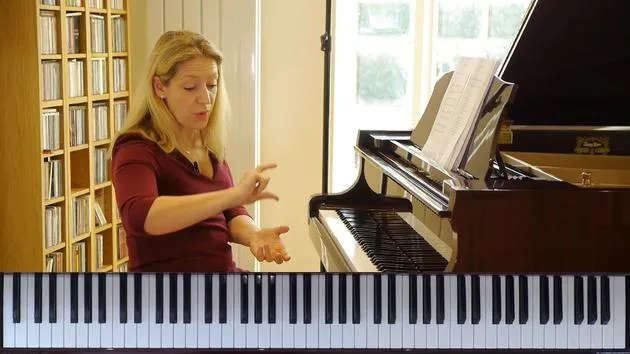
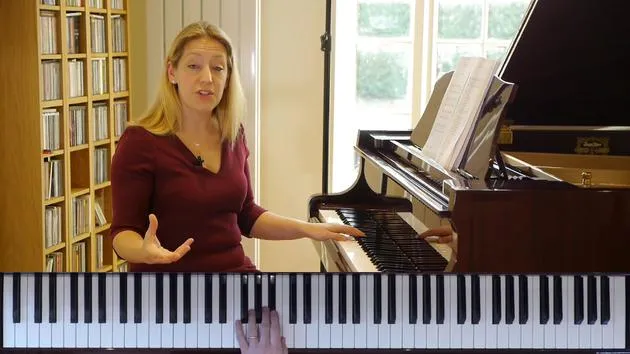
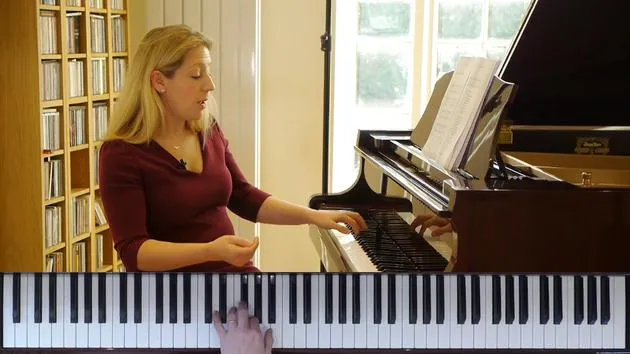
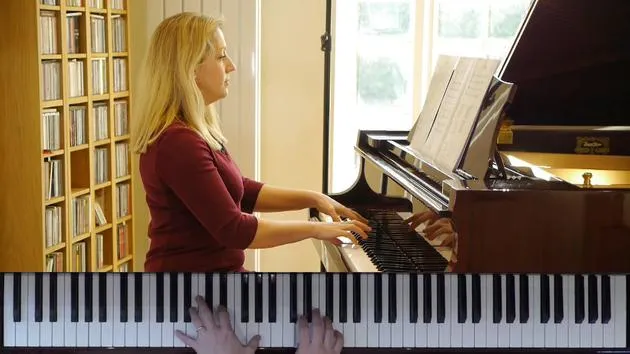
So this little piece is actually great for introducing melodic line and musical direction because we have the words written here. This gives us a sense of where the harmonies, which we'll be looking at more intricately in other works, kind of cadence.
Cadences
We sort of finish or begin again here. In particular, we have:
- "Little Town of Bethlehem"
- "Breath, how still we see thee lie"
There's a little cadence, and I think that's very important. It's a philosophy that we want to develop.
Dissonances and Resolutions
When we look at other Bach inventions, consider:
- Where the dissonances occur
- The clashes of the harmony
- Where they resolve
This is quite advanced thinking, but you'll have an idea of practicing the left hand and the right hand together or separately, focusing on where they go, where they rise, and where they fall. This can develop your understanding of phrase length and melodic contours.
The Importance of Breathing
I would really recommend thinking that every time you play a piece, it always has this melodic line and musical phrase. Consider it a sentence that you are almost singing. If you're singing, you need breath, and it's essential to breathe at various points.
Cadential Points
We have cadential points, harmonies that twist and turn, and those are the moments we can breathe.
Practice Tip: Sing along and see where your breath runs out. Then think, "Where is a suitable place to put a breath?" For example:
- Breathe, breathe.
This approach gives much more depth and space within the phrase and the whole piece. Additionally, it helps convey the melodic contour, offering the audience an idea of where the journey is moving and where it's going.
Harmony Insights
Looking at the harmony a bit more closely, in bar four it's interesting that:
- That A is a first inversion of F major
- It resolves on the third beat
This observation could be a little point to take away. We also have a couple of cool F sharps popping up within a kind of F major key, which adds further interest.
Notable Words
If you look at where they appear, such as in the words "sleep" and "the years", those might mean something. They appear at a point when the phrase turns, so just watch out for those.
Final Thought: Don't emphasize them; just subtly notice them and think, "Well, this is because it's turning the phrase that way or this way."
21 lessons
0h 41m of structured video lessons
Advanced video features
Slow down, loop a passage, follow along
Mobile, tablet & desktop
Practise wherever you are
100% satisfaction guarantee
30-day money-back guarantee
Meet your guru
Meet your guru
Recognised as one of Britain's most versatile and charismatic pianists, Annabel Thwaite enjoys a diverse career as a soloist, chamber musician, recording artist, educator and examiner, and has won all the major accompanying prizes, including the prestigious Kathleen Ferrier, Gold Medal, and Richard Tauber Piano Prizes. She has collaborated with renowned artists such as Roberto Alagna, Bryn Terfel, David Kempster and "Only Men Aloud!"
Annabel has recorded for Universal records with the "Scottish Tenor", whose album was nominated for a Classical Brit Award and is regularly played on Classic FM. Twice the accompanist for the Festival of Welsh Male choirs, her performances at the Royal Albert Hall were recorded by Sain and have been aired on S4C. She is also a film session pianist, having recorded at Abbey Road the music for the film "Awake", the BBC Jane Austen series "Emma", "The Secret Diaries of Miss Anne Lister" and, most recently, she has appeared on both Blue Peter and "The Rob Brydon Show".
"...no doubt helped by the obviously brilliant piano accompaniments from Annabel Thwaite...highly enjoyable."
In her MusicGurus courses - Learn Christmas Classics on Piano, Learn Classical Favourites on Piano, and Growing Chamber Groups and Small Ensembles - Annabel shares the musicianship behind that versatile career. You will learn how to bring well-loved Christmas and classical pieces to life at the piano, develop your touch and phrasing, and, drawing on her award-winning experience as an accompanist, discover how to listen, lead and play together when making music with other musicians in chamber groups and small ensembles.







