



Wayfaring Stranger (lesson)
With
Laurence Juber
What's in the course
16 lessons (1h 6m) · 1 free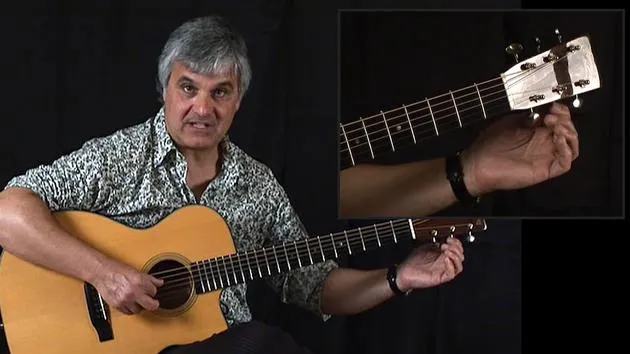
01. A few comments on tuning & theory
Free lesson6:11
02. Amazing Grace (lesson)
10:51
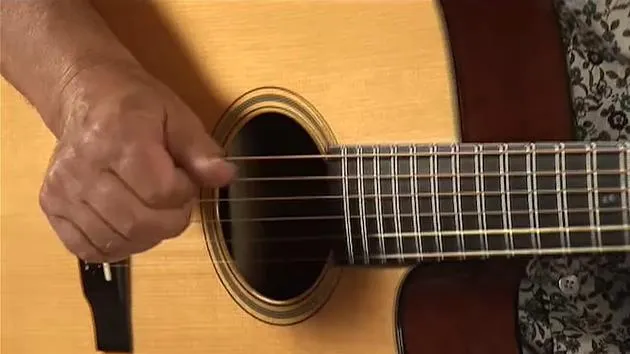
03. Amazing Grace (performance)
1:19
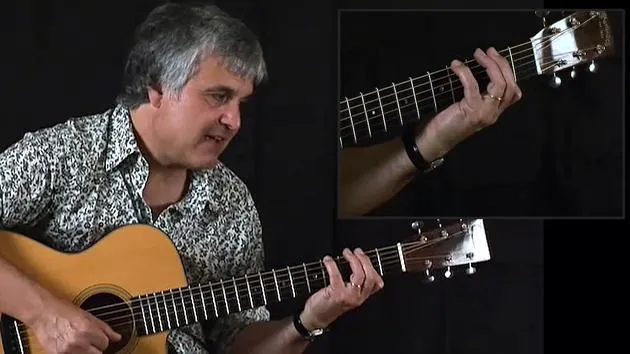
04. Greensleeves (lesson)
8:36
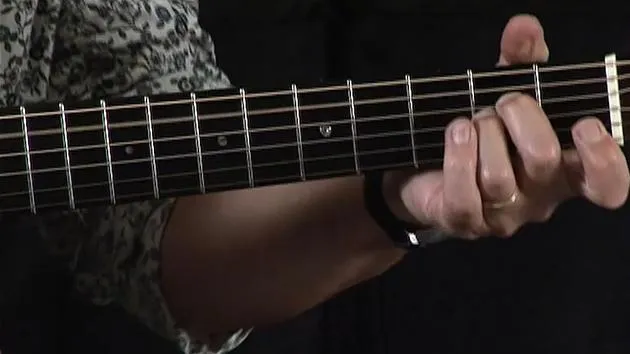
05. Greensleeves (performance)
1:12
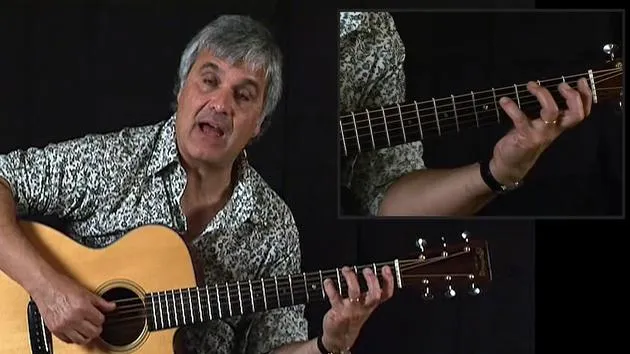
06. Shebeg & Shemore (lesson)
6:53
07. Shebeg & Shemore (performance)
1:54
08. Wayfaring Stranger (lesson)
You are here7:35
09. Wayfaring Stranger (performance)
2:36
10. Shenandoah (lesson)
5:34
11. Shenandoah (performance)
1:55
12. When The Saints Go Marching In (lesson)
3:47
13. When The Saints Go Marching In (performance)
0:43
14. Take Me Out To The Ballgame (lesson)
4:14
15. Take Me Out To The Ballgame (performance)
1:26
16. A few notes on the key of D Minor & sign-off
1:40
Lesson transcript
Music Lesson: Exploring E Minor in DADGAD
So we've explored the key of D and the key of A minor. In DADGAD, I'm going to move us into the key of E minor, which on the surface may not seem quite as logical as the others. However, what's really cool about E minor is:
- Open D String: With the open D string, you have the flattened seventh at the bottom.
- Hammer-On Opportunities: This allows for hammer-ons on:
- The A string (the fifth string)
- The second string
- Chord Relationships: I'll move on to the second fret to illustrate the relationship from A to B. Additionally, on the third string, you have the second fret going from G to A. This provides the relationship for each of the primary chords:
- E chord
- B chord
- A chord
Each one of these can be approached from a whole step below the chord root, which contributes to a very nice quality.
Chord Shapes
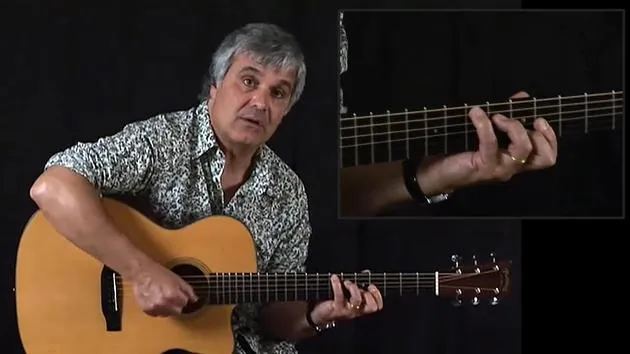
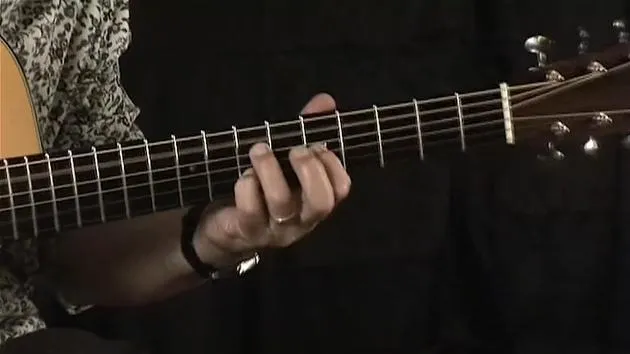
Here's the shape I showed you previously:
- Moving the F shape back to the E shape
- Lifting off your first finger gives you an E minor shape with the D on top (the flattened seventh).
- If you lift off your pinky, you have:
- The second string open (A, the fourth)
- The third string with a very cool, floating kind of harmonic quality.
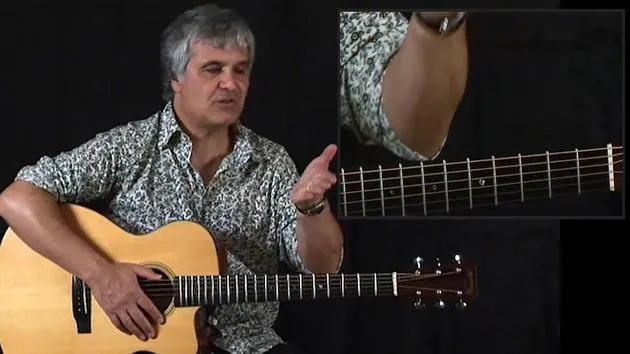
Arrangement of "Wayfaring Stranger"
I'm going to take the tune "Wayfaring Stranger" to arrange here. This very simple melody really only plays in one position if you're just focusing on the melody.
Chord Progression
In my arrangement, I'm filling in the E minor chord and adding the bass note, the flat seventh (D) to the E. This gives it a bit of a rock and roll vibe, with a bluesy rock feel.
For context, if you listen to my full band electric version, I'm playing electric guitar in standard tuning with a Hammond B3, bass, and drums. The tune suits that treatment as well.
This arrangement uses the following chords:
- A minor
- E minor
- C
- Dsus
Note: The Dsus utilizes open strings, showcasing a lot of open string activity.
Then transitioning to:
- C major 7
- G
Advanced Chords
Here's an example where I play the G with the 10th in the bottom. Instead of playing a straight B chord, I approach it with an F# minor 7, giving it a little staccato push.
You might expect the melody to return to E minor here, but I'm advancing the harmony a little bit by taking it to an A ninth chord over a C# (A first inversion).
Hear the difference:
- There's the E minor
- Here's the A
You can feel that emotional lift. This illustrates the essence of harmony:
- Underscoring Emotion: Harmony can underscore the emotion of a melody.
- Complexity in Chords: Instead of simple chords, using richer chords adds emotional depth.
I'm then moving it to the minor, further adding to the complexity.
Final Notes
One more time, instead of harmonizing the A melody note with an A minor, I'm going to a C minor chord. This captures the melody as the sixth, which again takes it to a darker place and then back to the beginning.
Creating Connecting Material
In the process of building an arrangement, you often want to find connecting material, such as an intro or a coda. For this arrangement, I've devised an intro inspired by a bluesy power chord that sets up a groove and allows for improvisation.
I'm going to give you a performance of this tune using that intro figure. Pay attention to how the harmony progresses, twisting from a simple chordal progression to something with a touch of jazz and blues rock , giving it a stylistic angle.
Conclusion
So this is "Wayfaring Stranger."
16 lessons
1h 6m of structured video lessons
Advanced video features
Slow down, loop a passage, follow along
Mobile, tablet & desktop
Practise wherever you are
100% satisfaction guarantee
30-day money-back guarantee
Meet your guru
Meet your guru
Laurence Juber first became known as lead guitarist in Paul McCartney's band Wings. Since then he has built a career as a fingerstyle guitarist, composer and arranger, working largely in the DADGAD tuning that earned him the nickname 'the Duke of DADGAD'.
He has been voted Guitarist of the Year by readers of Fingerstyle Guitar Magazine and named among the top guitarists by Acoustic Guitar magazine, alongside a long list of solo albums and worldwide touring.
In his courses he teaches his fingerstyle technique and the DADGAD tuning he's known for, how to arrange melody, harmony and bass together for solo guitar, and the pieces - like his signature 'Wooden Horses' - that bring it all together.







