



A few comments on tuning & theory
With
Laurence JuberLaurence Juber eases into DADGAD from standard tuning, dropping the low E a whole step to D and comparing octaves so you can hear how the tuning fits together.
What's in the course
16 lessons (1h 6m) · 1 free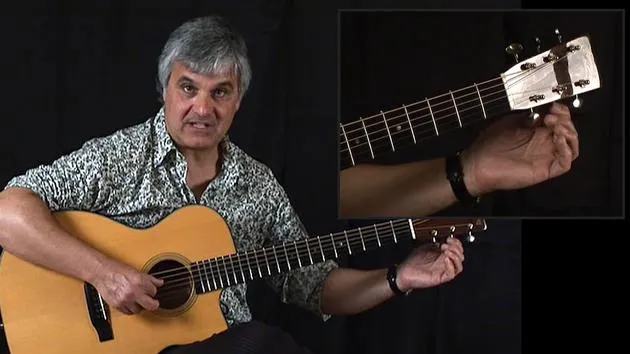
01. A few comments on tuning & theory
You are here6:11
02. Amazing Grace (lesson)
10:51
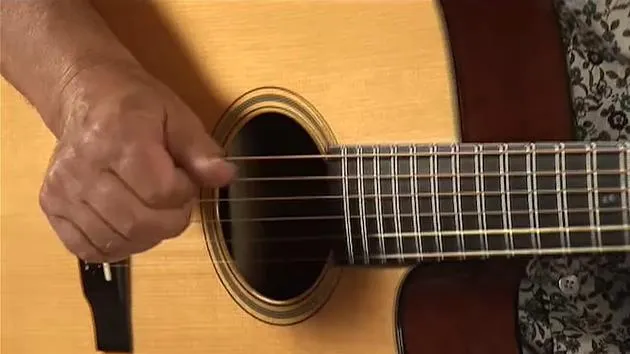
03. Amazing Grace (performance)
1:19
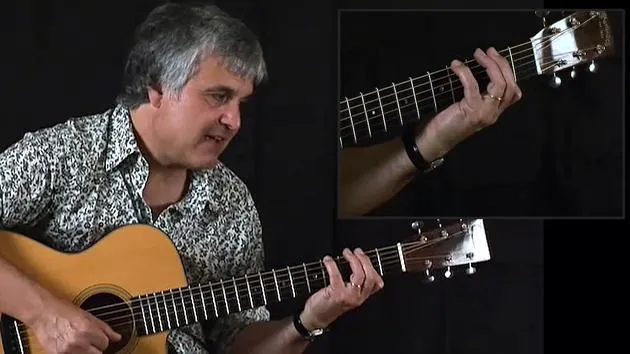
04. Greensleeves (lesson)
8:36
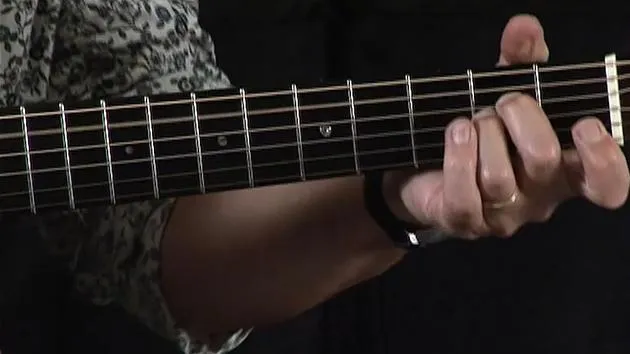
05. Greensleeves (performance)
1:12
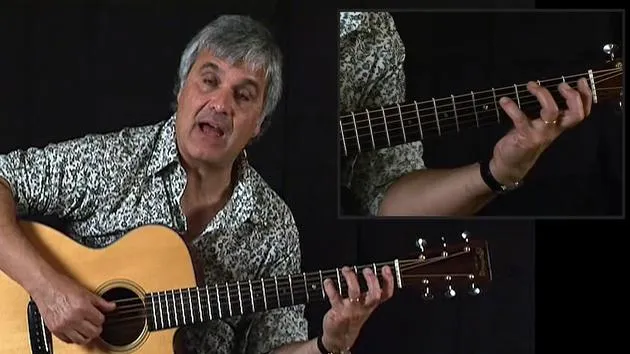
06. Shebeg & Shemore (lesson)
6:53
07. Shebeg & Shemore (performance)
1:54
08. Wayfaring Stranger (lesson)
7:35
09. Wayfaring Stranger (performance)
2:36
10. Shenandoah (lesson)
5:34
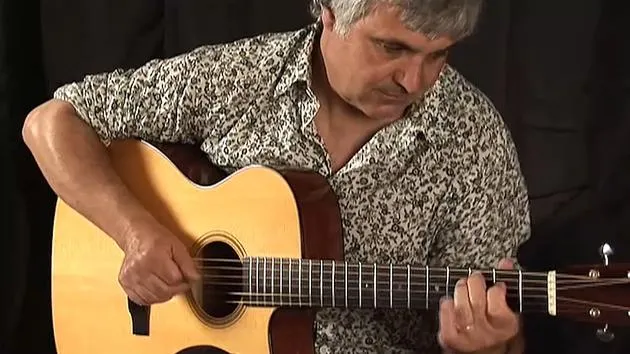
11. Shenandoah (performance)
1:55
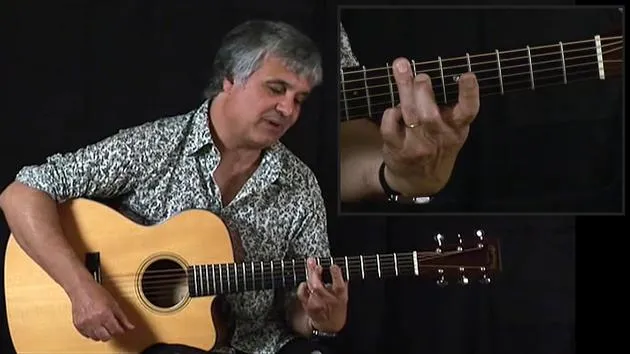
12. When The Saints Go Marching In (lesson)
3:47
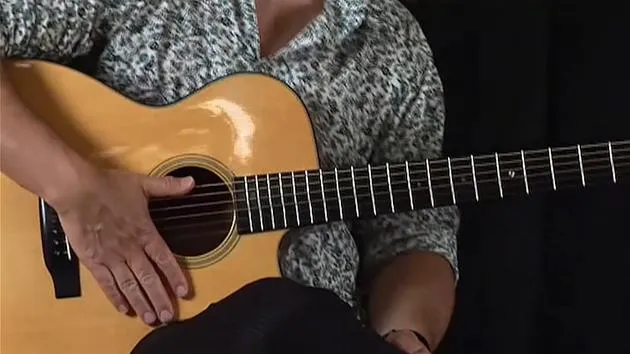
13. When The Saints Go Marching In (performance)
0:43
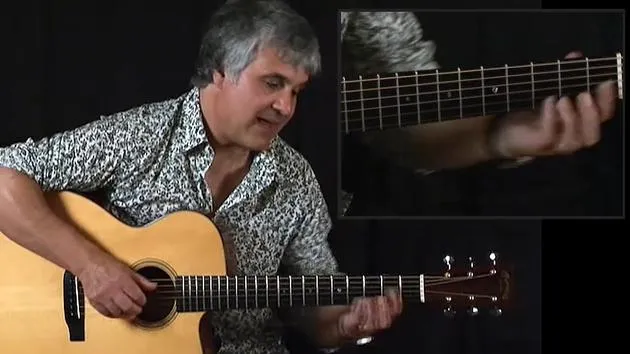
14. Take Me Out To The Ballgame (lesson)
4:14
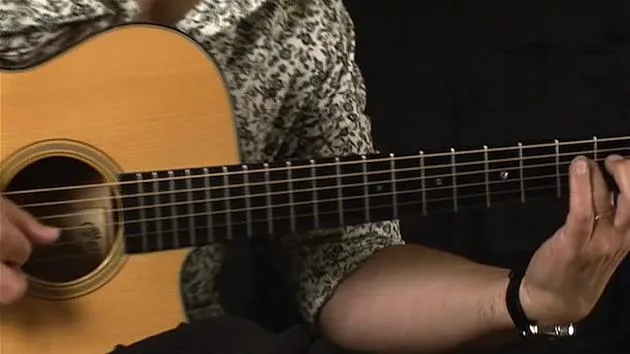
15. Take Me Out To The Ballgame (performance)
1:26
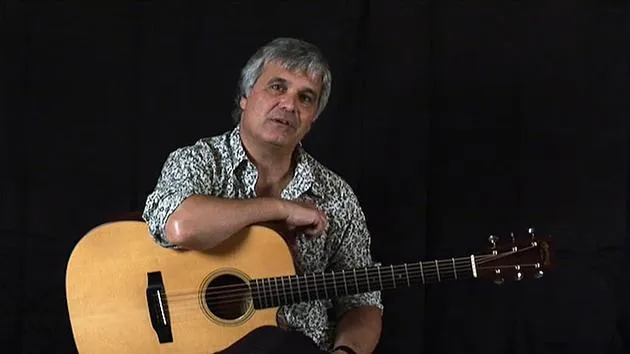
16. A few notes on the key of D Minor & sign-off
1:40
Lesson transcript
DADGAD Tuning Music Lesson
Strangely enough, for a DADGAD project, I'm actually starting in standard tuning. I have a reason for doing that.
Getting Started
- Bottom E in Standard Tuning:
- Tune it down a whole step.
- This gives you a D1, which is the equivalent of 2 frets up from the E.
Now, I go up 2 frets, and I'm back to an E.
Tune and Compare
What I'd like you to do is:
- Tune that string down.
- Compare the notes on that string with those on the fourth string, which is very familiar territory.
Here's your fourth string. Play that same pattern on the bottom string, and you can hear it's just one octave lower, same fingering, one octave lower.
So, nothing unfamiliar about that; it's familiar territory.
Tuning the Top String
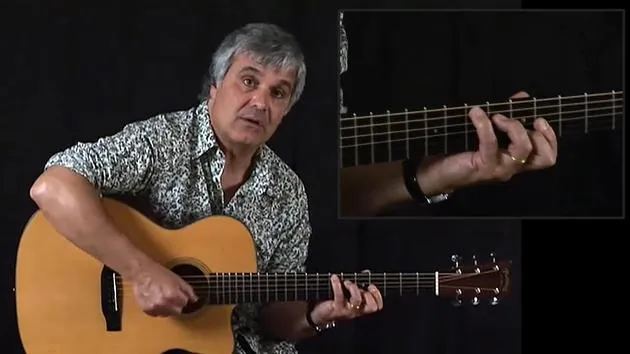
Now, we're going to take the top string (the E) and tune that down to a D also. You'll notice the fingering is the same:
- 3 D strings in DADGAD tuning.
- Then, we take the second string (B string) and tune that down a whole step.
Now, the tuning of that is the same as the fifth string.
This means:
- Anything I finger on the second string is the same but an octave lower on the fifth string.
So now we have:
- 3 D strings (D, D, D)
- 2 A strings
- The G (third string) hasn't changed.
In many respects, the individual string fingerings in DADGAD are already familiar territory.
- Anything on the top string or the bottom string is fingered the same as you would normally do on the fourth string (since those are all Ds).
- On the second string, everything is the same as on the fifth string in standard tuning (both A strings).
- The G string hasn't changed.
Experimenting with DADGAD
To get a little familiar with the sound of DADGAD, why don't we just pick across the strings?
You'll notice that, if you treat this as an open chord, this is a D sus chord:
- You have a D (the root)
- You have the ingredients of a D triad, but instead of having an F sharp as a major third, you have the fourth, which is the sus four.
So just to strum the open strings gives you a sus4 chord.
Playing Up the Neck
If you bar up the neck, for example, at the 5th fret:
- Now you have a G sus 4 at the 7th fret.
- An A sus 4 at the 12th fret (with the harmonics).
This openness of the tuning creates a suspended feel to it.
Understanding Adjacent Scale Tones
There is a very, very useful and musical thing that happens:
- You have a G and an A as adjacent scale tones.
- They are both open strings.
Here's my G, here's my A. This quality becomes very useful.
Let's say, for example, we're going to construct a scale of D. You'll notice that you have two of those scale tones that are on open strings:
- D
- E
- F sharp
- G
- A
Now, if I add an E to that, I have four adjacent scale tones, and then I let me say, play the open fourth string as the D.
So it goes:
- D, E, F sharp, G, A.
If I continue going up the scale, I added a B, a C sharp, and a D.
Conclusion
This progression gives us a very characteristic sound in DADGAD tuning.
This kind of cascading, cross-fingered pattern is very typical of how you can use the tuning to gain extra sustain in the melodic passages that you might play.
16 lessons
1h 6m of structured video lessons
Advanced video features
Slow down, loop a passage, follow along
Mobile, tablet & desktop
Practise wherever you are
100% satisfaction guarantee
30-day money-back guarantee
Meet your guru
Meet your guru
Laurence Juber first became known as lead guitarist in Paul McCartney's band Wings. Since then he has built a career as a fingerstyle guitarist, composer and arranger, working largely in the DADGAD tuning that earned him the nickname 'the Duke of DADGAD'.
He has been voted Guitarist of the Year by readers of Fingerstyle Guitar Magazine and named among the top guitarists by Acoustic Guitar magazine, alongside a long list of solo albums and worldwide touring.
In his courses he teaches his fingerstyle technique and the DADGAD tuning he's known for, how to arrange melody, harmony and bass together for solo guitar, and the pieces - like his signature 'Wooden Horses' - that bring it all together.







