



Amazing Grace (lesson)
With
Laurence JuberIn this lesson, Laurence Juber teaches you how to play the popular tune Amazing Grace on the acoustic guitar in DADGAD tuning.
What's in the course
16 lessons (1h 6m) · 1 free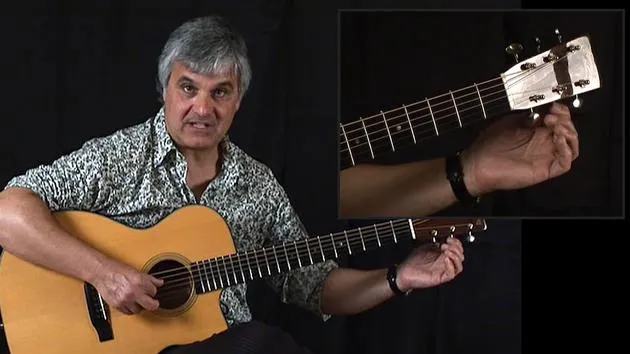
01. A few comments on tuning & theory
Free lesson6:11
02. Amazing Grace (lesson)
You are here10:51
03. Amazing Grace (performance)
1:19
04. Greensleeves (lesson)
8:36
05. Greensleeves (performance)
1:12
06. Shebeg & Shemore (lesson)
6:53
07. Shebeg & Shemore (performance)
1:54
08. Wayfaring Stranger (lesson)
7:35
09. Wayfaring Stranger (performance)
2:36
10. Shenandoah (lesson)
5:34
11. Shenandoah (performance)
1:55
12. When The Saints Go Marching In (lesson)
3:47
13. When The Saints Go Marching In (performance)
0:43
14. Take Me Out To The Ballgame (lesson)
4:14
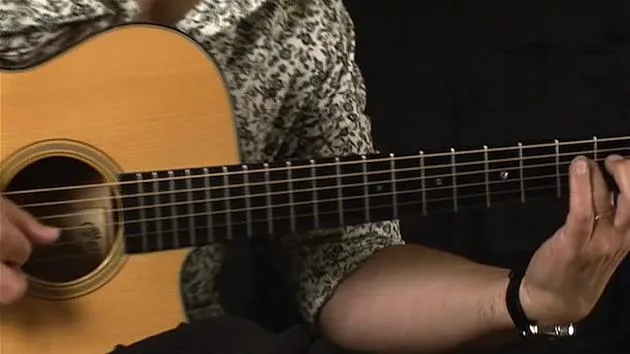
15. Take Me Out To The Ballgame (performance)
1:26
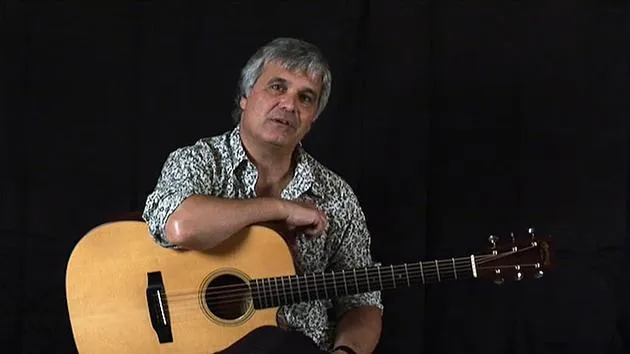
16. A few notes on the key of D Minor & sign-off
1:40
Lesson transcript
Music Lesson: Arranging "Amazing Grace" in DADGAD Tuning
Introduction
Today, we're going to explore a familiar melody, "Amazing Grace." We'll develop a unique arrangement to showcase the possibilities within DADGAD tuning.
Basic Melody Introduction
- Key: D
- Melody: "Amazing Grace"
- Approach: Start with a simple rendition
- The melody note and bass note (A) are introduced.
- Transition to the V chord in D with an A7.
Exploring Chords
-
A7 Chord Construction:
- In standard tuning, you would finger it traditionally.
- In DADGAD tuning, the shape moves up to the seventh fret.
-
Texture Addition:
- Utilize open strings to create texture.
- Play the melody again, incorporating bass notes.
Complexifying the Arrangement
- Add Complexity:
- Start with a D chord.
- Add a seventh to create a D7 chord with E in the melody, thus forming a D9 chord.
Finger Positioning
-
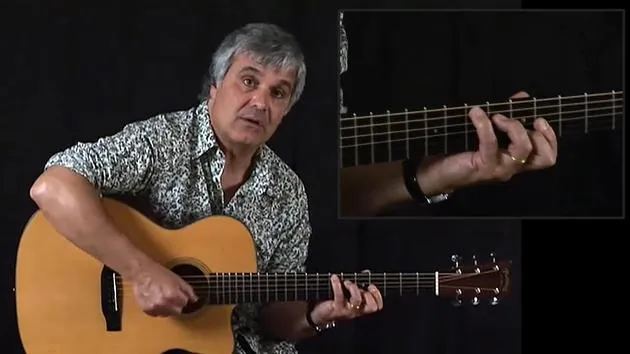
Fingering Technique:
- Notice the use of the pinky for the G bass note, which is good practice.
- Alternate finger options for increased mobility.
-
Exercise Suggestion:
- Hold down the G while playing a pattern on top to strengthen finger usage.
Transitioning Chords
-
B Minor Chord:
- Based on standard tuning fingering.
- Melody note: D (open string).
- Include an A to form a rich-sounding B minor 7th chord.
-
Moving to E Chord:
- Instead of an open E, structure it as an E7 with F# as the melody (the ninth).
Chord Comparison
- C Chord Variation:
- Standard C chord compared to C9 in DADGAD tuning.
- The shifted notes create a rich, mobile ninth chord voicing.
Application to "Amazing Grace"
- Chord Progressions:
- D9 chord transitioning to B minor.
- E chord progression leading naturally to A.
- B minor walking down to E, creating harmonious movement.
Complete Arrangement
Exploring Harmonic Twists:
-
Slide Technique:
- Begin with a slide on the fourth string from the seventh to the twelfth fret.
-
Voicing Introductions:
- Use an F# augmented chord for complexity.
- Include a G chord with added A.
Percussive Elements
- Incorporate Rhythm:
- Use a little slap percussively.
- Transition from A7 while maintaining the A bass note and moving up a half step.
Interval Techniques
- Tenth Intervals:
- Create a pleasing sound by moving in tenths.
Chord Movements
- Progression Notes:
- Casually finger down to F# minor 7 and B minor 7.
- Alternate between standard and first inversion E9 chords for bass movement.
Conclusion
- Ending the Arrangement:
- Conclude with a coda leading to C9, then to B, and finish with an A13.
- Final Touch:
- End with a simple turnaround.
Now, let's go ahead and play the arrangement of "Amazing Grace."
16 lessons
1h 6m of structured video lessons
Advanced video features
Slow down, loop a passage, follow along
Mobile, tablet & desktop
Practise wherever you are
100% satisfaction guarantee
30-day money-back guarantee
Meet your guru
Meet your guru
Laurence Juber first became known as lead guitarist in Paul McCartney's band Wings. Since then he has built a career as a fingerstyle guitarist, composer and arranger, working largely in the DADGAD tuning that earned him the nickname 'the Duke of DADGAD'.
He has been voted Guitarist of the Year by readers of Fingerstyle Guitar Magazine and named among the top guitarists by Acoustic Guitar magazine, alongside a long list of solo albums and worldwide touring.
In his courses he teaches his fingerstyle technique and the DADGAD tuning he's known for, how to arrange melody, harmony and bass together for solo guitar, and the pieces - like his signature 'Wooden Horses' - that bring it all together.







