


Palm muting

With
James Barratt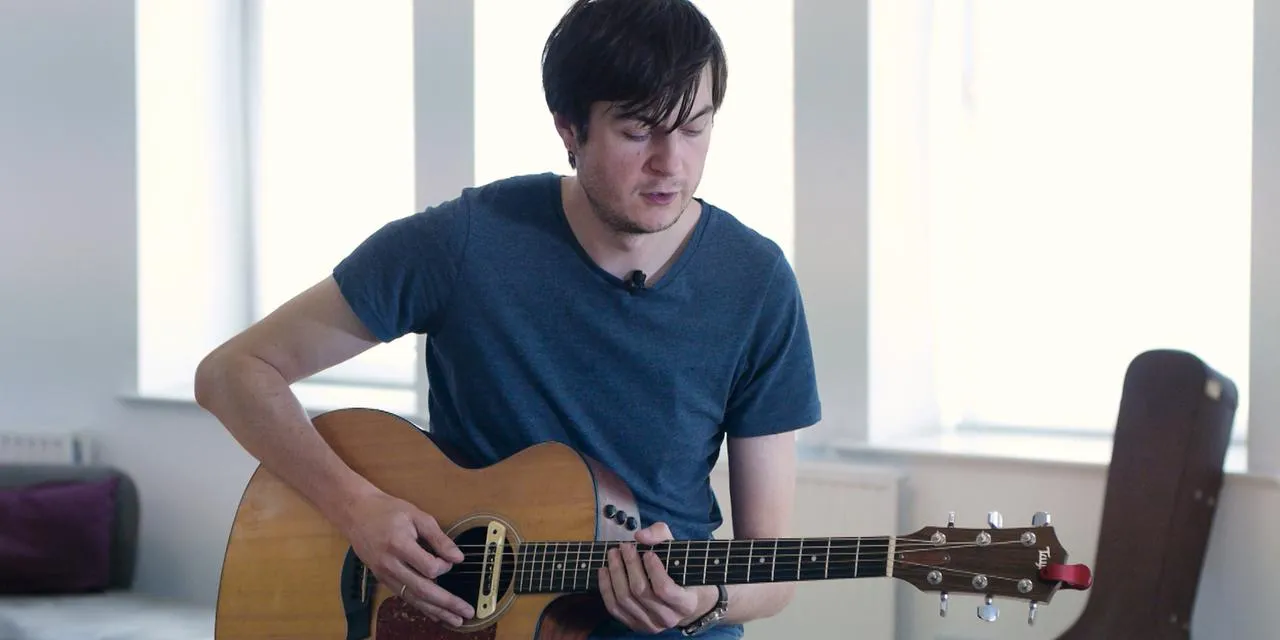
What's in the course
14 lessons (2h 12m) · 1 free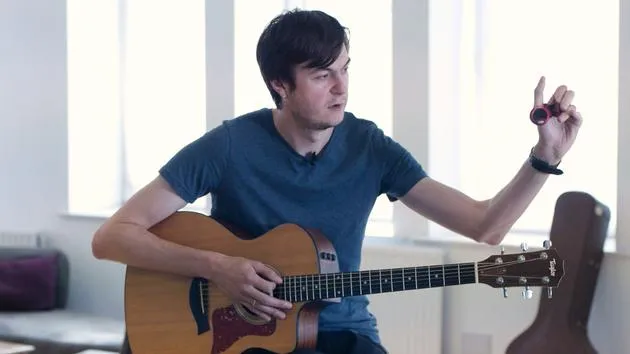
01. Tuning
13:34
02. Getting started
Free lesson9:58
03. Basic technique
9:01
04. Open chords
6:24
05. Chord progressions
7:57
06. Rhythm & the right hand
11:56
07. REM - Everybody Hurts
9:01
08. Bryan Adams - Run To You
3:23
09. Palm muting
You are here3:16
10. Legato
8:47
11. Michael Jackson - Beat It
5:23
12. Bending
15:36
13. Barre chords
11:35
14. Summary - AC/DC Back In Black
16:56
Lesson transcript
Music Lesson: Exploring Palm Muting Technique
Introduction
Okay, so I hope you're feeling a bit more confident with the basic techniques of the right and left hands now. We've covered:
- Chords
- Right and left hand positioning
- Picking patterns
- Rhythms
- All sorts of things
Focus of the Lesson
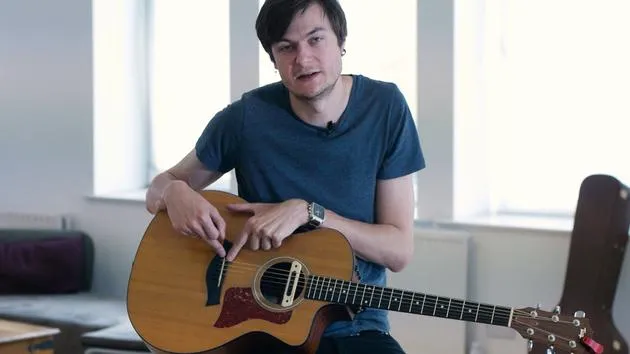
In this lesson, we're going to take a look at some more fun techniques you can get from the guitar. We're going to start with a right hand technique called palm muting (abbreviated to PM in tab).
Importance of Right Hand Position
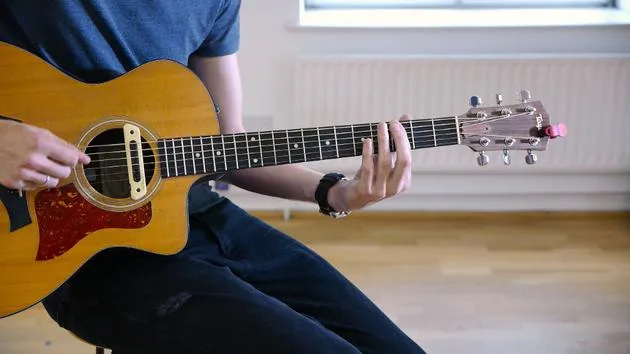
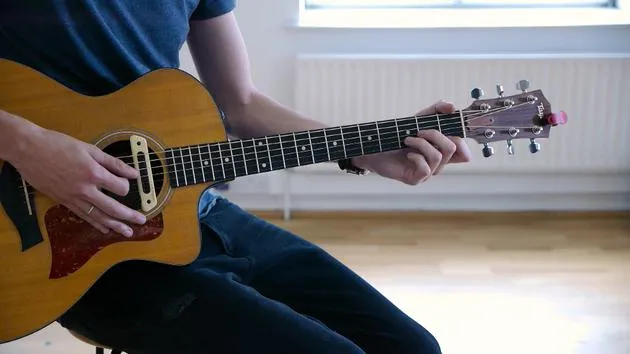
This technique is another benefit of getting your right hand position exactly right on the bridge. It enables you to come in and out of palm muting really easily.
Exercise: Practicing Palm Muting
Now, I'm going to show you an exercise to practice palm muting. We will focus on:
- The bottom E string (the thick E string)
- Alternate picking in eighth notes
Steps to Follow
-
Begin with open E as normal (no muting):
- Count: 1, 2, 3, and 4.
-
Adjust the position of your right hand:
- Slowly move the back of your palm to rest on the string. This provides a cool muting sound that you've likely heard before.
- As you move your palm back, you will notice that the sound transitions from muted to unmuted.
-
Observe the muting:
- Keep moving your palm toward the headstock for less muting until it reaches the point where it's not muted at all.
- Moving forward onto the strings again causes the muting to get heavier.
- Be cautious, as moving too far forward will result in excessive muting where the pitch of the string is lost.
Key Points
- Palm Placement: The effective muting area is tiny, probably about a centimeter.
- Minimal Positioning: You don't want to bring your palm onto the string any more than that to maintain definition when fretting different notes.
Dynamic Control and Practice
- Palm muting can help control dynamics and is a great-sounding technique for various styles.
- Practice the following:
- Begin unmuted.
- Slowly bring your hand forward onto the string to achieve muting.
- If you lift your hand up, you should feel your palm touching the string right near the bridge.
Moving Across Strings
- When practicing, remember:
- You may need to flatten your palm or move it down the bridge for the top strings.
- Listen to how much muting you want.
Conclusion
This is a great technique to master. If you solidify your right hand technique from the start in a good position, it will be easy to dip in and out of palm muting. You can switch between muted and unmuted sounds within a riff, and it'll sound really, really cool!
14 lessons
2h 12m of structured video lessons
Advanced video features
Slow down, loop a passage, follow along
Mobile, tablet & desktop
Practise wherever you are
100% satisfaction guarantee
30-day money-back guarantee
Meet your guru
Meet your guru
James has enjoyed a successful career as a full-time musician since graduating from the Academy of Contemporary Music in 2007. He has gone on to work with artists and producers from Stereophonics, Ronnie Dunn, Scissor Sisters and many more. He also composes music for television and film, such as Sony Walkman's 'Music Pieces' television commercial and the Albatross film trailer.
He refers to himself as something of a purist, a musicians' musician if you will, and this approach to his artistry has sparked attention from big corporations and TV producers. James can be heard during shows such as 'Geordie Shore' and even in adverts for the British Heart Foundation, thanks to his natural versatility as an artist. As he puts it: "The best, and most frequent, compliment I get when on sessions for clients is that I play what's 'right' for the music. Often it's all down to simplicity."
"James is the real deal. Great player, killer tone, and I wouldn't hesitate for a second recommending him for any project. Rock on James!" - Joey Sykes (Meredith Brooks / Will Champlin / The Babys)
In Foundations of Rock Guitar Technique, James passes on exactly that philosophy, showing you how to build solid, musical rock guitar technique and play what's 'right' for the song.