



Among the Stars Introduction

With
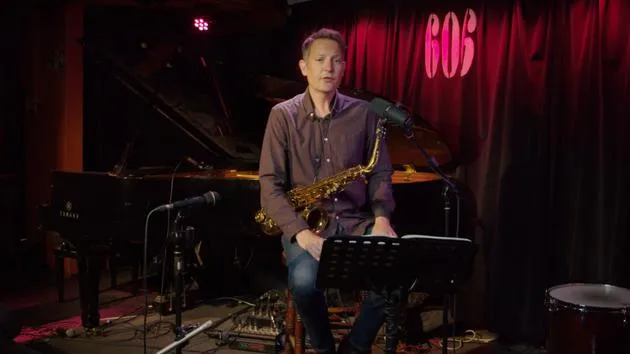
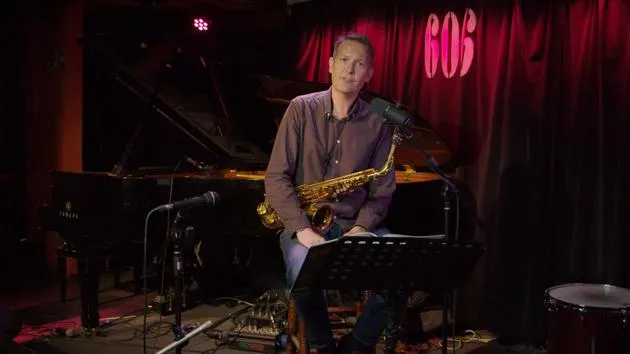
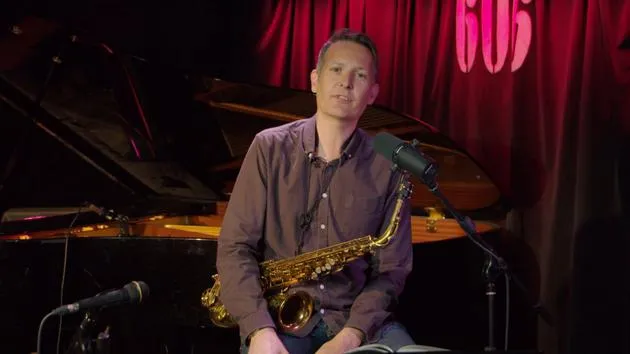
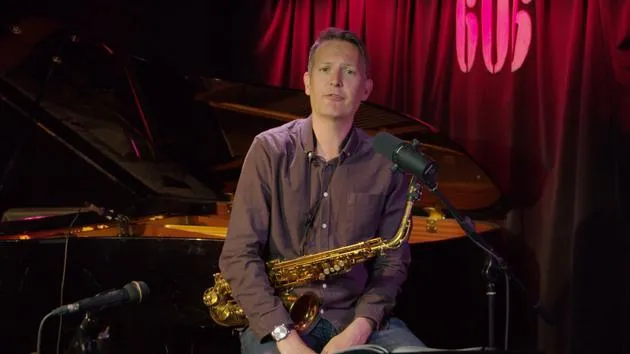
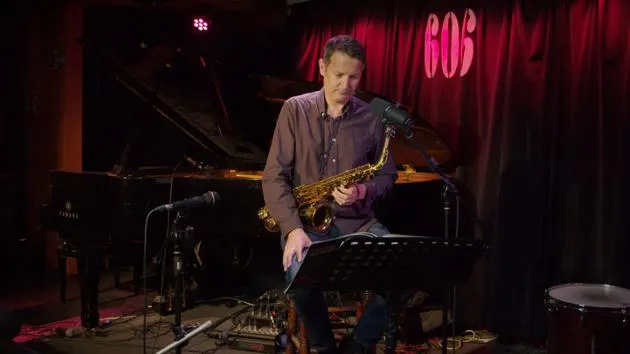
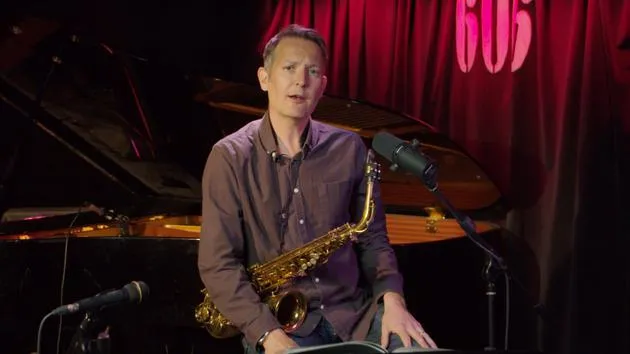
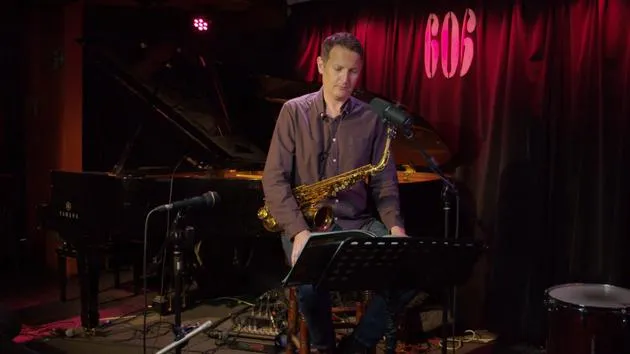
Ollie WestonOllie Weston introduces Among the Stars, his tune based on Fly Me to the Moon, outlining its 32-bar structure before playing the head and two choruses.
What's in the course
47 lessons (1h 48m) · 1 free
01. The V-I 'Perfect' cadence
3:28
02. Dominant 7 - Cycle of 5ths exercise
1:24
03. Dominant 7 - Cycle of 5ths using 3rs and 7ths
2:16
04. Rhythmic variations using 3rds and 7ths
2:02
05. "Rhythm Changes" using Dominant 7ths and Cycle of 5ths
1:08
06. The II-V-I progression
1:20
07. II-V-I licks in the style of Parker, Coltrane, Adderley
Free lesson4:15
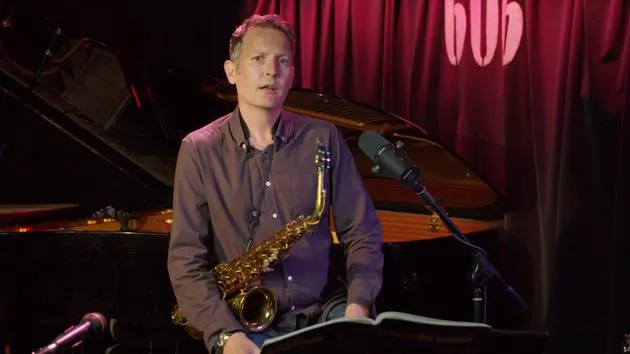
08. Dancing With Duke (II-V-I exercise) - Introduction
1:15
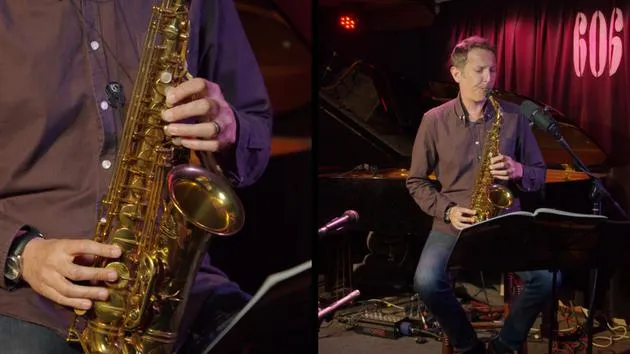
09. Dancing With Duke (II-V-I exercise) - Performance
4:38
10. II-V-I progression conclusion
0:42
01. Finding the relative minor
1:41
02. Using the Harmonic Minor over the V chord
1:15
03. V-I in A Minor with a b9
4:38
04. Minor V-I in all 12 keys exercise
1:43
05. Phrase for practising minor cadences
1:17
06. Minor II-V-I in a chord sequence
5:04
07. Adding the II chord
1:20
08. Autumn Sun - Introduction and Harmony
3:03
09. Autumn Sun Performance
4:44
01. Introduction to Standards
0:52
02. Among the Stars Introduction
You are here3:54
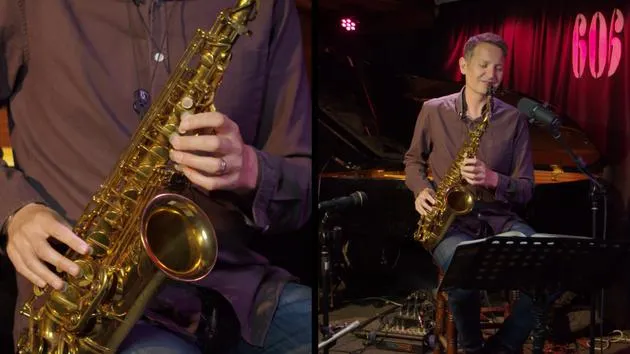
03. Among the Stars Performance
4:23
04. Undying Love - Expanding a chord sequence
4:42
05. Undying Love - Performance
1:12
06. Undying love - Checkpoint
0:47
07. Take the Express Train - The Turnaround
3:21
08. Melodic line examples for turnarounds
1:22
09. Take the Express Train - Introduction
1:28
10. Take the Express Train - Performance
1:12
11. Take The Express Train - Summary
0:39
01. Introduction to Bebop
1:04
02. 52nd Street Blues - Introduction and Head
0:29
03. 52nd Street Blues - Head using I-IV-V progression
0:45
04. 52nd Street Blues - Adding Chromaticism
2:53
05. Adding Jazz Harmony to the Blues
2:39
06. 52nd Street Blues - Head with II-V-I changes
1:05
07. 52nd Street Blues - Performance
3:01
Lesson transcript
Music Lesson: Among the Stars
Introduction
The first song I'm going to play is called Among the Stars. It's based on Fly Me to the Moon by Bart Howard, which was immortalized by Frank Sinatra and the Count Basie Orchestra on their Live at the Sands album. This is a great record from a Las Vegas nightclub called the Sands in the 1960s.
Structure
This tune is similar to others we've looked at before. It has a 32-bar structure, but rather than following an AABA format, it consists of two halves of 16 bars each:
- A section
- B section
I will play the head and two choruses of the written solo, and then the head to finish.
Chord Sequence
The chord sequence of Among the Stars is diatonic to C major. Once again, I'll switch between my major key and its relative minor.
Root Movement
You should be able to look through the root movement and identify the following progression:
- 6, 2, 5, 1, 4, 7, 3, 6
This progression is not dissimilar to Autumn Sun in that it suggests a major key initially and then modulates to the relative minor.
Two-Five-One Progressions
Throughout the sequence, there are many two-five-ones into C major and A minor.
Expanding Chord Sequences
There's one detail I want to show you to help expand your chord sequences: the treatment of chord VI. Typically, we would expect chord VI to be a minor chord since it is the relative minor of the key; however, it can be expanded into a seventh chord to create a cadence into D minor.
A Section Example
In the A section, the melody does the following:
- In the third line of the melody, I have a 2-5 D minor, G7 progression.
- Following that, I have an E minor, A7 progression.
I'm effectively transforming my sixth chord into a dominant to echo my 2-5-1 upward tone.
Sound Example
Here's what an E minor, A7 would sound like on the piano with the guide tones:
- Make sure to review the Among the Stars progression. Whenever you see the A chord as A6, I've frequently changed it to A7.
- Lines in the solo, such as this, help to bring out more detail on the A chord by incorporating a C sharp and A flat and treating it as a V chord into D minor.
Internal Modulations
Being able to perceive internal modulations within the overall umbrella key of the song (C major, A minor) while occasionally heading into D minor will enrich your understanding of jazz harmony. You'll begin to hear these elements in the players you listen to, as well as in my written solo.
Conclusion
Once again, have a listen to the solo and play through it. Feel free to lift any bits you like, but ultimately use the backing track as a resource for your own performances.
- Play the head
- Perform your own solo
- Close with the head again
47 lessons
1h 48m of structured video lessons
Advanced video features
Slow down, loop a passage, follow along
Mobile, tablet & desktop
Practise wherever you are
100% satisfaction guarantee
30-day money-back guarantee
Meet your guru
Meet your guru
Since graduating from the Leeds College of Music (BA Hons) and the Guildhall School of Music (Post Graduate Diploma in Performance), Ollie has built a busy and varied career in music. As a saxophonist he has performed in live and studio settings with artists as diverse as Amy Winehouse, Tim Minchin, Bonobo, Frank Turner, the London Jazz Orchestra, the Hackney Colliery Band, the Ambient Jazz Ensemble and the Nelson Riddle Orchestra. He is also the co-leader of the jazz quartet 'Time Is Of The Essence', and composes and arranges material for this and other ensembles.
Ollie is active in music education, currently as course leader for the jazz department at the Guildhall School of Music and Drama (junior school), where he runs jazz ensembles, big band and theory classes. He has written a series of 'Exploring Jazz' books for Schott Music that are published worldwide and feature on exam syllabuses in the UK. Ollie has also run workshops for Oxford University, Pro Corda Strings and BABSWE, as well as the Guildhall School of Music summer schools.
In his Exploring Jazz Saxophone courses, Ollie takes you from getting started right through to soloing confidently over songs and chord sequences, building the improvising skills that put a real jazz player's vocabulary at your fingertips.







