



9. Diminished, Whole Tone, and Chromatic Scales

With
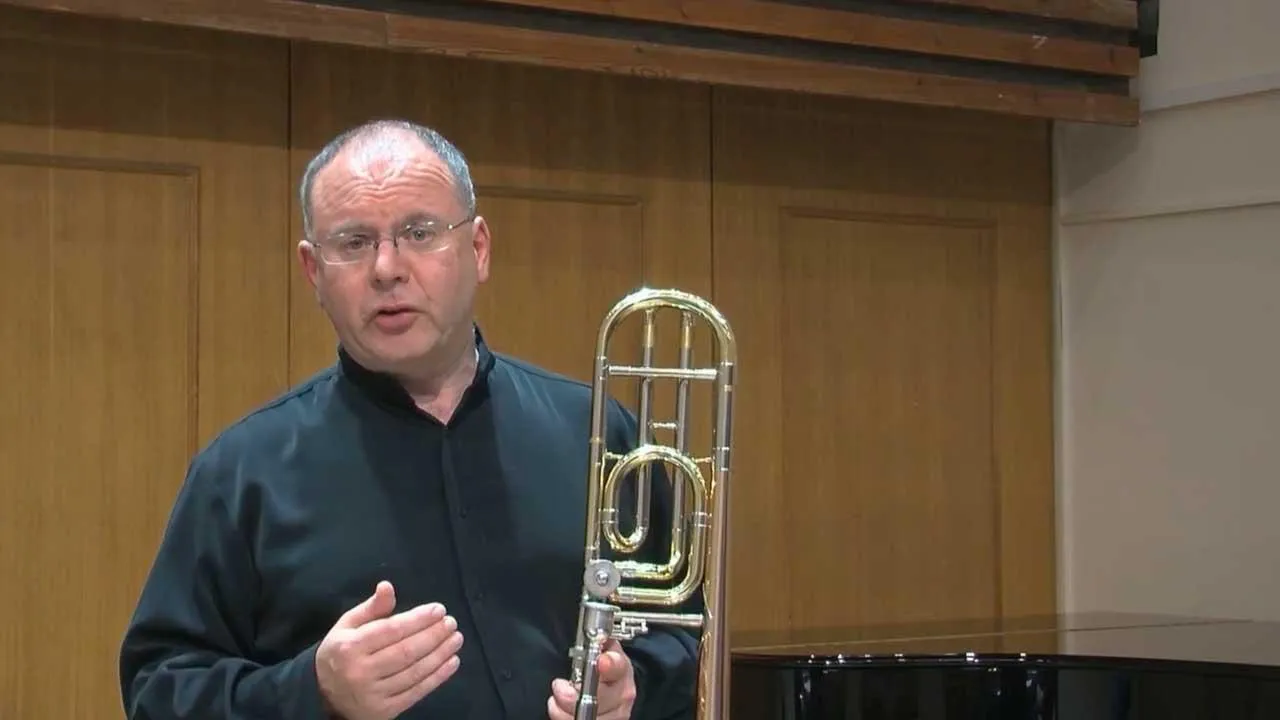
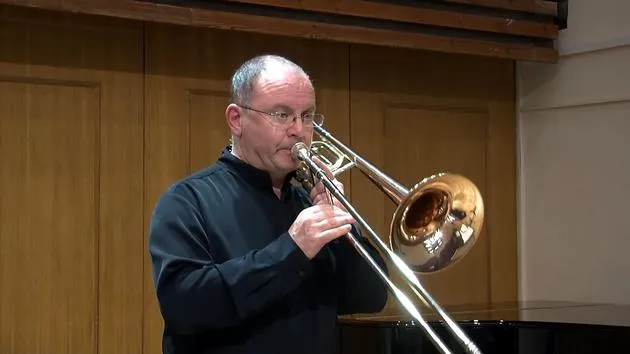
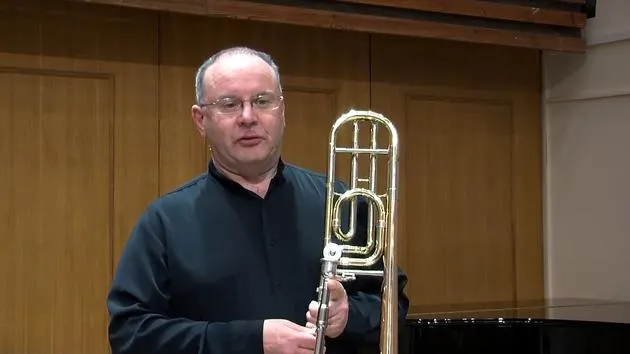
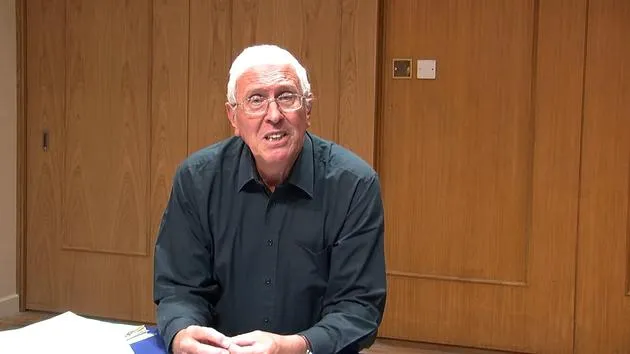
Peter GanePeter Gane and Chris Houlding tackle the rarer scales - diminished, whole tone and chromatic - and how to play them fluently on the trombone.
What's in the course
10 lessons (1h 33m) · 1 free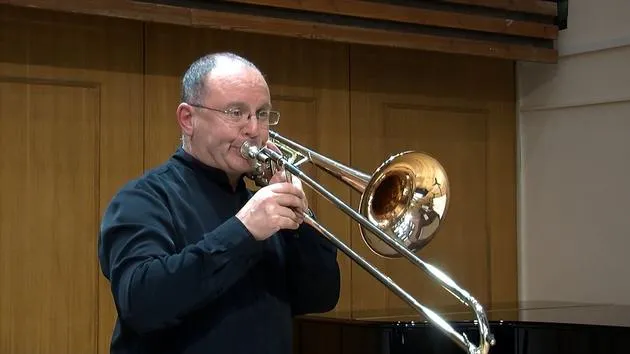
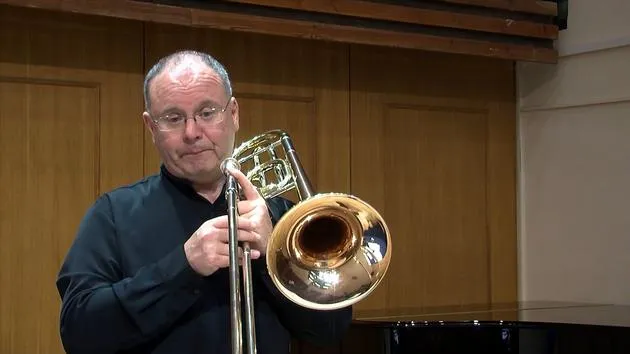
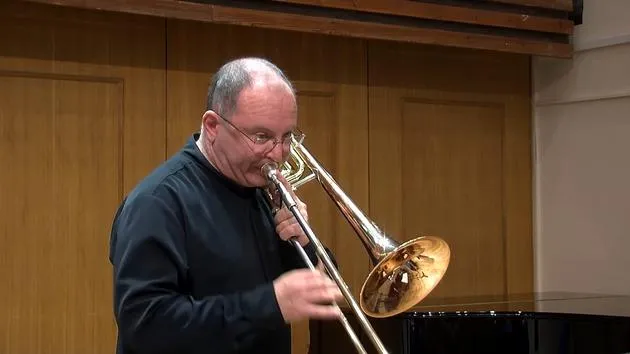
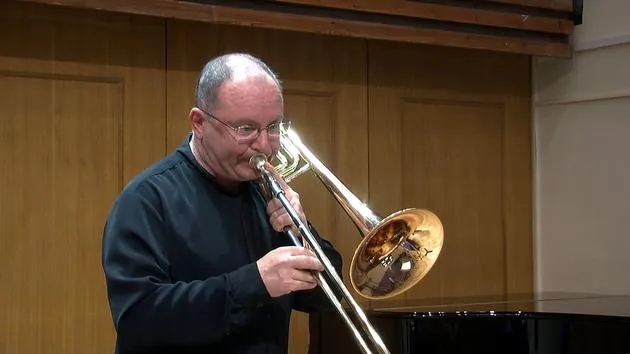
Lesson transcript
Circuit Training: Unit 9 - Diminished Whole Tone Chromatic
Hello and welcome to circuit training, unit 9.
Introduction to the Diminished Scale
The diminished scale is very widely used in the world of jazz, but it's quite a rarity for us classical players.
Basic Formation
- The basic formation is either:
- Tone - Semitone
- Semitone - Tone
With every third note creating the interval of a minor third. If we join these minor thirds together, we create a diminished chord.
Diminished Scale Structure
A diminished scale can be thought of as two interlocking diminished seventh chords.
- Chris, if you play figure one, page 51, you can hear this.
Relation to Major Intervals
Four majors is based on intervals found on the diminished scale. Define the phrasing clearly and use D in fourth in bars 8, 13, and 19.
Importance of Pivot Points
Pivot points on the slide are very important, especially in chromatic scales.
- Try to:
- Change the direction of the slide on main beats to avoid irregular accents in the low register.
- Carefully learn the sequence of smaller shifts in the higher register as repeated patterns or clich?s.
The Sanctus movement from Verdi's Requiem is a good example of this.
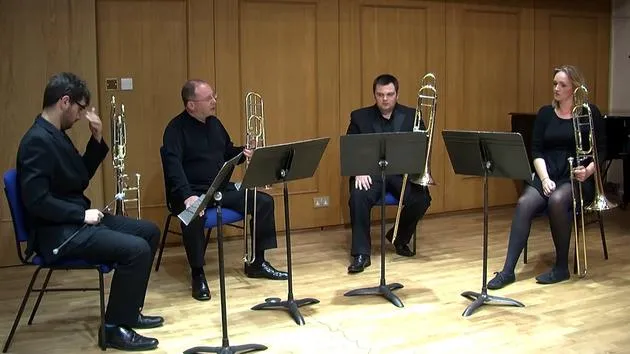
Trombone Section Playing
It's also a good idea when playing in a trombone section to use all the same slide positions. The effect of ascending across the harmonics while moving the slide out is particularly pleasing.
Exercises Based on the Diminished Scale
-
Crabwise Cocktail, page 54, is also based on the intervals found in the diminished scale.
- In Bar 7, you can use second or fourth position for all the notes, but be careful to tune them correctly.
-
The One and a Half Study is what it says, a study based on the tone and semitone relationship of the diminished scale.
- Make sure you sustain the length of the two slurred quavers in the phrasing to avoid any rushing.
-
Sa Swing Along is a short study in the jazz style, still based on the diminished scale.
- You can play across the harmonics for the jazz turn in bars 4, 21, 23, etc.
- Make sure to exaggerate the jazz phrasing.
- Long - Short: that means the short, really short.
Relaxed Swing Feel
Tara, try to produce a relaxed, cool swing without any reference to a classical dotted rhythm.
Conclusion
We have covered a lot in this unit and heard some fantastic playing. Don't forget that all we have talked about and heard played can be found in Circuit Training, Volume 2.
10 lessons
1h 33m of structured video lessons
Advanced video features
Slow down, loop a passage, follow along
Mobile, tablet & desktop
Practise wherever you are
100% satisfaction guarantee
30-day money-back guarantee
Meet your guru
Meet your guru
Peter Gane is one of Britain's leading brass specialists and trombonists. At the age of 19 he became a member of the London Symphony Orchestra. He became a professor at the Guildhall School in 1971 and remains so to this day. He was elected a Fellow of the Guildhall School in 1981 and was Head of the Wind, Brass and Percussion from 1988 to 2008. He is Artistic Adviser to the Combret Music Festival, Aveyron, France.
A founder and former president of the British Trombone Association, Peter is a noted educator. He has a long-standing association with the National Youth Orchestra of Great Britain and the European Union Youth Orchestra, where he has been professor of trombone since 1977 and 1984 respectively.
As a teacher, brass specialist and conductor he has taken masterclasses and workshops in many European conservatoires and with professional groups in Germany, France, Denmark, Sweden, Norway, Spain, Holland, Austria, Italy and the US. In 1996 his international reputation was confirmed by the presentation of the Neill Humfeld Award for excellence in trombone teaching by the International Trombone Association.
Peter's publications include: The Good Brass Guide, Trombone Books 1 & 2, published by Trinity Guildhall; Circuit Training for Trombone, volumes 1 and 2, Slide Systems, Five Games, Guildhall 125, World in Motion, Mansion House Fanfare, all published by Warwick Music; How Trombonists Do It, published by Brass Wind; and Brass Medals, published by the Associated Board.
That same Circuit Training approach is what Peter shares with you here: focused, repeatable workouts that build the slide accuracy, breath control, flexibility and tone you need to take real command of the trombone - whatever your level.







