



6. Major Scale or Ionian mode

With
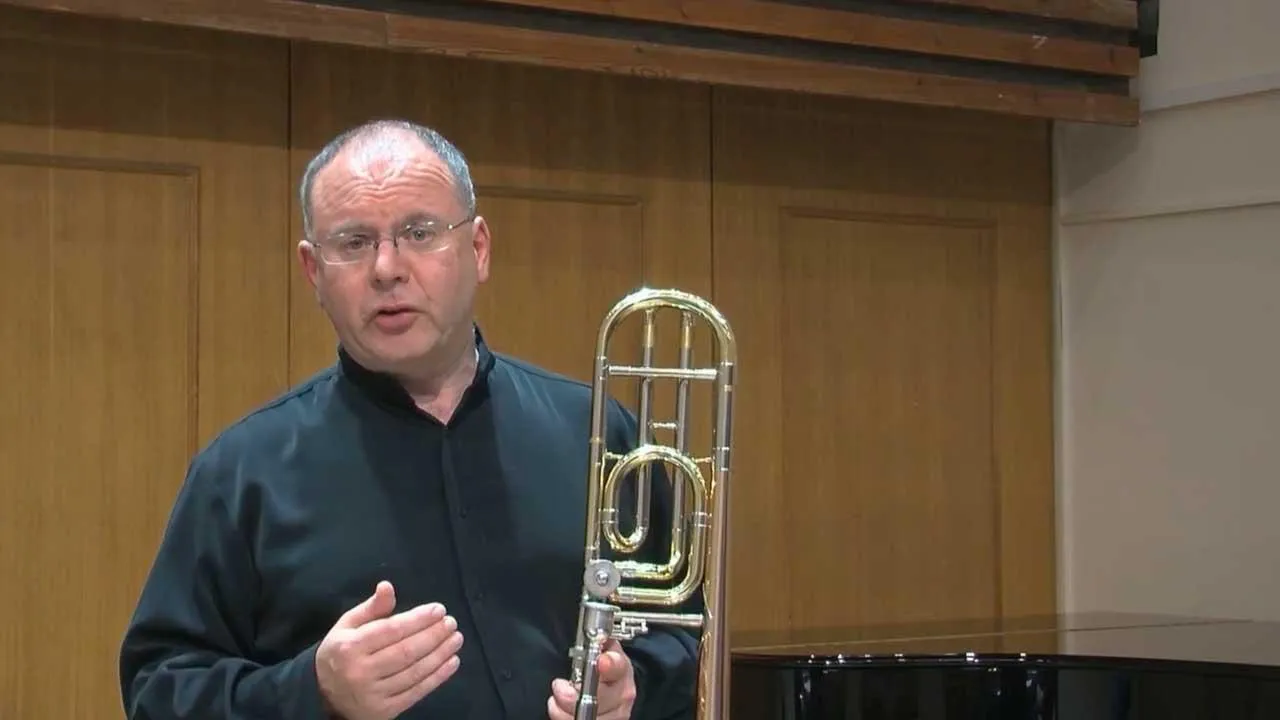
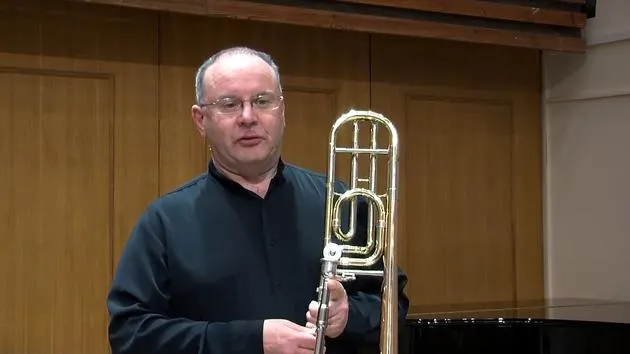
Peter GanePeter and Chris look at the major scale, detailing the essential advanced scale and arpeggio exercises that they and their students use.
What's in the course
10 lessons (1h 33m) · 1 free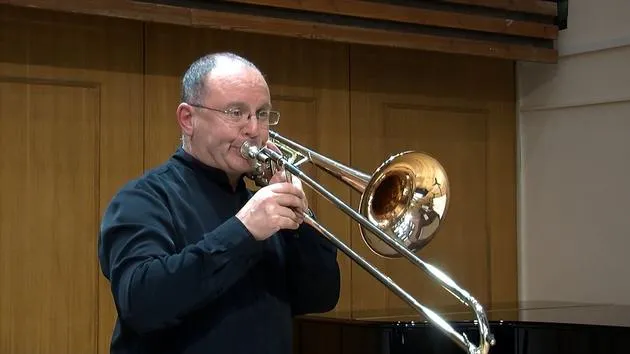
Lesson transcript
Circuit Training: Unit 6 - Major Scale or Ionian Mode
Hello and welcome to circuit training!
Introduction
Chris, I think it's about time that we looked at some scales. Let's start by exploring the Ionian mode (or major scale) alongside some advanced scale and arpeggio patterns.
Learning Techniques
I have found the easiest and fastest way to learn some of these patterns is by playing them in a crabwise formation.
- Aural Memory & Musical Phrases
Developing your aural memory and instrumental skills by making up your own short musical phrases and then playing them through all the keys is an excellent skill to acquire.
Chris, could you play some different note patterns to illustrate? You can then go on to take each pattern and try them in different keys. And don't stop there. You can go on and make up your own patterns just like the jazz players do.
Thank you, Chris.
Spider Scales
Spider scales are, for me, the quickest and most efficient way of playing through all the patterns.
- Keep It Fresh
Keep yourself mentally and musically fresh by changing the rhythms and articulations. Chris, could you illustrate one by playing, say, sevens?
Good Practice
When playing these advanced patterns, it's a good idea to keep balanced and focused.
- Instrument Positioning
- Keep the instrument still and firm in the left hand to avoid unwanted stress on the embouchure.
- Keep the instrument still when taking a breath, maintaining the top lip connected to the mouthpiece and breathing through the corners to enhance the melodic line.
Example: Crabwise Arpeggio Study
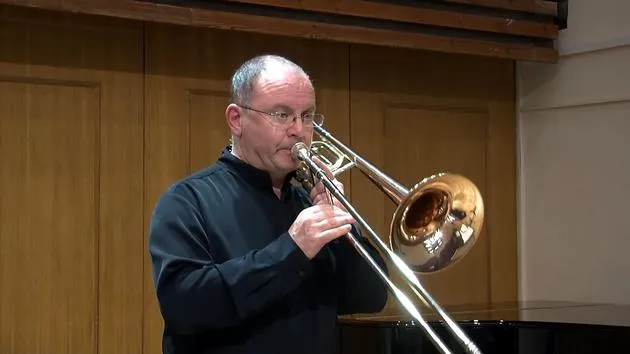
I'm now going to play the crabwise arpeggio study on page 30.
- Rhythm Variation
Fives are a great rhythm and get you away from the predictable four-four up-and-down formula. They're great fun!- It's interesting to note that this rhythm is a palindromic rhythm, i.e., like the name "Hannah," it's the same forwards and backwards.
By the way, Fives for H on Bones is published by Warwick.
Conclusion
In Unit 6, Major Scale or Ionian Mode, we have covered a lot of material.
- Key Topics
- Major crabwise scales
- Aural memory
- Major crabwise arpeggios
- Sevens and fives
To consolidate, play the complete unit once again. And don't forget that all we've discussed can be found in Circuit Training volume.
10 lessons
1h 33m of structured video lessons
Advanced video features
Slow down, loop a passage, follow along
Mobile, tablet & desktop
Practise wherever you are
100% satisfaction guarantee
30-day money-back guarantee
Meet your guru
Meet your guru
Peter Gane is one of Britain's leading brass specialists and trombonists. At the age of 19 he became a member of the London Symphony Orchestra. He became a professor at the Guildhall School in 1971 and remains so to this day. He was elected a Fellow of the Guildhall School in 1981 and was Head of the Wind, Brass and Percussion from 1988 to 2008. He is Artistic Adviser to the Combret Music Festival, Aveyron, France.
A founder and former president of the British Trombone Association, Peter is a noted educator. He has a long-standing association with the National Youth Orchestra of Great Britain and the European Union Youth Orchestra, where he has been professor of trombone since 1977 and 1984 respectively.
As a teacher, brass specialist and conductor he has taken masterclasses and workshops in many European conservatoires and with professional groups in Germany, France, Denmark, Sweden, Norway, Spain, Holland, Austria, Italy and the US. In 1996 his international reputation was confirmed by the presentation of the Neill Humfeld Award for excellence in trombone teaching by the International Trombone Association.
Peter's publications include: The Good Brass Guide, Trombone Books 1 & 2, published by Trinity Guildhall; Circuit Training for Trombone, volumes 1 and 2, Slide Systems, Five Games, Guildhall 125, World in Motion, Mansion House Fanfare, all published by Warwick Music; How Trombonists Do It, published by Brass Wind; and Brass Medals, published by the Associated Board.
That same Circuit Training approach is what Peter shares with you here: focused, repeatable workouts that build the slide accuracy, breath control, flexibility and tone you need to take real command of the trombone - whatever your level.







