



Musik, Werbung und die wirtschaftliche Notwendigkeit von Popmusik
Das steckt im Kurs
16 Lektionen (2h 16m) · 1 gratis
Transkript der Lektion
The Intersection of Music and Advertising
It's a sort of ad for society. That's why music was very important at the same time in advertising. Of course, they went hand in hand; they did almost parallel. I don't think without rock and roll, we wouldn't have a certain type of advertising, very erudite, adventurous, daring.
The Impact of Rock and Roll on Advertising
- Rock and roll was very important for political and economic reasons.
- The encapsulated tightness of the three-minute pop song also played a role in condensing a message.
- Advertising, obviously, has its 30-second or 15-second windows.
"If you think about it, it's something that probably a musician would say: Oh, you shouldn't say those things. I find it an art. I think both arts are very... they always fed each other."
The Influence of Film Directors
Consider a lot of the great film directors. Ridley Scott is a classic example; he was making adverts first. Ian Softly is another, along with those who transitioned to music videos.
- Condensing a story down into a small amount of time is the best breeding ground for these kinds of arts.
- Ridley Scott knew how to sell himself.
"If you think about his first big blockbuster, which is Alien, I think he definitely saw what was going on and he needed a blockbuster in Hollywood."
The Power of Simplicity
Ridley Scott summed it up when he presented the film:
"Mr. Scott, what's your movie about?"
He famously replied, "It's Jaws in outer space."
In that year, the two biggest movies were Jaws and Star Wars.
- "Where do I sign? How much you need?"
- It's a great subtext; that's what the movie is about.
- If your concept can be summed up in either a song, film, or advertising in two paragraphs, or even one line, that's it.
Complexity vs. Simplicity in Creativity
You can even use Brian Eno and make it complex production-wise and interesting. If the concept is very simple, it will translate.
The Economic Necessity of Pop Music
Does all of the branding, product imagery, and understanding of logos contribute to the zeitgeist statement and futurism?
Do you feel that's a sort of economic necessity of pop music?
- Pop music is about economic necessity.
- It's about turning over.
If you look at the most influential music, it drew inspiration from black music. African American music is the root of everything.
"You know, anyone white from our generation? Lou Reed told me that you scratch the white skin and we got black."
African Americans faced limited access to education. The only ways out were:
- Music
- Sports
Even cinema was challenging for them.
"There was only two way out: social inspiration and economic aspiration."
Without Motown, we likely wouldn't have had a black president. Without Atlantic Records, there might still be apartheid in South Africa.
The Shift in the Music Industry
Popular music, by being popular, is about an economic necessity.
"Like everybody, in a way, we all have to earn some money for a living, which is very unfortunate. But it's called the music industry, not the music charity."
So, what is it today, the music industry?
"Well, let's get a ham sandwich. We were the ham. The music industry was the ham. Today, it's the mayonnaise."
The Changing Landscape
What do you mean by that?
- Today, it has completely reversed.
- We used to give tour support money when you signed an artist because the tour supported the record.
- Now, you release a record to finance the tour, making music a promotional tool.
"Yeah. Yep."
16 Lektionen
2 Std. 16 Min. strukturierte Videolektionen
Erweiterte Videofunktionen
Verlangsamen, Passagen loopen, mitlesen
Handy, Tablet & Desktop
Üben, wo du willst
100 % Zufriedenheitsgarantie
30 Tage Geld-zurück-Garantie
Lern deinen Guru kennen
Lern deinen Guru kennen
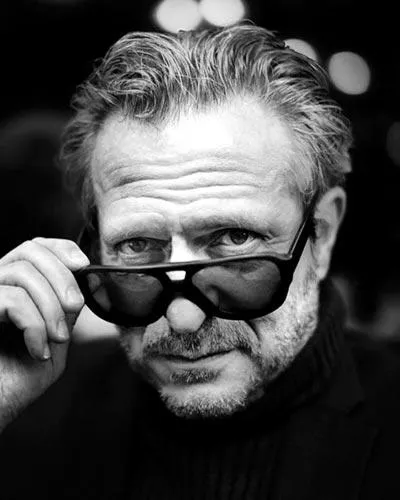
Charlie begann seine Karriere in der Musikindustrie als frisch gebackener Anwalt und veranstaltete Konzerte, indem er Künstler wie Iggy Pop und Patti Smith vor ein radikales italienisches Universitätspublikum brachte.
Nach seiner Arbeit im legendären Record Plant NYC und dem Eintauchen in die House-Szene gründete er mit Marco Sabiu die Rapino Brothers, zog 1990 nach London und blickte nie zurück. Dort eroberten sie das Jahrzehnt im Sturm, produzierten und nahmen Platten auf. Nach ihrem ersten Hit mit Kym Mazelles Love Me The Right Way steckten sie hinter Take Thats erstem Hit und produzierten, mischten und feilten in den 1990er-Jahren an zahlreichen großen Pop-Acts, von Kylie bis Primal Scream.
1997 war Charlie der „On-Air“-Produzent von „Get Your Act Together“ der BBC, gefolgt von „Full Frontal“ auf Channel 4. Von 1999 bis 2004 war er A&R Director bei Sony Music International.
Seine Energie lässt nie nach. Über die Jahre hat er seine Zeit aufgeteilt zwischen Management-Beratung für Ennio Morricone, Beratung für das Magazin Rolling Stone, Arbeit an Soundtracks und Produktionsberatung für Filme und Spiele (darunter Iggy Pop dafür zu gewinnen, die Voice-overs für das Videospiel Driver 3 zu übernehmen) sowie dem Verpflichten und Managen von Acts über sein Joint-Venture-Label mit Sony, Stud Records.
In Get signed! zieht Charlie den Vorhang zurück auf jahrzehntelange Erfahrung in Produktion und A&R, um dir genau zu zeigen, worauf Labels hören, wie du deinen Act formst und präsentierst und was wirklich nötig ist, um aufzufallen und einen Vertrag zu bekommen.







