



Over the Octave & Right Hand Jump

With
Talia GirtonTalia Girton shows how to read notes beyond the octave and nail big right-hand jumps, using finger numbers to land accurately.
What's in the course
23 lessons (0h 33m) · 1 free
01. What Are Tied Notes
Free lesson1:03
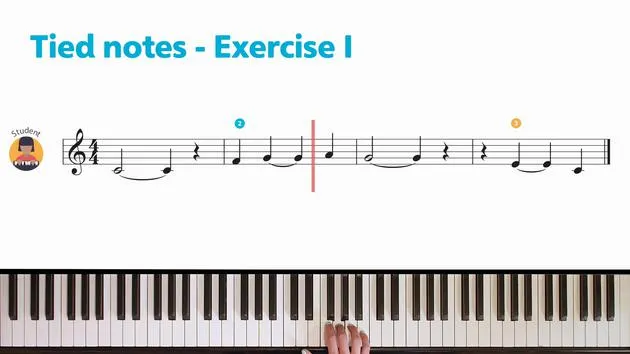
02. Tied Notes Exercise 1
1:00
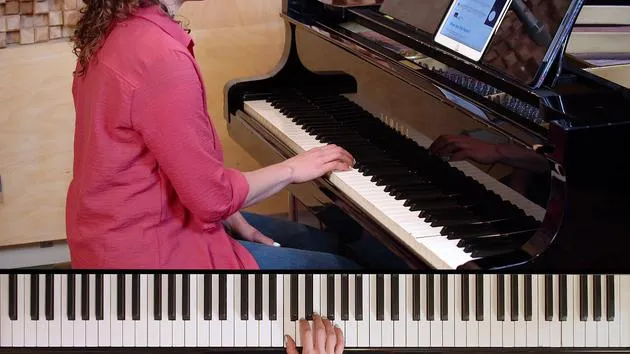
03. Tied Notes Exercise 1 (Performance)
1:23
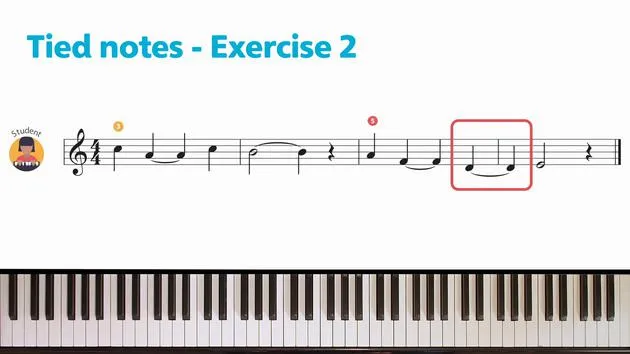
04. Tied Notes Exercise 2
1:09
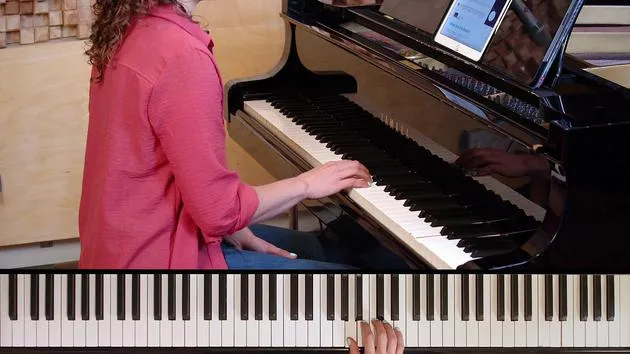
05. Tied Notes Exercise 2 (Performance)
1:03
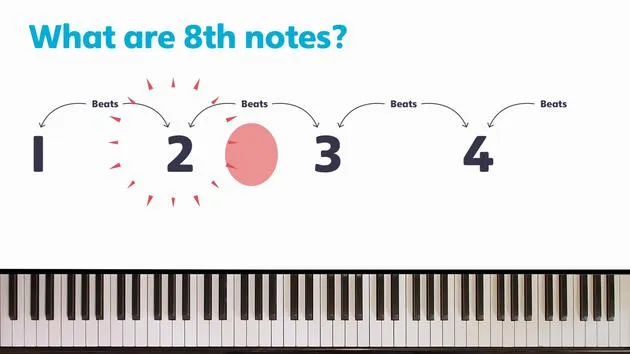
06. What Are Eighth Notes
1:25
07. Eighth Note Rhythm Game
1:48
08. Eighth Note Exercise 1
1:56
09. Eighth Note Exercise 1 (Performance)
1:21
10. Eighth Note Exercise 2
1:31
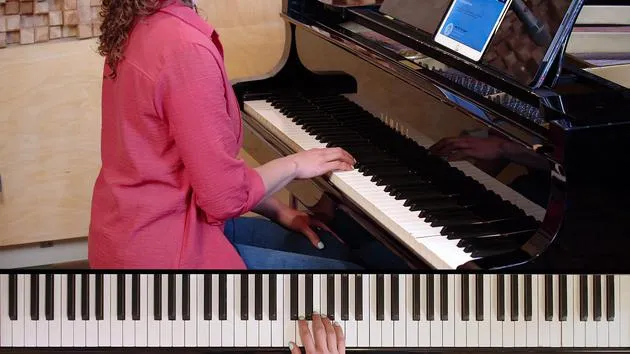
11. Eighth Note Exercise 2 (Performance)
1:05
Lesson transcript
Reading Notes Over the Octave
Now we'll have a look at reading notes over the octave. An octave refers to eight notes, so, for example, the notes between C and C.
We're going to start playing notes that go further beyond that. Let's have a look at this first example:
Right Hand Jump
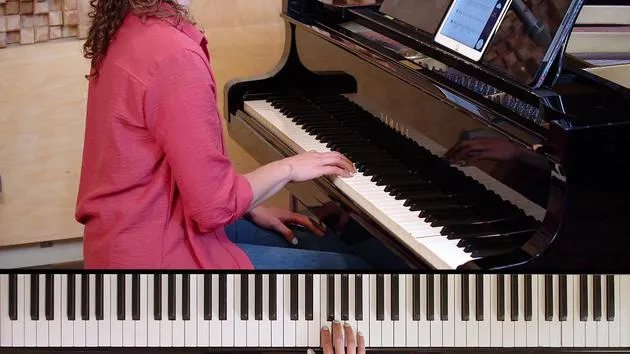
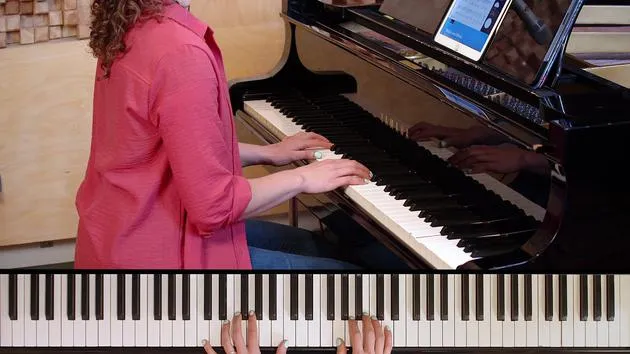
What's key here is to pay really close attention to your finger numbers, because they're going to help you reach those notes that are further away.
First, we'll snap the rhythm, then we'll add in the pitches:
- 1 and 2 and 3 and 4 and
- 1 and 2 and 3 and 4
- 1 and 2 and 3 and 4
- 1 and 2 and 3 and 4
- 1 and 2 and 3 and 4
Getting Started with the Notes
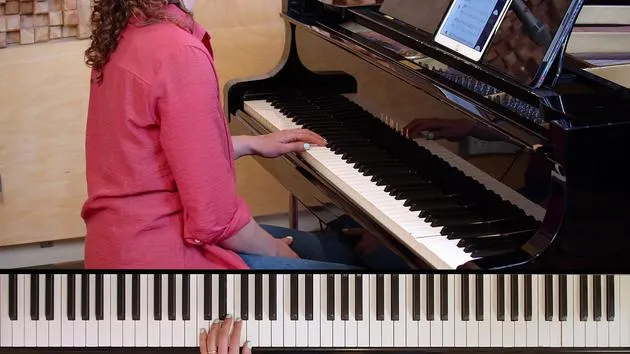
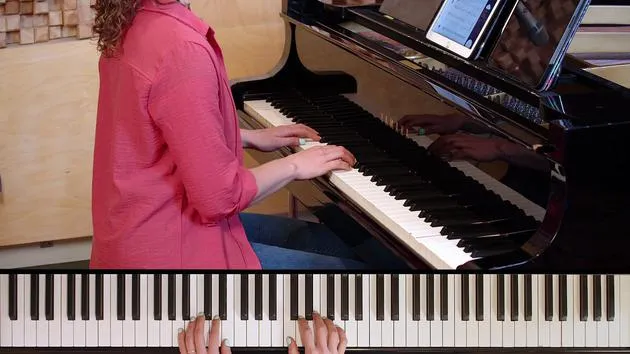
Now we'll have a look at the notes. We'll go ahead and get our one finger ready on C and our two finger can already be placed on G to anticipate that big jump.
- 1 and 2 and 3 and 4 and
- 1 and 2 and 3 and 4
- 1 and 2 and 3 and 4
- 1 and 2 and 3 and 4
You might have noticed that I was counting pretty quickly there. It's no problem for you to slow it way down.
For example:
- 1 and 2 and 3 and...
Or even more slowly.
Breaking It Down
You can also break it down into small chunks—one bar at a time.
Pause the video at any time that you need and rewatch it as many times as you'd like.
23 lessons
0h 33m of structured video lessons
Advanced video features
Slow down, loop a passage, follow along
Mobile, tablet & desktop
Practise wherever you are
100% satisfaction guarantee
30-day money-back guarantee
Meet your guru
Meet your guru
Talia Girton is a musician and HCPC-registered music therapist, and the founder of The Cycling Music Teachers. Her work brings together music therapy, counselling and education, and she tutors internationally on the music therapy training course at UDELAS in Panama as well as contributing to professional development with the European Piano Teachers Association (EPTA). On MusicGurus she teaches the Piano Method and Piano Foundations courses, guiding complete beginners from first steps through rhythm, both hands, theory and performance.







