



Choisir des morceaux pour les albums ou les concerts
Le contenu du cours
8 leçons (1h 4min) · 1 gratuites
01. Composer et collaborer
11:54
02. Comment ont été écrits les morceaux célèbres de Youngblood
8:33
03. Choisir des morceaux pour les albums ou les concerts
Tu es ici6:18
04. Comment aborder les reprises
8:12
05. Comment reconnaître une "bonne idée"
Leçon gratuite4:44
06. La structure et le développement des idées en un morceau abouti
8:15
07. Qu'est-ce qu'une idée ?!
4:17
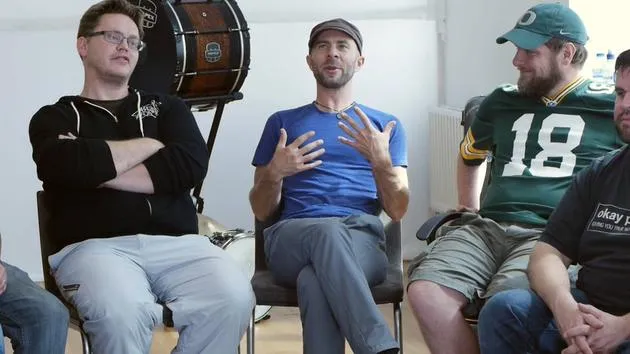
08. Écrire et arranger pour les cuivres
12:18
Transcription de la leçon
The Evolution of Our Music: From Writing to Performing
During our tours, we create a set list, and for the first half of the tour, we're constantly adjusting it. Here's a closer look at our process:
Set List Adjustments
- We evaluate the flow of the set.
- Songs that feel slow or don't fit well may be replaced or repositioned.
- The goal is to keep the performance engaging by:
- Changing tempos.
- Varying focus from song to song.
Recording Process
When it comes to recording, I don't think about specifics until I start hearing sounds in my head. Eventually, we accumulate a lot of material and decide what's optimized for the album, keeping in mind that sequencing is the final piece of the puzzle.
Changing Album Lengths
- 10 years ago: An album typically aimed for 72 minutes.
- Current long-term goal: Albums like PAX Volume clock in at around 64 minutes.
- We've shortened the number of tracks, aiming for:
- Four-minute songs.
- Old tracks often ranged from six to six-and-a-half minutes.
This shift has necessitated more editing, leading to more concise song forms.
The Live Show vs. Studio Recording
In our earlier albums, we aimed to encapsulate the live show experience:
- Typical live performance: Songs featured multiple solos (often two or three).
- Over time, we learned it's challenging to fully capture that energy in the studio. Now, we write with both the studio and live performance in mind:
- Newer albums tend to have one solo per song, occasionally two.
Writing and Performing
Previously, we developed songs through extended live play. Now, since we're often in different locations, the process has changed:
- We focus on writing the album, recording it, and then learning how to perform the new material live.
What Comes First?
The question arises: Do we write for the album or for live performances first?
- Creative Mode vs. Touring Mode: We oscillate between both states, making it difficult to pinpoint which comes first.
As I reflect on our newer work, it's different than past albums. For instance, the tracks on Younger Brass Bands:
- These songs didn't originate as live tunes. Instead, they came from years of writing, aiming to craft enjoyable material both for the studio and the stage.
The Challenge of Opinions
Managing a band with many opinions can be challenging.
- We need to collectively decide which songs to play, which can be complex.
- Ultimately, this responsibility falls to Dave and me:
- I serve as the musical director.
- Dave is the bleeder, guiding the band.
Together, we determine when a song truly becomes a "Youngblood tune."
The Collaborative Process
Having a collaborative approach is essential:
- It prevents the burden of creation falling on one individual.
- Cohesion in sound relies on someone determining when a track is complete, a role we often fulfill in Dave's basement.
Our process reflects our growth and adaptability in both writing and performing. While it can be complex, the art of collaboration ensures our music continues to evolve.
8 leçons
1h 4m de leçons vidéo structurées
Fonctions vidéo avancées
Ralentissez, bouclez un passage, suivez la partition
Mobile, tablette et ordinateur
Pratiquez où vous voulez
Satisfaction garantie à 100 %
Garantie remboursement 30 jours
Rencontrez votre guru
Rencontrez votre guru
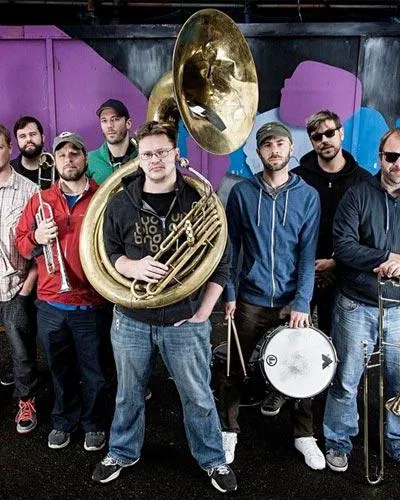
Youngblood Brass Band fusionne les cuivres sans concession de La Nouvelle-Orléans avec l'énergie et le lyrisme du hip-hop. Issu de Madison, Brooklyn, Minneapolis et Chicago, ce groupe de dix musiciens tourne dans le monde entier depuis 2000 et a collaboré avec des artistes tels que Questlove et Talib Kweli. Il est tout aussi à l'aise à mener une fanfare sur ses propres compositions qu'à faire la tête d'affiche d'un festival de punk. Sur MusicGurus, ils décomposent leur son mêlant La Nouvelle-Orléans et hip-hop : comment ils composent et arrangent pour les cuivres, le vocabulaire rythmique et harmonique qui relie le tout, et comment jouer une ligne de cuivre au sein d'une section soudée, y compris les parties complètes de leur morceau 'Brooklyn'.







