



La structure et le développement des idées en un morceau abouti
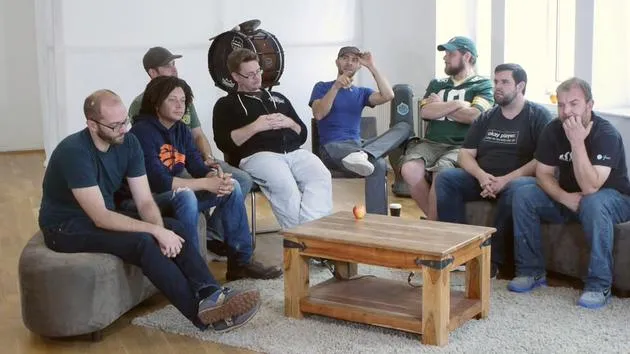
The Youngblood Brass Band expliquent comment ils transforment de petites idées en morceaux aboutis : dépasser le doute de soi et façonner la structure du morceau.
Le contenu du cours
8 leçons (1h 4min) · 1 gratuites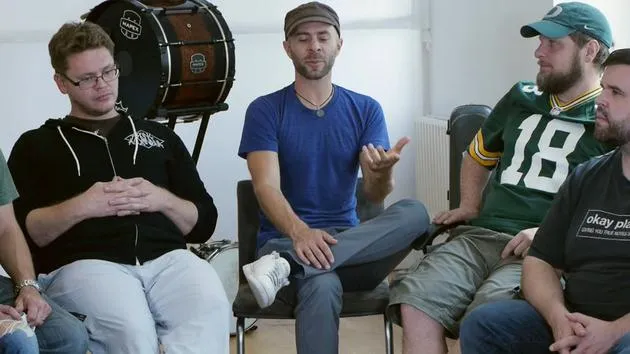
01. Composer et collaborer
11:54
02. Comment ont été écrits les morceaux célèbres de Youngblood
8:33
03. Choisir des morceaux pour les albums ou les concerts
6:18
04. Comment aborder les reprises
8:12
05. Comment reconnaître une "bonne idée"
Leçon gratuite4:44
06. La structure et le développement des idées en un morceau abouti
Tu es ici8:15
07. Qu'est-ce qu'une idée ?!
4:17
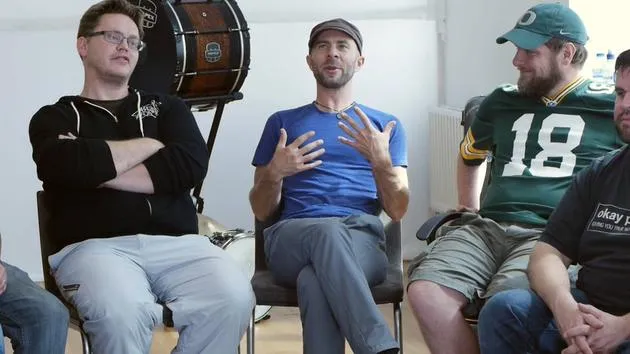
08. Écrire et arranger pour les cuivres
12:18
Transcription de la leçon
Overcoming Self-Doubt in Music Composition
"I think it's still really hard for all of us. It's not easy for any of us. And we're not..."
The Struggles of Creating New Music
- The new album involves a lot of hard work.
- There's a sense of crippling self-doubt in getting things done.
- Having supportive band members encourages the development of new ideas.
Idea Development
- Some band members may feel less confident presenting small ideas.
- It often helps to have someone else affirm that an idea is worth exploring.
"It just takes somebody else to be like, no, we could work with that..."
Song Structure
Traditional Song Structure
- Historically, our song structure was based on hand signals:
- Part 1: Wave it in the air for the next section.
- Part 2, Part 3: Sequential signaling for upcoming parts.
"You only really need three parts to write a song."
Key Points on Songwriting
- Minimum Parts: Ensure there are at least three parts.
- Natural Flow: The transitions between parts should feel seamless.
- Collaborative Challenges: Avoid jamming multiple ideas that clash.
"It's better to be a creator than a recreator."
Getting Comfortable with Composition
- Being able to play without looking at sheet music enhances creativity.
- New composers should focus on generating ideas frequently.
The Importance of a Sketchbook
- Like artists, musicians should maintain a sketchbook for ideas.
- Home recording tools like Pro Tools create a space for quick idea capture.
"I need to get it in there and get it done."
Embracing Variety in Music Projects
- Working on multiple projects boosts creativity and reduces pressure.
"If you have a variety of outlets... it makes it a little easier."
Structure and Flexibility
- There's no strict structure we follow; we play around with multiple formats.
- Understanding where the music wants to go is crucial.
"You have to be able to ask yourself, where does it sound like the tune wants to go?"
Writer's Block Perspectives
- "The point is, shut up and write something."
- Many writers share the fear that their work isn't good enough.
Learning from Bad Writing
- Writing poorly can lead to unexpected gems.
"Try to write the worst song you could write... you will come away with something that you actually like."
Critique and Self-Reflection
- Artists often struggle with criticism of their own and others' ideas.
- A balance is needed between positive and negative feedback to foster creativity.
"How do you focus on what form it is you're writing?"
Conclusion
- Traditional forms can dull the creative process.
- Our goal is to innovate rather than repeat existing formats.
"We don't want to contribute to the endless albums written in one or two keys."
8 leçons
1h 4m de leçons vidéo structurées
Fonctions vidéo avancées
Ralentissez, bouclez un passage, suivez la partition
Mobile, tablette et ordinateur
Pratiquez où vous voulez
Satisfaction garantie à 100 %
Garantie remboursement 30 jours
Rencontrez votre guru
Rencontrez votre guru
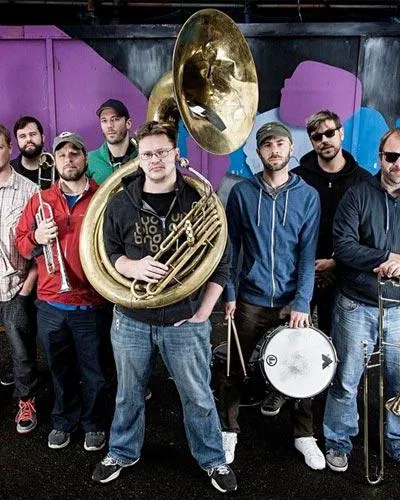
Youngblood Brass Band fusionne les cuivres sans concession de La Nouvelle-Orléans avec l'énergie et le lyrisme du hip-hop. Issu de Madison, Brooklyn, Minneapolis et Chicago, ce groupe de dix musiciens tourne dans le monde entier depuis 2000 et a collaboré avec des artistes tels que Questlove et Talib Kweli. Il est tout aussi à l'aise à mener une fanfare sur ses propres compositions qu'à faire la tête d'affiche d'un festival de punk. Sur MusicGurus, ils décomposent leur son mêlant La Nouvelle-Orléans et hip-hop : comment ils composent et arrangent pour les cuivres, le vocabulaire rythmique et harmonique qui relie le tout, et comment jouer une ligne de cuivre au sein d'une section soudée, y compris les parties complètes de leur morceau 'Brooklyn'.







