



Comment ont été écrits les morceaux célèbres de Youngblood
Le contenu du cours
8 leçons (1h 4min) · 1 gratuites
01. Composer et collaborer
11:54
02. Comment ont été écrits les morceaux célèbres de Youngblood
Tu es ici8:33
03. Choisir des morceaux pour les albums ou les concerts
6:18
04. Comment aborder les reprises
8:12
05. Comment reconnaître une "bonne idée"
Leçon gratuite4:44
06. La structure et le développement des idées en un morceau abouti
8:15
07. Qu'est-ce qu'une idée ?!
4:17
08. Écrire et arranger pour les cuivres
12:18
Transcription de la leçon
Brooklyn's Simplicity and Musical Evolution
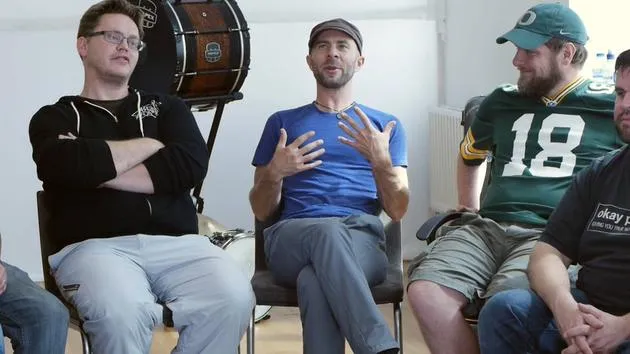
Yeah, Brooklyn's pretty simple. I used to live in a little suburb of a suburb in Wisconsin called Brooklyn. I was walking around one night and the song came to me.
So I wrote it in my head, then I taught it to everybody, and that wound up being the one that everybody really loved. I didn't know at the time that it was going to be our big hit, but that one was pretty simple.
The Band's Live Performance
I think it's kind of interesting, though. One of the things I know Nat thinks about when he's writing is considering the way the band performs in the live show and what it feels like the show is lacking.
- Live Performance Focus: When we think about playing gigs, the band has always existed to perform live.
- Filling the Gap: After doing a duo and playing 30 dates in a row, we ask ourselves: what feels like it's missing? What can only this band do in a certain way to enhance the live show?
Brooklyn might have been partially about that, where it's like:
- Jam and Sing Along: We need something you can jam to and sing along with.
Influences and Sound Development
I think it was one of the first songs where we were taking primarily hip-hop beats and applying New Orleans brass band styles or phrases.
It's interesting for me to think about how our approach to music has evolved:
- Youngblood's Sound: I feel like now, Youngblood sounds like a singular entity. It's not just a bunch of ideas smashed together. Youngblood things sound like Youngblood things.
- Evolution Over Time: The difference in the type of tune just feels like our ears hear music differently than we did 15 years ago.
Writing for Personalities
Again, writing has progressed to focus more on the personalities in the band rather than just instrumentation.
- Unique Appeal: What makes Youngblood unique and appealing is the raw power and emotion that comes through when we play.
- Individual Contributions: I'm not writing a trombone part; I'm writing a Joe part, a Zach part, a Tony part, and definitely writing for me.
Nuclear Summer and Experimentation
"Nuclear Summer" embodies a point in Youngblood's history. We pondered, how far outside the box can we get with instrumentation?
- Dancehall Beat: That song started with a classic Jamaican dance hall beat, which felt incredibly punk and aggressive.
- Creative Noises: During recording, we had band members capable of making unique sounds, allowing us to incorporate "nice weird noises" into the track.
In "Nuclear Summer," parts of the tune were left open for creativity:
- Improvisation: There's a whole section of the tune with no written parts for horns, just following rough chord changes and creating noise. We hadn't done that before.
Growth as Musicians
It's a sign of us maturing as musicians. When we were younger, we relied on Nat for all the parts because we were still developing.
- Current Capability: Now, everyone in the band is a consummate professional, capable of contributing to the creative process without specific directions.
New Record: Two Approaches
On the new record, two songs demonstrate different writing processes:
- 20 Questions: This hip-hop tune started with voice memos on my phone. I recorded everything on an organ, capturing the clicking of broken organ keys.
- Lyric Integration: Unlike past records, I waited to write lyrics until after completing the instrumental, making them intrinsically tied to the music.
Zach pointed out something interesting, what are the 20 questions? I realized that the question, Who am I? is asked 20 times in that song.
8 leçons
1h 4m de leçons vidéo structurées
Fonctions vidéo avancées
Ralentissez, bouclez un passage, suivez la partition
Mobile, tablette et ordinateur
Pratiquez où vous voulez
Satisfaction garantie à 100 %
Garantie remboursement 30 jours
Rencontrez votre guru
Rencontrez votre guru
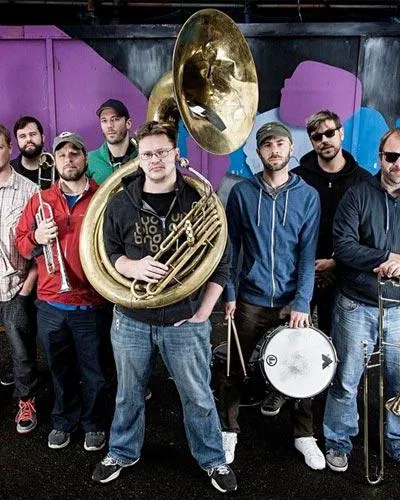
Youngblood Brass Band fusionne les cuivres sans concession de La Nouvelle-Orléans avec l'énergie et le lyrisme du hip-hop. Issu de Madison, Brooklyn, Minneapolis et Chicago, ce groupe de dix musiciens tourne dans le monde entier depuis 2000 et a collaboré avec des artistes tels que Questlove et Talib Kweli. Il est tout aussi à l'aise à mener une fanfare sur ses propres compositions qu'à faire la tête d'affiche d'un festival de punk. Sur MusicGurus, ils décomposent leur son mêlant La Nouvelle-Orléans et hip-hop : comment ils composent et arrangent pour les cuivres, le vocabulaire rythmique et harmonique qui relie le tout, et comment jouer une ligne de cuivre au sein d'une section soudée, y compris les parties complètes de leur morceau 'Brooklyn'.







