



L'inclinaison de l'archet
Lesson time: (4min 14sec)
Course preview
This lesson is part of the course Les secrets de la production du son, Partie 1 : connaître ton instrument
Watch a preview of the full course below.
Lesson transcript:
How Much Hair Should Contact the String?
Quieter Playing vs. Deeper Playing
-
For quieter playing:
- Play further from the bridge.
- Use less hair and play on the edge of the hair.
-
For deeper playing:
- Play nearer the bridge.
- Use flatter hair so that the wood of the bow is more directly above the hair.
High Positions
When playing in very high positions, it's essential to avoid using full hair. Otherwise, it covers too wide an area of the string in proportion to the short string length.
- Visualization:
- Imagine playing a note this high: the width of the hair is about a fifth or sixth of this distance.
- Conversely, the width of the hair on an open string is very minimal.
Common Problem
A remarkably common issue is that players tilt the bow over towards the fingerboard during forte playing. This tilt causes the wood of the bow to contact the string.
- Result:
- As you push down, the actual wood touches the string, creating a scraping sound.
- Constant occurrences of this can lead players to stop noticing the scraping noise.
Tip: Check the wood of the bow for scratches caused by contact with the string. It's a sobering thought to realize that each mark on the bow represents a moment when an audible scraping sound was created, attacking the string from the air at the heel.
Best Practices
- It's often best and more natural not to use all the hair.
- Using too much hair can result in an impure sound.
- Aim for a safer tilt in your playing.
Helpful Exercise
Here's a very helpful exercise to sensitize you to the tilt of the bow.
Exercise Structure:
- This isn't one of the five tone exercises, a little extra inspired by one of Cape's favorites:
- Alternate between flat hair and tilted hair.
Steps:
-
Start with a tilted bow in the lower half:
- Tilt and flat, repeat sustaining throughout.
- "That's great. Lovely. Really solid in the string despite what you're doing."
-
Do two in one bow:
- "Yeah. So tilt flat. Tilt flat. That's great. Lovely."
- You can extend to 3, 4, 5, 6, or even up to 8 if you wish.
-
Reverse the exercise:
- Start flat in the lower half and then tilt in the upper half.
- "What's quite nice is to make it solid. Even though you're turning the bow, keep the sound. Brilliant."
-
Two in one bow again:
- "So you didn't need to stop, but never mind. Lovely. Keep it solid as far as possible."
- "Great. Lovely. Lovely."
About the instructor
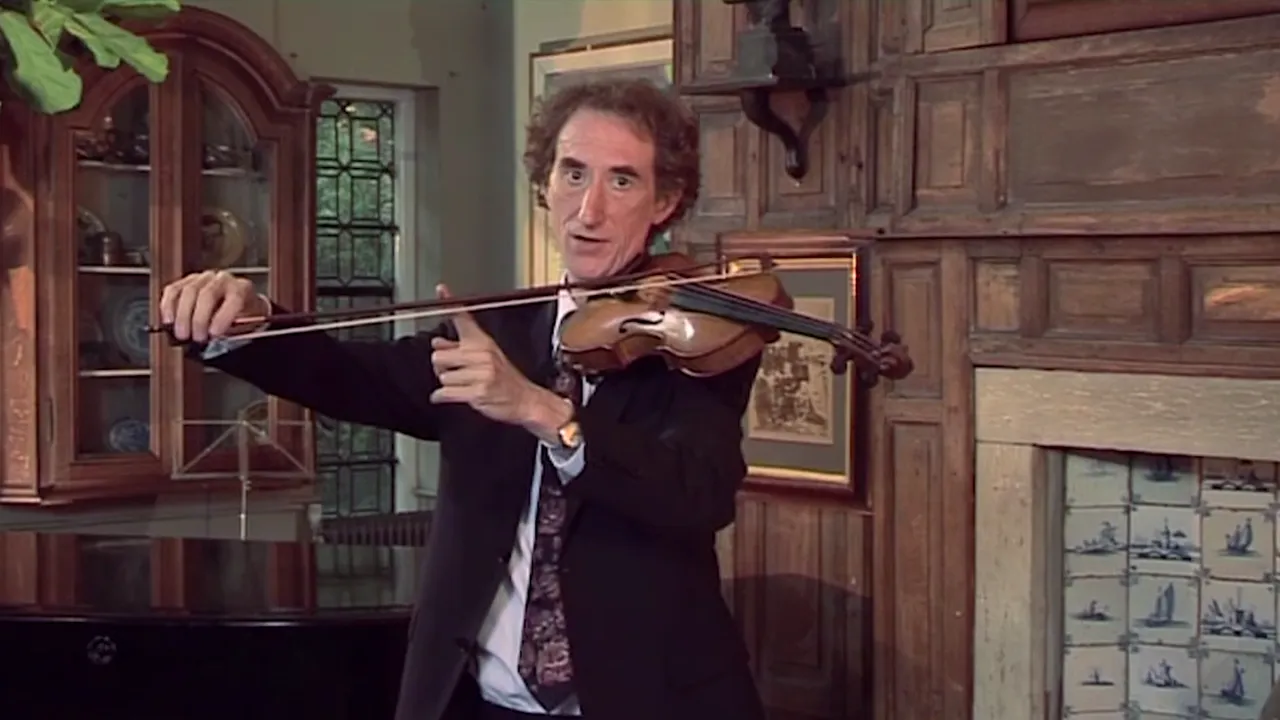
Simon Fischer mène une carrière remarquable et variée de concertiste, de pédagogue et d'artiste de studio. Il s'est produit dans le monde entier en récital et a enregistré trois Sonates de Brahms, un enregistrement salué par la revue Gramophone. Simon est reconnu comme l'un des professeurs d'élite au monde. Il est professeur à la Guildhall School of Music et a occupé des postes à la Yehudi Menuhin School, la Wells Cathedral School et la Purcell School, et a été pendant 15 ans professeur invité à la Royal Scottish Academy of Music. Après avoir étudié à Londres avec Yfrah Neaman et à New York avec Dorothy DeLay, l'approche de Fischer réunit les meilleurs éléments des traditions violonistiques française, russe et américaine. Les publications de Fischer exercent une grande influence sur l'enseignement du violon. Rédacteur pour la revue The Strad depuis 1991, ses articles mensuels ont conquis un lectorat dans le monde entier. Publiés par Edition Peters, ses ouvrages techniques Basics and Practice (traduit en coréen, italien et allemand), Scales et The Violin Lesson, ainsi que le DVD The Secrets of Tone Production (désormais disponible en streaming via MusicGurus), sont devenus des références sur de nombreux continents. Son livre et DVD Warming Up a été décrit par la revue The Strad comme « 23 pages d'or technique à l'état pur ». En 2014, Simon Fischer a reçu le prix de la European String Teachers Association « pour saluer une contribution à l'enseignement des cordes à l'échelle d'une vie ». Dans son cours en quatre parties Secrets of Tone Production, Simon te guide pour apprendre à connaître ton instrument, puis pour travailler pas à pas ses exercices fondamentaux de sonorité, afin de produire un son plus riche, plus maîtrisé et plus beau au violon. read more